

Antique Scroll Painting
An antique scroll painting brings historic narrative, Buddhist imagery, and traditional pigment on silk into domestic spaces with quiet gravity.
Antique Scroll Painting
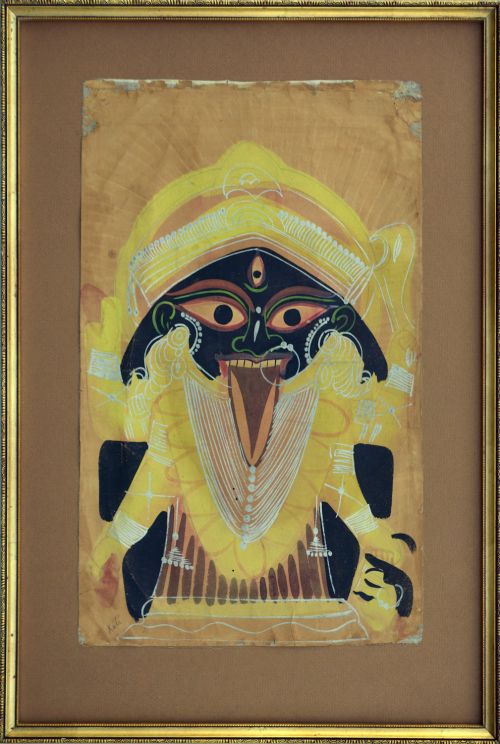
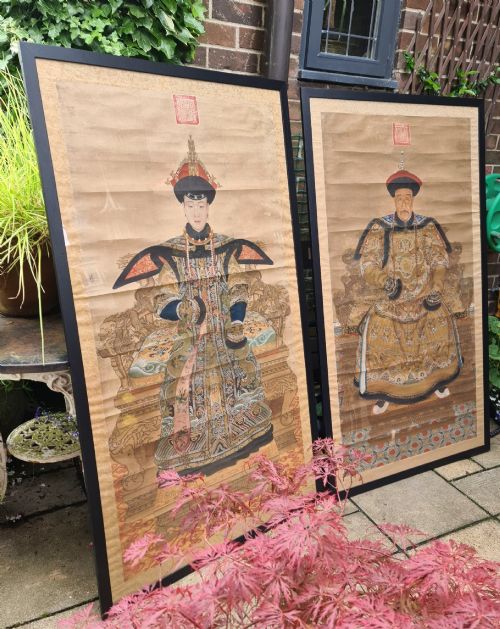
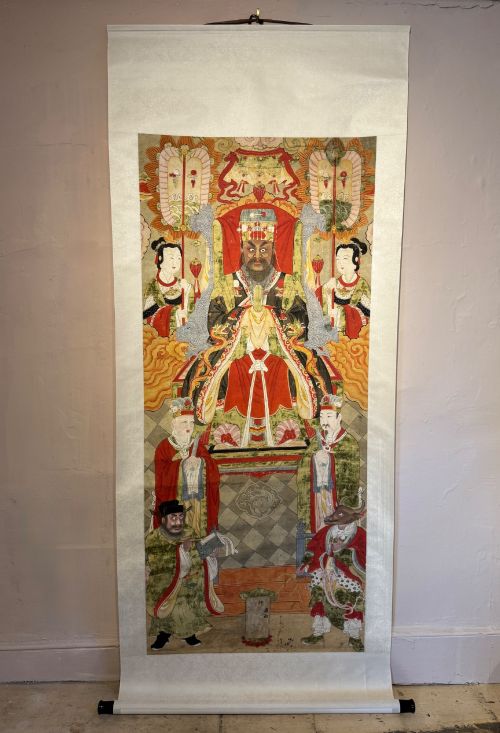
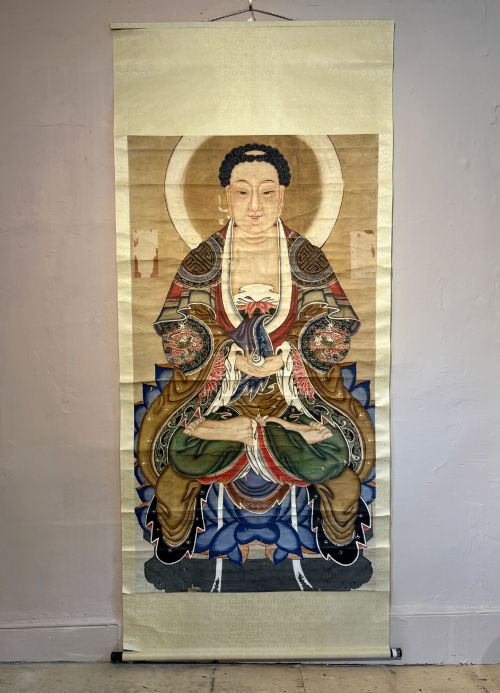
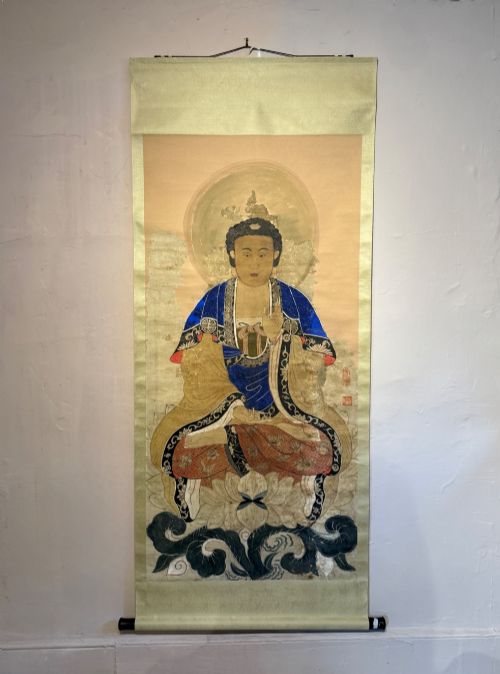
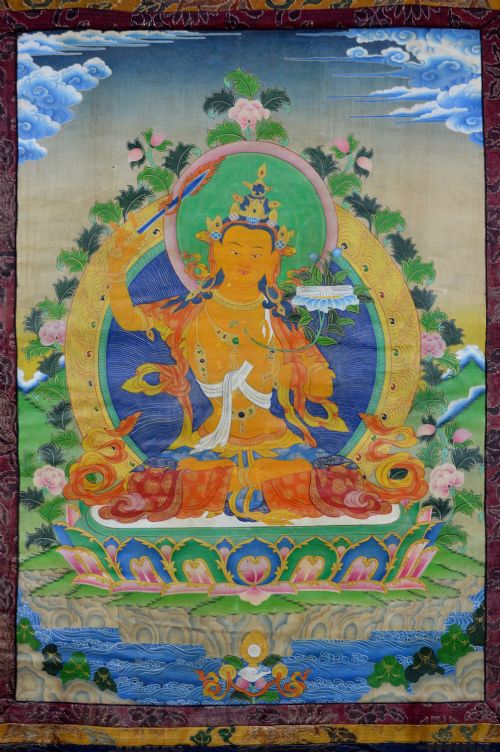
When searching for an antique scroll painting, a buyer looks at hanging works originating from traditions such as the Qing Dynasty or Tibetan Buddhist practice. These pieces arrive mounted on fabric or framed, depicting figures like the Daoist Immortal Jade Emperor, the Buddhist deity Manjushri, or animals such as a snow leopard.
The versions met most often on this page date from the nineteenth century into the early twentieth century. They combine traditional East Asian subjects with the physical materials of silk and pigment, preserved either as ancestral scrolls or devotional temple depictions.
Buyers select these works to introduce vertical presence and historic pigment depth to a room. Each piece reflects specific religious, ancestral, or imperial portraiture traditions tied to its period of origin.
How they were made
Makers applied pigment directly onto fine silk surfaces using traditional brush techniques. This combination allowed the fabric to absorb colour while maintaining the delicate linework required for portraits of deities and ancestors.
Mounting involved backing the painted silk with supportive layers of textile and paper to permit rolling and hanging. The structural integrity relied on organic glues and woven borders that protected the fragile central image over decades of display.
Antique Scroll Painting Retail Price Guide 2026
Typical asking prices for scroll painting among the pieces listed under this phrase on Sellingantiques today, from the lower quarter to the upper quarter. They describe what is for sale here now, not the wider market.
A snowy leopard once stepped quietly onto a nineteenth-century silk scroll, pausing forever beneath the brush of a forgotten painter.
What varies in quality
The distinction between tiers rests on the fineness of the brushwork and the preservation of the pigment. Superior examples retain vibrant colouration and precise detail in facial expressions and garments, whereas lesser pieces suffer from flaking pigment and obscured lines.
Condition of the silk support and the authenticity of the mounting significantly influence the standing of an individual scroll. Works showing stable fibres and original framing elements demonstrate superior historical integrity compared to heavily restored or degraded examples.
The Antique Scroll Painting Glossary
- Pigment
- The finely ground coloured substances mixed with a binder to create the painted imagery on silk. These materials determine the tone and permanence of the artwork.
- Silk
- The natural protein fibre woven into fabric used as the primary canvas for traditional scroll paintings. Its smooth surface accepts delicate ink and colour washes.
- Qing Dynasty
- The imperial dynasty of China spanning from the seventeenth to the early twentieth century, associated with many extant ancestral and religious scrolls.
- Ancestral scroll
- A portrait created to honour family forebears, often displayed during rituals and preserved across generations in domestic or temple settings.
Antique Scroll Painting: Frequently Asked Questions
How do I hang a scroll painting?
Traditional scrolls use hanging cords attached to wooden rollers at the base and top to keep the fabric flat against the wall.
Modern buyers often place them behind glass within custom frames to protect the fragile silk from atmospheric moisture and handling damage.
Where should I display an antique scroll?
These works suit low-light environments away from direct sunlight, which fades organic pigments and degrades silk fibres over time.
Placement in studies, quiet sitting rooms, or hallways allows the vertical format to draw the eye upward without competing with other furniture.
How do I date an antique scroll?
Dating relies on examining the style of the brushwork, the type of mounting textiles, and the specific iconography of the deities or subjects depicted.
Nineteenth-century examples often exhibit distinct pigment saturation and mounting conventions that separate them from twentieth-century reproductions.