

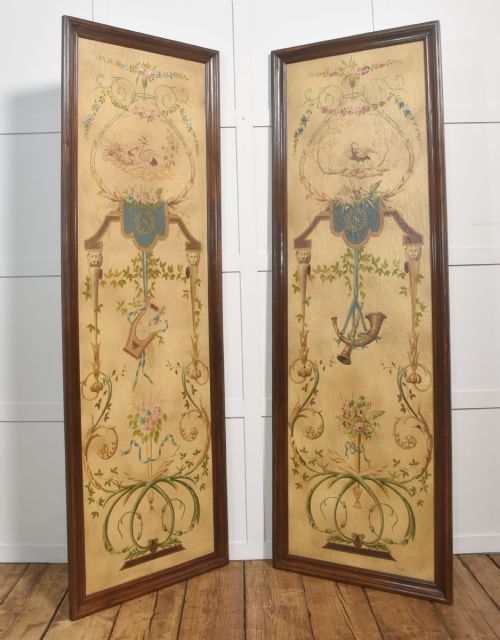
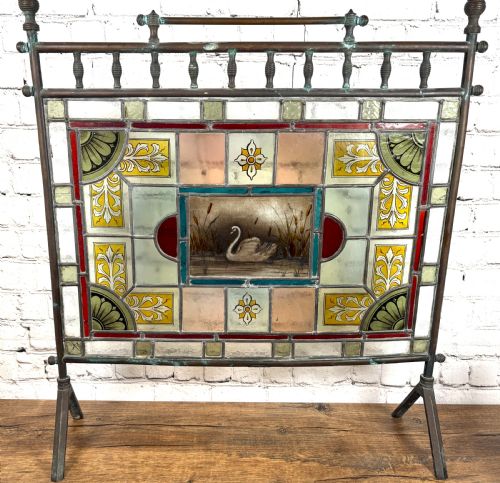


Antique Screen Frame
An antique screen frame holds textiles, glass, or panels designed to divide space or block hearth heat, offering architectural character to a room.
Antique Screen Frame
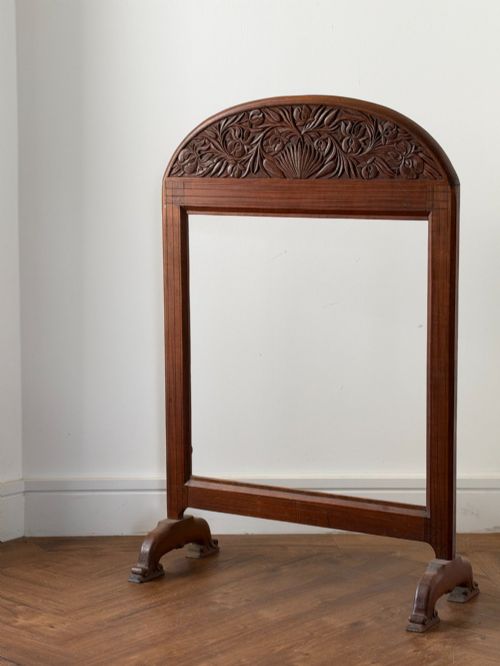
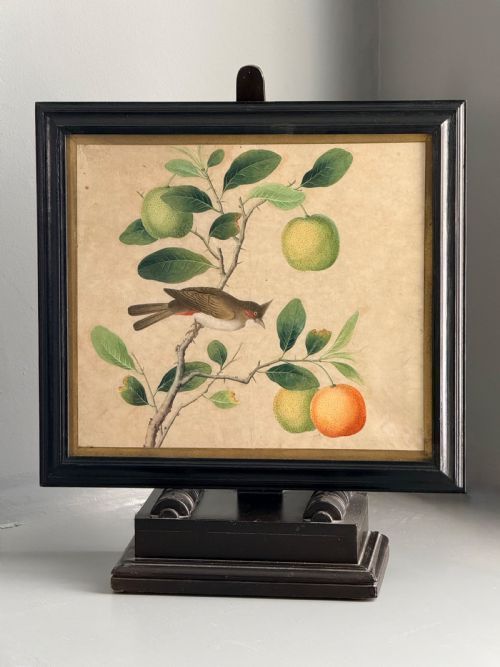
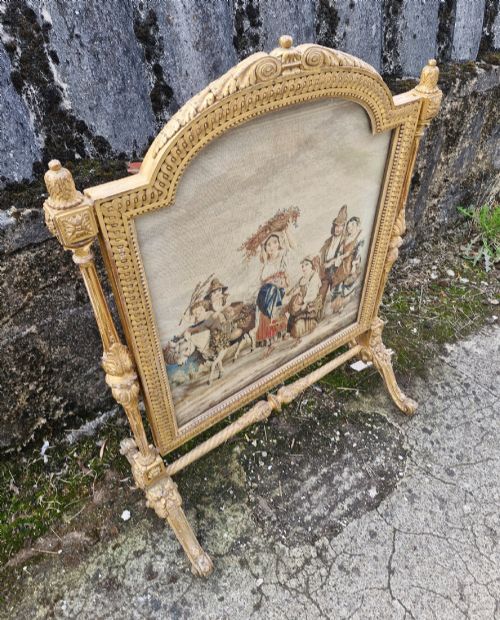
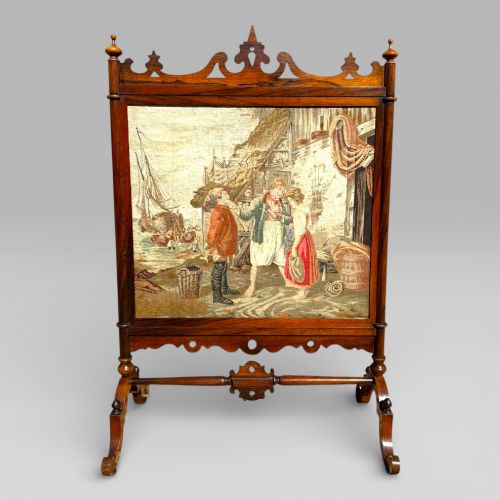
When you search for an antique screen frame, you encounter surrounds and structural supports originally built for fire screens, room dividers, and decorative wall panels. The examples gathered here span from the eighteenth century through the twentieth century, taking forms such as cheval frames, pole screens, nursery guards, and multi-fold panels.
You meet a variety of regional interpretations and stylistic influences on this page, including Victorian needlework mountings, Art Nouveau brass work, Chinese export lacquer panels, and Regency samplers. These pieces function today as standalone wall art, photo displays, or architectural fragments.
The objects combine timber, metal, and glass structures designed to hold textiles, painted canvas, pith paper, or stained glass. Whether encountered as a single standing frame or part of a folding set, each piece retains the framework intended to showcase a decorative insert.
How they were made
Cabinetmakers constructed these frames using dense hardwoods like mahogany and rosewood, alongside moulded brass, gilded gesso, and painted wood. Joints were joined to support hanging panels, heavy glass, or tensioned needlework.
Surfaces received decorative finishes including gilding, lacquer, paint, and papier-mâché. Metal frames utilised cast brass and lead for stained glass windows and wire mesh nursery guards.
Antique Screen Frame Retail Price Guide 2026
Typical asking prices for screen frame among the pieces listed under this phrase on Sellingantiques today, from the lower quarter to the upper quarter. They describe what is for sale here now, not the wider market.
Some frames once stood quietly in college debating chambers or guarded Victorian drawing rooms from stray embers.
What varies in quality
Quality rests in the precision of the joinery and the integrity of the original material, whether carved mahogany, cast brass, or moulded papier-mâché. Superior examples retain their original structural bracing and surface finishes without extensive rebuilding.
The refinement of decorative details, such as hand-carved mouldings, crisp gilding, and integrated hardware, distinguishes standard production pieces from finer workshop outputs.
The Antique Screen Frame Glossary
- Cheval screen
- A standing fire screen mounted on a vertical frame with pivoting pivots. It allows the panel to tilt and angle away from the hearth heat.
- Pole screen
- A small framed screen mounted on a vertical wooden pole with a sliding collar. This design permitted the viewer to adjust the height of the panel relative to the fire.
- Nursery guard
- A protective metal screen, often made of brass wire mesh or framed iron. It kept children and floating embers safely separated in period rooms.
- Needlework
- Hand-stitched textile work including petit point and cross-stitch. These panels were frequently stretched directly inside wooden screen frames.
- Coromandel
- A type of Chinese export lacquer work featuring incised designs filled with colour on a dark ground. Pieces in this style were often adapted into Western folding screens.
Antique Screen Frame: Frequently Asked Questions
What is an antique screen frame?
An antique screen frame is a structural mount designed to hold a decorative panel, textile, or glass insert. These pieces originated as functional items near fireplaces or as folding room dividers.
Today, collectors use them to display antique needlework, paintings, or mirrors, or mount them directly onto walls as decorative art.
How were screen frames used originally?
Original uses varied from blocking radiant heat from an open fireplace to dividing large rooms for privacy. Pole screens and cheval screens sat near hearths to protect complexions from the fire.
Larger multi-fold panels partitioned spaces within Victorian and Edwardian drawing rooms, while smaller brass frames housed photographs or stained glass.
Can I display these frames on a wall?
Many screen frames lend themselves well to wall mounting, particularly flat panels, lacquer plaques, and stained glass window guards. Their original structural surrounds often include hanging loops or can be adapted with appropriate fixings.
Heavier freestanding cheval frames or folding room dividers require floor space and proper stabilisation if placed near high-traffic areas.
How do I date an antique screen frame?
Dating relies on identifying the prevailing style, timber choices, and construction methods used in the frame. Eighteenth-century pieces often feature hand-carved mahogany, while Victorian examples frequently utilise rosewood, needlework, or gilt finishes.
Later pieces from the early twentieth century introduce brass Art Nouveau motifs, oak debating society panels, and streamlined Art Deco sunbursts.