



Antique Satsuma Koro
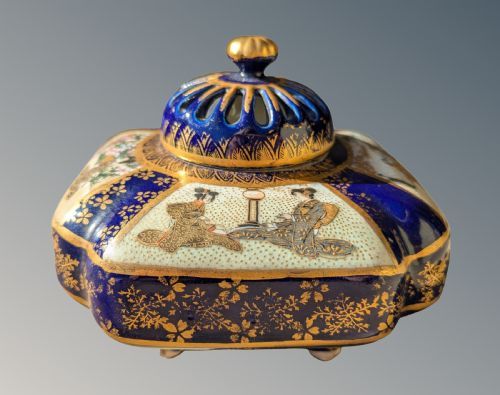
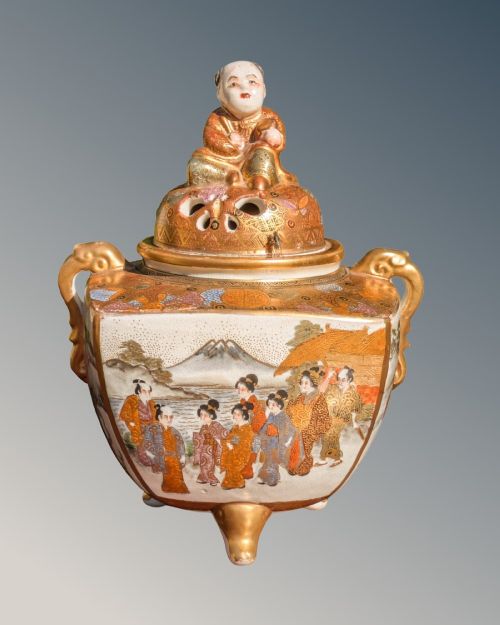
These antique satsuma koro are Japanese ceramic incense burners that bring intricate painted detail and gilt ornamentation to a mantelpiece.
Antique Satsuma Koro
An antique satsuma koro is a lidded incense burner originating from Japan, typically taking the form of a footed vessel designed for burning aromatic materials. These ceramic pieces frequently appear from the nineteenth century, spanning the Meiji and Taisho periods.
The objects on this page include both standard incense burners and lidded vase variants, often surmounted by figurative handles such as the Shi-Shi lion. Most examples belong to the Meiji period, reflecting the decorative export wares produced during that era.
Kyoto workshops produced many of the finest pieces found in trade, alongside miniature incense burners and larger lidded vessels. Buyers encounter earthenware bodies richly finished with enamel and gold leaf.
How they were made
Potters shaped these vessels from earthenware, applying a fine crackle-glaze base before adding elaborate enamel decorations. Artisans then highlighted specific motifs with gold leaf, gilding and gilt details to catch the light.
Specialised Kyoto makers constructed these koro with fitted lids and sculptural elements like bronze or ceramic lions. The combination of painted enamels and raised gold created the signature layered texture characteristic of the Satsuma style.
Antique Satsuma Koro Retail Price Guide 2026
Typical asking prices for satsuma koro among the pieces listed under this phrase on Sellingantiques today, from the lower quarter to the upper quarter. They describe what is for sale here now, not the wider market.
Every Shi-Shi lion perched on a lid stares back with a fierce expression designed to ward off malevolent spirits.
What varies in quality
The precision of the enamel painting and the density of the gilding set the finer pieces apart from standard export wares. Signature marks from recognised workshops indicate a higher tier of production.
Sculptural elements such as moulded Shi-Shi lion finials demonstrate greater artistic ambition when modelled with sharp detail rather than soft, mass-produced contours.
Kinkozan·Kizan·Kotobuki do·Shizan
The Antique Satsuma Koro Glossary
- Koro
- An incense burner. These traditional vessels feature a perforated lid to release aromatic smoke.
- Satsuma
- A type of Japanese pottery. It is characterised by a pale, ivory-coloured earthenware body covered in a fine network of crackled glaze.
- Shi-Shi
- A mythical guardian lion. These figures frequently serve as sculptural finials on vessel lids.
- Meiji Period
- A historical era in Japan lasting from 1868 to 1912. It produced the majority of elaborate export ceramics seen on the market today.
- Gilt
- Applied gold ornamentation. This technique highlights key decorative motifs across the ceramic surface.
Antique Satsuma Koro: Frequently Asked Questions
What is a satsuma koro used for?
These vessels functioned primarily as ceremonial or decorative incense burners in Japanese interiors. The pierced lid allowed fragrant smoke to disperse throughout the room.
Today, collectors appreciate them as sculptural mantelpiece ornaments rather than practical items for burning incense.
How do I identify a Meiji period piece?
Meiji period pieces typically display dense polychrome enamel painting combined with heavy gilding on a crackled earthenware body. Many carry workshop signatures or family crests from this era.
Production methods shifted after this time, making the intricate detail of nineteenth-century examples distinctive.
What does Kyoto Satsuma mean?
Kyoto Satsuma refers to ceramics made in Kyoto workshops rather than the Satsuma province itself. These urban makers refined the crackle-glaze style for the international export market.
Their output often featured exceptionally delicate painting and elaborate sculptural lids.
Are these koro always made of ceramic?
The main body and lid are formed from earthenware with an applied glaze, but individual pieces incorporate other materials. Gilt and gold leaf provide surface decoration, while specific elements utilise bronze.
Sculptural details like the Shi-Shi lion are shaped directly from the ceramic body or modelled to match.