

Antique Salt Glaze Stoneware
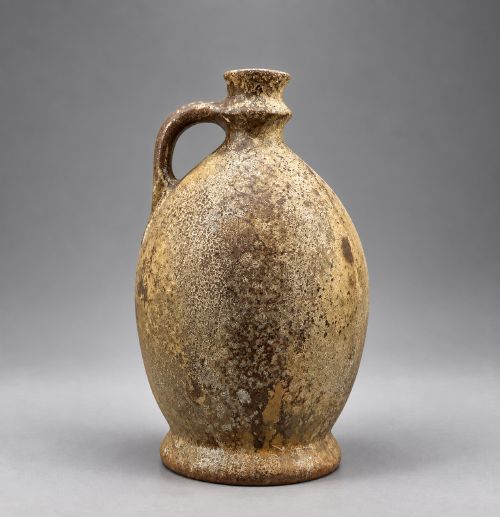
These salt glaze stoneware pieces combine dense ceramic bodies with textured, pebbled surfaces formed by salt thrown into the kiln.
Antique Salt Glaze Stoneware
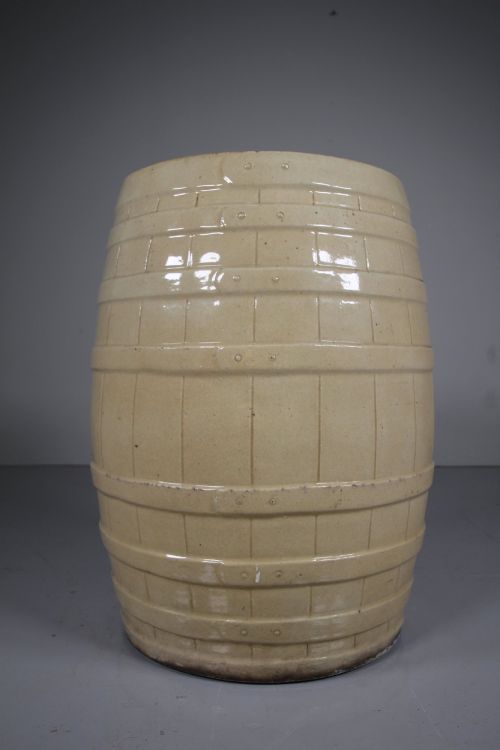
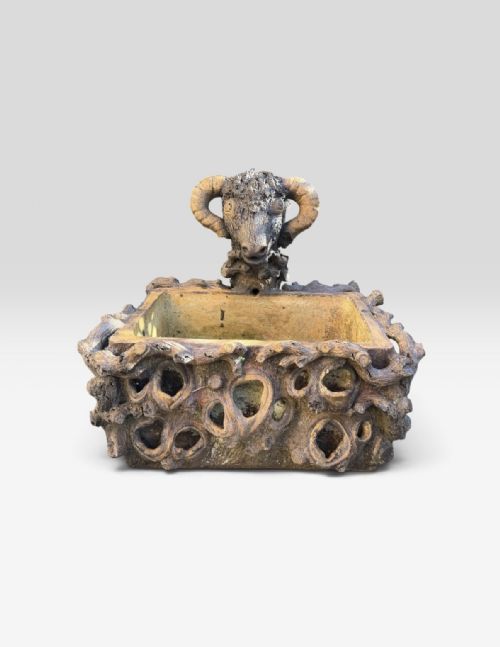
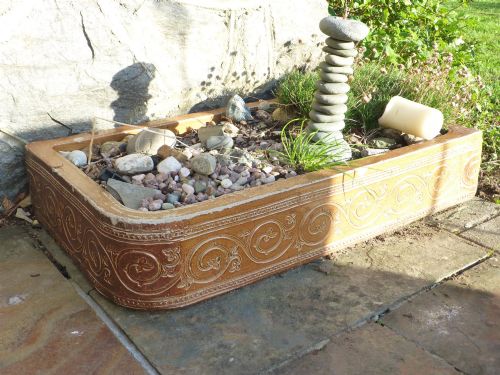
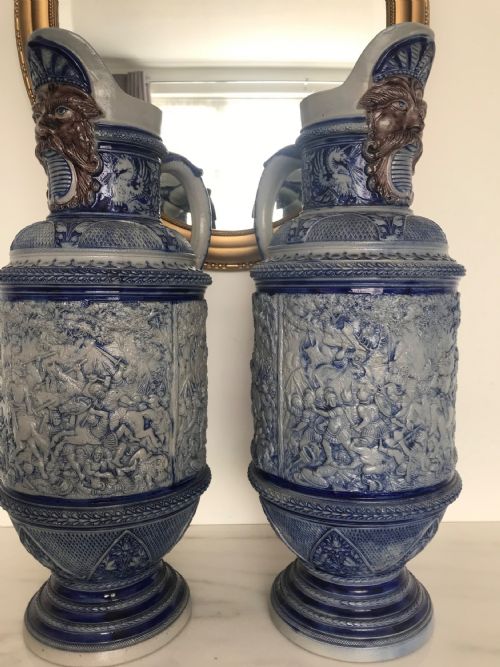
When you examine antique salt glaze stoneware, you encounter vessels and containers made for domestic, trade, and decorative use across centuries. The selection ranges from robust German utility jugs and English tavern tankards to elaborate Victorian garden planters and exhibition vases.
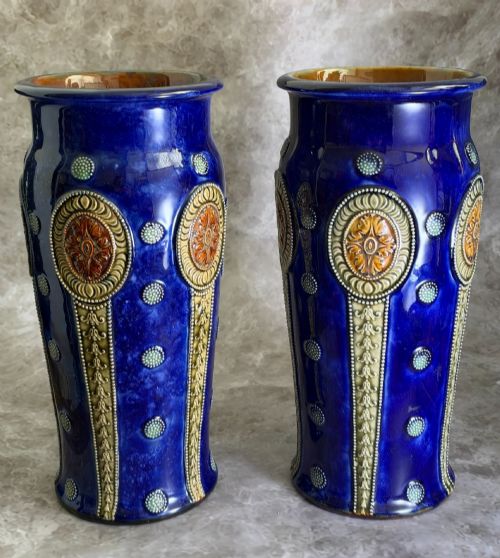
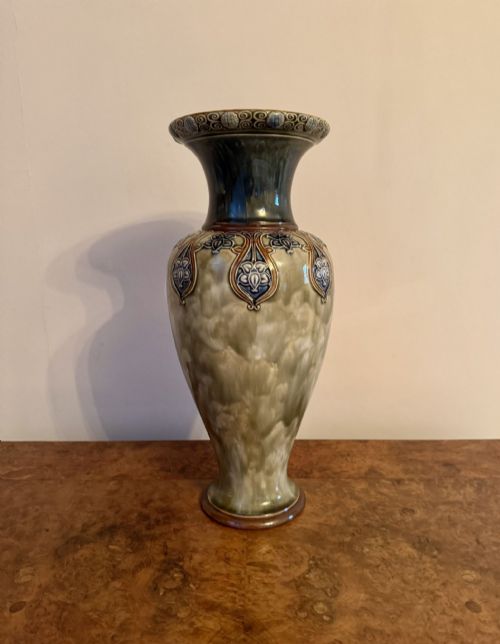
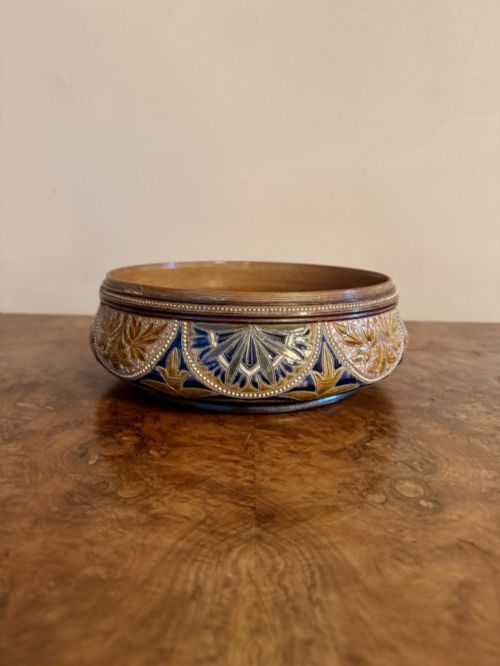
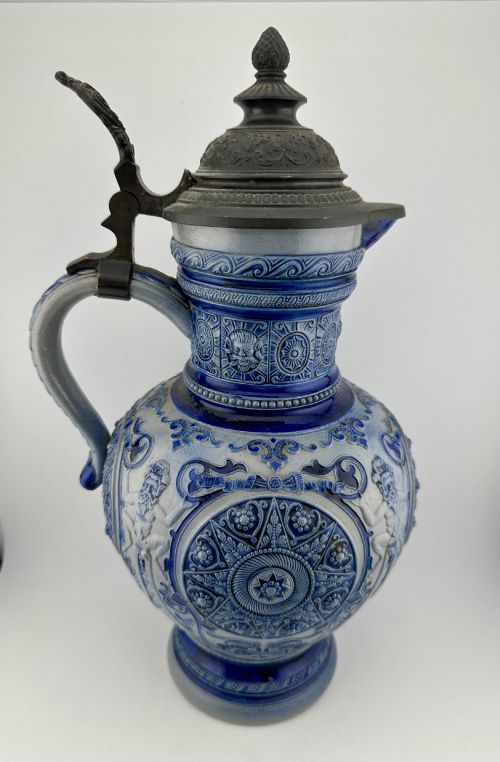
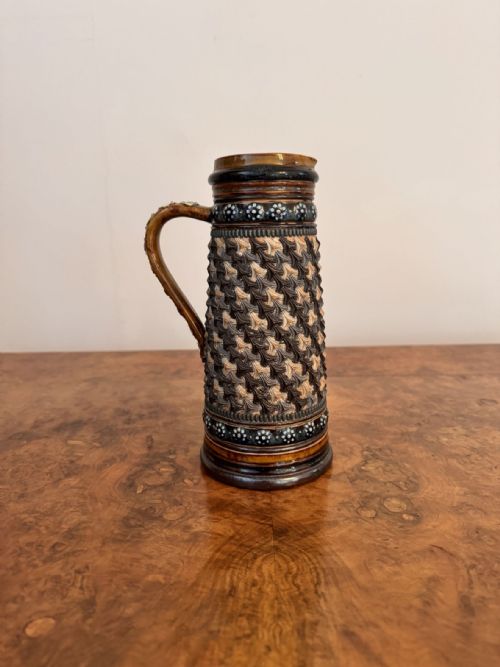
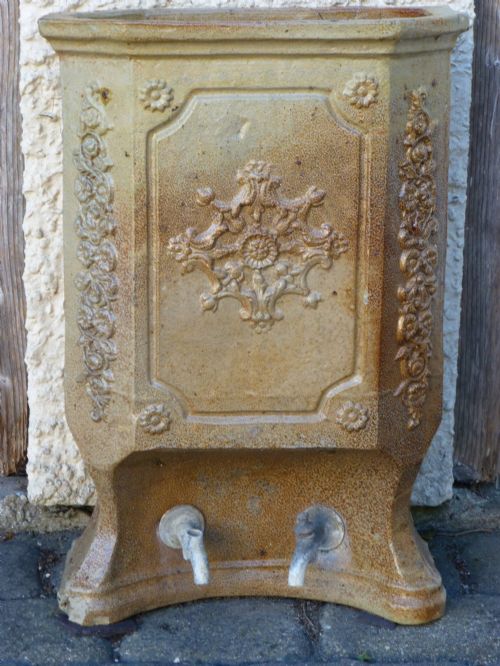
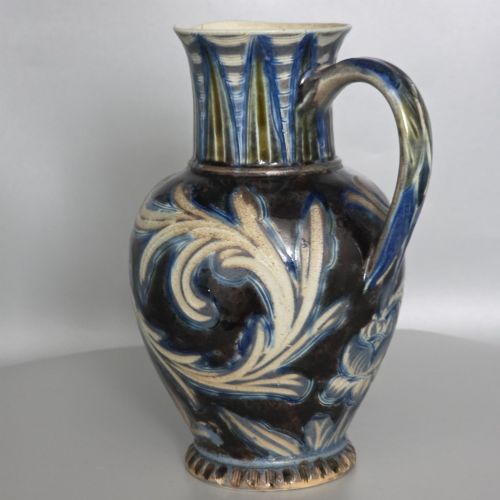
You are most likely to meet Victorian Doulton Lambeth pieces alongside German Westerwald jugs on this page. These domestic vessels and decorative objects span periods from the seventeenth century through the Victorian era, showing varied forms like ewers, pitchers, and water filters.
How they were made
Potters shaped dense clay into vessels and applied cobalt blue pigments or sprigged reliefs before firing. Common materials include salt-glazed stoneware, ceramic, and clay, occasionally finished with sterling silver collars, rims, or hinged lids.
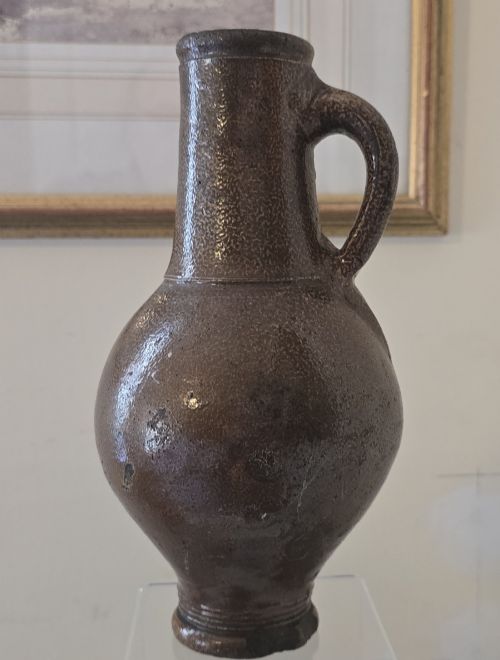
During high-temperature kiln firings, workers shovelled common salt into the flames. The salt vaporised and reacted with the silica in the clay body to create a durable, glossy, orange-peel texture across the surface.
Antique Salt Glaze Stoneware Retail Price Guide 2026
Typical asking prices for salt glaze stoneware among the pieces listed under this phrase on Sellingantiques today, from the lower quarter to the upper quarter. They describe what is for sale here now, not the wider market.
Materials span salt-glazed stoneware, ceramic, and clay, occasionally paired with sterling silver rims and hinged lids.
What varies in quality
Quality depends upon the crispness of the moulded or incised decoration and the uniformity of the characteristic pitted glaze. Pieces featuring hand-painted cobalt detailing by named artists or applied silver mounts display greater refinement than standard utility vessels.
The distinction between ordinary workshop production and exhibition pieces rests in the ambition of the form and the control shown during the salt-glazing process. Early German jugs and later Doulton pieces demonstrate different peaks of technical execution.
Doulton Lambeth·Simon Peter Gerz·Emma Shute·Emily Stormer·Florence Barlow·Price of Bristol·Fulham Pottery
The Antique Salt Glaze Stoneware Glossary
- Salt glaze
- A vitreous coating formed on stoneware by throwing common salt into the kiln during high-temperature firing. This process produces a characteristic textured surface resembling an orange peel.
- Cobalt
- A blue metallic oxide pigment used to paint floral and geometric designs under the glaze. It withstands intense kiln heat without losing its deep colour.
- Sprigged
- A decorative technique where separate moulded clay motifs are applied to the damp body of a vessel before firing. These reliefs stand out in relief against the main body.
- Tyg
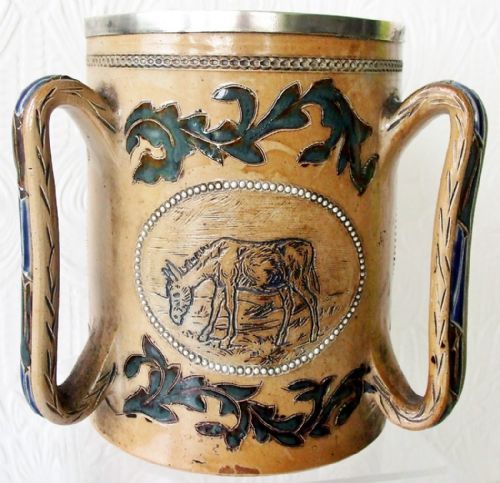
- A large drinking vessel fitted with three or more handles, designed for communal passing around a table. These ceramic cups date back to medieval drinking customs.
- Westerwald
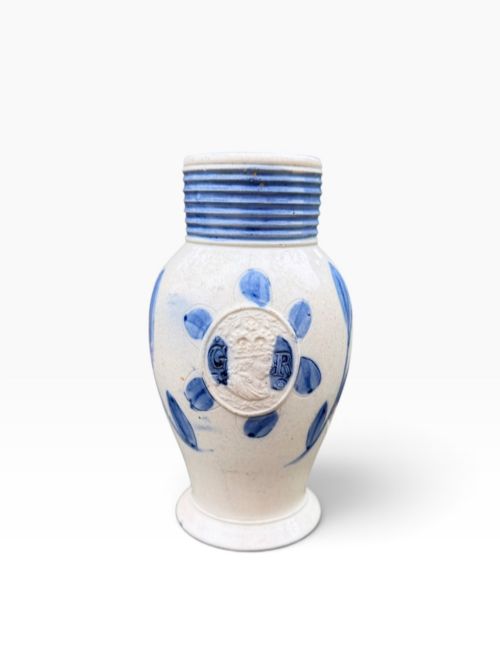
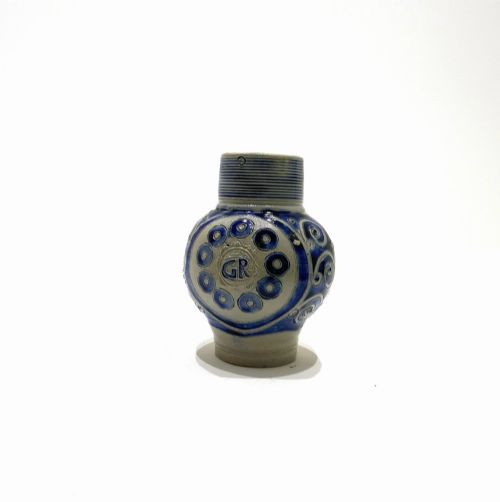
- A major German ceramic region known for producing grey stoneware decorated with cobalt blue and manganese purple. These jugs and tankards often feature royal ciphers or heraldic motifs.
Antique Salt Glaze Stoneware: Frequently Asked Questions
What is salt glaze stoneware?
Salt glaze stoneware is a dense, vitrified ceramic created when salt is introduced into a hot kiln. The chemical reaction forms a durable, slightly pitted surface texture.
This technique renders the vessel completely waterproof without requiring traditional liquid glazes. It protects the clay body against acids and liquids.
How do I identify German Westerwald jugs?
German Westerwald jugs display grey stoneware bodies ornamented with cobalt blue designs. They often feature stamped rosettes, incised floral motifs, or royal ciphers.
These pieces frequently originate from the seventeenth and eighteenth centuries. Their distinct salt-glazed surfaces show rich blue coloration against neutral grey clay.
What were three handled tygs used for?
Three handled tygs served as communal drinking vessels in taverns and homes. Multiple handles allowed guests to pass the cup securely around a table.
Their robust stoneware construction ensured they survived frequent use and heavy handling. Today they stand as notable examples of early drinking culture.
How should I clean antique stoneware?
Clean antique stoneware gently using warm water and a soft cloth to remove dust. Avoid harsh chemical detergents or abrasive brushes that might damage the historic surface.
Stoneware is durable, but aged silver mounts or applied handles require careful handling. Patinas accumulated over centuries add character and should be preserved.