





Antique Salt Glaze Pottery
Antique salt glaze pottery brings rugged texture and durable stoneware forms into domestic spaces through centuries of utilitarian craft.
Antique Salt Glaze Pottery
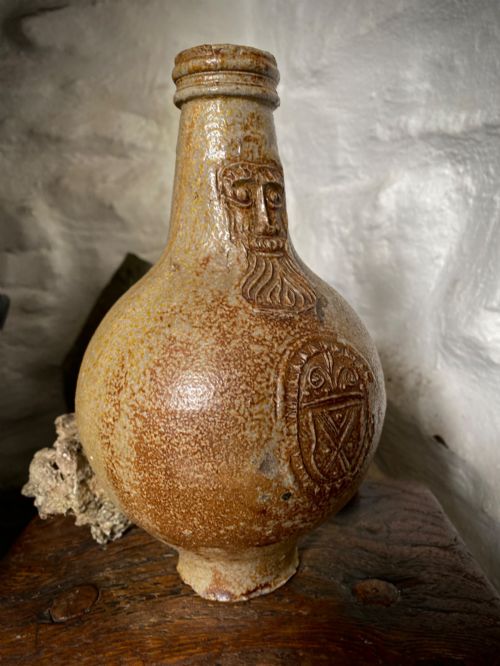
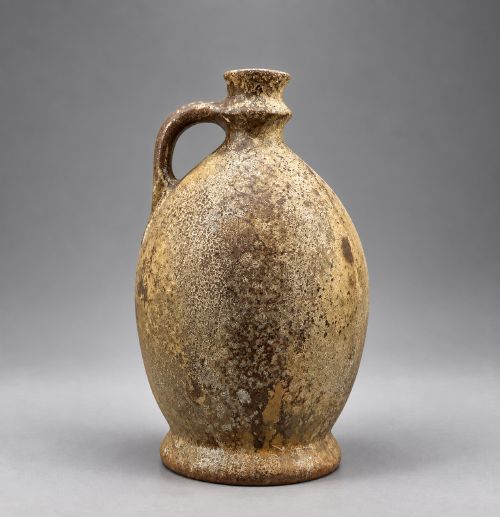
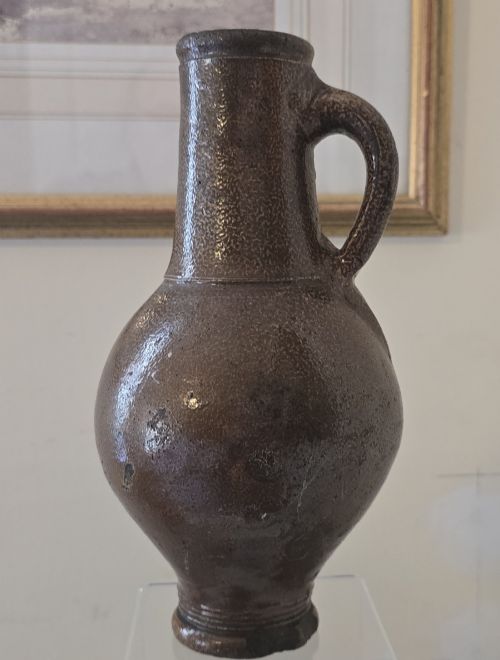
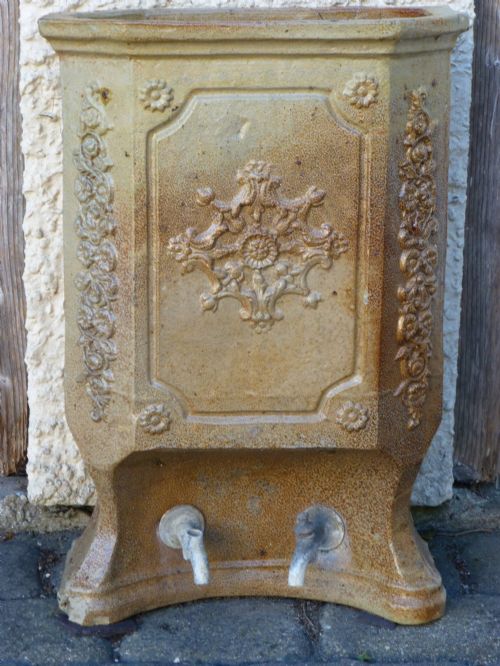
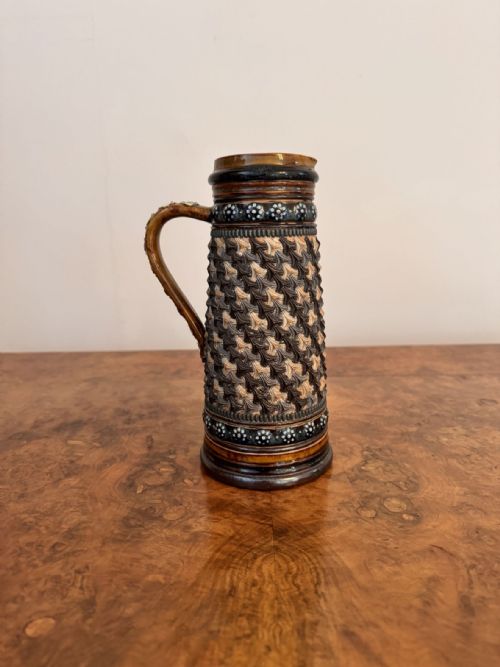
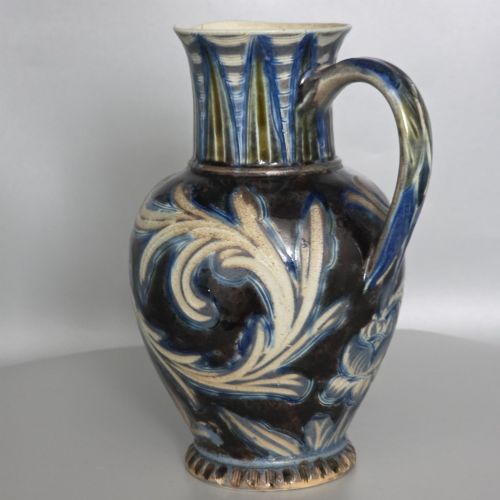
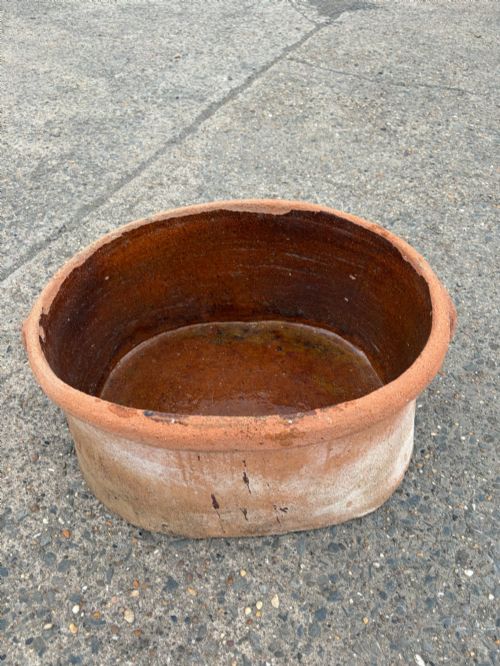
When you search for antique salt glaze pottery, you encounter heavy stoneware vessels shaped for practical use and decorative display across the eighteenth and nineteenth centuries. Jugs, tankards, water filters, and ewers dominate the selections, alongside garden ornaments and table vessels.
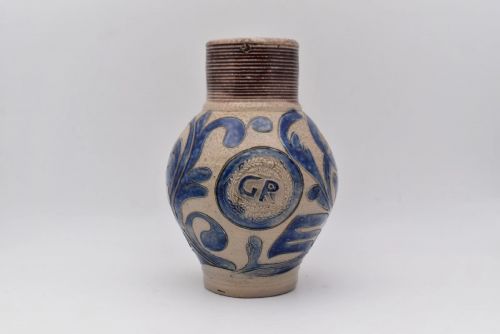
English and German potteries provide the core of these pieces, with Victorian Doulton Lambeth productions appearing frequently alongside earlier Westerwald imports. Collectors find items ranging from utilitarian barrels and preserving jars to ornate art pottery vases and silver-mounted beakers.
Period manufacturing spans Georgian, Victorian, and Arts and Crafts eras, reflecting changing domestic requirements. The forms transition from heavy German drinking vessels to refined British exhibition pieces and garden sculptures.
Materials and Technique
Potters shape dense clay and stoneware bodies before introducing common salt into the kiln during high-temperature firing. The vaporised sodium reacts with the silica in the clay body to form a durable, glossy surface with a characteristic orange peel texture.
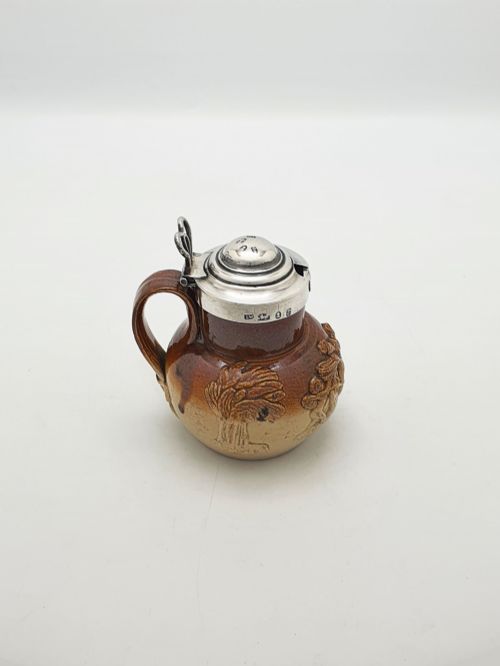
Decoration often relies on incised patterns, applied sprigged reliefs, and cobalt or manganese colourants applied before firing. Selected pieces receive additions such as sterling silver collars, hinged lids, and silver-plated mounts.
Antique Salt Glaze Pottery Retail Price Guide 2026
Typical asking prices for salt glaze pottery among the pieces listed under this phrase on Sellingantiques today, from the lower quarter to the upper quarter. They describe what is for sale here now, not the wider market.
Listings feature salt-glazed stoneware spanning the seventeenth to the twentieth centuries, including Westerwald jugs and Victorian Doulton Lambeth art pottery.
Assessing the Pieces
Quality rests on the crispness of the salt glaze surface and the precision of applied sprigged decoration. Pieces featuring hand-incised foliage or portraits by named artists display superior artistic ambition.
The integration of precious metal mounts and the preservation of original lids or stoppers influence the desirability of utilitarian forms. Sound structural condition without extensive repair distinguishes standard vessels from exhibition-grade examples.
Doulton Lambeth·Emma Shute·Emily Stormer·Florence Barlow·Fulham Pottery·Moorcroft
The Antique Salt Glaze Pottery Glossary
- Salt glaze
- A glassy, pitted texture formed when salt is thrown into the kiln during firing. The chemical reaction creates a durable waterproof coating resembling orange peel.
- Stoneware
- A dense, hard pottery fired at high temperatures until vitrified. It holds liquids securely without requiring an internal lead glaze.
- Sprigged
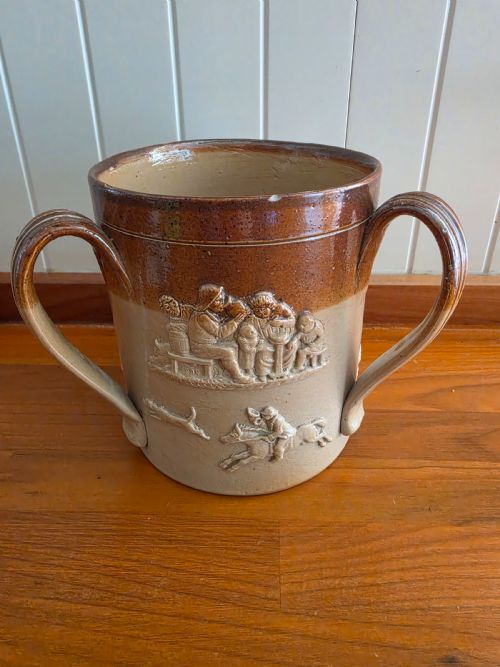
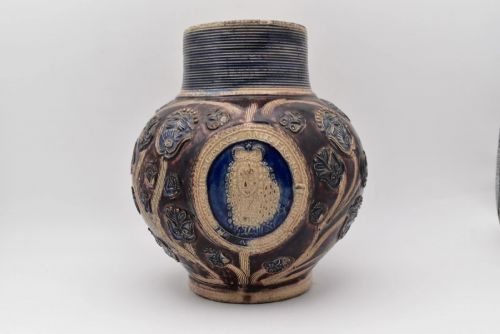
- A technique where moulded clay reliefs are applied to the surface of an unfired vessel using slip. This adds decorative detail such as crests, figures, or floral motifs.
- Tyg
- A large drinking cup featuring multiple handles designed for communal passing around a table. They appear frequently in seventeenth and eighteenth-century forms.
- Westerwald
- A German ceramic region known for grey stoneware decorated with cobalt blue incisions. These pieces often feature royal ciphers or floral stamps.
Antique Salt Glaze Pottery: Frequently Asked Questions
What is salt glaze pottery?
Salt glaze pottery is stoneware created by throwing common salt into the kiln at the peak of firing. The sodium vaporises and bonds with the clay to form a durable, vitreous coating.
This chemical reaction produces a distinctive pebbled texture similar to the skin of an orange. The resulting surface resists acids and moisture, making the vessels ideal for storing liquids and provisions.
How do I clean antique stoneware?
Cleaning antique stoneware requires only warm water and a soft cloth to remove accumulated dust and surface grime. Avoid harsh chemical detergents or abrasive scrubbers that might damage historical surfaces.
Metal mounts require separate attention depending on whether they are sterling silver or plated brass. Keeping moisture away from porous unglazed bases helps preserve the integrity of the clay.
Were these vessels used daily?
Utilitarian vessels such as water filters, preservation jars, and beer pitchers formed the backbone of household and tavern storage. Their impermeability made them standard equipment for keeping liquids cool and fresh before refrigeration.
Decorative items like jardinières, vases, and puzzle jugs fulfilled social and ornamental roles in Victorian parlours. The presence of silver collars on certain jugs indicates presentation or table use among affluent households.