



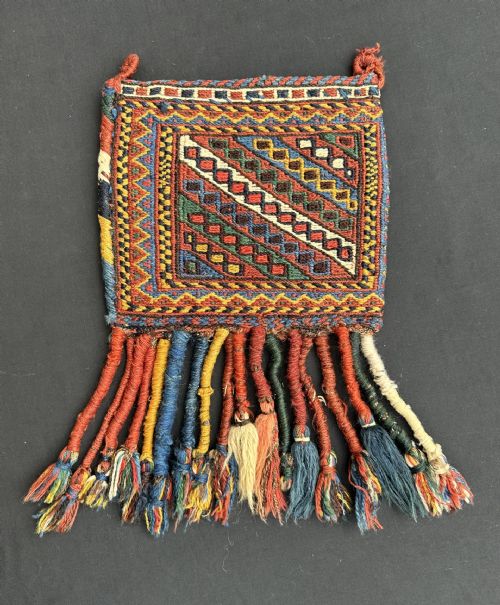
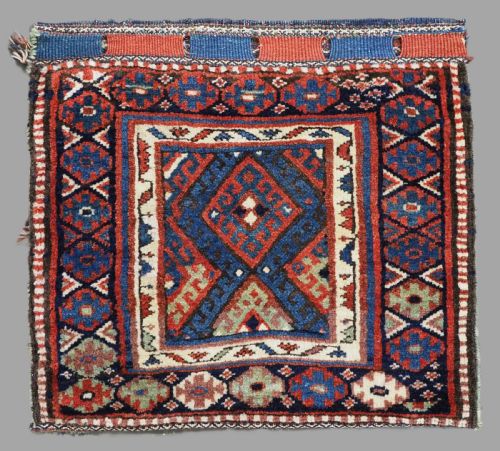


Antique Saddlebag
An antique saddlebag brings the tactile weave and rich natural dyes of nomadic tribal life directly into a modern interior.
Antique Saddlebag
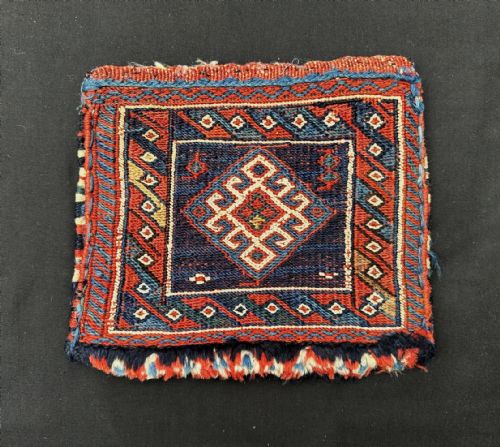
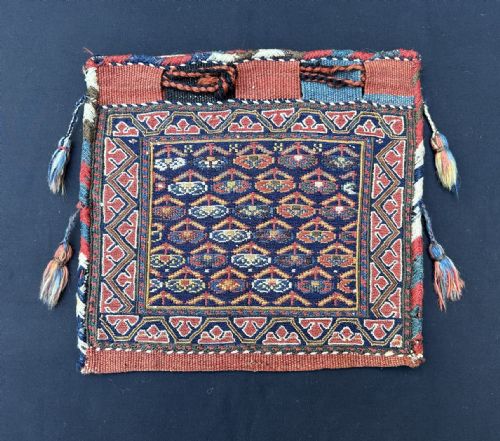
An antique saddlebag represents the utilitarian weaving of tribal and nomadic groups, primarily created across Persia, Anatolia, and the Caucasus during the nineteenth and early twentieth centuries. These pieces encompass complete double saddlebags, known as khorjin, alongside single bag faces and vanity bags utilised for domestic storage and transport on animals.
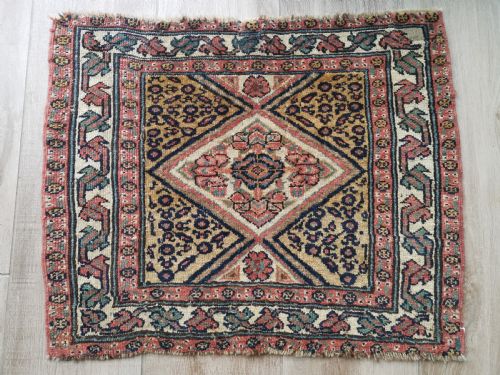
The objects frequently display geometric motifs, medallion formats, and boteh patterns tied directly to specific regional confederations such as the Qashqai, Shahsavan, Afshar, and Jaf Kurd. Many survive as isolated fragments or single panels once separated from their original paired format.
Materials and construction methods
Weavers constructed these textiles primarily from hand-spun wool for the pile and foundation, often supplemented with cotton and occasionally leather or metal elements for reinforcement and closure. Natural dyes provided the deep palette, yielding lasting colour variation across the fleece.
Techniques varied between pile knotting and flatweaving methods such as soumac and plain weave. Complete examples incorporated sturdy backs to withstand the rigours of nomadic transit.
Antique Saddlebag Retail Price Guide 2026
Typical asking prices for saddlebag among the pieces listed under this phrase on Sellingantiques today, from the lower quarter to the upper quarter. They describe what is for sale here now, not the wider market.
Nomads wove these durable pouches to ride securely across pack animals, turning everyday travel gear into lasting art.
Distinguishing quality in tribal weaving
Quality rests upon the handling of the wool, where a lustrous and luminous fleece indicates superior natural materials and careful preparation. The precision of the weave and the complexity of the tribal design further separate standard utility pieces from exceptional village work.
The integrity of the remaining structure, whether a full bag with its plain weave back intact or a well-preserved bag face, heavily influences the character of the surviving textile.
The Antique Saddlebag Glossary
- Khorjin
- The traditional Persian term for a double saddlebag designed to be slung over a pack animal for transport.
- Bag face
- The decorative front panel of a storage bag, which often survived independently after the plain weave back deteriorated.
- Soumac
- A flatweave technique utilising wrapping threads over warp foundations to create a textured, durable surface.
- Boteh
- A stylised floral motif resembling a stylised almond or teardrop, frequently repeated across tribal designs.
- Plain weave
- A simple, unknotted weave structure forming the flat backing or sides of utility bags.
Antique Saddlebag: Frequently Asked Questions
What is an antique saddlebag?
An antique saddlebag is a woven textile container produced by nomadic and tribal groups for practical transport and storage during the nineteenth and early twentieth centuries.
These pieces were woven from wool using natural dyes and typically feature distinctive regional geometric patterns associated with specific Persian or Anatolian tribes.
How were saddlebags used originally?
Nomadic families used these double pouches slung across horses, donkeys, or camels to carry personal possessions, provisions, and household goods during seasonal migrations.
Smaller vanity bags and single faces served similar domestic storage functions within tribal tents and settlements.
How do I display an antique saddlebag?
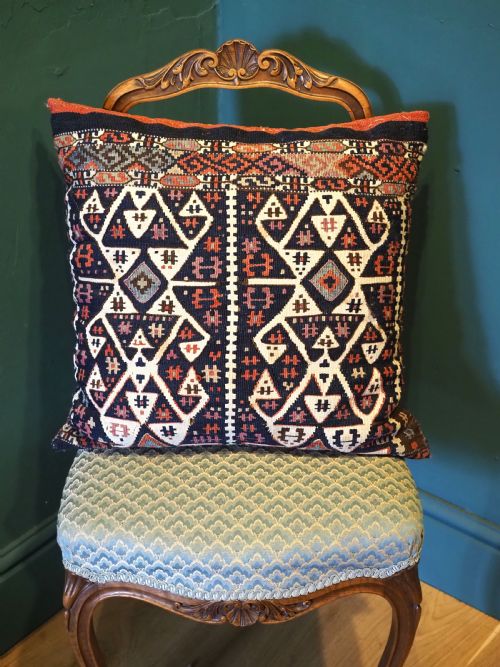
Many collectors mount complete bags or single bag faces on walls as textile art to showcase their intricate patterns and rich textures.
Smaller pieces also function effectively as decorative cushions or flat surfaces when handled with care to protect the historic wool pile.
How do I identify different tribal styles?
Different tribal groups employed distinct colour palettes, weave structures, and specific motifs such as medallions or repeating boteh patterns.
Attributions rely on recognising these traditional design markers characteristic of regions like Fars, Azerbaijan, or Kerman.