



Antique Saddle Rug
When you search for an antique saddle rug, you uncover dense tribal textiles woven for practical equestrian use across Persia, Central Asia, and the Caucasus.
Antique Saddle Rug
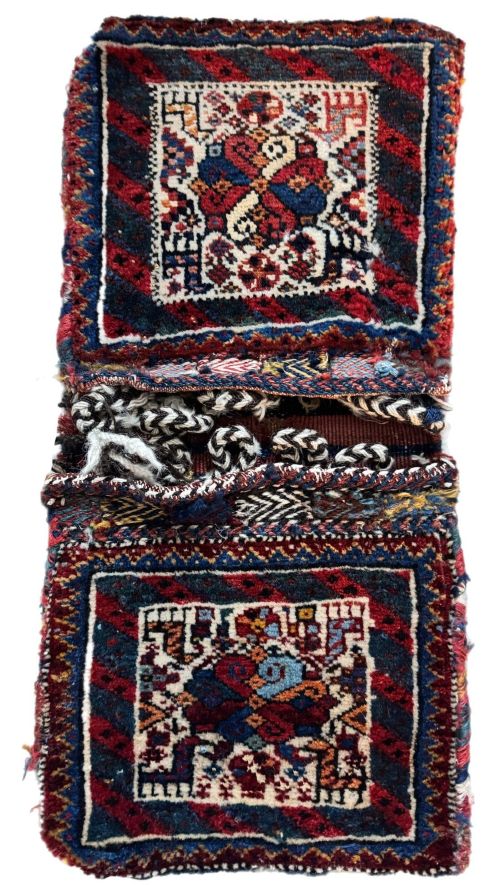
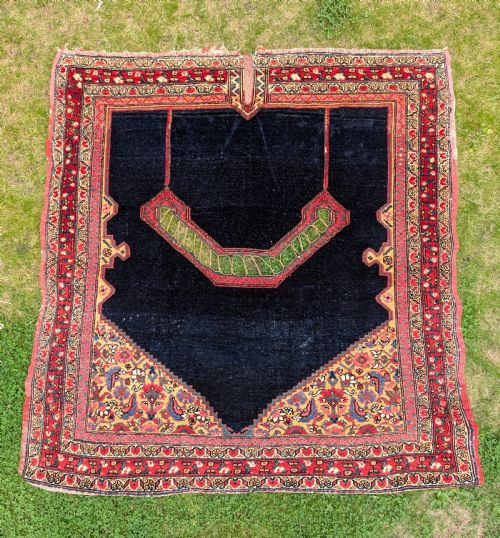
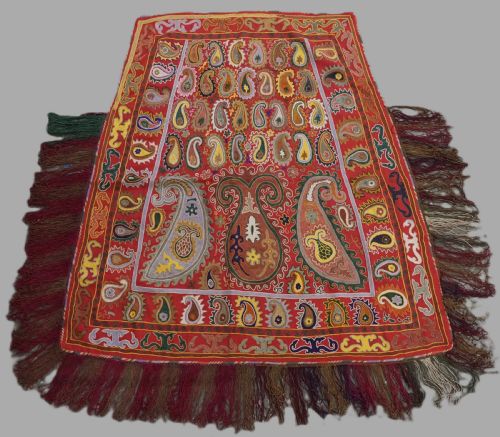
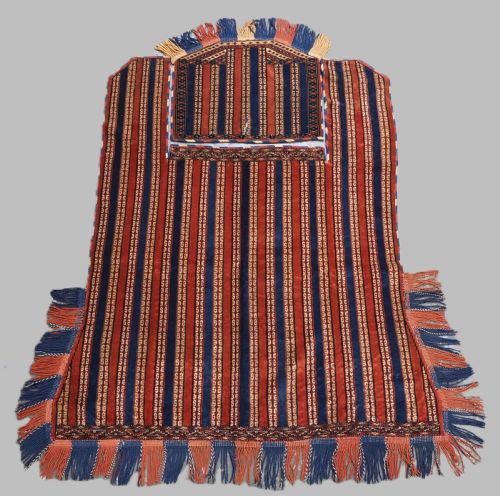
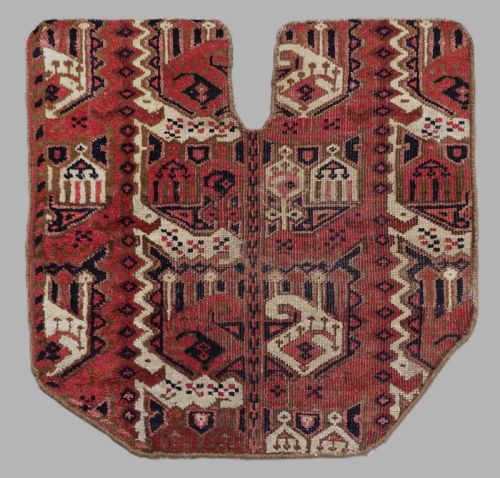
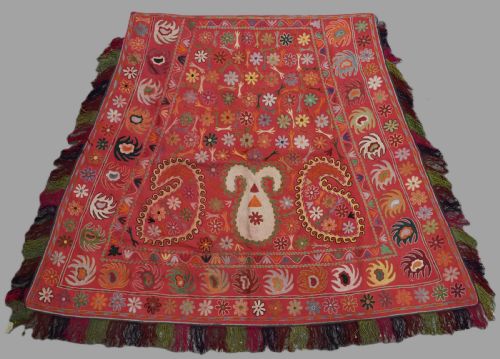
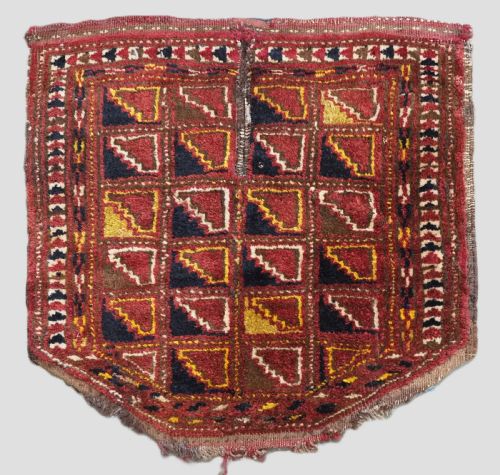
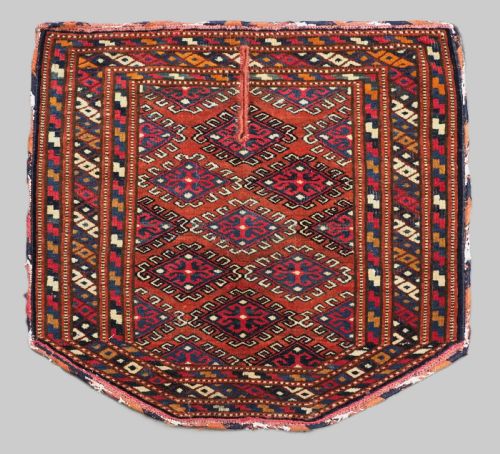
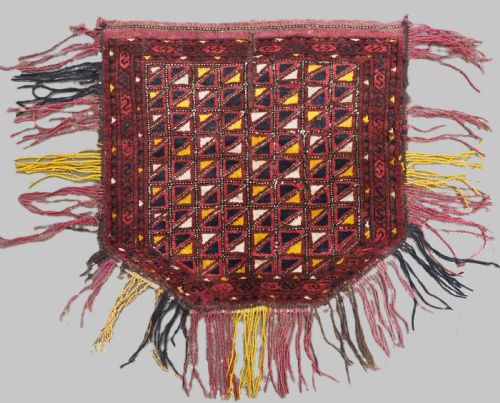
An antique saddle rug encompasses functional horse covers, ceremonial horse blankets, and utilitarian saddle bags produced by nomadic and tribal groups. These items served daily equestrian purposes or marked special gatherings within communities in regions such as Persia, Anatolia, and Uzbekistan.
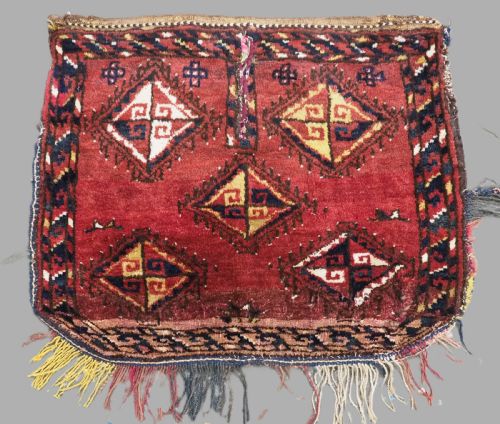
Makers utilised specific regional patterns, ranging from repeating gul motifs on Turkmen pieces to boteh designs on Afshar bag faces. Every textile reflects the practical requirements of nomadic life combined with distinct tribal iconography.
How they were made
Weavers constructed these textiles using hand-spun wool for the pile, paired with cotton or wool foundations for structural durability. Natural dyes provided the colour palette, yielding deep tones that aged across decades of use.
Certain examples incorporate metal threads or specialised flatweave techniques such as sumac alongside standard pile knotting. Leather and original wool tassels occasionally appear on covers intended for ceremonial display.
Antique Saddle Rug Retail Price Guide 2026
Typical asking prices for saddle rug among the pieces listed under this phrase on Sellingantiques today, from the lower quarter to the upper quarter. They describe what is for sale here now, not the wider market.
Listings include pieces from the nineteenth century up to nineteen-twenty, utilising wool, natural dyes, and cotton.
What varies in quality
The standard of an antique saddle rug rests upon the density of the knotting and the handling of the wool. Lustrous, luminous wool combined with tightly packed structures separates superior examples from simpler utilitarian pieces.
Clarity of tribal design and the integrity of surviving borders or original flatweave backs dictate the refinement of the textile. Complete sets and intact tassels add notable visual depth to individual pieces.
The Antique Saddle Rug Glossary
- Khorjin
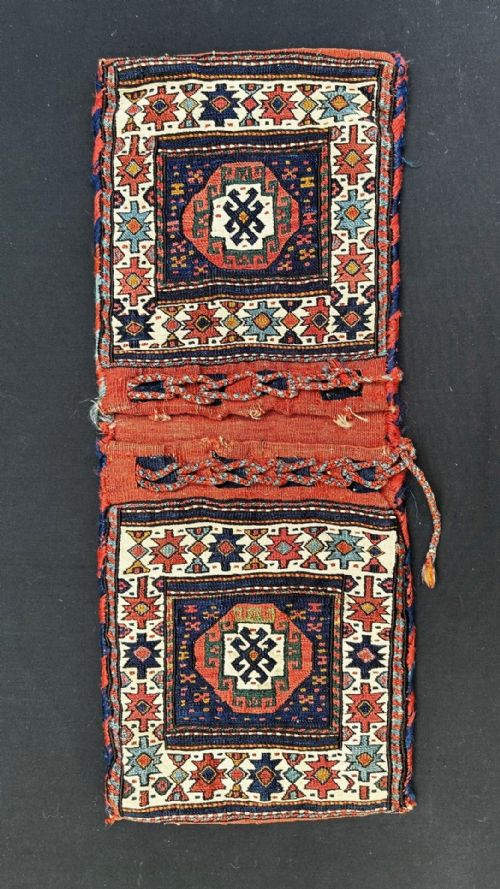
- A traditional double saddle bag used by nomads for carrying personal belongings on horseback. These pieces were joined by a central web and often separated over time.
- Gul
- A repeating medallion motif frequently found in Turkmen tribal rugs and saddle covers. The pattern varies slightly between different tribal sub-groups like the Yomut and Ersari.
- Sumac
- A warp-wrapping flatweave technique that creates a sturdy, durable fabric without a cut pile. It is commonly observed on pieces originating from the Caucasus and Northwest Persia.
- Boteh
- An almond-shaped or paisley motif representing a floral spray or cypress tree. This design appears frequently on Afshar and Persian tribal bag faces.
- Chuval
- A large storage bag produced by Turkmen nomads. Chuval faces often display multiple rows of guls and were utilised within the tribal dwelling.
Antique Saddle Rug: Frequently Asked Questions
What is an antique saddle rug?
An antique saddle rug is a woven textile created by nomadic and tribal groups for equestrian use. These items include horse covers, ceremonial blankets, and functional riding pads.
Weavers across Persia, Central Asia, and the Caucasus produced these pieces during the nineteenth and early twentieth centuries. They combine practical durability with traditional tribal designs.
How were saddle bags used?
Saddle bags served as practical luggage strapped across horses or camels during nomadic migrations. They transported personal possessions, household goods, and provisions.
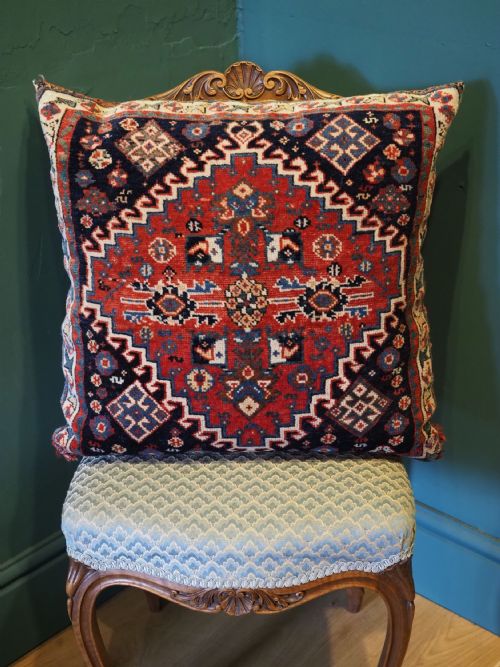
Pairs of bags were linked by a central web, allowing them to balance evenly across the animal. Many surviving examples now function as small floor rugs or decorative wall hangings.
How do I identify tribal origins?
Tribal origins are identified through specific colour palettes, structural materials, and repeating geometric motifs. Different groups such as the Qashqai, Afshar, and Yomut utilised distinct design vocabularies.
Examining the weave type, such as sumac flatweaving or knotted pile, along with edge finishes provides further clues to regional manufacture.
How do I care for my textile?
Care for an antique textile involves gentle treatment and protection from direct sunlight and excessive moisture. Regular light vacuuming without a rotating brush helps remove dust from the wool pile.
Professional textile conservators should handle major cleaning or structural stabilization. Keeping the piece in a stable environment preserves the natural dyes and fibres.