

Antique Ruby and Diamond
An antique ruby and diamond piece combines deep red stones with brilliant gems in gold or platinum settings.
Antique Ruby and Diamond
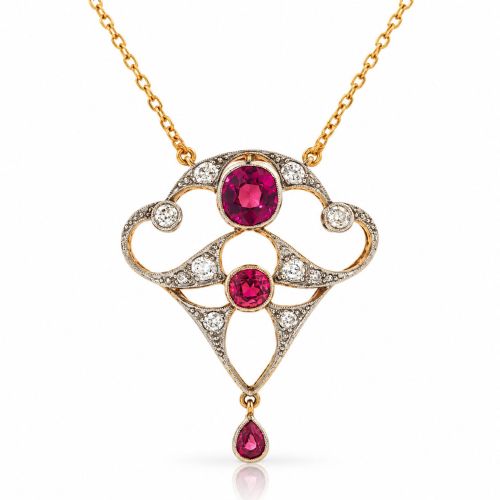
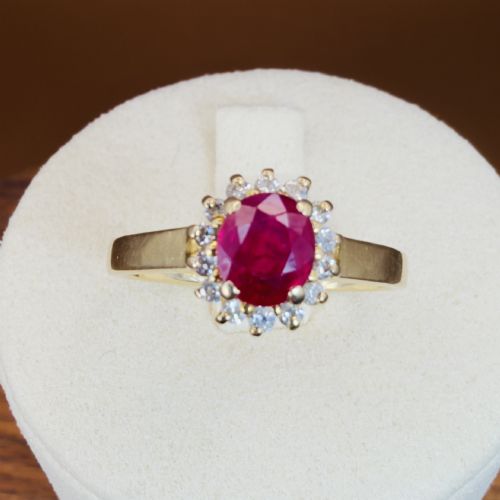
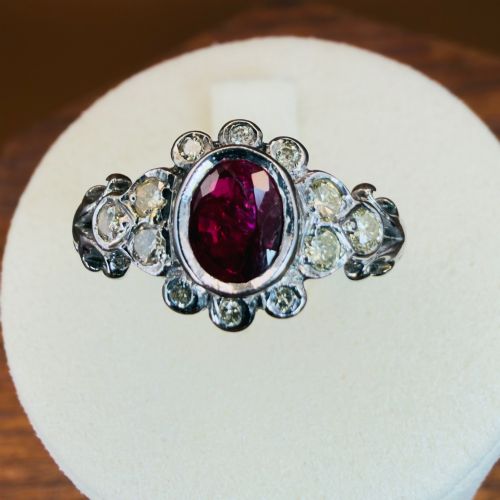
When searching for antique ruby and diamond items, buyers encounter a variety of forms including cluster rings, brooches, pendants, and bangles. These pieces span periods from the Victorian era through Edwardian designs and Art Deco creations up to the mid-twentieth century.
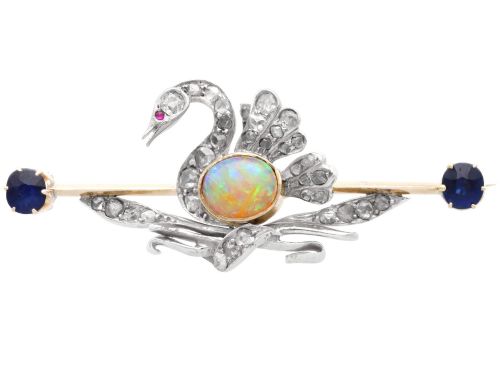
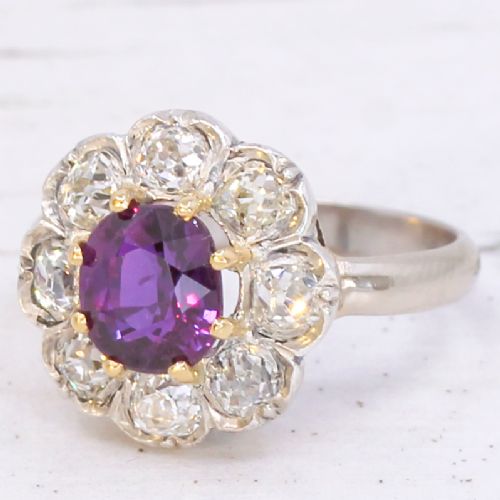
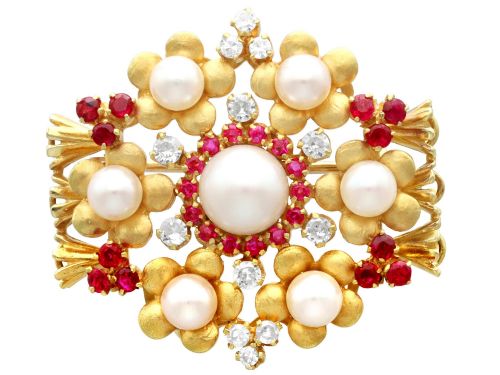
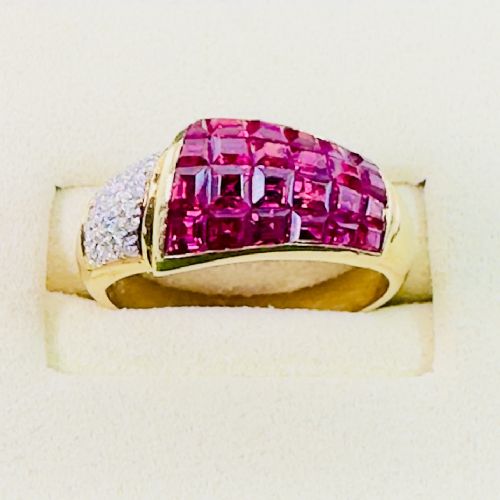
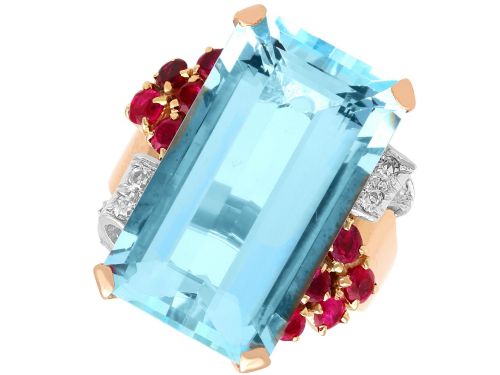
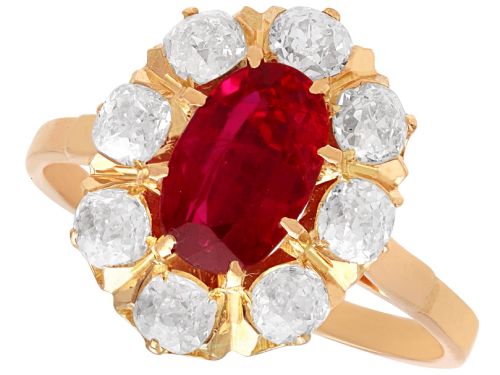
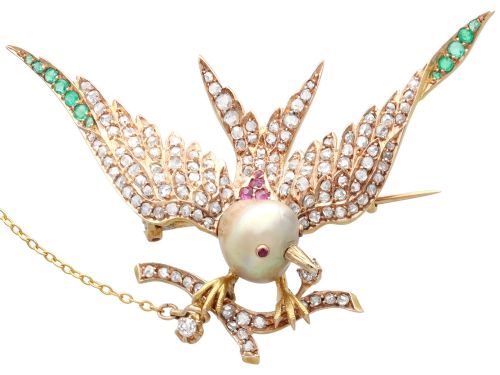
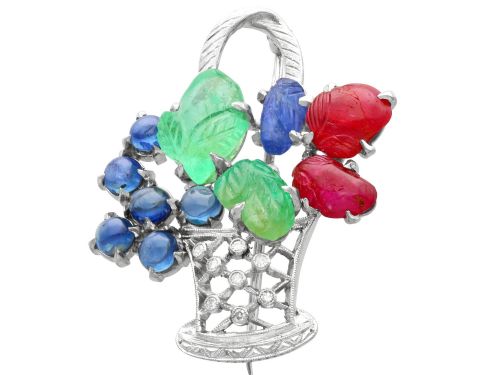
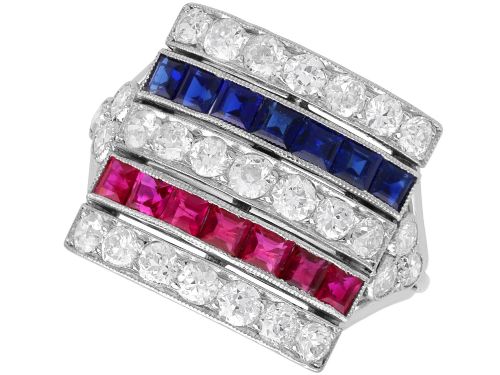
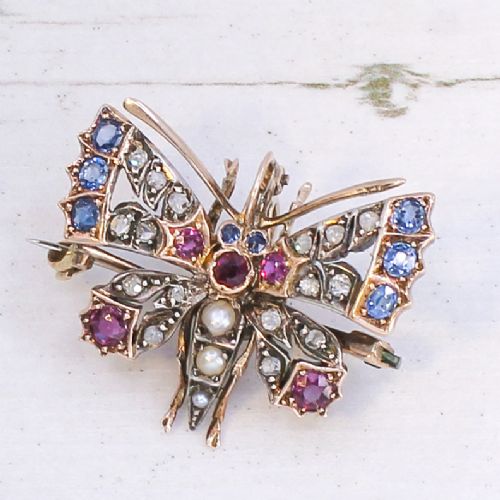
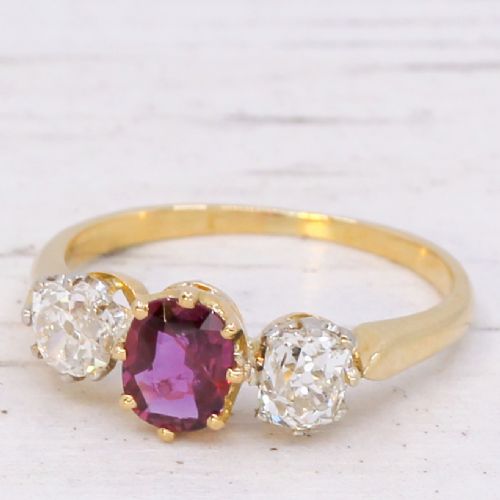
The most common formats on this page are rings featuring central red stones flanked or surrounded by white gems, alongside decorative pins and brooches fashioned into floral, avian, or geometric motifs. Materials range from traditional yellow gold and rose gold to platinum and white gold settings.
Materials and construction techniques
Metals such as eighteen-carat yellow gold, rose gold, and platinum provide the structural foundation for mounting stones securely using claw, bezel, or star settings. Platinum-topped gold appears frequently in pieces from the early twentieth century, combining strength with a bright surface.
Gems are cut using period techniques, resulting in old mine cuts and old European cuts for diamonds alongside natural rubies that vary from Burmese origins to unheated varieties. Construction methods involve hand-fabrication, granulation, and engraved detailing characteristic of specific decades.
Antique Ruby and Diamond Retail Price Guide 2026
Typical asking prices for ruby and diamond among the pieces listed under this phrase on Sellingantiques today, from the lower quarter to the upper quarter. They describe what is for sale here now, not the wider market.
Equestrian racing brooches from the mid-century combine spirited enamel horses with ruby blinkers and diamond accents.
Distinguishing quality factors
Quality rests upon the natural saturation and clarity of the red stones paired with the brilliance and cut of the accompanying diamonds. Examples featuring unheated rubies or specific geographic origins command distinct interest among collectors.
The integrity of the metalwork, the preservation of original settings, and the harmony of the overall design differentiate standard examples from masterworks. Hand-finished details and maker attribution elevate certain items above typical production pieces.
Garrard and Co
The Antique Ruby and Diamond Glossary
- Cluster ring
- A ring design featuring a central stone encircled by a border of smaller gems. This layout maximises the visual impact of the materials.
- Old cut diamond
- A diamond cut by hand before modern machinery standardised facets. These stones possess smaller tables and higher crowns.
- Gypsy ring
- A style where stones are flush-set directly into a thick metal band. The surface of the ring remains relatively smooth.
- Navette
- A boat-shaped design with pointed ends. This silhouette stretches along the finger in ring forms.
- Trilogy ring
- A ring set with three stones representing past, present, and future. Rubies and diamonds frequently alternate in these layouts.
Antique Ruby and Diamond: Frequently Asked Questions
How do I wear an antique ring daily?
Selecting a secure setting like a bezel or low-profile cluster helps protect softer gems from everyday knocks and friction. Regular checks by a jeweller ensure claws remain tight.
Pairing older rings with plain bands prevents scratching between adjacent pieces. Removing jewellery during heavy manual tasks preserves the metal and stones.
How are different eras identified?
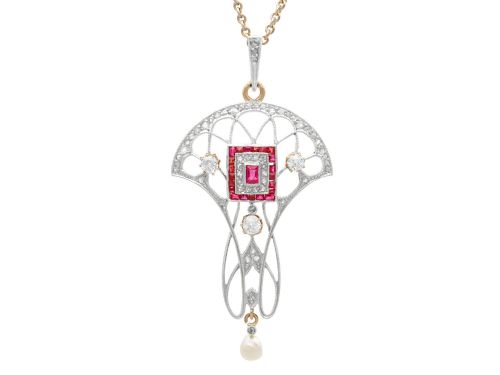
Victorian pieces often utilise heavier yellow gold and ornate floral or star motifs. Edwardian items introduce platinum and lighter, lace-like openwork.
Art Deco jewellery shifts towards geometric lines and symmetrical patterns. Mid-century examples display bolder volumes and distinct retro styling.
What care do antique rings need?
Gentle cleaning with warm water and a soft brush removes accumulated oils without damaging delicate settings. Ultrasonic cleaners should be avoided for treated or fracture-filled stones.
Storing pieces individually in lined boxes prevents metal friction and gemstone scratching. Professional inspections every few years maintain structural integrity.
Were these pieces worn originally?
Jewellery from the nineteenth and twentieth centuries served as personal adornment for social occasions, daily wear, and ceremonial events. Brooches secured garments while rings marked engagements and milestones.
Many designs adapted to changing fashions across decades. Conversions from buttons or pins into modern rings also occurred historically.