


Antique Round Timepiece
An antique round timepiece is a dependable instrument for tracking the hours, combining practical utility with traditional cabinet-making and dial design.
Antique Round Timepiece
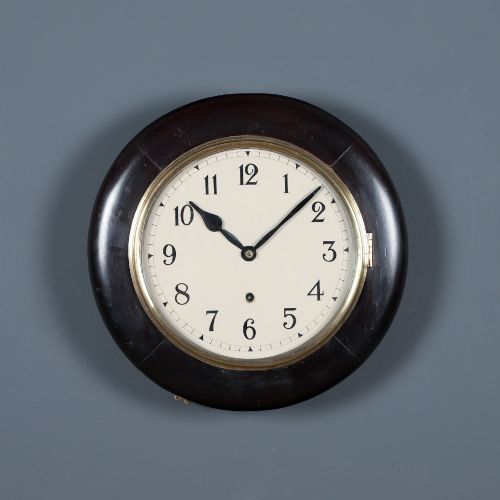
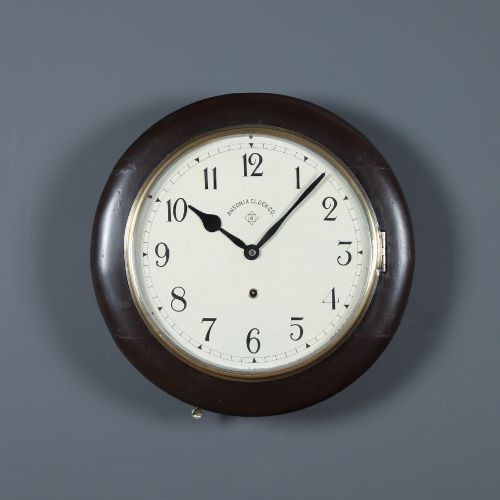
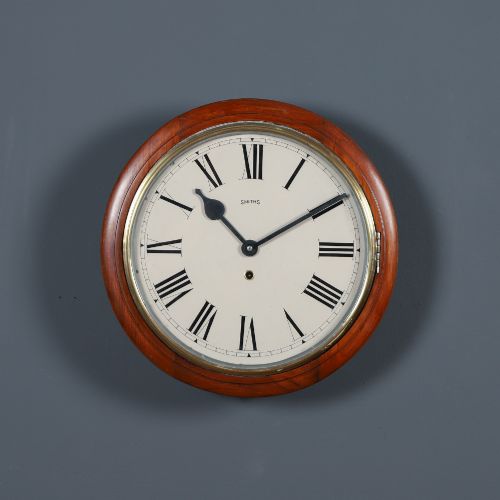
An antique round timepiece is primarily represented on this page by wall-mounted dial clocks and desk-mounted timepieces spanning the Victorian era through the mid-twentieth century. These horological objects include railway station and school round dial designs alongside domestic oak and mahogany wall clocks.
Buyers will frequently encounter timber-cased wall clocks featuring classic circular faces, originating from periods such as the 1890s, 1920s, and 1930s. Alongside these, smaller desk varieties and mantel pieces emerge in styles ranging from Victorian and Edwardian to Art Deco and Mid-Century Modern.
The selection encompasses diverse regional and commercial origins, taking in English traditional fusee movements as well as Swiss and international makers. Each version provides a distinct character shaped by its specific decade of production and intended utilitarian purpose.
What varies in quality
The standard of a timepiece is distinguished by the refinement of its cabinet woodwork and the sophistication of its internal movement. Finely carved mahogany or walnut cases demonstrate superior joinery compared to utilitarian alternatives.
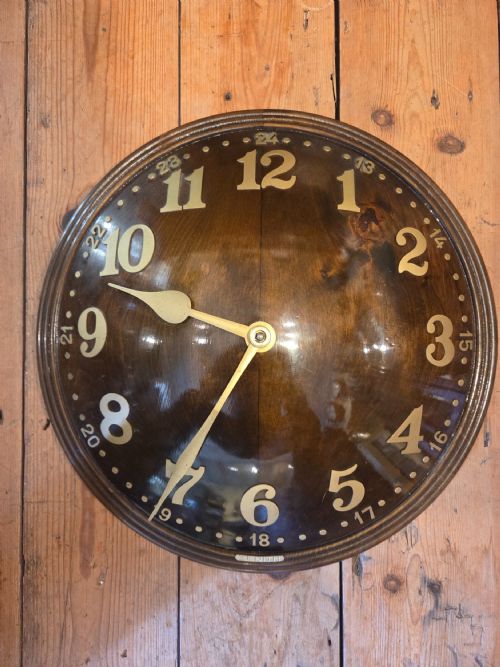
Dial legibility and finishing also separate standard items from finer examples, with hand-painted numerals, convex glass, and specialised 24-hour displays marking higher production standards.
At least one timepiece abandons conventional numbering for a rarer 24-hour dial layout.
Zenith·Ansonia·Smiths·Imhof·John Walker
The Antique Round Timepiece Glossary
- Fusee
- A conical pulley used in older clock movements to maintain even power as the mainspring unwinds. This mechanism ensures more consistent timekeeping throughout the running cycle.
- Timepiece
- A clock that indicates the time without possessing a striking mechanism. Such instruments focus solely on the primary function of hour and minute indication.
- Dial
- The face of the clock upon which the hours and minutes are marked. These surfaces often display maker names and specific regional railway or school designations.
- Bezel
- The metal or wooden ring that holds the glass protecting the clock face. It often opens on a hinge to allow hand-setting and access to the dial.
Antique Round Timepiece: Frequently Asked Questions
How do I wind a fusee wall clock?
Winding requires inserting the key into the dial aperture and turning it gently until resistance is felt. Care should be taken not to overwind the mechanism.
Ensuring the pendulum hangs evenly before starting the movement helps maintain steady timekeeping after the process is complete.
Where were railway station clocks used?
These large round dial clocks were positioned in offices, platforms, and waiting rooms to keep railway staff and passengers synchronized. Their clear numerals ensured readability from a distance.
Today, they translate well into domestic kitchen or hallway environments where bold proportions create a strong visual focal point.
What is a convex dial?
A convex dial curves outward toward the viewer rather than remaining entirely flat. This curvature helps reduce glare from ambient lighting.
Matched with brass bezels, this design element is frequently encountered on nineteenth-century mahogany wall timepieces.
How do I date an antique timepiece?
Dating relies on examining the timber species, dial inscriptions, case construction, and the style of the numerals. Victorian and Edwardian examples often feature specific cabinet proportions.
Maker signatures and retailer stamps on the dial or movement backplate provide further confirmation of the period of origin.