
Antique Round Marble Table
An antique round marble table brings a smooth, cool stone surface and classical proportions to a room, most often found as a French gueridon or centre table.
Antique Round Marble Table
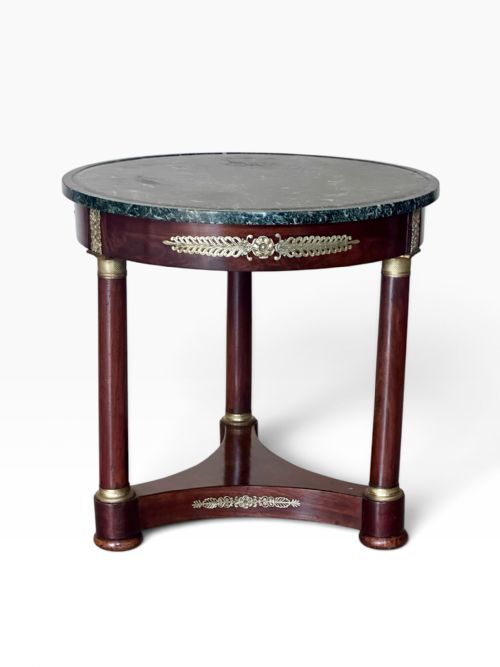
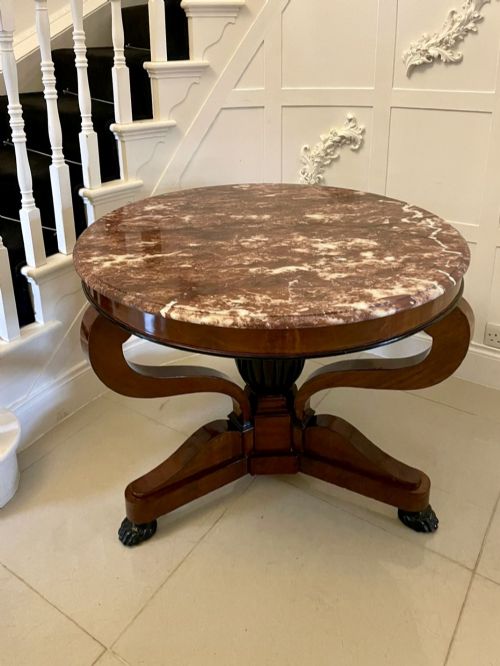
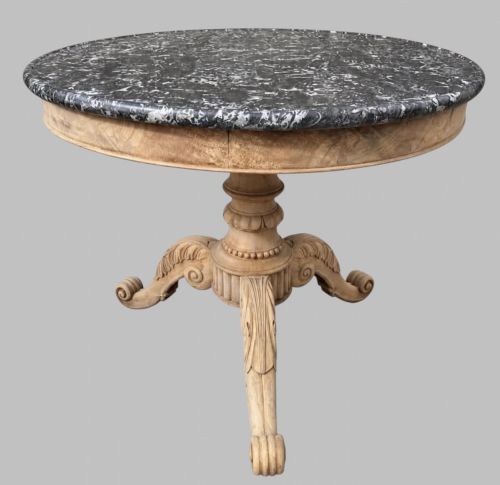
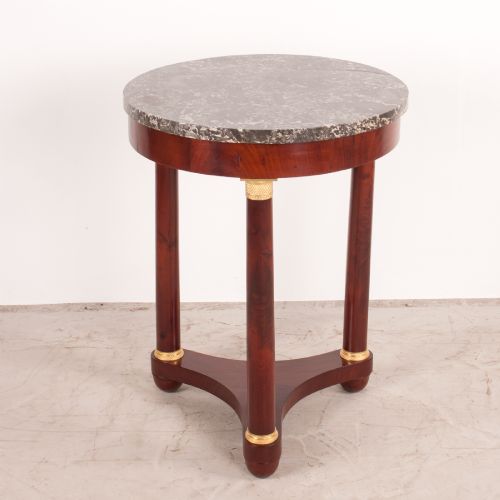
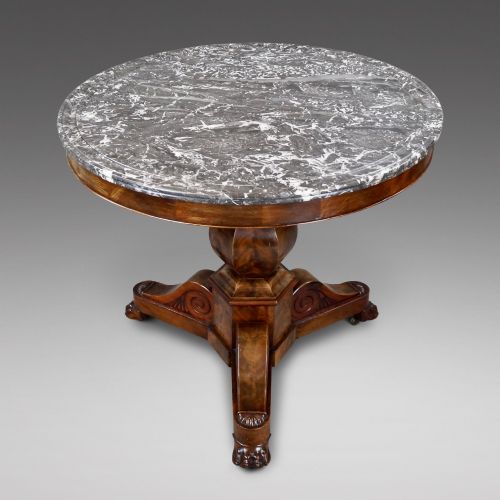
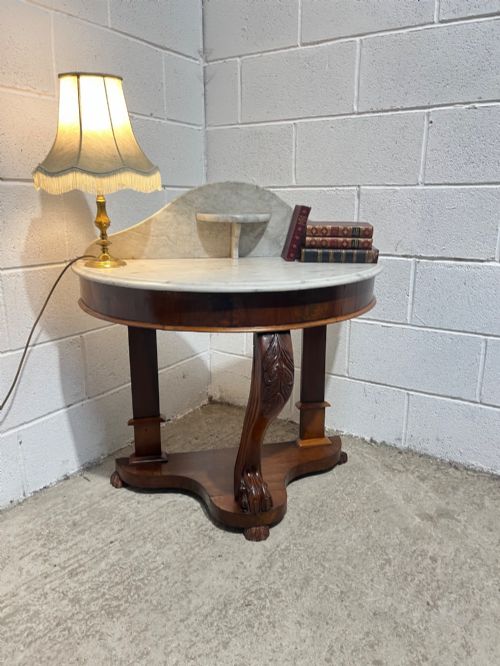
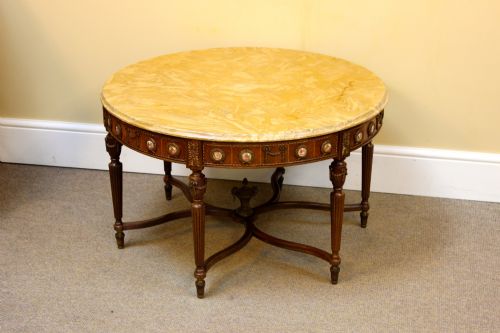
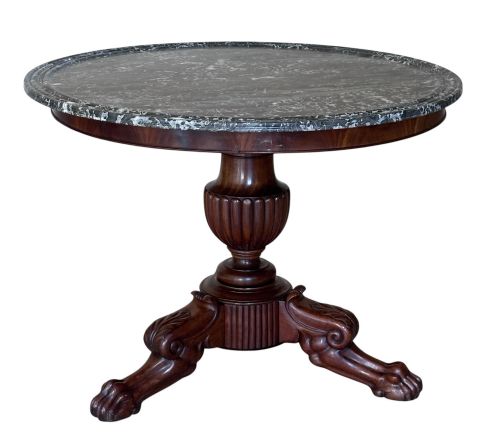
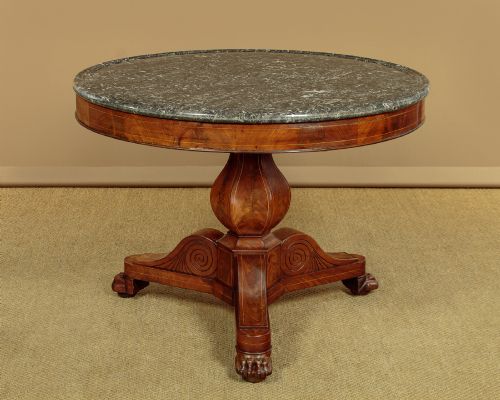
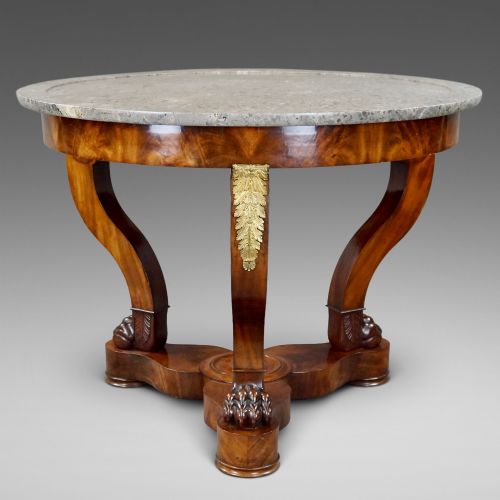
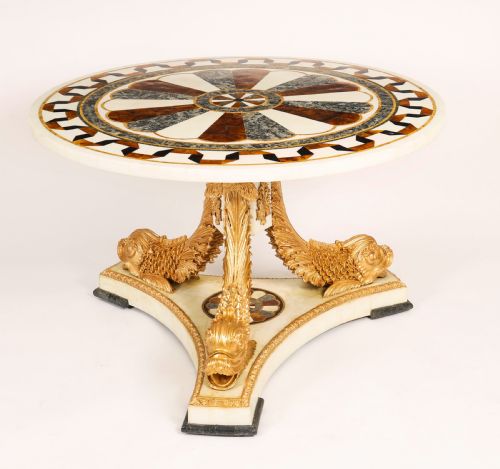
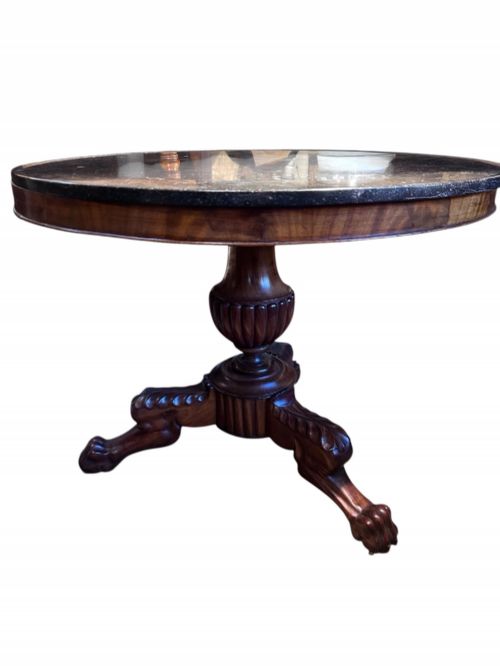
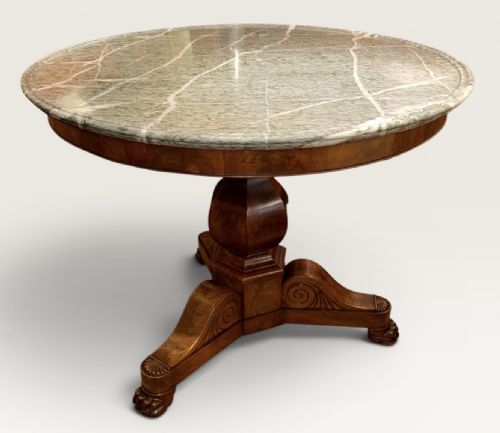
When you search for an antique round marble table, you encounter a variety of forms designed for dining, display, and daily use. Centre tables and gueridons dominate the selection, featuring circular stone slabs resting on timber pedestals or metal bases.
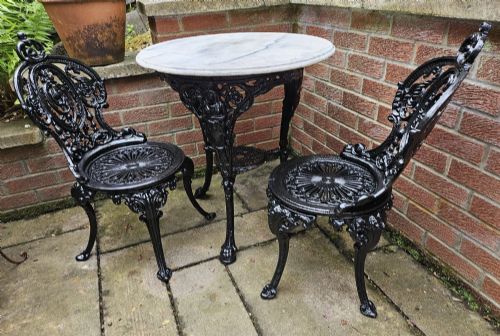
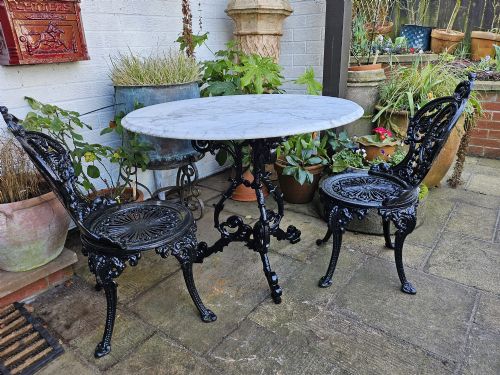
The material vocabulary spans several centuries and origins, with nineteenth-century French examples appearing most frequently. These pieces range from polished mahogany and walnut frames to practical cast-iron bistro settings with stone tops.
Forms vary according to their intended function within historical interiors, moving from grand Empire reception pieces to compact occasional tables and cafe furniture. The circular format naturally encourages gathering and fits comfortably within diverse room layouts.
How they were made
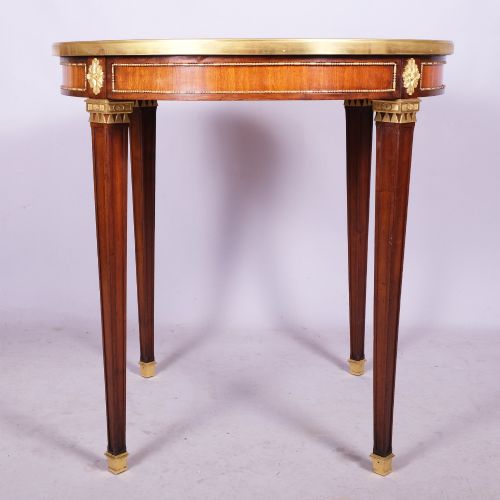
Cabinetmakers constructed the wooden frames using native and exotic timbers such as mahogany, walnut, and flame mahogany, often incorporating brass mounts, ormolu, and giltwood for decorative emphasis. Marble slabs were cut, ground, and polished to fit precisely within the wooden rims or metal galleries of the tables.
Iron and cast iron appear in cafe and bistro formats, paired with heavy stone surfaces to ensure stability in commercial and domestic settings. Joinery techniques relied on traditional pedestal construction and central columns supported by tripod or quadrapod feet.
Materials in this category include marble, mahogany, brass, walnut, cast iron, giltwood, wood, and ormolu.
What varies in quality
The distinction between standard domestic pieces and top-tier examples lies in the selection of timbers, such as figured walnut and flame mahogany, alongside the density and coloration of the marble. Finer tables exhibit crisp carving, disciplined proportions, and high-grade metal mounts.
Construction methods also separate workshop tiers, visible in the stability of the central pedestal and the precision with which the stone top integrates into the wooden frame. Original surfaces and untouched patination elevate the standing of a piece considerably.
The Antique Round Marble Table Glossary
- Gueridon
- A small circular table on a central pillar, originating in seventeenth-century France and remaining a staple form through the nineteenth century.
- Bouillotte table
- A small French neoclassical occasional table with a raised brass gallery around the marble top, originally intended for card games.
- Ormolu
- Gilded bronze used for decorative mounts and accents on furniture frames, particularly prominent in French Empire and Louis XVI styles.
- Console table
- A table designed to stand against a wall, frequently topped with marble and supported by decorative brackets or legs.
Antique Round Marble Table: Frequently Asked Questions
What is a gueridon table?
A gueridon is a circular table supported by a single central pillar and a stable base, traditionally used in French interiors for lamps, display, or general occasional use.
These pieces emerged in various sizes throughout the nineteenth century, utilising timber frames and smooth stone tops to anchor a room's decorative scheme.
How do I clean marble tops?
Marble requires gentle maintenance using soft cloths and warm water, avoiding acidic substances or harsh chemical cleaners that can etch the polished surface.
Regular wiping preserves the natural finish and prevents staining from liquids left on the stone over extended periods.
Where were these tables used?
Historical uses ranged from grand reception rooms and boudoirs to Parisian cafes and dining spaces, depending on the sturdiness of the frame.
Heavier timber and giltwood versions occupied formal drawing rooms, while iron and bistro variants served social dining environments.
How do I identify French styles?
French furniture styles are identified through characteristic design motifs, such as the classical restraint of Louis XVI or the bolder proportions of the Empire period.
Examining the wood species, mount designs, and structural silhouette helps place an item within its specific nineteenth-century decade.