


Antique Rosewood Tallboys
Antique rosewood tallboys are tall storage chests defined by dense tropical timber, offering narrow footprints and deep vertical capacity for the collector.
Antique Rosewood Tallboys
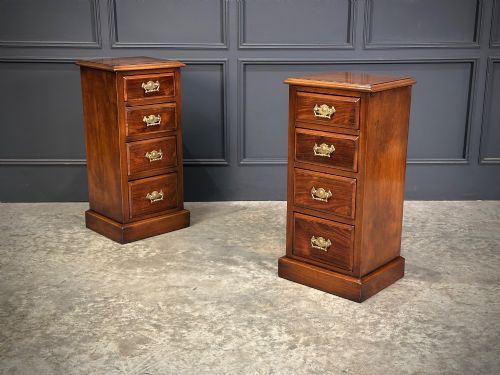
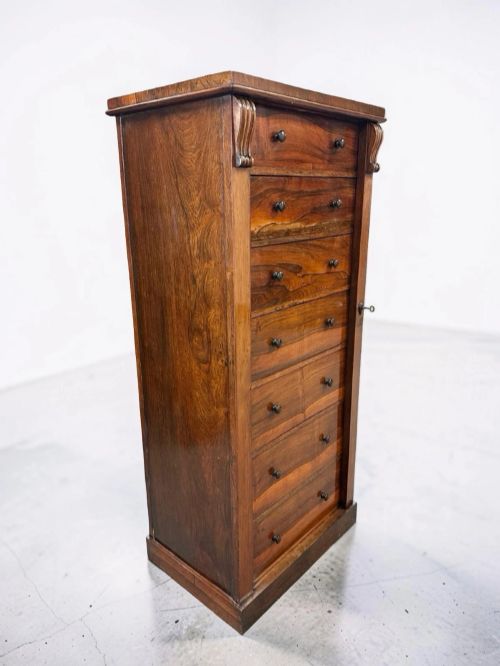
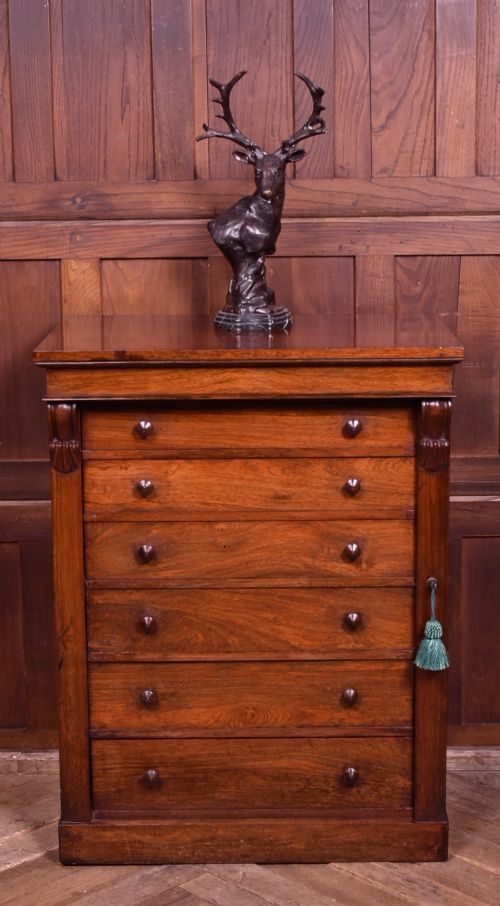
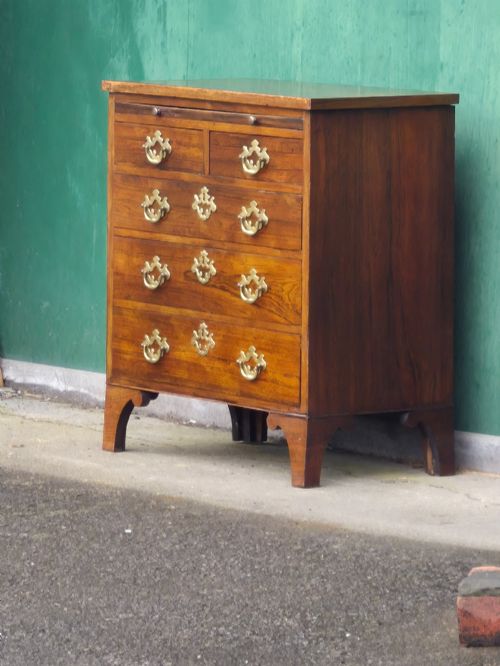
Antique rosewood tallboys encompass vertical storage forms, most frequently appearing as Wellington chests, semainiers, and narrow multi-drawer chests of drawers from the nineteenth and early twentieth centuries. These pieces provide substantial drawer capacity within a compact footprint, making them practical for modern interiors while retaining traditional proportions.
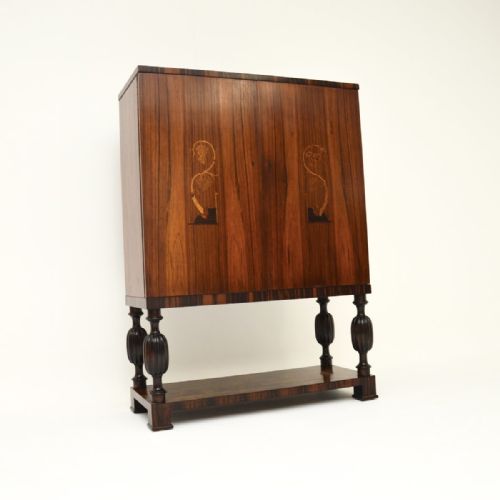
The selection on this page leans heavily toward Victorian examples and French regional variants, including marquetry-inlaid pieces and secretaire configurations with fold-down writing surfaces. Alongside standard drawer arrangements, buyers frequently encounter specialised bedside cabinets and writing cabinet hybrids sharing the characteristic rosewood construction.
Origins span English cabinet-making traditions and French workshop production, reflecting both formal Georgian-derived proportions and exuberant continental revival styles. This mix offers a clear view of how high-status timber was utilised across different European design movements during the nineteenth and early twentieth centuries.
How they were made
Makers utilised dense rosewood veneers laid over secondary carcasing timbers, frequently enhancing surfaces with contrasting crossbanding in mahogany or satinwood. Brass hardware, including drop handles and locking mechanisms characteristic of Wellington chests, secured the long stacking drawers.
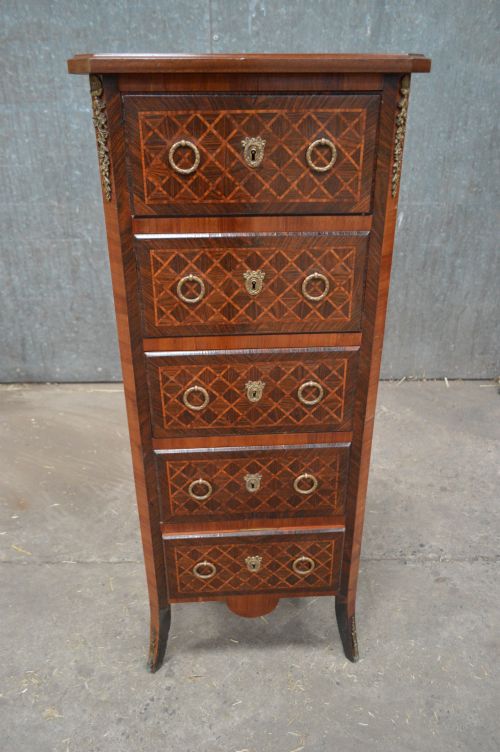
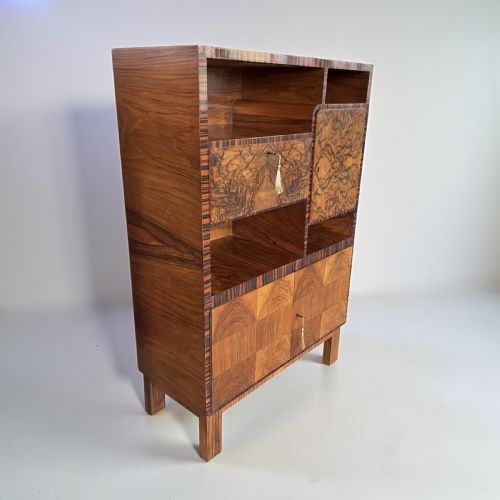
Parquetry and marquetry inlay introduced geometric patterns and floral motifs, particularly on French pieces utilising kingwood and maple alongside rosewood. Marble tops appeared on select continental examples, providing a durable and decorative upper surface atop multi-drawer carcasses.
Seven drawers provided precisely enough storage for a Victorian gentleman to allocate one drawer for each day of the week.
What varies in quality
The refinement of the timber selection dictates the visual impact, with tightly figured grain and balanced book-matching separating standard workshop production from exceptional pieces. Artisanal execution in the marquetry inlay and the precision of brass stringing reveal the hand of skilled cabinet-makers.
Structural integrity rests on the stability of the carcass and the smooth operation of deep drawer sets, particularly in tall locking configurations like Wellington chests. Finer examples maintain crisp mouldings and original hardware, whereas altered pieces show the signs of later adaptation.
Maison Krieger
The Antique Rosewood Tallboys Glossary
- Wellington chest
- A tall, narrow chest of drawers secured by a hinged locking stile on one side that fastens over the drawer edges. This specific form originated in the nineteenth century to protect confidential papers and valuables.
- Semainier
- A tall seven-drawer chest traditionally designed to hold a week's worth of linen or garments. Originating in France, these pieces often feature detailed marquetry and marble tops.
- Crossbanding
- A border technique where thin strips of veneer are laid perpendicular to the grain of the main panel. This frames the primary timber surface and demonstrates advanced cabinet-making skill.
- Marquetry
- The art of forming decorative patterns using fitted pieces of various coloured veneers. Makers employed this technique on continental pieces to create floral or geometric tableaus.
- Secretaire
- A cabinet or chest incorporating a fitted writing drawer with a drop-down front. These hybrid forms combine vertical storage with a compact desk surface.
Antique Rosewood Tallboys: Frequently Asked Questions
What is a Wellington chest?
A Wellington chest is a tall, narrow set of drawers secured by a locking vertical flap on the right side. This locking stile fastens over the drawer ends, keeping all contents secure with a single key turn.
Originally designed in the nineteenth century, these pieces provide deep vertical storage while occupying minimal floor space in a room.
How do you use a semainier?
A semainier functions as a tall seven-drawer storage chest, traditionally used to organise garments or linens for each day of the week. The high, narrow design accommodates significant storage in compact spaces.
In contemporary interiors, these pieces work well in bedrooms or studies for organising documents, accessories, or smaller garments.
Where were rosewood tallboys made?
These pieces were produced across English and French workshops, reflecting distinct regional cabinet-making styles. English examples often showcase restrained Regency or Victorian proportions, while French pieces frequently feature elaborate marquetry and marble tops.
Imported tropical hardwoods were sent to European cabinet-makers who turned them into high-status furniture for domestic interiors.
How do you distinguish nineteenth-century pieces?
Nineteenth-century pieces are identified by traditional construction methods, such as hand-cut dovetails on drawer boxes and the use of dense solid timbers beneath rosewood veneers. Structural details like brass locking stiles and hand-polished finishes point to this period.
Stylistic cues, including Georgian proportions or Victorian revival details, help narrow down the decade of manufacture alongside any maker stamps or workshop labels.