


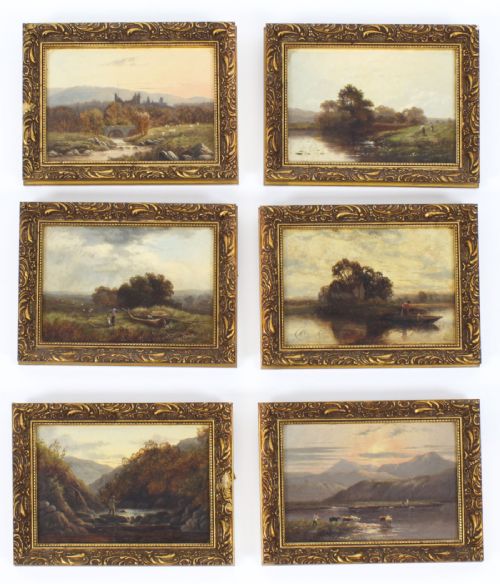


Antique River Scenery Art
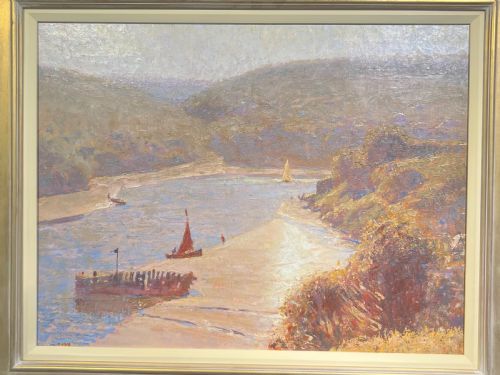
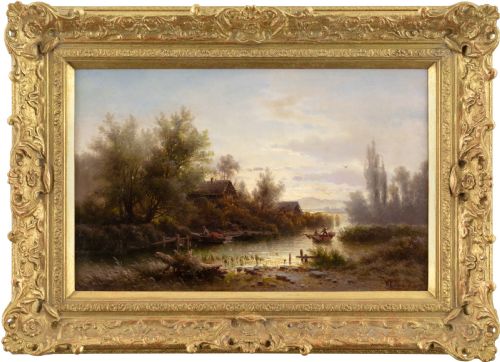
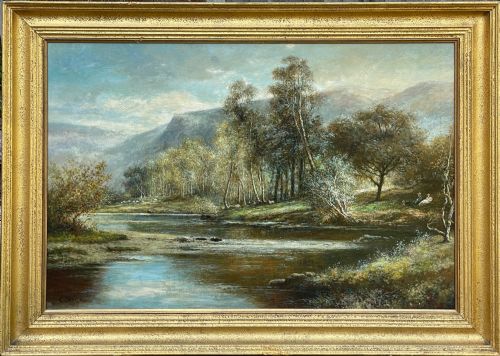
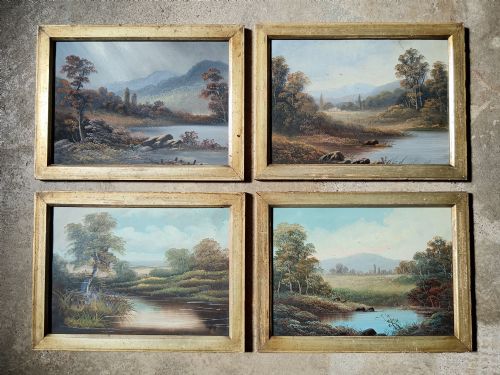
Antique river scenery art captures tranquil waterways and rural banks, offering a picturesque glimpse into nineteenth and early twentieth-century topography.
Antique River Scenery Art
Antique river scenery art comprises paintings depicting natural waterways, riverbanks, and pastoral bodies of water. The selections found here span the nineteenth and early twentieth centuries, featuring British and European subjects.
Buyers are most likely to encounter framed oil paintings on canvas or wood panels, alongside delicate watercolour paintings on paper. These works frequently record specific British rivers and streams, such as the Wharfe or North Wales waterways.
The aesthetic bridges several periods, taking in Victorian naturalism, British Impressionism, and traditional Edwardian approaches. Such pieces serve as historical windows onto bygone rural vistas and traditional pastoral life.
How they were made
Artists utilised oil paint and watercolour as primary media, applying them to stretched canvas, prepared wood panels, or heavy paper. Oil pigments allowed for rich, layered textures, whilst watercolours captured translucent atmospheric effects over river valleys.
Works are typically presented in period frames constructed from wood, often finished with gilt wood and gold leaf detailing. These traditional mounts and frames protect the fragile paper or canvas supports from environmental degradation.
This selection includes works from the Victorian, Edwardian, and Georgian periods, executed in oil and watercolour on canvas, paper, and wood.
What varies in quality
Quality rests significantly upon the artist's command of light, perspective, and atmospheric depth within the landscape. Superior examples demonstrate confident brushwork and a nuanced handling of water reflections and changing weather.
The condition of the original support and pigment layer also dictates the piece's standing. Works that retain their vibrant colours without extensive retouching or heavy craquelure represent the finer tiers of the selection.
Cecil Allan Mould RI·Albert Rieger·H Wallace·John Wright Oakes·William Mellor·Amos Green·William Hoggatt·Noel Harry Leaver·Ernest Higgins Rigg·Thomas Swift Hutton·Robert John Hammond·James Poole·Thomas E Francis·R E Richardson
The Antique River Scenery Art Glossary
- Oil paint
- A slow-drying medium composed of pigments suspended in a drying oil, usually linseed. It permits deep blending and rich textural applications on canvas or wood.
- Watercolour
- A paint consisting of colorants suspended in a water-soluble vehicle, traditionally applied to paper. It relies on the white of the paper to provide luminosity.
- Gilt wood
- Wood carved and coated with a thin layer of gold leaf or metallic powder. It provides a decorative, reflective border typical of period picture frames.
- Wood panel
- A flat piece of timber utilised as a rigid painting support prior to the widespread adoption of canvas. Panels offer a stable surface for detailed nineteenth-century compositions.
- Canvas
- A heavy woven fabric stretched across a wooden frame to serve as a foundation for oil paintings. It provides a flexible yet durable ground for expressive brushwork.
Antique River Scenery Art: Frequently Asked Questions
What periods do these river paintings span?
The works primarily originate from the nineteenth and early twentieth centuries. This encompasses Victorian, Edwardian, and Georgian eras.
Creators during these periods observed changing rural landscapes with varying degrees of realism and impressionistic freedom.
Are these river artworks signed by artists?
Many pieces feature visible signatures or attribution to named painters, while others remain attributed to the broader English or Scottish school.
Signed works often connect directly to documented exhibitors and regional artists of the period.
What materials were used for these paintings?
Painters utilised oil paint on canvas or wood panels, alongside watercolour on paper. Some pieces also employ heavy opaque gouache.
Frames are commonly constructed from wood and frequently feature gilt wood or gold leaf finishes.
How should I display antique landscape art?
These framed works suit traditional interior settings, particularly spaces with adequate wall room to accommodate their historical presence.
Ensure they are placed away from direct sunlight and damp environments to protect the canvas, paper, and gilt frames.