

Antique Religious Wood Art
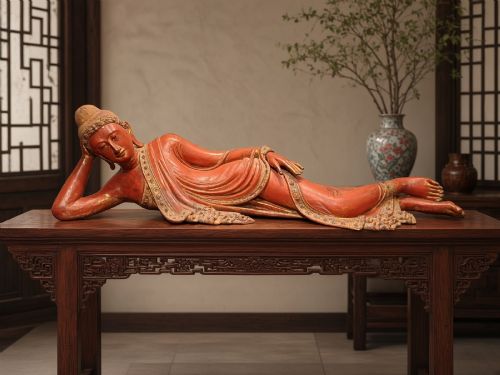
Antique religious wood art brings centuries of devotion into a room, offering carved figures and panels shaped by hands long gone.
Antique Religious Wood Art
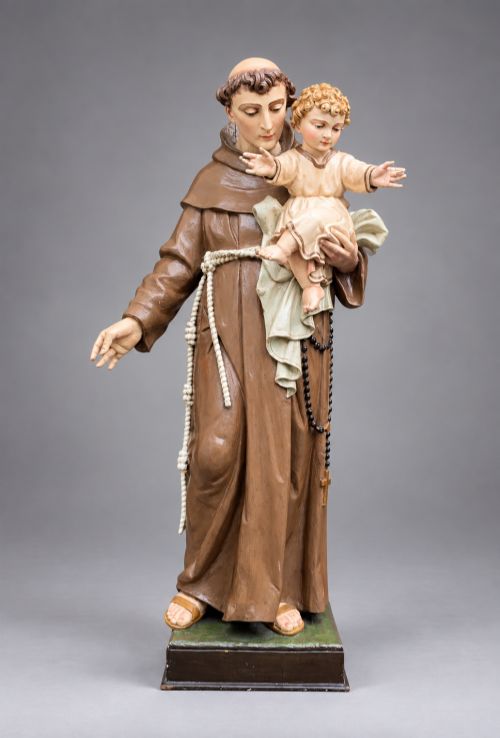
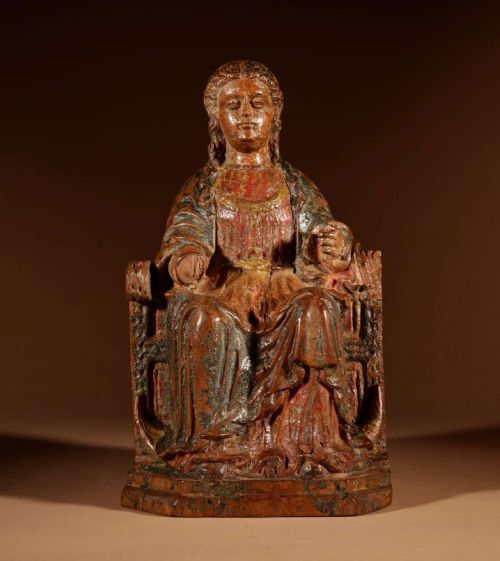
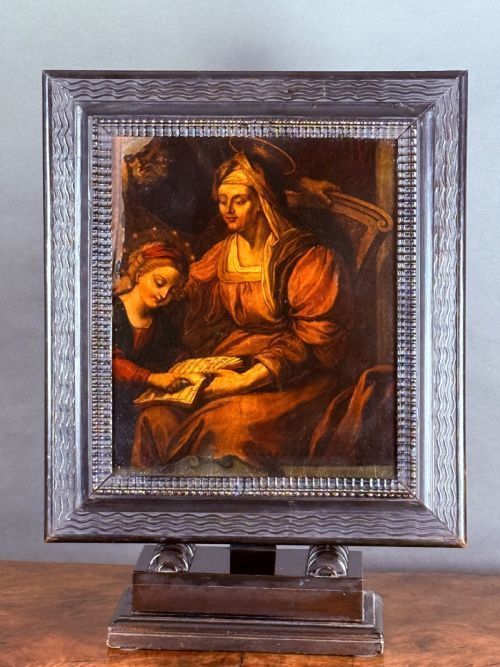
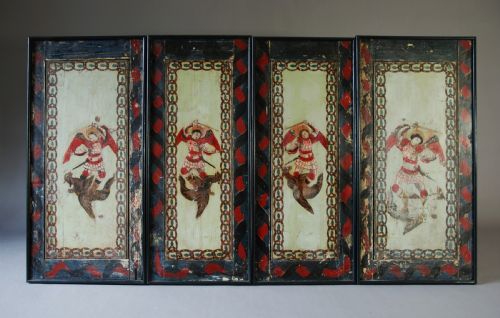
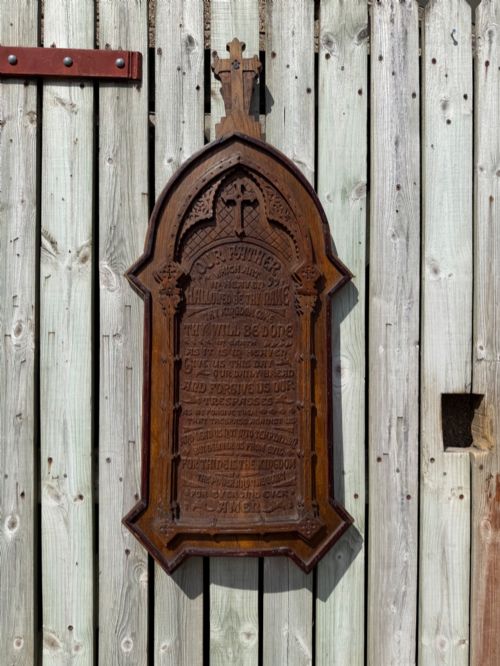
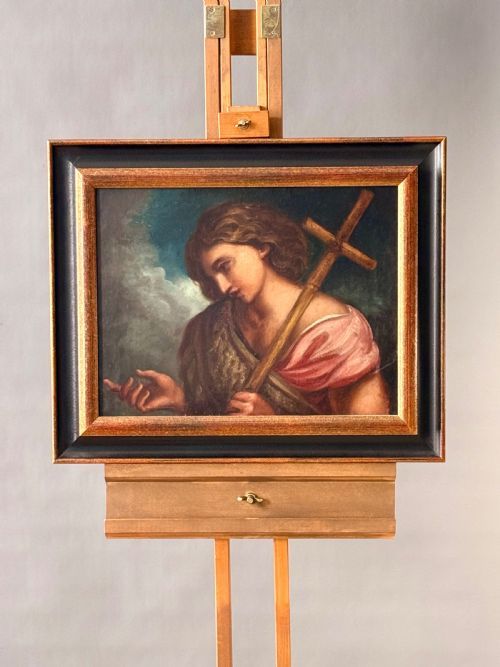
Beyond standalone sculptures, the pieces available include altarpiece panels, framed paintings, and home altars created for personal prayer or ecclesiastical settings. Oak, walnut, chestnut, and limewood serve as the primary substrates for these historical devotional works.
The aesthetic vocabulary stretches from austere medieval carvings to elaborate Baroque and folk art expressions. Eighteenth-century polychrome figures and seventeenth-century Spanish pieces dominate the material record here.
Materials and construction methods
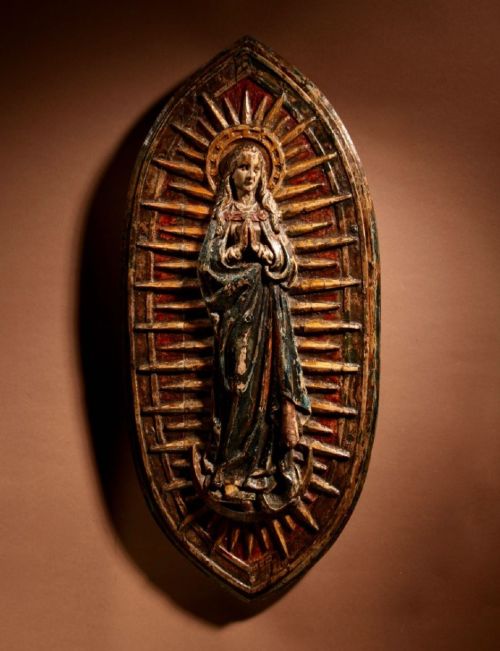
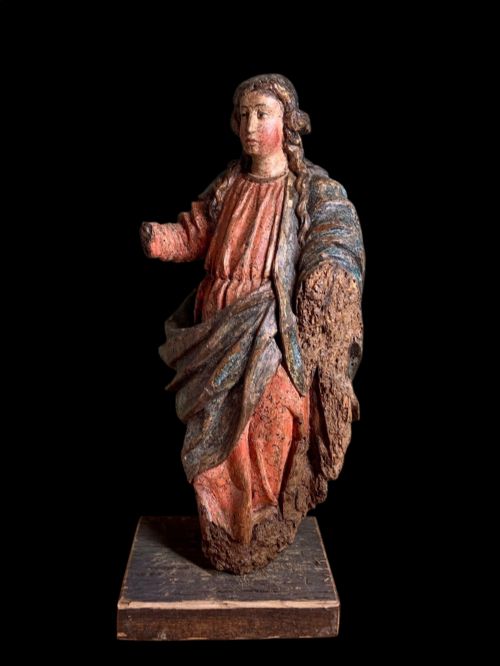
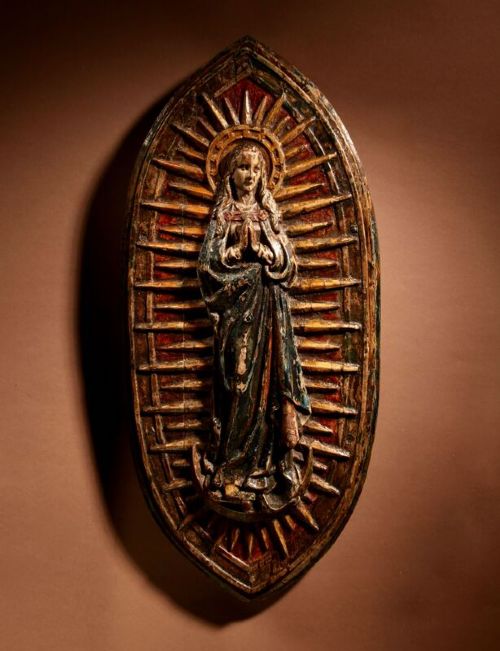
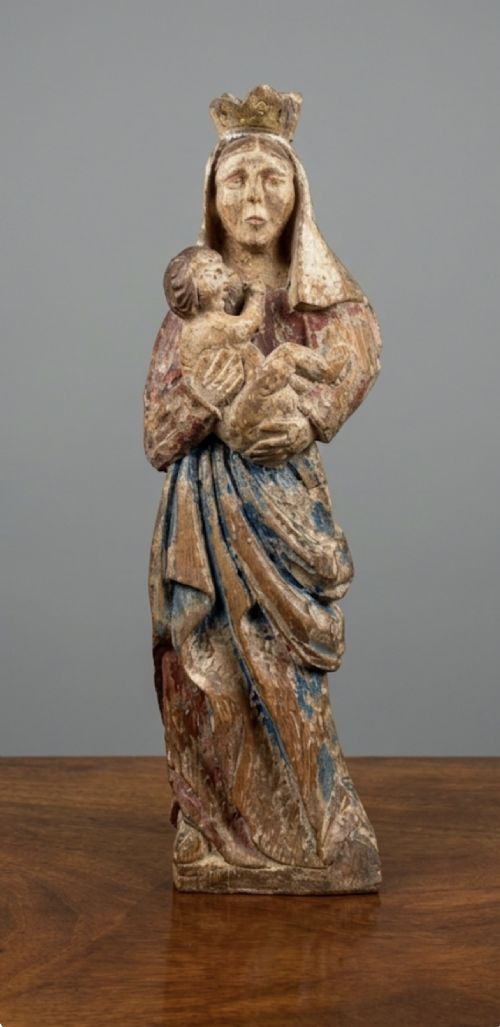
Many surfaces received a preparation of gesso before painters applied polychrome pigments and gold leaf to heighten the visual drama. This combination of carved wood, gesso, and oil paint created richly coloured surfaces designed for candlelit interiors.
A watchful snake coils beneath the feet of a sixteenth-century Virgin, silently reminding viewers of ancient theological struggles.
Distinctions in quality and execution
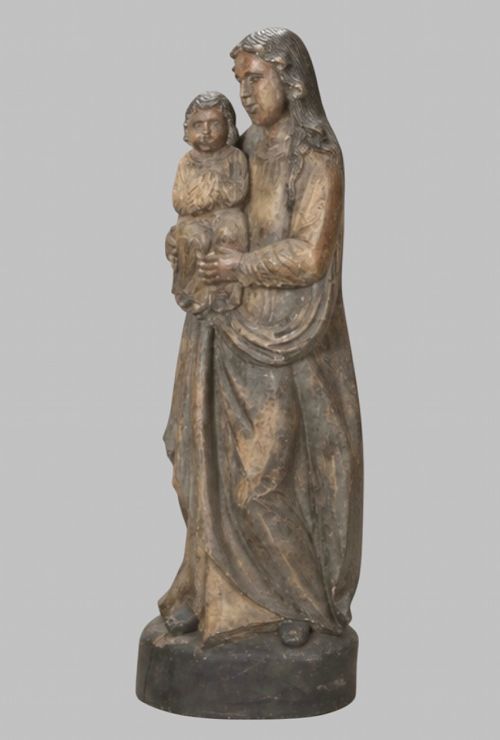
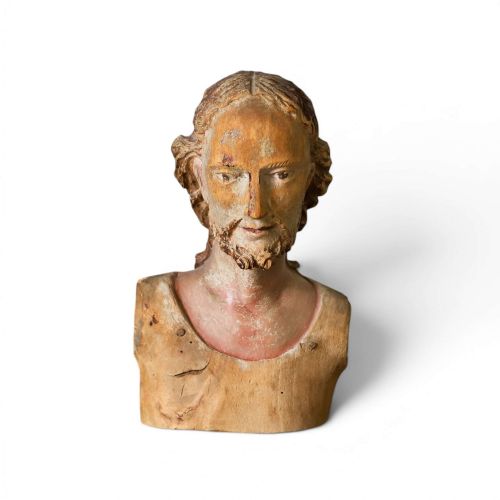
Superior examples of religious wood art display anatomical proportion and expressive depth in the carving, distinguishing master workshop output from naive folk art. The crispness of the chisel work in complex drapery and hair reveals the artisan's level of training.
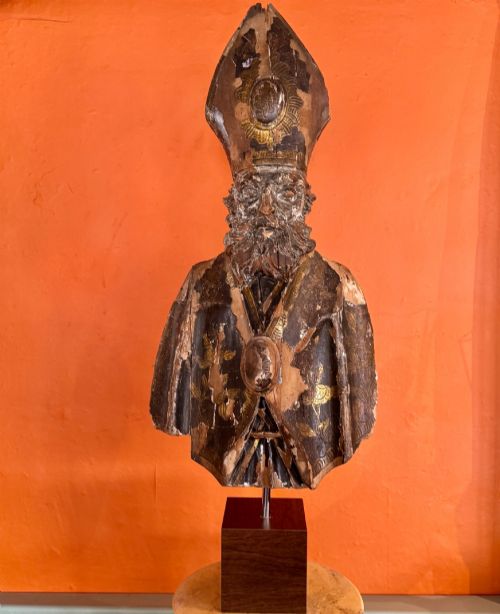
The preservation of original gesso, polychrome pigment, and gilding heavily influences the desirability of a piece. Later overpainting or stripped surfaces reduce historical integrity, whereas untouched surface patina elevates the standing of the work.
The Antique Religious Wood Art Glossary
- Polychrome
- Painted in several colours. This surface treatment brings carved wooden statues to life with realistic flesh tones and vibrant garments.
- Gesso
- A plaster mix used as a base. Artisans applied it to wood to create a smooth surface for gilding and painting.
- Corpus Christi
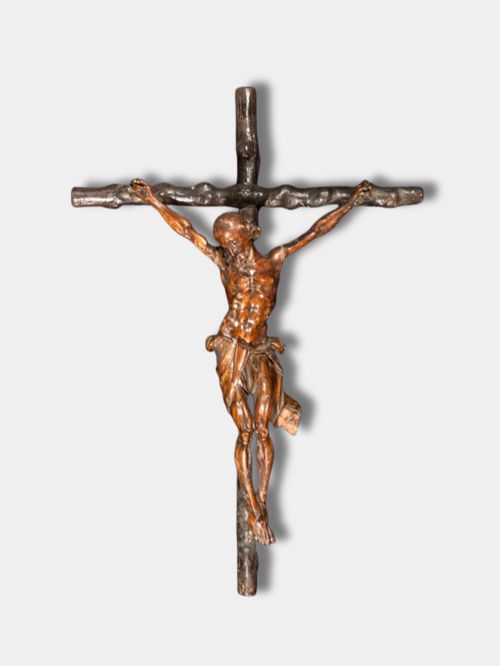
- The body of Christ on the cross. These wooden figures focus on the crucifixion scene in Christian iconography.
- Capipote
- A wooden devotional figure with a carved head and hands attached to a dressed armature. These statues often wore real fabric garments.
- Altarpiece
- A structure set above an altar. Central panels from these large church fixtures frequently survive as standalone carvings.
Antique Religious Wood Art: Frequently Asked Questions
How were these wooden sculptures used originally?
Devotees used these carved figures and panels in churches, monasteries, and domestic shrines for daily prayer and contemplation. They helped focus religious devotion and narrative teaching in spaces often devoid of literacy.
Larger statues stood upon altars or within niches, while smaller panels and home altars served private family worship. Candles and oil lamps lit these devotional spaces, causing gold leaf and polychrome paint to shimmer.
How do I distinguish between periods in religious carvings?
Earlier pieces from the sixteenth century often display Gothic rigidity or early Renaissance naturalism with heavier, stiffer drapery folds. Seventeenth and eighteenth-century Baroque works introduce theatrical movement, emotional facial expressions, and dynamic poses.
Folk art pieces from the nineteenth and twentieth centuries adopt simpler, more naive forms while utilising traditional woodworking methods. Examining tool marks and stylistic conventions helps clarify the era of creation.
What is polychrome wood art?
Polychrome wood art refers to sculptures and panels painted with multiple colours over a prepared gesso ground. Artisans used pigments bound in oil or tempera to render realistic skin, hair, and patterned textiles.
This technique added realism and solemnity to devotional figures, making them visually striking in dimly lit ecclesiastical interiors. Surviving traces of this original paint remain crucial for historical authenticity.
How should I care for antique wood art at home?
Maintain stable room temperatures and avoid placing wooden sculptures near direct heat sources or strong sunlight. Fluctuating humidity causes wood to expand and contract, which endangers both the timber and any applied gesso layers.
Dust the pieces gently with a dry, soft brush rather than using wet cloths or chemical polishes. Protecting the fragile surface preserves the original patina and historic pigments for the future.