

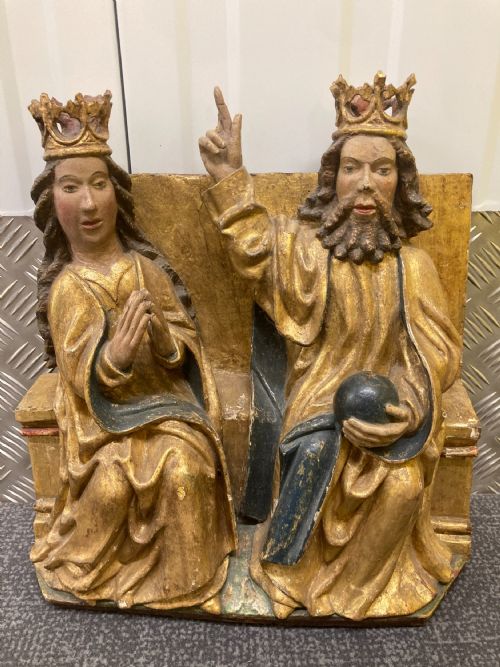


Antique Religious Relief
Antique religious relief works encompass devotional wall carvings, plaques, and medallions spanning several centuries of European and Asian craftsmanship.
Antique Religious Relief
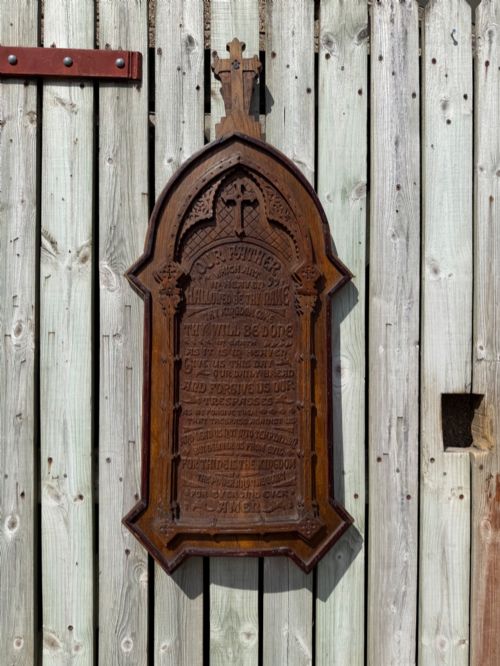
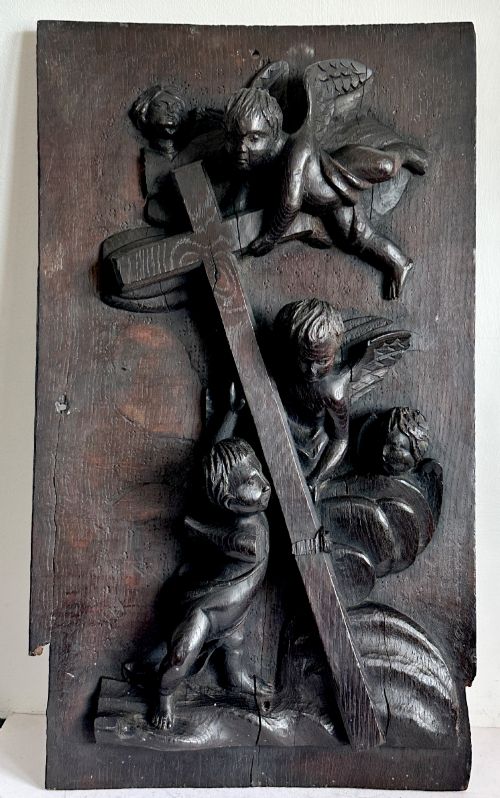
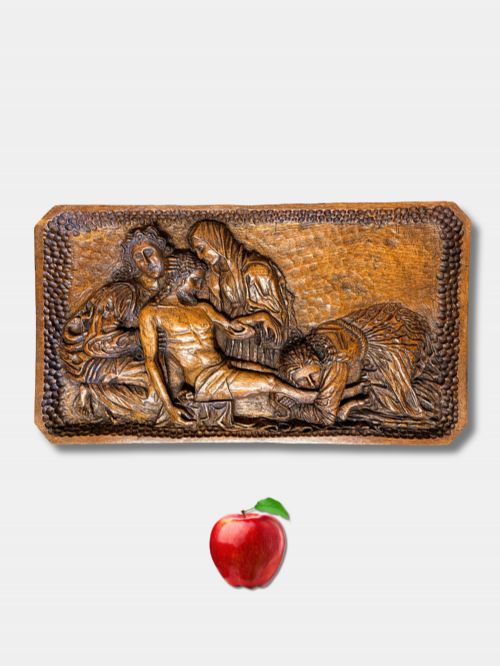
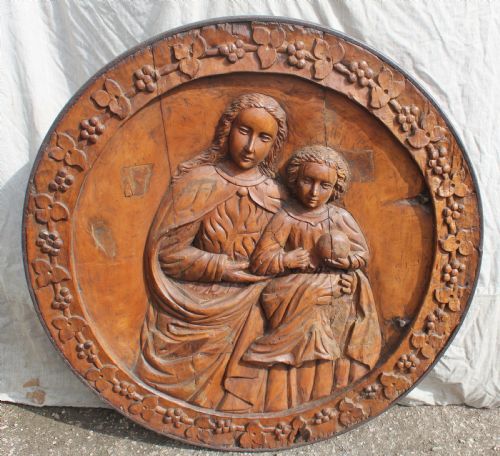
An antique religious relief presents sacred figures and biblical scenes carved or moulded onto a flat background, designed for contemplation and prayer. These pieces include timber panels salvaged from altarpieces, stone architectural fragments, bronze plaques, and small personal pendants worn as medals.
The objects serve as tangible fragments of ecclesiastical history, functioning equally as focal points for private devotion and as architectural ornamentation. Whether mounted on a wall or worn close to the body, each item carries devotional iconography developed over hundreds of years of tradition.
How they were made
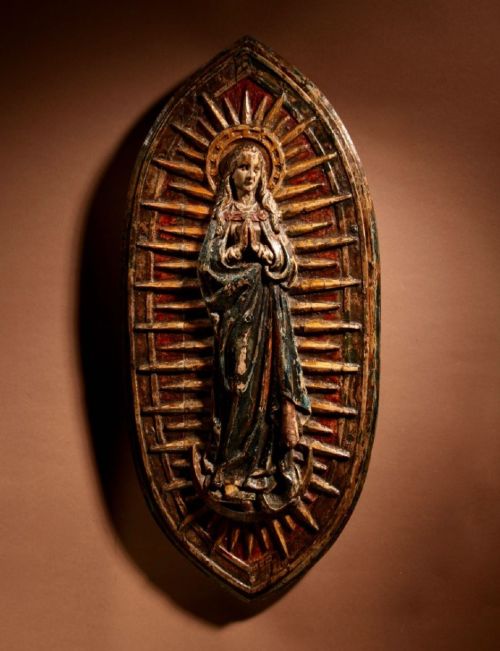
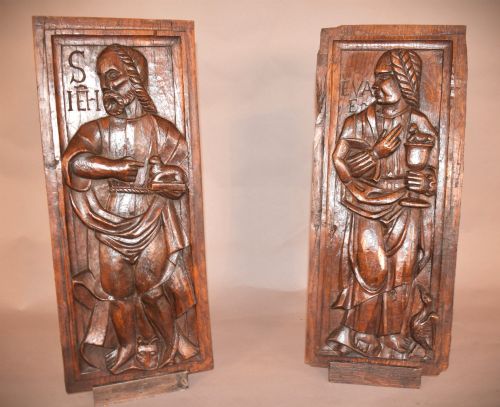
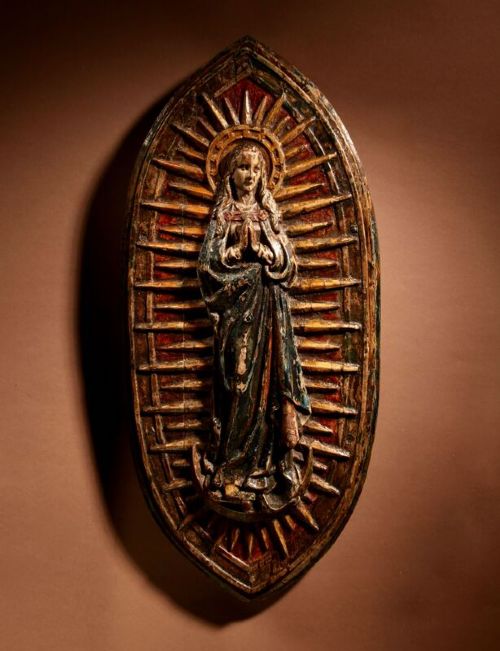
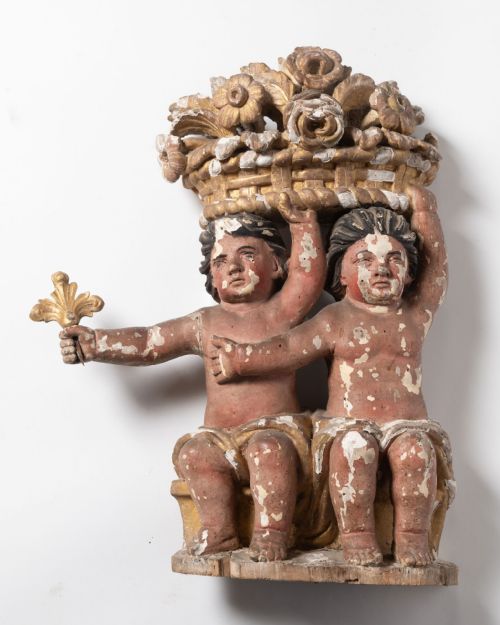
Carvers shaped these reliefs primarily from dense timbers such as oak, walnut, and chestnut, utilising hand chisels and gouges to build depth and perspective. Many wooden examples received layers of gesso, gold leaf, and polychrome paint to heighten their visual drama and protect the surface.
Metal items, including bronze and yellow gold pieces, were cast or struck using traditional dies, while stone reliefs relied on direct incision into limestone, marble, or sandstone. Mother-of-pearl shells were delicately hand-carved with intricate sacred imagery, showcasing minute detail achieved with specialist miniature tools.
Listings feature oak, walnut, and chestnut panels alongside gold medals and mother-of-pearl carvings.
What varies in quality
The standard of carving distinguishes exceptional pieces from ordinary workshop output, seen in the fluid movement of drapery and the anatomical precision of human figures. Master carvers achieved expressive depth that draws the eye, whereas lesser examples remain stiff and formulaic.
Survival of original surface finishes, such as polychrome paint or gilding, greatly elevates a piece, though patination gained through centuries of handling also matters. The integrity of the ground timber or metal dictates durability, with superior pieces retaining crisp edges despite natural ageing.
Emile Monier·Shadwell Bros.·Ruffony
The Antique Religious Relief Glossary
- Polychrome
- Painted in several colours. This surface treatment was widely applied to wood and stone carvings to render figures lifelike.
- Gesso
- A plaster mixture used as a smooth base for painting and gilding. It provides an adherent surface for gold leaf on wooden panels.
- Relief
- Sculpture in which figures project from a background. High relief stands out prominently, while low relief remains closer to the plane.
- Diptych
- A two-part painting or carving hinged together. These portable objects allowed private prayer during travel.
- Altarpiece
- A structure set above and behind an altar. Central panels from these large church fixtures frequently survive as independent wall reliefs.
Antique Religious Relief: Frequently Asked Questions
What periods do these pieces date from?
The selection spans from pre-sixteenth century medieval works up to mid-twentieth-century gold pendants. Earlier pieces are typically ecclesiastical wood and stone carvings, while later items include nineteenth-century metal plaques and personal medals.
Century designations often reflect stylistic traits or documented origins rather than exact calendar years. Collectors will find sixteenth-century Gothic and Renaissance fragments alongside seventeenth-century Baroque panels.
How were wooden wall reliefs originally used?
Large wooden panels usually formed structural components of church altarpieces, choir stalls, or domestic devotional furniture. They surrounded worshippers with narrative scenes from scripture to aid contemplation.
Over time, many panels became detached from their original architectural settings to be displayed as standalone works of art. Smaller plaques served as private devotional objects within homes or monastic cells.
How do I distinguish wood types in panels?
Oak and walnut dominate European ecclesiastical carvings, chosen for their durability and fine grain. Chestnut and various softwoods also appear in regional European workshops.
Examining the weight, grain pattern, and colour helps identify the timber. Oak typically shows prominent medullary rays, while walnut offers a smoother, darker brown finish.
What is the significance of polychrome paint?
Polychrome paint added realism and devotional impact to wooden and stone sculptures by depicting skin tones, hair, and garments in natural hues. It transformed stark carvings into vibrant visual narratives.
Original pigment remaining on antique pieces is prized by collectors. Traces of old paint reveal how the maker intended the sculpture to be perceived in dim church interiors.