





Antique Regency Tableware
Antique regency tableware brings the refined ceramics, gleaming silver and cut crystal of the early nineteenth century straight to the dining table.
Antique Regency Tableware
When searching for antique regency tableware, collectors encounter a diverse array of dining and serving pieces originating primarily from the Georgian and Regency periods. The selection on this page centres on porcelain services, sterling silver hollowware, Old Sheffield plate, and lead crystal glass.
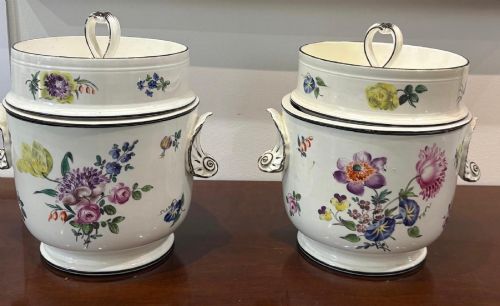
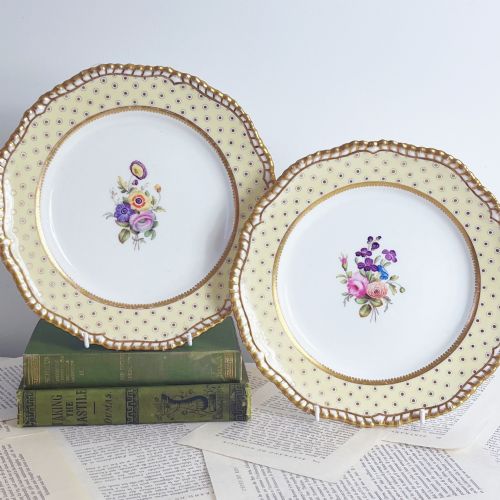
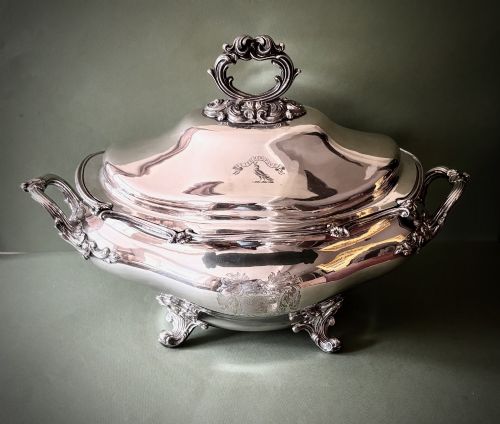
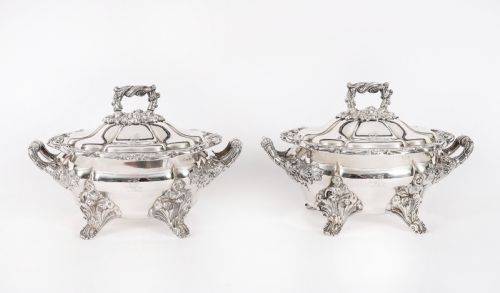
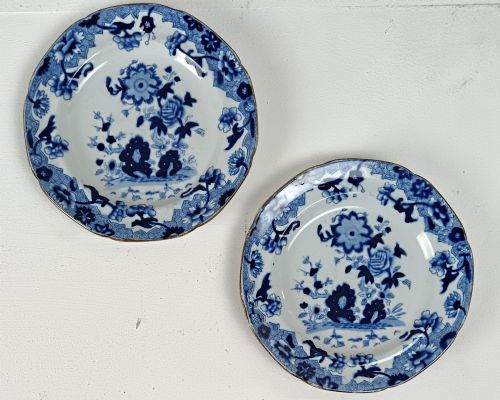
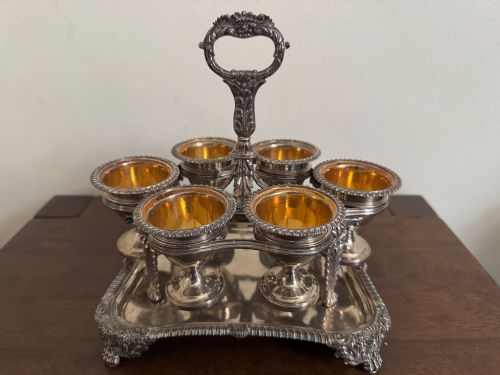
The most common forms appearing here include dessert services, tureens, wine coasters, egg cruets, and individual plates decorated with handpainted florals, transfer prints, or armorial crests. These items reflect the formal dining customs of the early nineteenth century, combining utility with decorative elegance.
Makers and factories from this era utilised robust earthenware bodies alongside fine bone china and felspar porcelain, ensuring that surviving pieces retain their utility. Buyers meet everything from matched multi-piece dessert sets down to single bread and butter plates or specialised novelty pieces.
Materials and Construction
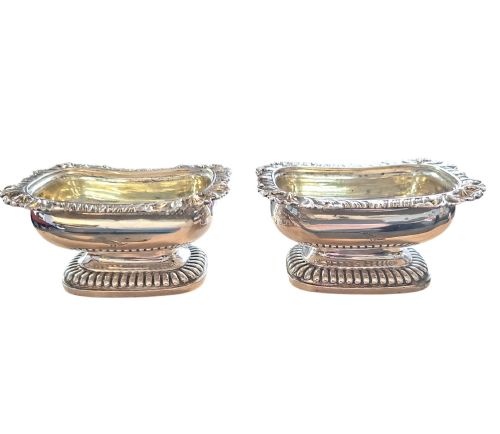
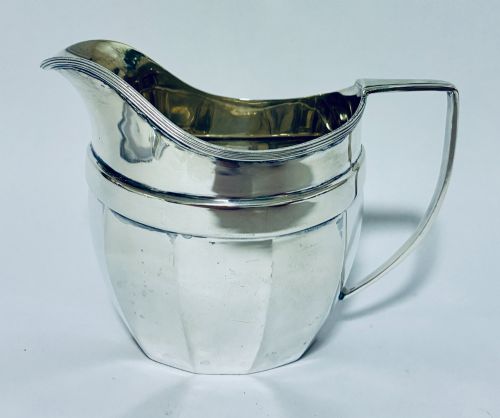
Silversmiths and manufacturers employed sterling silver, Old Sheffield plate, and pewter to create durable tureens, coffee pots, and egg cruets, often incorporating chased details and applied crests. Silver plating techniques involved fusing a thin sheet of silver to a copper base, visible only where wear reveals the warm metal beneath.
Ceramic pieces rely on porcelain, earthenware, and New Stone bodies shaped in moulds or thrown on wheels, then handpainted with enamel colours or impressed with transfer prints. Factories applied clear and coloured glazes before firing the ceramics at high temperatures to achieve a glossy, vitrified finish.
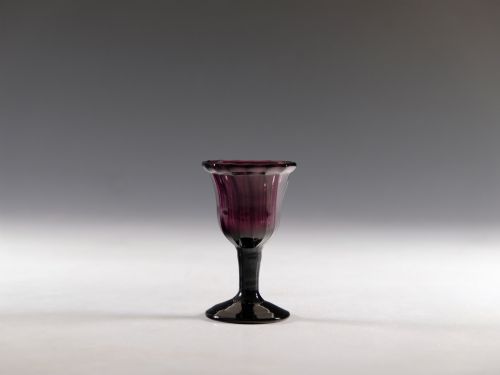
Glassware items such as celery vases, salt cellars, and condiments were produced using lead crystal blanks that were deeply wheel-cut with flutes, panels, or geometric patterns. These manufacturing methods demanded high levels of manual skill from artisans working in workshops across England, Scotland, and Ireland.
Antique Regency Tableware Retail Price Guide 2026
Typical asking prices for regency tableware among the pieces listed under this phrase on Sellingantiques today, from the lower quarter to the upper quarter. They describe what is for sale here now, not the wider market.
Listings feature ceramics from factories including Minton, Spode, Coalport, and various Worcester works alongside sterling silver and Old Sheffield plate.
Judging Quality and Execution
Quality in these items rests upon the crispness of execution, whether in the depth of hand-cut facets on crystal, the sharpness of hallmarks on silver, or the precision of handpainted botanical and floral motifs on porcelain. Finer examples display meticulous brushwork and careful gilding that has survived generations of use.
The integrity of the material also dictates value, with well-preserved silver plating showing minimal copper bleed and ceramic bodies possessing smooth glazes free from excessive kiln distortion. Pieces bearing recognised factory marks or specific historical provenance represent the upper echelon of surviving tableware.
Minton Porcelain·H and R Daniel·Grainger Lee and Co·Spode·Matthew Boulton·Coalport Porcelain·Chamberlain Worcester·T and H Compton
The Antique Regency Tableware Glossary
- Old Sheffield Plate
- A composite material made by fusing a thin layer of sterling silver to a copper ingot. This technique was widely utilised for tureens, coffee pots, and baskets before modern electroplating was invented.
- Felspar Porcelain
- A type of porcelain body developed by factories like Spode using felspathic rock. It offered increased durability and a brilliant white surface ideal for elaborate dinner and dessert services.
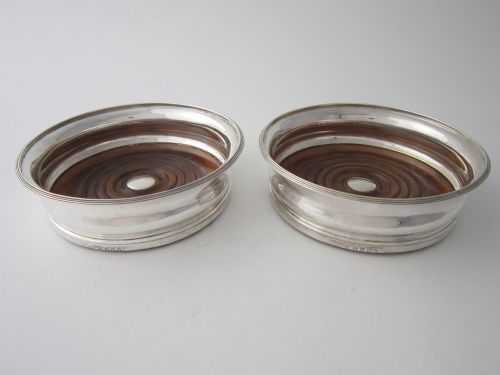
- Wine Coaster
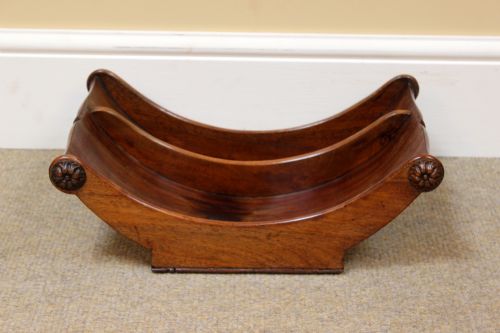
- A small wheeled tray or shallow dish made from mahogany, silver, or plate, used to slide bottles around the dining table after the cloth was removed. The raised sides kept the decanter secure.
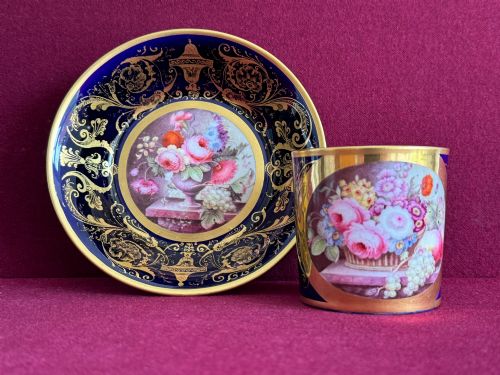
- Coffee Can
- A small, cylindrical porcelain cup without a handle, produced in the early nineteenth century for drinking strong coffee after dinner. They were frequently painted with delicate floral or armorial designs.
Antique Regency Tableware: Frequently Asked Questions
How do I care for antique silver tableware?
Clean sterling silver and Old Sheffield plate gently using a soft cloth and specialised silver polish, avoiding harsh abrasives that wear away thin plating.
Store pieces in a dry environment away from direct sunlight and humidity to prevent tarnishing and protect any underlying copper.
Can I use antique porcelain for dining?
Most early nineteenth-century porcelain and earthenware remain structurally sound for occasional modern dining and serving.
Handwash these pieces strictly in warm soapy water, as modern dishwashers use harsh detergents and heat that damage fragile handpainted enamels and gilding.
What distinguishes Regency glass from later glass?
Regency glass is characterised by heavy lead crystal content, distinct hand-cut facets, and a slightly darker, greyish refractive tone compared to Victorian pressed glass.
Look for pontil marks on the base, which indicate that the piece was hand-blown and finished individually by an artisan.
How do I identify a dessert service?
A dessert service typically comprises a matching set of plates alongside higher compotes, serving dishes, or tureens designed for the final course of a formal meal.
These sets frequently feature botanical illustrations, handpainted flowers, or armorial crests tailored to wealthy dining rooms.