


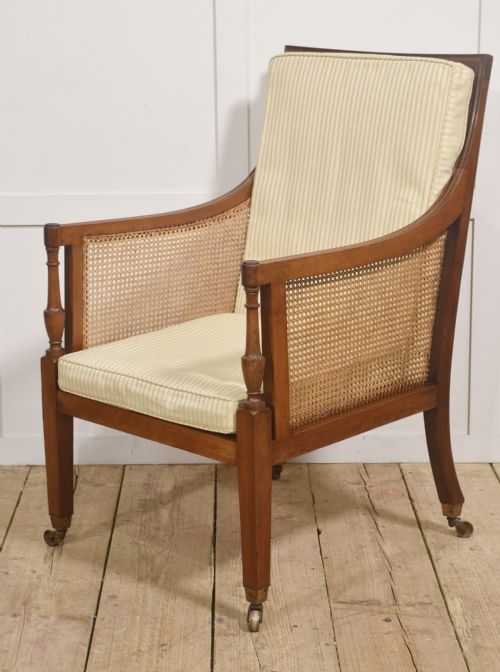


Antique Regency Bergere
An antique regency bergere is a deep, enclosed armchair built for comfort and reading, bringing refined neoclassical lines to any room.
Antique Regency Bergere
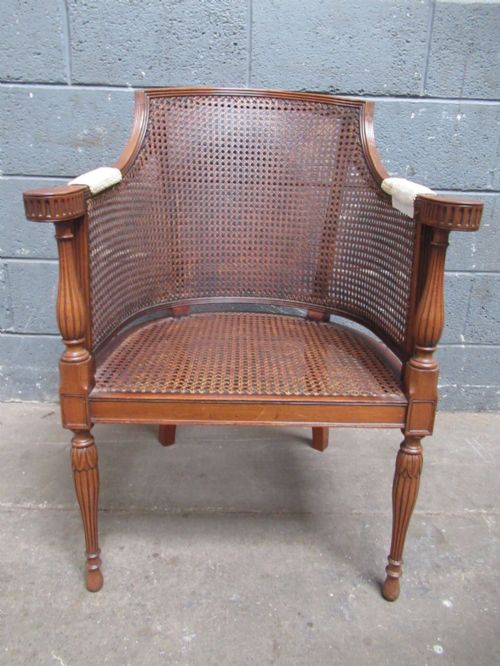
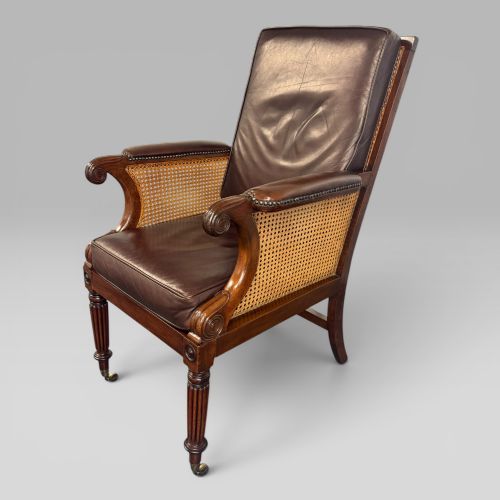
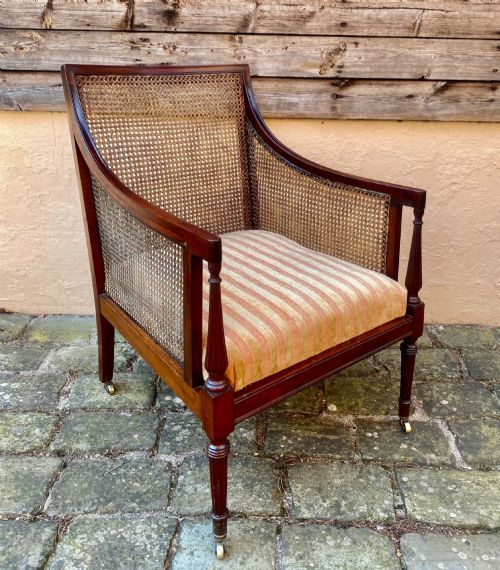
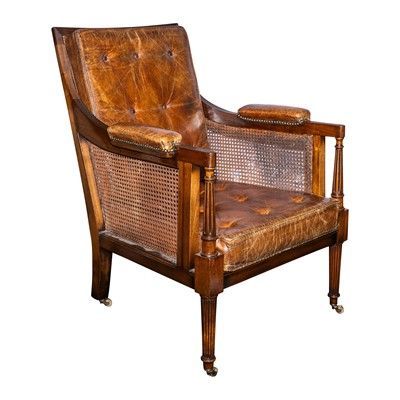
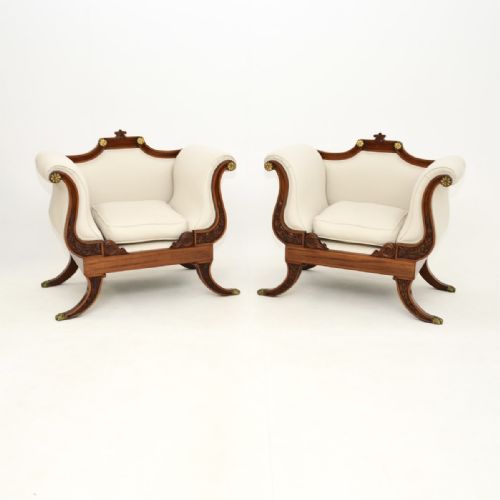
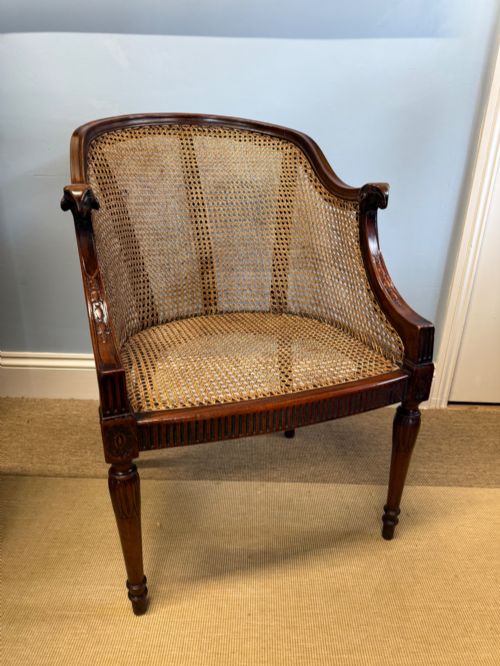
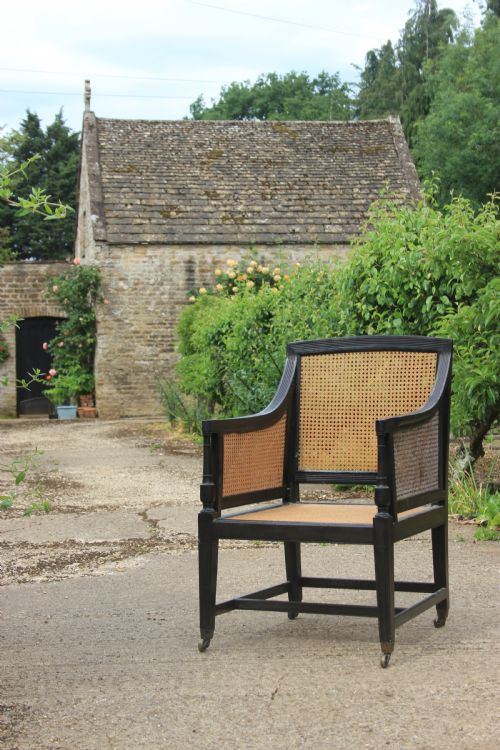
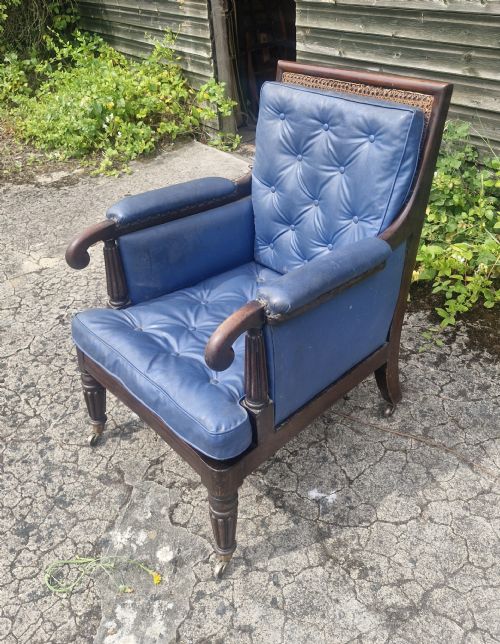
When you search for an antique regency bergere, you encounter low, closed-sided armchairs designed primarily for the library or parlour during the early nineteenth century. These seats typically feature rounded or tub-shaped wooden frames enclosed with woven cane on the back and sides, often accompanied by loose squab cushions for comfort.
While genuine period examples date from the Regency and William IV eras, you will also frequently meet later revivals from the Edwardian period and the early twentieth century. The prevailing forms remain library armchairs, though variants include childs armchairs, window seats and occasional side chairs constructed to replicate these classic proportions.
Origins span standard English workshops alongside Anglo-Indian colonial productions and occasional continental pieces like Swedish neoclassical armchairs. Mahogany forms the backbone of these selections, alongside ebonised wood, rosewood, simulated rosewood, walnut and solid ebony.
Materials and construction
Makers fashioned the robust frames of an antique regency bergere predominantly from solid mahogany, rosewood, or walnut, sometimes applying ebonising or a simulated grain to mimic costlier exotic timbers. Artisans turned and carved the structural members carefully, creating reeded legs, scroll arms and curved backs that define the neoclassical silhouette.
Caning formed the signature enclosed sides and backs, woven tightly by hand through drilled holes along the frame channels to support the sitter. Workshops completed the seating with drop-in or squab cushions upholstered in leather, velvet, or various fabrics.
Mahogany and cane dominate the materials recorded in these listings, alongside variations in rosewood, velvet and brass.
Judging quality and craftsmanship
The distinction between ordinary and superior pieces rests on the crispness of the carving, the elegance of the frame proportions and the selection of timber. Well-drawn chairs exhibit harmonious curves and balanced dimensions rather than heavy or clumsy joinery.
The integrity of the woven cane work significantly influences the standing of a piece, as dense, uniform hand-weaving demands high skill. Furthermore, attribution to known makers or workshops elevates the historical interest of certain library armchairs.
Gillows
The Antique Regency Bergere Glossary
- Bergere
- A closed-sided upholstered armchair with cane or solid panels enclosing the back and arms. This French-inspired form became a staple of English Regency library seating.
- Caning
- A method of weaving rattan strips into a patterned mesh. It provides a resilient, breathable backing for chair frames.
- Regency
- A British design period spanning the early nineteenth century defined by classical restraint and archaeological revival. It draws heavily on ancient Greek, Roman and Egyptian motifs.
- Klismos
- An ancient Greek chair shape with concave curved legs and a flared backrest. Regency cabinet makers reinterpreted this form for occasional and library seating.
- Squab
- A loose, upholstered cushion placed over the caned seat base of an armchair. It ensures comfortable seating while retaining visibility of the woven frame beneath.
Antique Regency Bergere: Frequently Asked Questions
What is a bergere chair?
A bergere is a French-style armchair featuring enclosed sides and back, typically filled with woven cane panels.
These seats were designed for lounging and reading, often paired with a loose cushion for extra comfort.
How were antique bergere chairs used?
These armchairs served primarily as reading seats in libraries and studies, where the enclosed sides provided shelter from draughts.
They also functioned as elegant salon and drawing room chairs during the Regency era.
How do I spot a Regency period piece?
Regency chairs exhibit classical neoclassical elements such as reeded legs, scroll arm supports and dark timber frames like mahogany or rosewood.
Later revival pieces from the twentieth century often replicate these exact proportions and decorative details.
Can I use these chairs daily?
These armchairs suit everyday sitting provided the cane work remains taut and the wooden frame is structurally stable.
Adding a supportive squab cushion protects the woven base from excessive downward pressure during routine use.