


Regency Fireside Chairs
Regency fireside chairs are substantial mahogany seating pieces built for warmth and comfort, offering classic library and wingback forms that anchor traditional interiors.
Regency Fireside Chairs
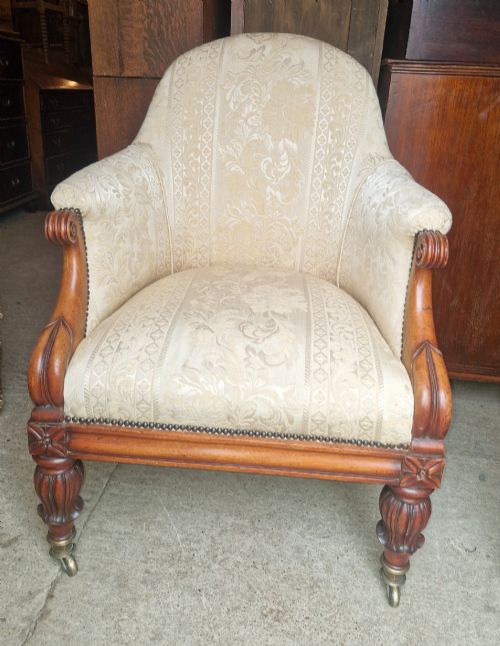
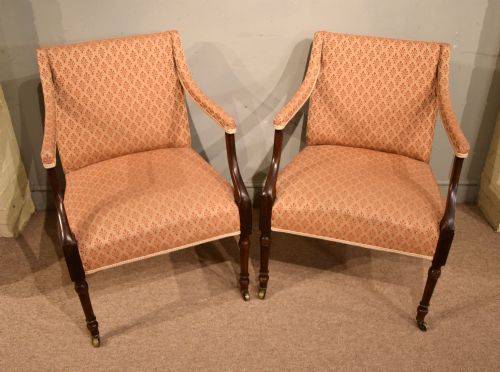
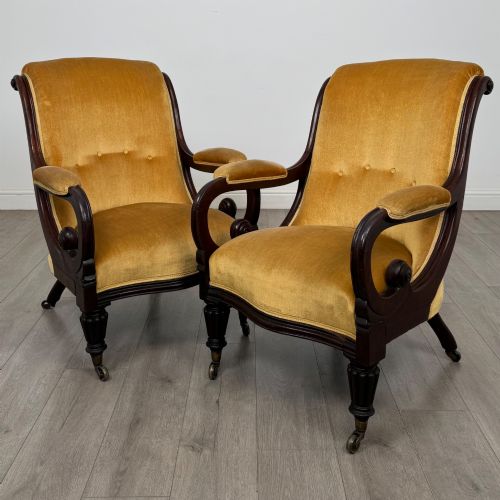
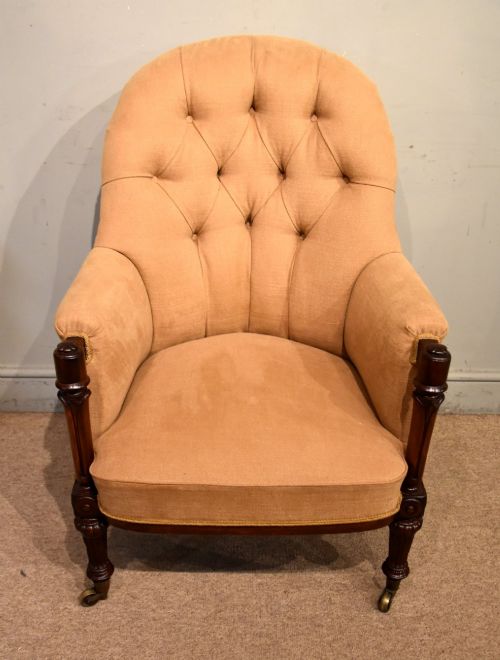
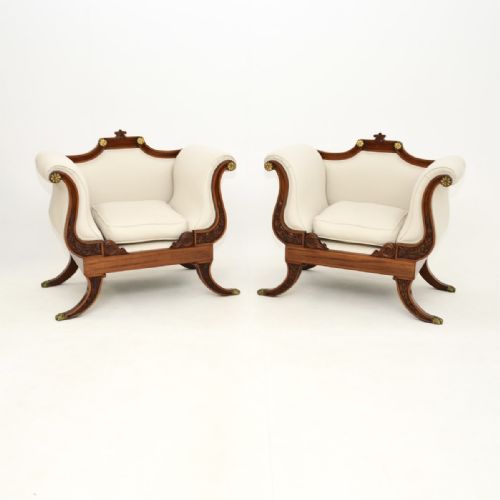
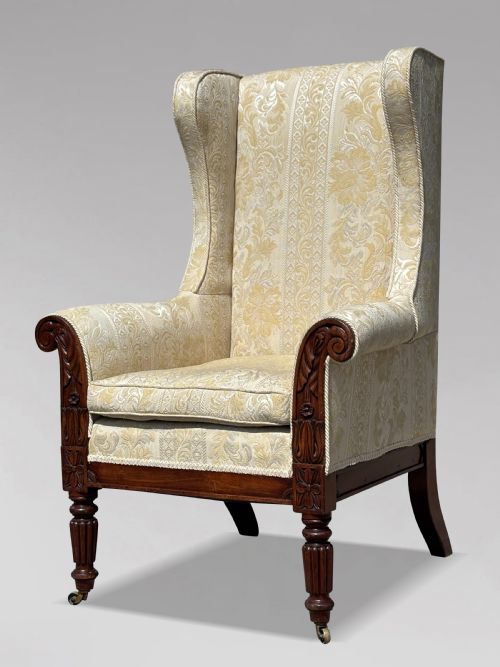
Regency fireside chairs encompass library armchairs, wing chairs, and bergères designed for domestic comfort during the early nineteenth century and later revival periods. These seats frequently appear in mahogany frames with carved details and low profiles suited to hearthside placement.
The selection includes original pieces from the nineteenth century alongside later revival interpretations from the Edwardian era and the early twentieth century. Buyers encounter forms ranging from library armchairs to spoon back country house examples and nursing chairs.
Materials and construction
Construction relies heavily on solid mahogany and rosewood timber frames, shaped through turning and hand carving. Structural members often incorporate brass castors and fittings to facilitate movement across carpeted drawing rooms.
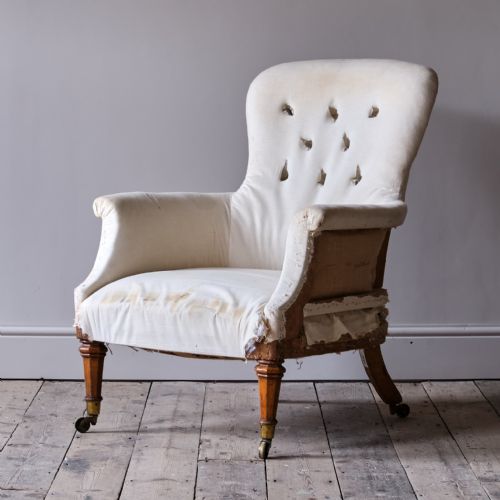
Upholstery methods utilise traditional webbing and stuffing finished in textiles such as leather, velvet, calico, hessian, and damask fabric. Frames display structural carpentry appropriate to library and fireside duties.
Some library armchairs spent centuries absorbing pipe smoke and scholarly debate.
Judgements of quality
Quality rests in the crispness of the timber carving and the architectural proportions of the frame. Superior examples maintain original structural integrity without excessive replacement of timber or inappropriate alterations.
The choice of upholstery materials and the fidelity of the revival period relative to the original nineteenth century design distinguish standard pieces from more distinguished examples.
Thomas Chippendale
The Regency Fireside Chairs Glossary
- Bergère
- An enclosed armchair with cane or upholstered sides and back panels. This form provides substantial enclosure against draughts near an open hearth.
- Library armchair
- A sturdy upholstered seat designed for prolonged reading and study. These chairs typically feature substantial armrests and supportive back heights.
- Wingback
- An armchair featuring protective side panels attached to the backrest. These wings historically deflected cold air away from the occupant's head and neck.
- Spoon back
- A contoured backrest shape resembling the bowl of a spoon. This profile supports the natural curve of the human spine.
- Mahogany
- A durable tropical hardwood prized for its deep reddish brown tone and stability. Cabinet makers utilised this timber extensively for high status seating.
Regency Fireside Chairs: Frequently Asked Questions
What is a Regency fireside chair?
These pieces are nineteenth century and revival armchairs designed for use beside a fireplace, combining wooden frames with upholstered seating.
They appear in various timber configurations and upholstery styles intended to provide comfort and warmth in traditional rooms.
How do I spot a real Regency chair?
Authentic period pieces exhibit timber construction methods, patination, and design characteristics consistent with the early nineteenth century. Revival pieces from later decades often imitate these historical forms with distinct structural details.
Examining the frame joints and timber species helps differentiate between original nineteenth century manufacture and twentieth century revivals.
Were these chairs used only by the fire?
While named for fireside placement, these seating forms served versatile roles in libraries, studies, and drawing rooms. Their sturdy construction made them suitable for general domestic use.
Library and wingback variants provided comfort for reading and conversation throughout the home.
What upholstery materials are common?
Original and revival pieces feature a range of coverings including leather, velvet, damask, calico, and hessian. Many chairs have undergone reupholstery over time to suit modern interiors.
Underneath the surface fabric, traditional stuffing and webbing support the user.