



Antique Mahogany Bergere
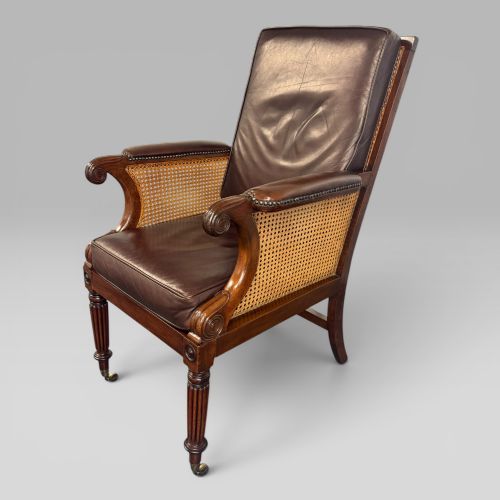
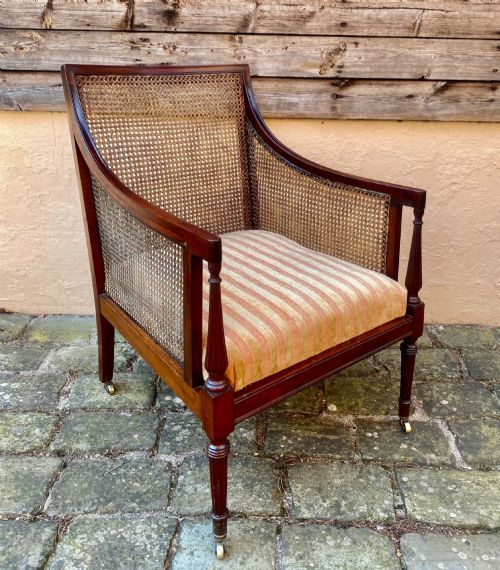
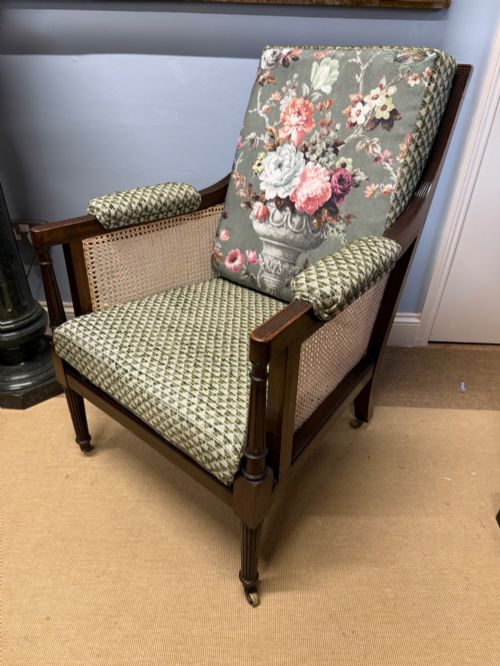
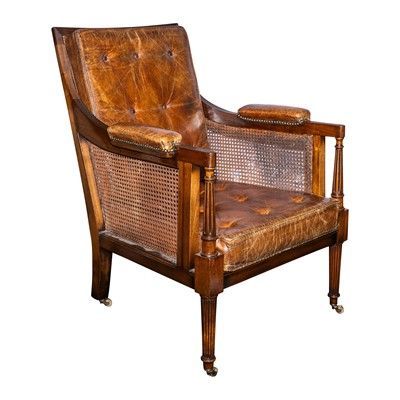
When you look for an antique mahogany bergere, you seek a classic upholstered armchair defined by its woven cane panels and timber frame.
Antique Mahogany Bergere
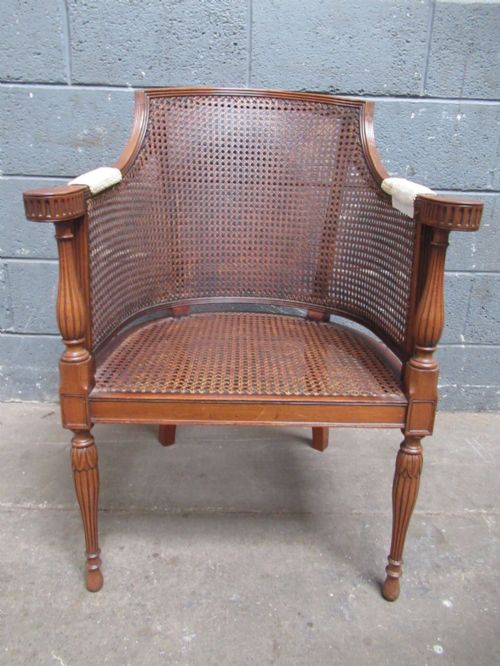
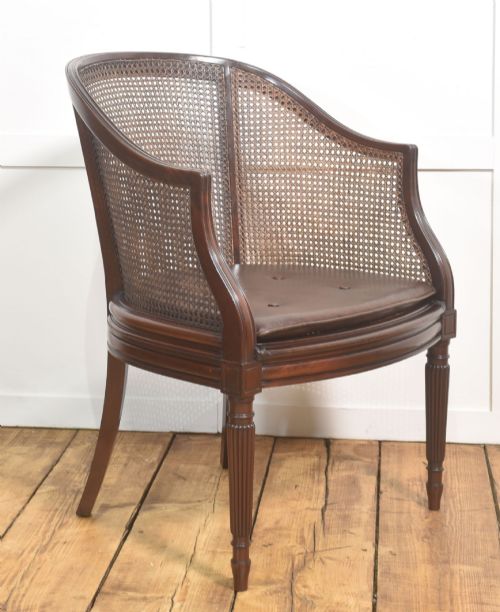
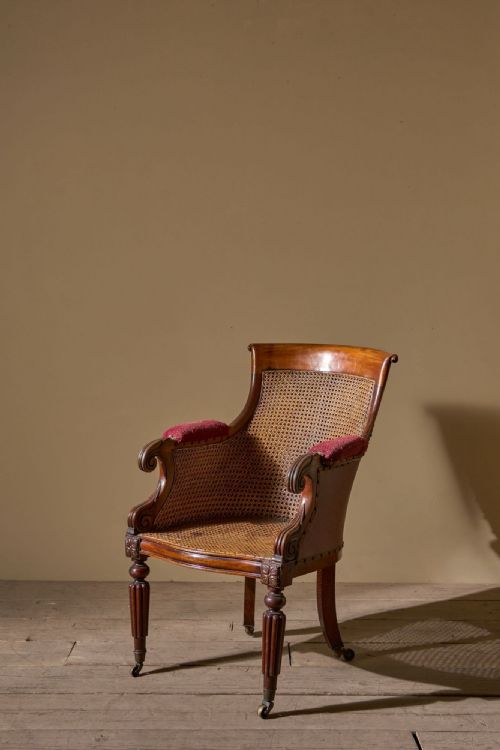
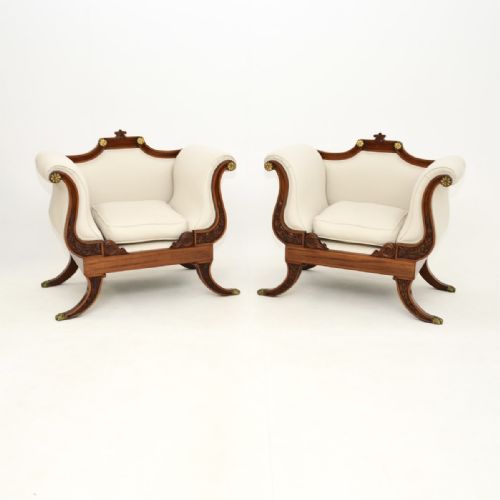
An antique mahogany bergere is a deeply comfortable upholstered seat featuring solid mahogany frames and woven cane sides and backs. These chairs originate across the nineteenth and early twentieth centuries, spanning periods from Regency and William IV through to Edwardian and Art Deco revivals.
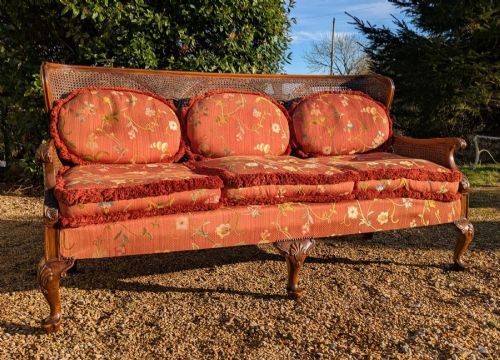
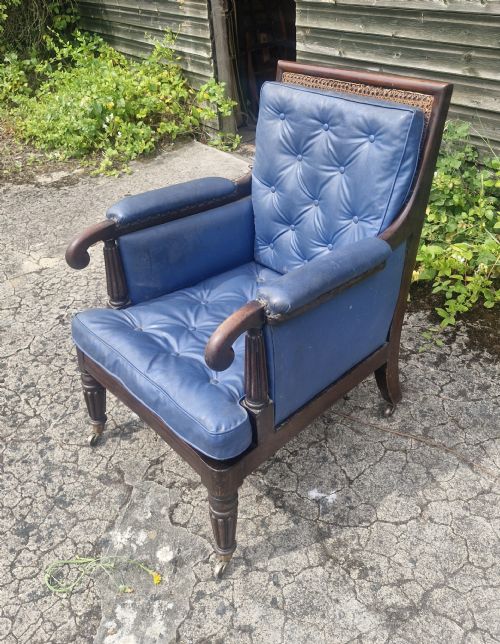
Most examples found in collections take the form of library armchairs, tub chairs, and spacious salon suites designed for reading and lounging. Alongside standard armchairs, makers also produced occasional side chairs, footstools, children's high chairs, and matching sofa suites.
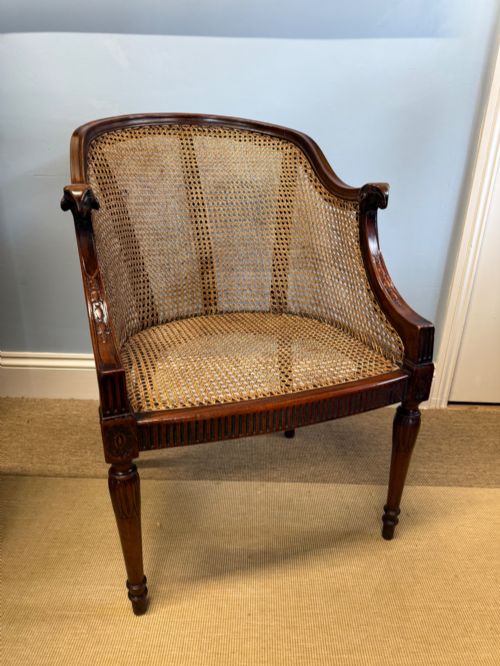
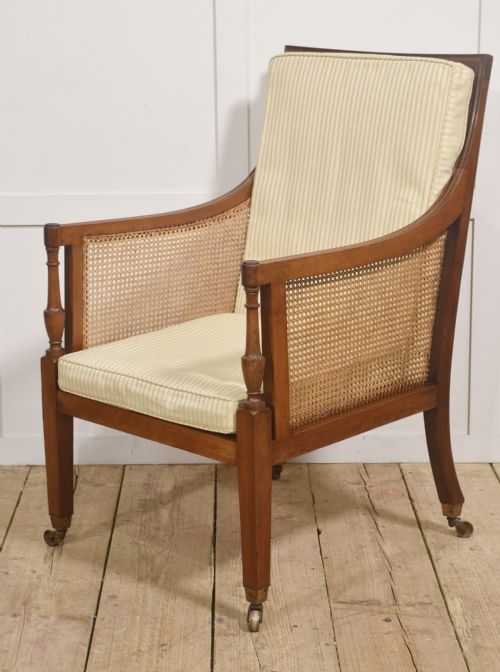
The timber framework typically displays the rich grain of mahogany, complemented by loose cushions upholstered in leather, fabric, or velvet. The defining characteristic remains the tight woven rattan cane panels that form the enclosed back and armrests.
Distinguishing quality across pieces
The refinement of the timber carving and the tightness of the cane weave separate finer examples from standard production pieces. Superior frames exhibit fluid hand-carved details, smooth curves, and dense mahogany with deep natural figuring rather than plain veneer.
The integrity of the woven cane work indicates the standard of original craftsmanship. Even tension across the cane panels and well-preserved natural fibres distinguish pieces made by skilled workshops from later replacements.
Antique Mahogany Bergere Retail Price Guide 2026
Typical asking prices for mahogany bergere among the pieces listed under this phrase on Sellingantiques today, from the lower quarter to the upper quarter. They describe what is for sale here now, not the wider market.
Children's miniature bergere armchairs and high chairs prove that Victorians expected toddlers to lounge with proper library decorum.
Gillows·J. S. Kinsey·Harrods
The Antique Mahogany Bergere Glossary
- Caning
- A method of weaving rattan strips into a patterned mesh. This technique forms the porous back and sides characteristic of bergere seating.
- Regency
- A design period spanning the early nineteenth century defined by classical neoclassical influences. Furniture from this era often incorporates clean lines and dark mahogany timbers.
- Tub Chair
- An armchair with a continuous curved back and arms forming a rounded enclosure. This form wraps around the sitter for added comfort.
Antique Mahogany Bergere: Frequently Asked Questions
How do I care for antique cane?
Keep the woven rattan cane panels clean by dusting them gently with a soft brush and maintaining stable indoor humidity. Avoid placing the chair near direct heat sources which can dry out and snap the natural fibres over time.
Moisturise the wooden mahogany frame with appropriate furniture wax while leaving the cane untreated to prevent clogging the weave.
Are bergere chairs comfortable to sit in?
These armchairs are designed for relaxed sitting, usually featuring deep seats and supportive upholstered cushions filled with materials like feathers. The angled cane back provides a yielding yet supportive structure for the spine.
Most surviving examples retain generous proportions that accommodate long periods of reading or resting in a library setting.
What is the difference between Regency and Edwardian pieces?
Regency pieces date from the early nineteenth century and display classical architectural lines, scroll arms, and dark figured mahogany. Edwardian versions, produced around 1900, often reflect Chippendale revival styles with lighter frames and refined inlay work.
Examining the construction joints, timber oxidation, and secondary woods helps clarify the chronological origin of each armchair.
Can I replace damaged cane on a chair?
Traditional hand-caning can be repaired or entirely re-woven by a skilled artisan using matching rattan materials. Professional restoration ensures the new cane matches the original drilling pattern on the antique frame.
Preserving original cane adds value, but professional re-weaving maintains the structural utility of the chair for daily use.