



Antique Red Glass Jar
These antique red glass jar examples combine deep ruby or cranberry tones with period metalwork, offering striking colour and historic utility for the collector.
Antique Red Glass Jar
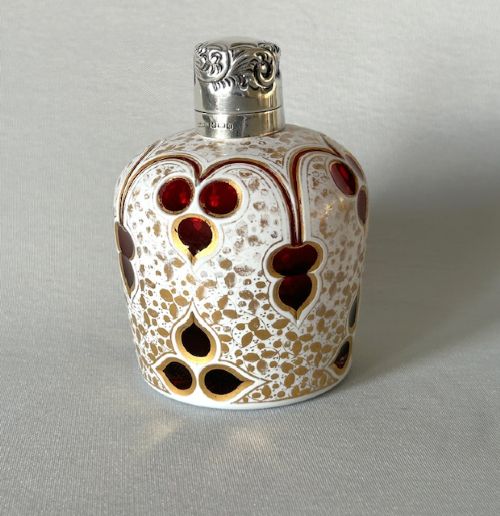
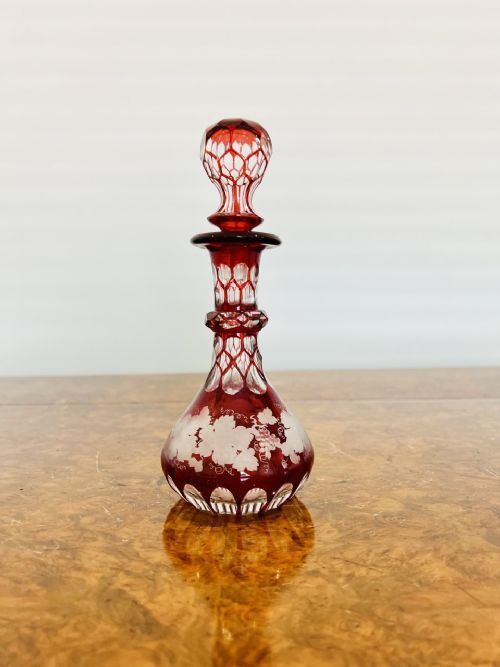
When searching for an antique red glass jar, one encounters a range of forms including lidded biscuit barrels, perfume and scent bottles, trinket boxes, mustard pots, and apothecary jars. These vessels span the Victorian, Edwardian, and early twentieth century periods, reflecting diverse domestic uses from the dining table to the dressing table.
The pieces on this page are most frequently made of cranberry glass or ruby glass, often paired with sterling silver lids, silver plate mounts, or ebonised wood bases. Objects such as biscuit barrels and display domes demonstrate how these coloured glass containers served both decorative and functional purposes in historic interiors.
Origins include English and Bohemian workshops, with some items featuring specific hallmarked silver fittings from towns such as Birmingham. Whether meeting a tall apothecary carboy or a delicate trinket box, the buyer finds items shaped by nineteenth and early twentieth century craftsmanship.
What varies in quality
The weight and depth of the glass colour establish the visual presence of each piece, with richer cranberry tones and even saturation distinguishing superior examples. Engraved or enamelled decoration, such as the white painted figures seen on Mary Gregory pieces, adds complexity to the surface.
The quality of the accompanying metalwork - particularly substantial sterling silver lids with clear hallmarks - elevates the overall standard. Sound construction in the mounts, hinges, and fitted wooden bases ensures the vessel retains its original integrity.
Listings feature Victorian, Edwardian, and early twentieth-century periods, alongside materials such as cranberry glass, sterling silver, enamel, and ebonised wood.
The Antique Red Glass Jar Glossary
- Cranberry glass
- A type of transparent red glass produced by adding gold chloride to the molten batch. It gained popularity during the Victorian era for tableware and decorative items.
- Ruby glass
- A deep red glass coloured with copper or gold oxide, often used for nineteenth-century apothecary vessels, scent bottles, and decorative jars.
- Biscuit barrel
- A covered ceramic or glass jar designed to hold dry biscuits on the Victorian or Edwardian dining table, frequently fitted with a silver-plated or sterling silver lid and swing handle.
- Carboy
- A large, bulbous glass bottle traditionally used for holding liquids, often employed in apothecaries or laboratories during the nineteenth and early twentieth centuries.
- Display dome
- A blown glass cover mounted on a wooden base, used in Victorian homes to protect and showcase taxidermy, ornaments, or delicate curiosities.
Antique Red Glass Jar: Frequently Asked Questions
What is cranberry glass?
Cranberry glass is a distinctive transparent red material created by introducing gold into the glassmaking process. It became a staple of Victorian interior decoration, particularly for tableware and vanity items.
Artisans shaped this coloured glass into biscuit barrels, scent bottles, and trinket jars, often combining the vessels with silver mounts or enamel decoration.
How were apothecary carboys used?
Apothecary carboys were large glass vessels utilised by chemists and pharmacists to store bulk liquids or chemical preparations. Their vibrant red or coloured glass also served as a visible sign in shop windows.
Today, these substantial jars survive as decorative items valued for their scale, form, and historic utility in interiors.
How do I date an antique red glass jar?
Dating these objects relies on examining the manufacturing techniques, glass colour, and any associated metal mounts or hallmarks. Victorian and Edwardian examples often feature stamped silver hallmarks from assay offices like Birmingham, providing precise years.
Stylistic clues, such as ebonised wood bases, engraved patterns, or the specific form of a biscuit barrel lid, further indicate the period of origin.