

Antique Red Dining Chairs
Antique red dining chairs bring rich colour and formal presence to a room, spanning periods from the eighteenth century to the twentieth.
Antique Red Dining Chairs
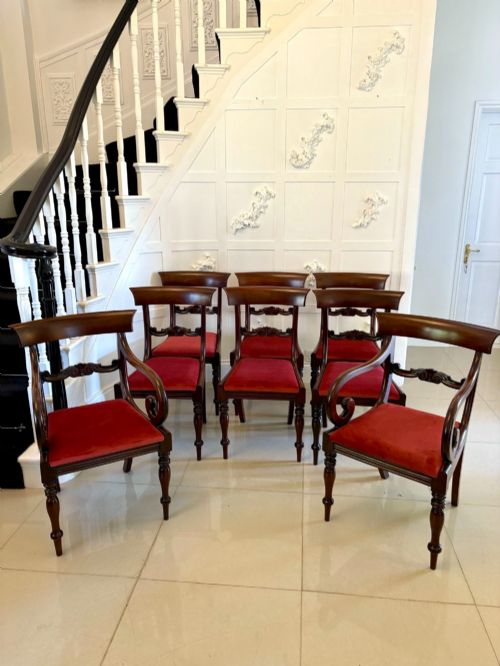
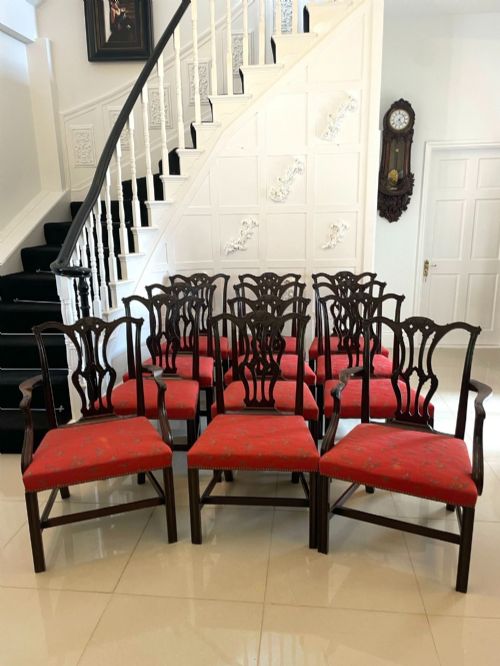
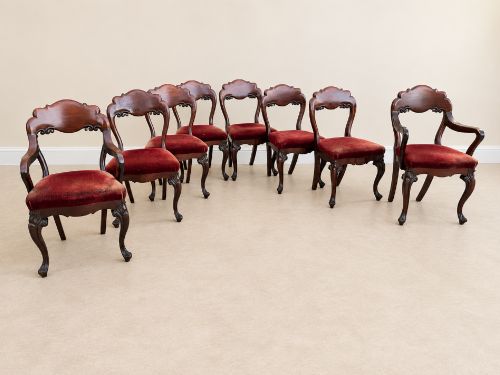
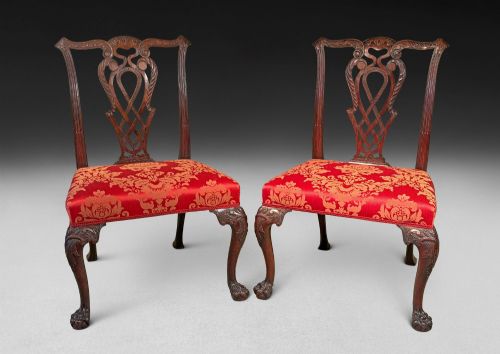
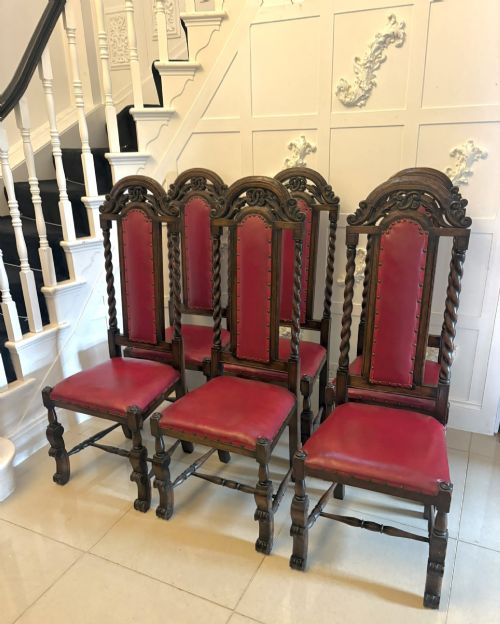
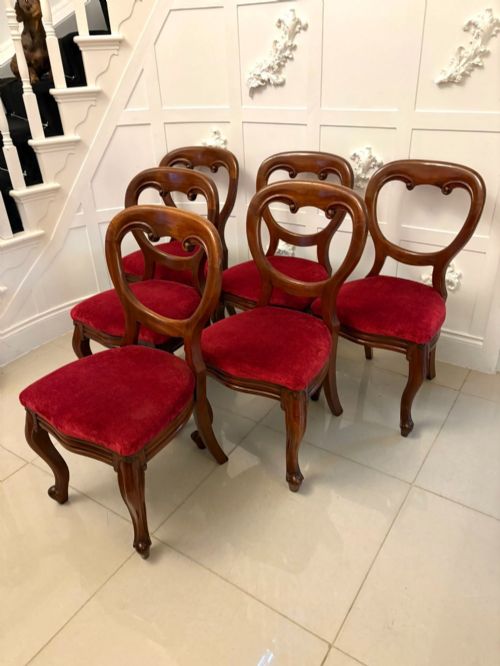
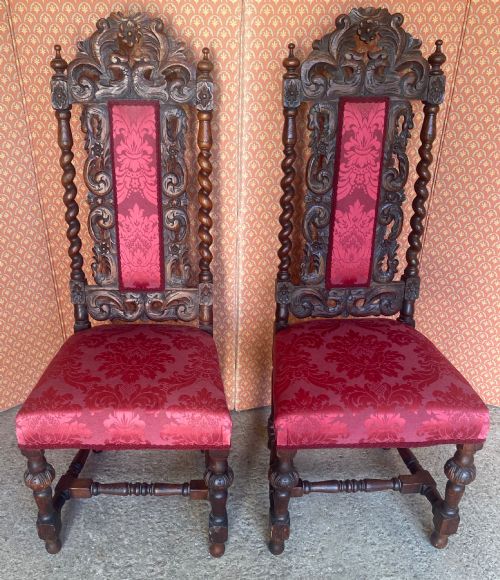
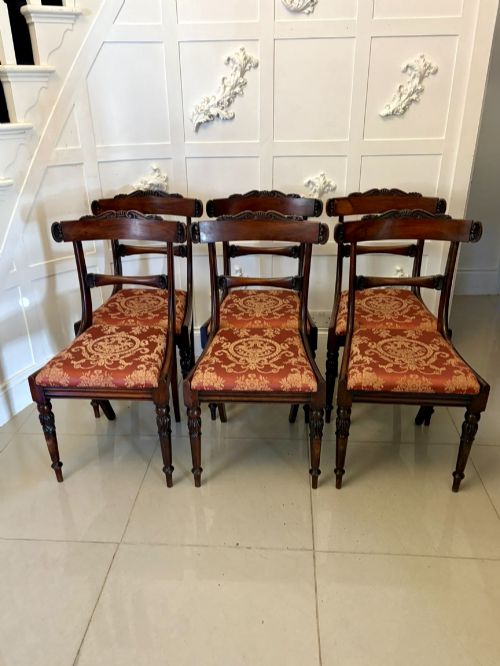
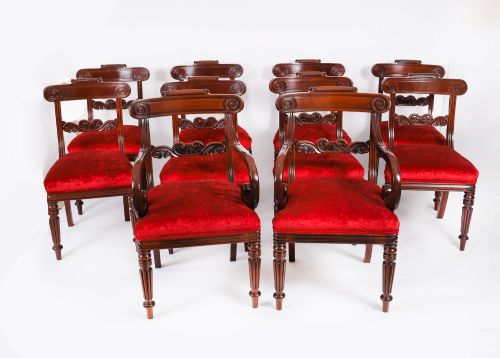
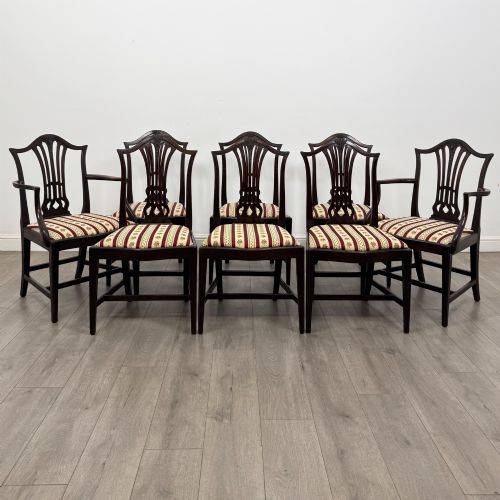
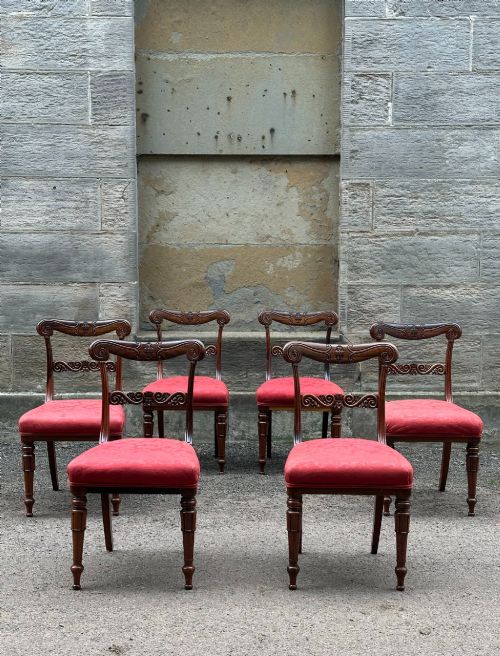
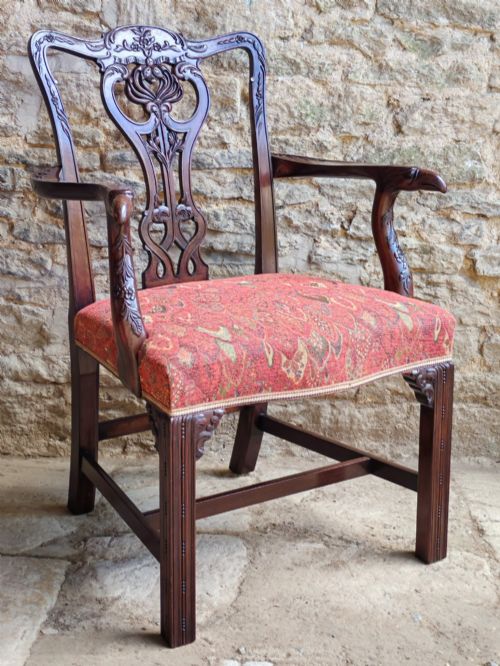
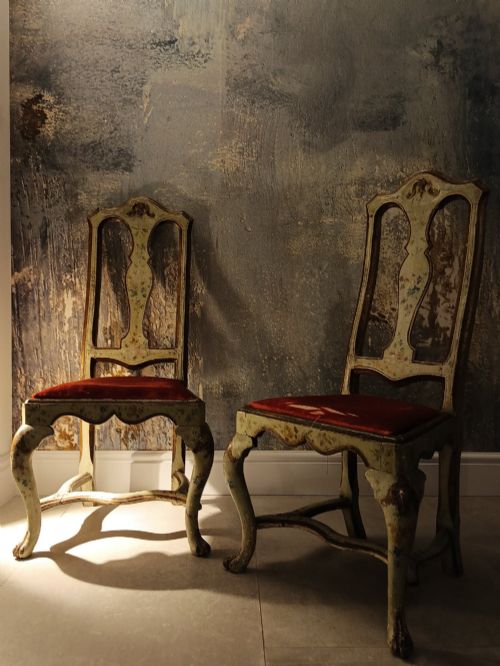
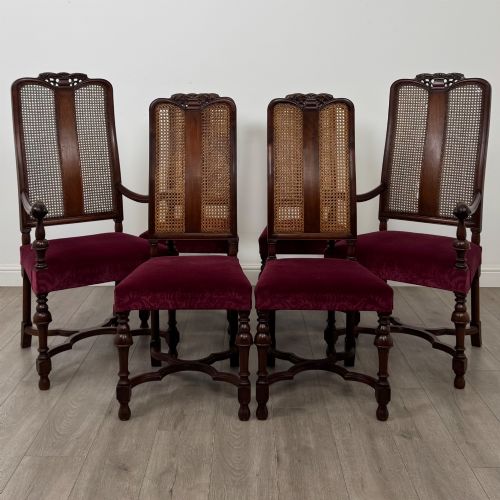
When searching for antique red dining chairs, buyers encounter seating formed primarily from mahogany, walnut, and oak, frequently paired with red leather, velvet, or textile upholstery. These chairs range from single side chairs and pairs to large matched sets of ten or twelve, often including carvers with arms.
The periods represented span eighteenth-century Georgian designs through Regency, Victorian, Edwardian, and later revivals up to the 1930s. Mahogany and oak frame constructions dominate the offerings, with red leather or fabric providing the contrasting seat colour that defines the category.
How they were made
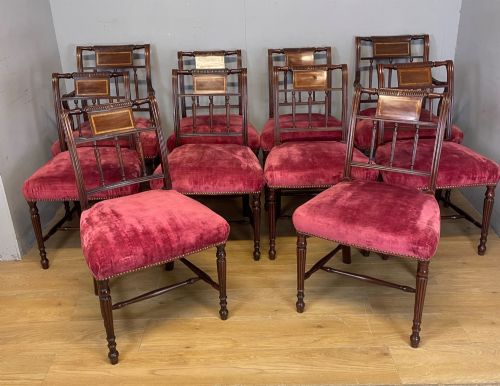
Makers shaped frames from dense hardwoods like mahogany, walnut, and oak, often utilising carved details such as shield backs, ribbon backs, and balloon backs. Brass inlay appears on select Regency examples to accent the timber grain.
Upholstery techniques involve securing fabric, textile, velvet, or leather pads over horsehair or spring stuffing using brass studs or tacks. Joinery relies on traditional mortise and tenon methods to ensure structural integrity across centuries of use.
Dining chairs once doubled as boardroom sentinels, enduring decades of lengthy arguments and formidable meals while keeping their red leather dignity entirely intact.
What varies in quality
The standard of carving and the selection of figured timber separate standard production pieces from finer examples. Uniformity across a large set of twelve chairs requires greater skill than the construction of a single side chair.
The integrity of the original wood frame and the quality of the red leather or textile upholstery dictate the visual impact. Pieces retaining their structural frame without heavy intervention command greater attention from collectors.
Gillows·Howard and Sons·Alfred Allen·Shoolbred and Co·Rigaux
The Antique Red Dining Chairs Glossary
- Carver
- An armchair designed to match a set of dining chairs, usually placed at the head of a table. These often feature sweeping arms integrated into the frame.
- Shield back
- A chair back shaped in the outline of a heraldic shield, popular in late eighteenth-century designs. This form showcases delicate pierced splats and fine woodwork.
- Balloon back
- A rounded, oval-shaped chair back introduced during the Victorian era. It offers ergonomic support through a continuous curved wooden frame.
- Sabre leg
- A concave, outward-curving chair leg resembling a cavalry sword, common in Regency seating. This form adds visual lightness to heavy mahogany frames.
- Splat
- The central vertical strip of wood in a chair back connecting the seat to the top rail. Carved splats often define the stylistic period of a piece.
Antique Red Dining Chairs: Frequently Asked Questions
How do I date an antique red dining chair?
Dating relies on identifying stylistic markers such as shield backs, balloon backs, or sabre legs alongside the primary wood used in the frame. Oak and walnut predominate in earlier centuries, while mahogany gains prominence through the Georgian and Victorian periods.
Secondary indicators include construction methods and the presence of brass inlay or specific upholstery techniques. Comparing the piece to documented examples from makers like Gillows helps narrow the decade of manufacture.
Are large sets difficult to find?
Large sets of ten or twelve chairs survive less frequently because dining parties were smaller and individual chairs suffered loss or damage over generations. Most surviving seating appears as single side chairs, pairs, or sets of four to six.
When sets of eight, ten, or twelve do appear, they often represent matched groupings assembled later or substantial boardroom commissions. Buyers seeking extensive matching seating must examine the uniformity of the timber and carving closely.
What is the difference between a carver and a side chair?
A carver is an armchair equipped with structural armrests, traditionally placed at the ends of a dining table for the host. Side chairs lack arms and are designed to line the sides of the table efficiently.
In many antique dining sets, a dozen chairs comprise ten side chairs and two carvers. The carvers share the stylistic vocabulary of the side chairs but offer wider proportions.
How should I care for red leather upholstery?
Leather upholstery benefits from gentle cleaning and occasional conditioning to prevent the hide from drying out over time. Avoiding direct sunlight and excessive heat preserves both the red dye and the suppleness of the material.
Checking the stability of brass stud work ensures the leather remains securely fastened to the wooden frame. Regular dusting maintains the finish without requiring aggressive chemical treatments.