





Antique Red Clock
An antique red clock brings rich colour and precise mechanical movement to a room, drawing the eye with warm tones of rouge marble, tortoiseshell, and lacquer.
Antique Red Clock
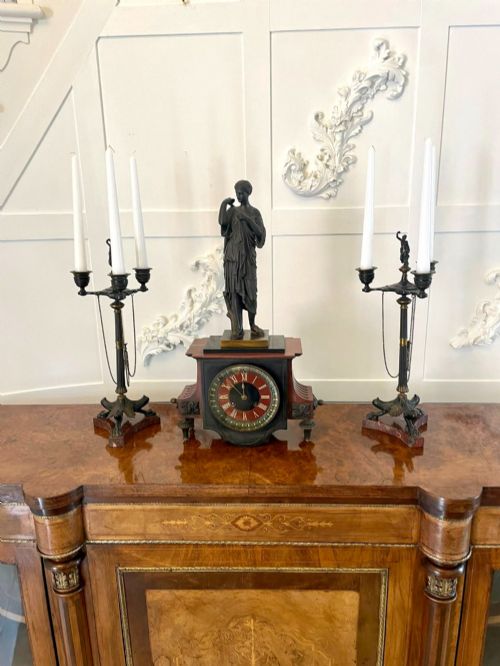
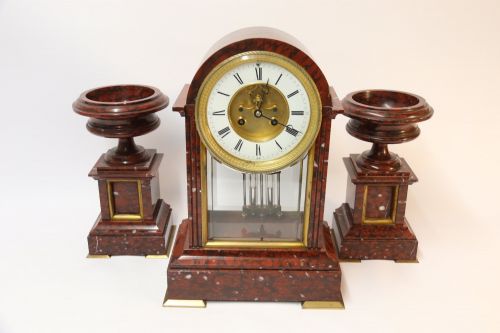
When searching for an antique red clock, you encounter primarily French mantel clocks, longcase clocks, and desk pieces spanning the Georgian, Victorian, and Edwardian eras. These objects range from compact tortoiseshell carriage clocks to large rouge marble mantel garnitures and lacquered longcase clocks.
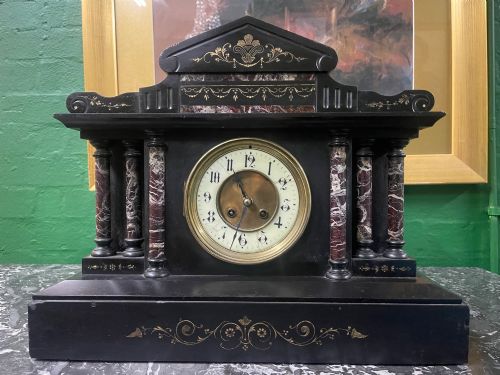
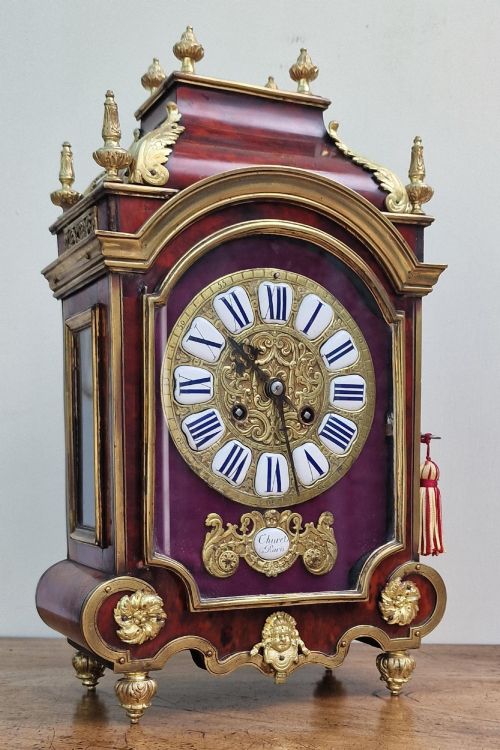
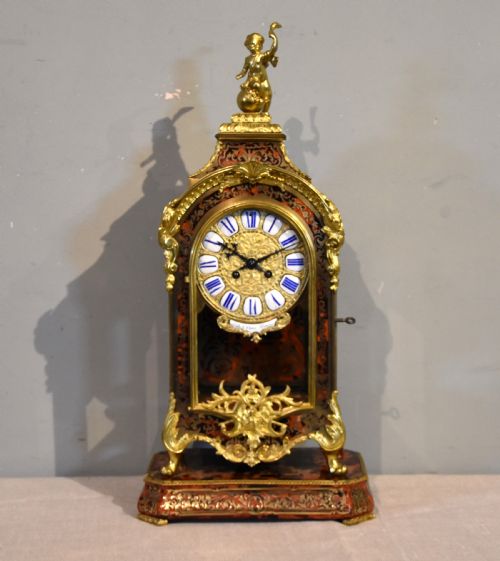
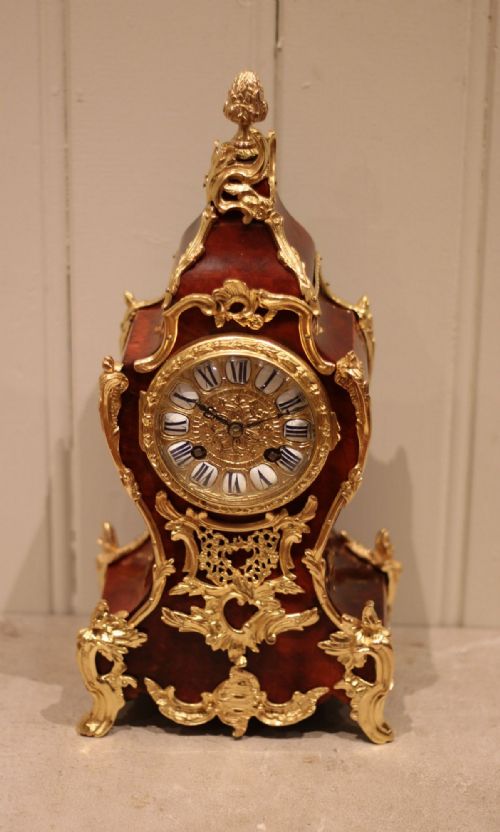
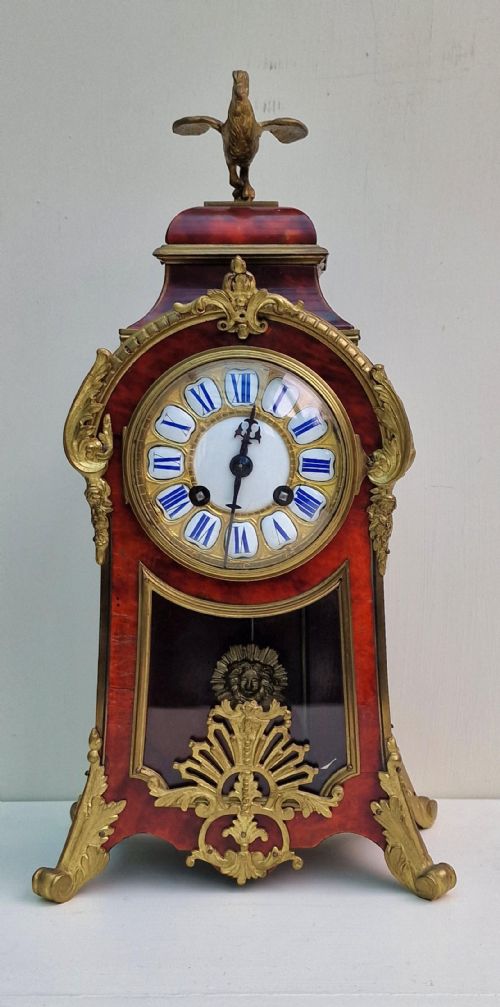
The most common examples on this page are French mantel clocks housed in rouge marble or finished in red-toned tortoiseshell and Boulle marquetry. These pieces originate largely from the nineteenth century, reflecting revival styles such as Louis XIV, Louis XVI, and French Rococo.
Materials and Construction
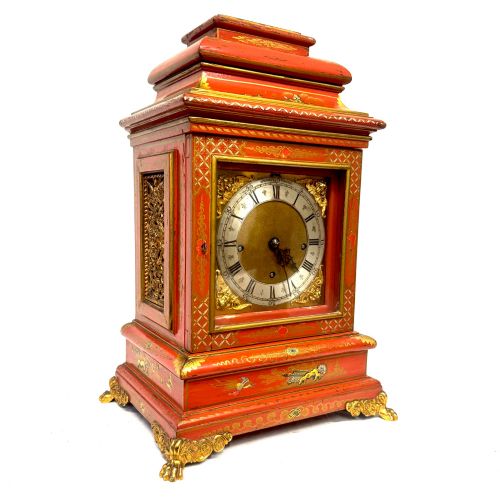
Clockmakers of the eighteenth and nineteenth centuries utilised natural stone, exotic shell, and precious metals, pairing rouge marble and bronze with tortoiseshell inlay. Wood frames received elaborate lacquer work or Boulle marquetry featuring brass and tortoiseshell arranged in ornate patterns.
Movements were constructed from brass and steel, often housing eight-day mechanisms created by established makers. Enamel was applied to dial faces, while gilt bronze and ormolu mounts provided decorative borders and architectural details.
Antique Red Clock Retail Price Guide 2026
Typical asking prices for red clock among the pieces listed under this phrase on Sellingantiques today, from the lower quarter to the upper quarter. They describe what is for sale here now, not the wider market.
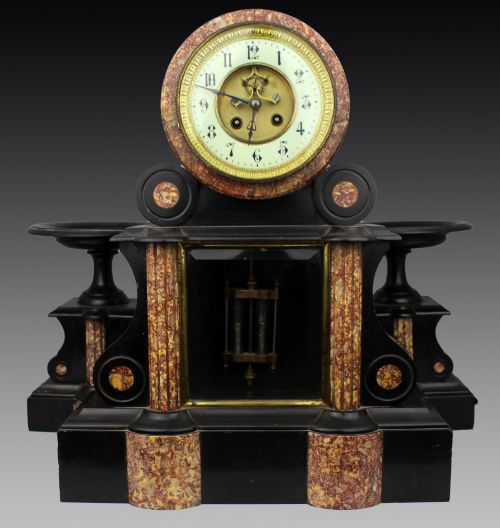
Several clocks hide their inner workings behind translucent tortoiseshell panels or miniature portico columns, letting you watch the brass gears turn while the red shell catches the light.
Craftsmanship and Material Depth
The division between standard production and exceptional work rests in the crispness of the bronze casting and the depth of the red marble or tortoiseshell. Finer examples display meticulous hand-chased mounts and fully signed movements from recognised French workshops rather than mass-produced generic components.
Proportion and architectural harmony separate superior pieces from simpler utilitarian items, particularly in large clock garnitures and tall case clocks. The integration of matching side pieces or original pedestals elevates the standing of the primary clock.
Thuret Paris·Georg Adam Scheid·Japy Freres·Samuel Marti
The Antique Red Clock Glossary
- Boulle
- A form of marquetry using brass and tortoiseshell, developed in France and popular on nineteenth-century mantel clocks. This technique creates a rich tortoiseshell background punctuated by gleaming metallic scrollwork.
- Clock Garniture
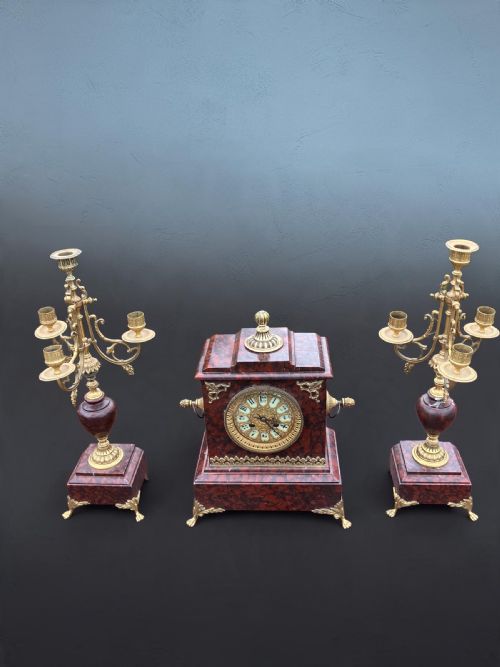
- A set comprising a central clock accompanied by matching side ornaments such as urns or candelabra. These sets were designed to sit harmoniously on a mantelpiece.
- Rouge Marble
- A deep red, variegated limestone used extensively for French mantel clock bodies during the nineteenth century. Its striking natural veining provides a heavy, solid foundation for bronze mounts.
- Portico Clock
- A clock featuring an architectural frame supported by columns, often housing a delicate pendulum swinging within the open central structure.
- Ormolu
- Gilt bronze produced by applying a mercury and gold amalgam to a bronze base, creating a durable golden finish seen on clock mounts and feet.
Antique Red Clock: Frequently Asked Questions
What is an antique red clock made of?
These clocks are primarily constructed from rouge marble, tortoiseshell, or lacquered wood, accented with gilt bronze and brass mounts. Dial faces typically feature white enamel with black numerals.
Movements inside are built from brass and steel components, housing mechanical gear trains driven by springs or weights.
How do I maintain an antique mechanical clock?
Mechanical clocks require regular winding and occasional professional servicing to keep the gear trains functioning smoothly. Placing the clock on a level surface ensures the pendulum beats evenly.
Avoid exposing tortoiseshell and wood cases to direct sunlight or fluctuating humidity to prevent warping or cracking.
Where were most red marble and tortoiseshell clocks made?
The majority of decorative mantel and desk clocks originate from French workshops and Parisian makers active throughout the nineteenth century. Longcase clocks with lacquered red finishes are more commonly of British origin.
French pieces frequently feature distinct maker signatures stamped on the brass movement plates.
What is a clock garniture?
A clock garniture is a matched set consisting of a central mantel clock accompanied by two or more matching decorative side pieces, such as urns or vases. These sets were designed to create a balanced arrangement on a fireplace mantel.
The materials and decorative motifs on the side pieces mirror those found on the main clock body.