


Antique Reception Seating
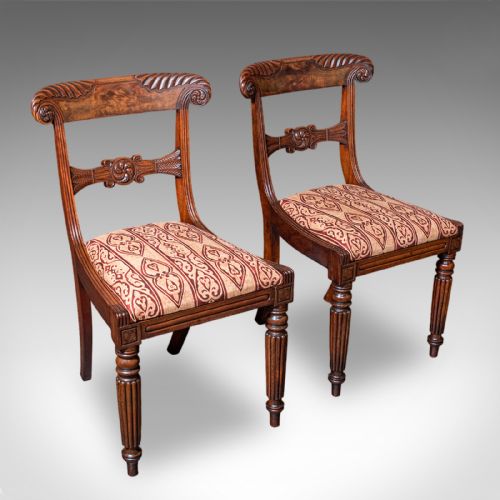
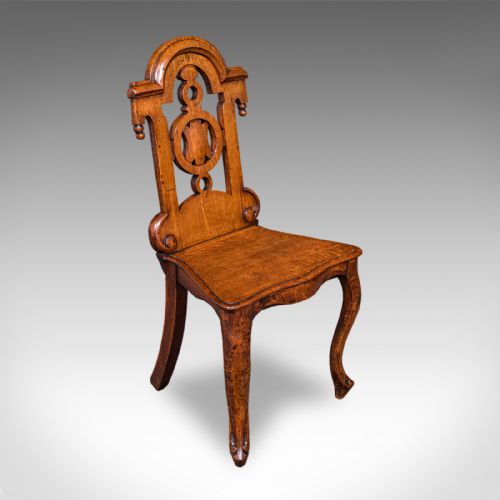
Antique reception seating brings immediate character to an entryway or hallway through solid mahogany, oak, and walnut forms.
Antique Reception Seating
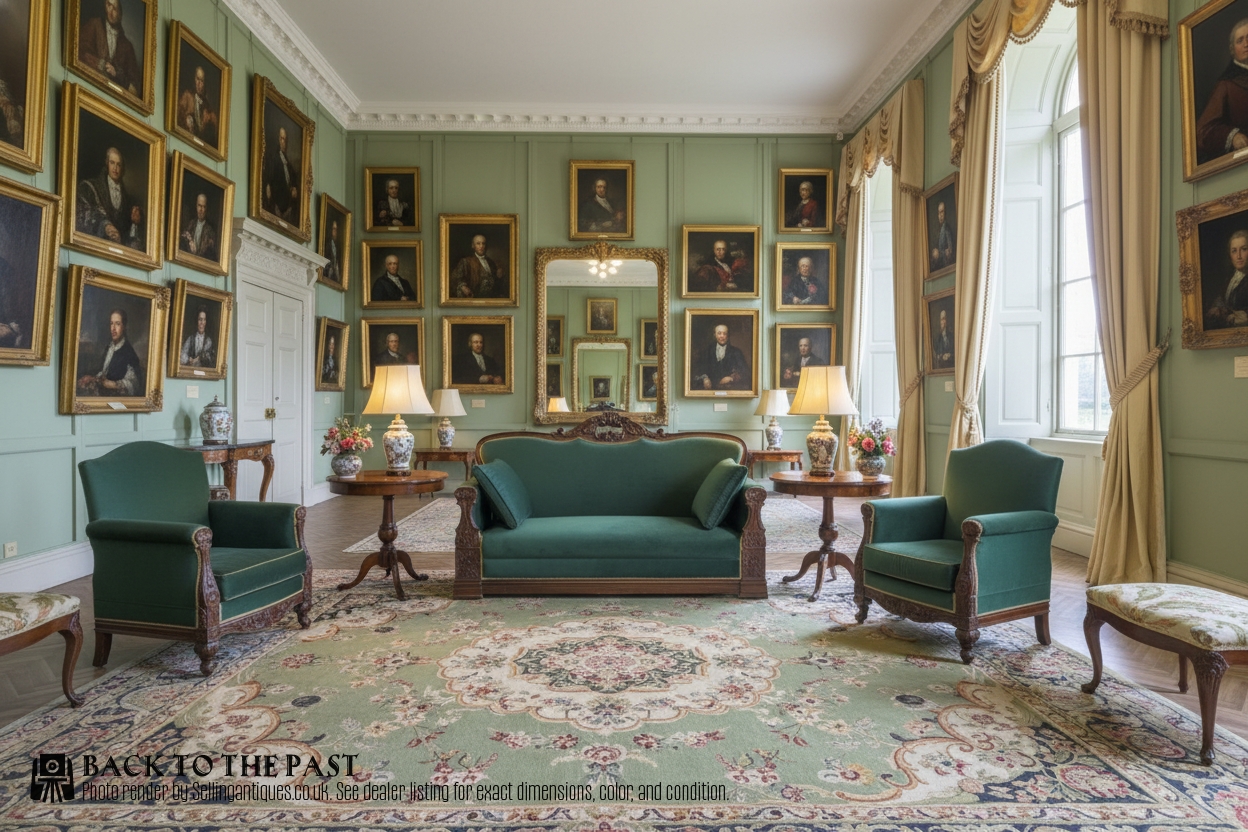
Antique reception seating encompasses chairs, benches, and suites designed to furnish entrance halls, morning rooms, and parlours. These pieces serve both practical and formal roles in welcoming visitors to a home.
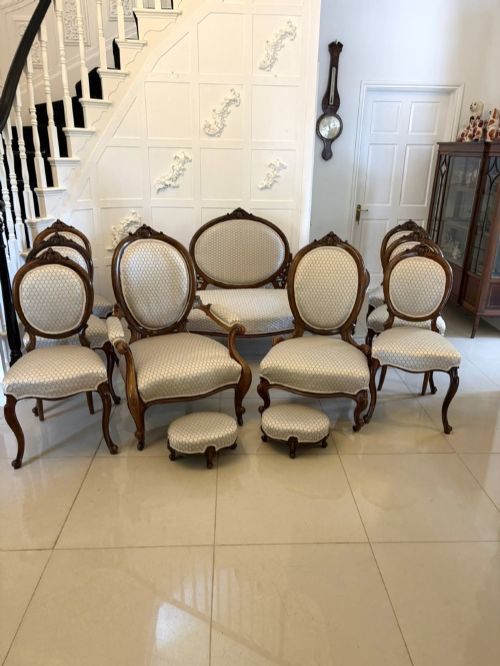
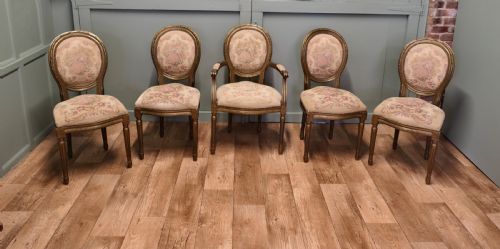
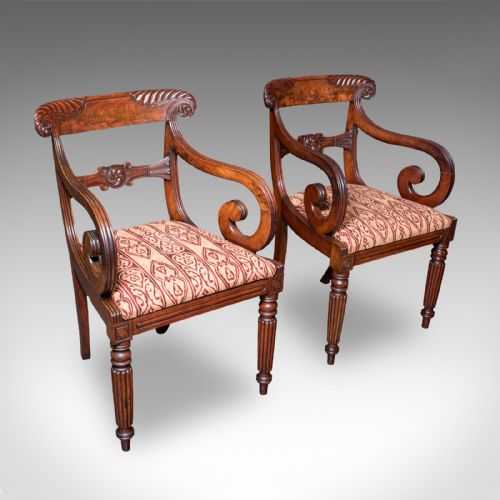
The selection ranges from sturdy oak and walnut hall chairs to upholstered French salon suites and carved mahogany armchairs. Pieces spanning the Regency, Victorian, and Edwardian periods appear frequently across the inventory.
Materials and construction methods
Cabinet makers utilised dense hardwoods such as mahogany, walnut, and oak to build durable frames that withstand regular use in high-traffic hallways. Beech and elm frequently support simpler station chairs and occasional seating.
Decoration relies on carved woodwork, applied brass details, and inlaid veneers to elevate standard chair and bench designs. Giltwood finishes and tailored fabric upholstery distinguish more formal French salon suites and reception armchairs.
Listings feature pieces from the Victorian, Edwardian, and Regency periods, constructed from mahogany, oak, walnut, beech, and giltwood.
Markers of quality and craftsmanship
Superior quality shows in the depth and crispness of carved details on wooden backs and frames. Finely figured mahogany and walnut display natural grain patterns that cheaper timber lacks.
Construction integrity separates everyday furniture from exceptional examples. Robust joinery in the seat frames and sturdy leg attachments ensure lasting stability for daily use.
The Antique Reception Seating Glossary
- Hall chair
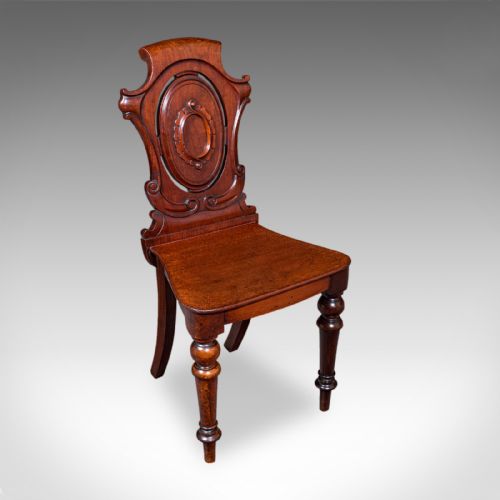
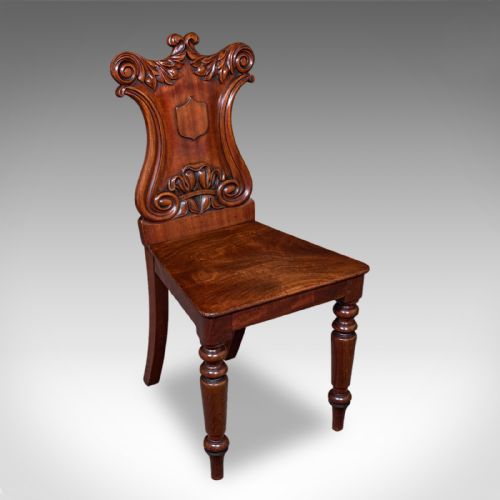
- A rigid wooden seat, usually without arms, placed in an entrance hall and often carved with a crest or shield. These chairs were designed for brief seating rather than comfort.
- Salon suite
- A matching set of upholstered chairs and settees intended for formal entertaining in a drawing room or salon. They frequently feature exposed carved frames in giltwood or mahogany.
- Settle
- A wooden bench featuring a high back and solid arms, designed to block draughts in an entranceway. Early examples often incorporate storage beneath the seat.
- Giltwood
- Timber coated with a thin layer of gold leaf or gilt paint. This finish appears primarily on decorative nineteenth-century French salon furniture.
- Inlay
- A technique where contrasting pieces of wood or other materials are inserted into a recessed surface to form decorative patterns. Edwardian furniture frequently employs this method for visual refinement.
Antique Reception Seating: Frequently Asked Questions
Where should I place an antique hall chair?
Antique hall chairs suit entranceways, landings, and wide corridors where their decorative wooden backs can be appreciated against a plain wall. They are designed for occasional use rather than lounging.
Because they feature wooden seats without upholstery, these chairs withstand the dust and heavy foot traffic of a hallway better than softer parlour furniture.
How do I care for antique wood furniture?
Dust wooden frames regularly with a soft cloth and maintain a stable indoor humidity level to prevent the timber from splitting. Avoid placing pieces near direct heat sources.
Apply a traditional beeswax polish occasionally to nourish the grain of mahogany, oak, and walnut surfaces without building up a sticky residue.
What is the difference between a hall chair and a salon chair?
Hall chairs feature all-wood construction with rigid backs, built for durability and display in entrance spaces. They often display carved crests or shield-shaped panels.
Salon chairs are upholstered seats designed for comfort and conversation in reception rooms, frequently showcasing exposed giltwood frames or delicate inlaid mahogany.
How can I identify a Victorian hall chair?
Victorian hall chairs often exhibit dark timbers like walnut and mahogany, combined with heavy carved decoration, Gothic revival motifs, or shield backs. Construction is typically robust and heavy.
Makers of this era drew inspiration from earlier Regency and William IV styles while incorporating Victorian standards of solid craftsmanship and dense wood selection.