




Antique Reading Lens
These antique reading lens examples are practical library aids and desk accessories, prized for their quality optics and tactile handles.
Antique Reading Lens
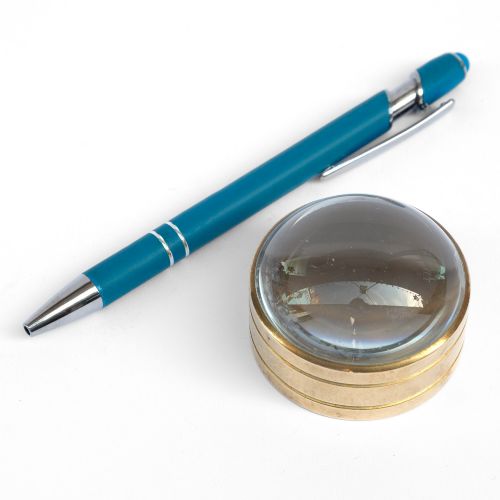
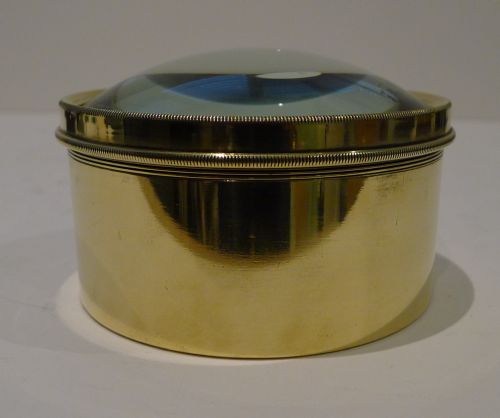
An antique reading lens functions as a practical optical tool and desk accessory, appearing in forms such as hand-held magnifiers, folding designs, and heavy desk-top lenses used as paperweights.
The pieces on this page span the Victorian era, Edwardian period, and Art Deco years, extending from the late nineteenth century through to mid-century modern examples.
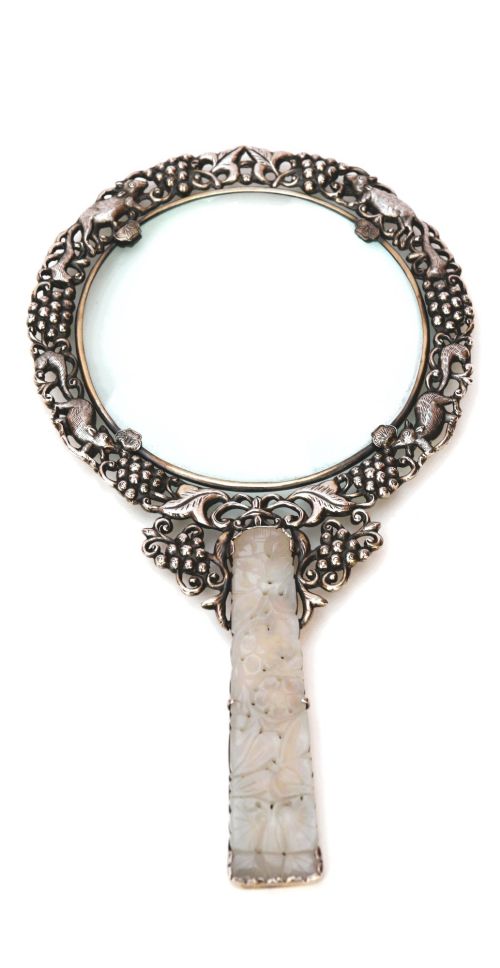
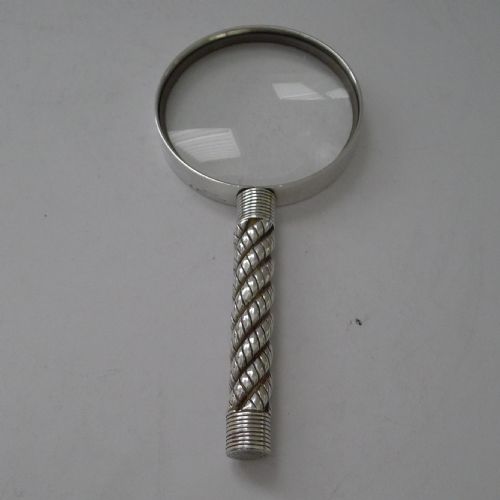
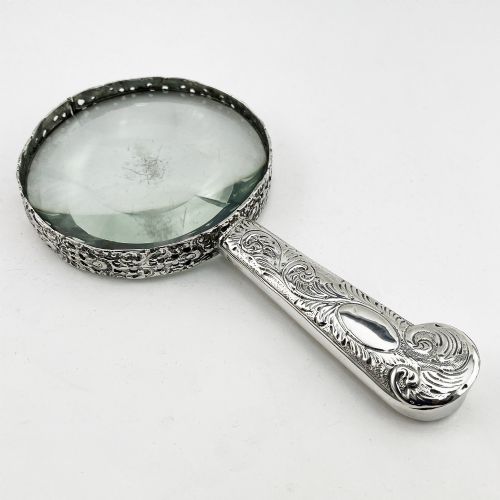
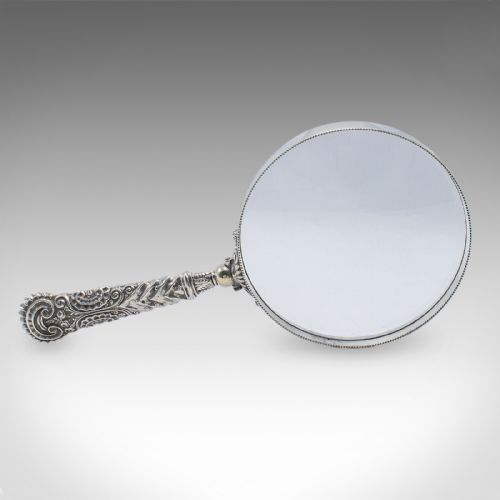
Materials range from simple brass mounts to sterling silver, silver plate, jade, ebony, celluloid, and shagreen, reflecting the utilitarian or luxury purpose of each reading lens.
How they were made
Frames and handles combine optical glass with worked metals like brass, sterling silver, and silver plate, alongside organic materials including jade, ebony, and textured shagreen.
Manufacturing methods involve precision lens grinding paired with metal smithing, pivoting brass stands, and specialist casing techniques such as those seen in patented folding designs.
The listings on this page span several decades, featuring materials from simple brass and glass to exotic shagreen and jade across Victorian and Art Deco eras.
What varies in quality
The distinction between standard items and superior examples lies in the optical clarity of the glass and the weight and finish of the mountings.
Makers who utilised luxury finishes like shagreen and sterling silver, or patented mechanical adjustments, produced pieces of notably higher execution than basic utilitarian versions.
Mappin & Webb·P H Vogel & Co·CW Dixey London·Asprey·Hermes Paris
The Antique Reading Lens Glossary
- Magnifying Glass
- An optical lens set within a frame, designed to enlarge small text and fine details. These were essential library aids before widespread electric illumination.
- Shagreen
- A textured leather prepared from the skin of sharks or rays, frequently employed by luxury makers during the Art Deco period for handles and cases.
- Sterling Silver
- A silver alloy containing ninety-two point five percent pure silver, commonly hallmarked on the mounts and handles of high-grade desk accessories.
- Desk Accessory
- An item kept upon a writing table or library desk for daily use, combining practical utility with decorative appeal.
- Bullseye Lens
- A thick, rounded convex glass lens capable of gathering and focusing light or magnifying a wide field of view.
Antique Reading Lens: Frequently Asked Questions
How do I clean an antique reading lens?
Use a soft microfibre cloth for the glass to avoid scratching the historical surface. Keep moisture away from vintage mounts and organic handle materials.
Harsh chemical cleaning agents can strip patination from silver, brass, and shagreen. Gentle dusting is usually sufficient for regular maintenance.
Were these lenses used only for reading?
Many examples served as general library aids for examining maps, fine print, and botanical specimens. Some heavier brass models doubled as functional paperweights on busy desks.
Folding designs and pocket versions allowed scholars and merchants to carry magnification outdoors. Their dual role as desk ornaments made them popular gifts.
How do I identify an Art Deco reading lens?
Art Deco pieces often feature geometric lines and tactile materials like shagreen paired with silver plate or sterling silver. They typically date from the nineteen-twenties and nineteen-thirties.
Earlier Victorian and Edwardian examples lean towards ornate floral silver repoussé work or simpler turned brass and ebony frames.
What is a pivoting bullseye lens?
A bullseye lens is a thick, convex glass mounted on a pivoting brass stand that tilts to direct light and magnification. These desk-top pieces sat on tables for hands-free reading.
The adjustable stand allowed the user to alter the angle according to the natural light from a window or desk lamp.