



Antique Queen Victoria Figurine
These antique queen victoria figurine pieces capture a monarch in ceramic and bronze, bringing royal history into the home.
Antique Queen Victoria Figurine
An antique queen victoria figurine captures the likeness of the nineteenth-century British monarch in decorative forms suited for display. The pieces on this page span the Victorian period, including specific dates from the eighteen-fifties through the eighteen-eighties alongside general nineteenth-century examples.
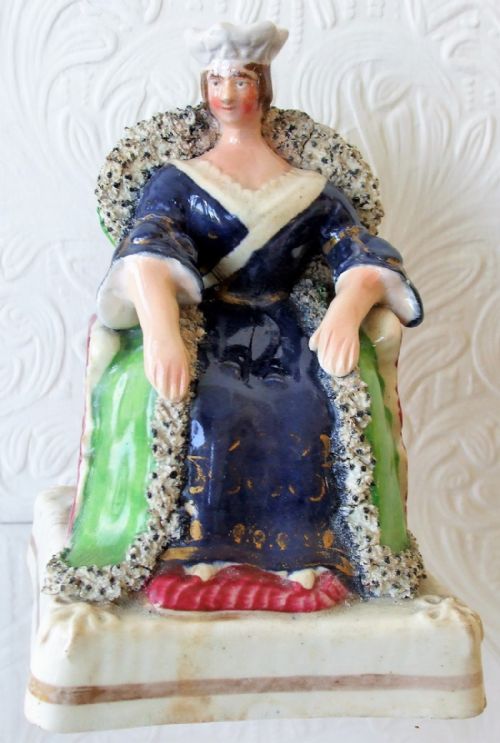
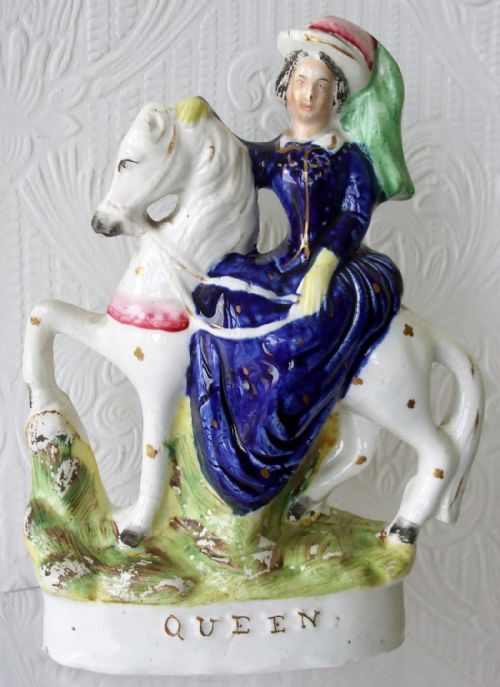
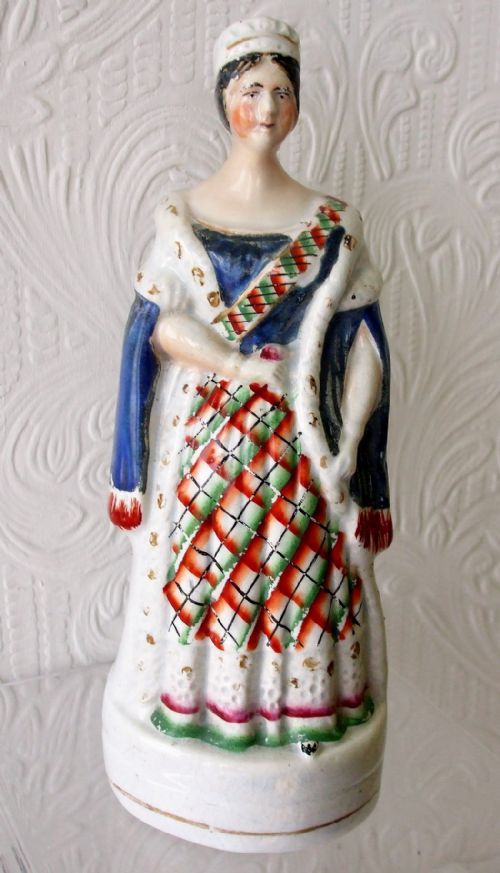
Most items appearing here take the form of Staffordshire pottery royal portrait figures, featuring subjects such as the queen seated, alongside her husband Prince Albert for a wedding piece, or as part of a group with Turkey, England and France. Alongside these ceramic ornaments and flatback figures, buyers also encounter a bronze sculpture dated eighteen ninety-seven.
How they were made
Makers shaped these ceramic pieces from earthenware, applying lead glaze and enamel colours to finish the surfaces. Gilt highlights often accent the details of royal costume and ornamentation.
Some Staffordshire works utilise flatback construction intended for placement against a mantelpiece. The metal works employ bronze casting to produce standing sculptural representations.
Antique Queen Victoria Figurine Retail Price Guide 2026
Typical asking prices for queen victoria figurine among the pieces listed under this phrase on Sellingantiques today, from the lower quarter to the upper quarter. They describe what is for sale here now, not the wider market.
Queen Victoria appears here not just alone, but sharing mantelpiece space with a geopolitical trio representing Turkey, England and France.
What varies in quality
The clarity of glaze and application of gilt work also separate pieces, where cleanly preserved surfaces and well-defined cobalt blue elements elevate the visual presence of a royal portrait figure.
The Antique Queen Victoria Figurine Glossary
- Flatback
- A ceramic figure modelled with a finished front and a flat, unglazed or minimally finished back designed to stand against a wall or mantelpiece. This style is common in nineteenth-century Staffordshire portrait pieces.
- Staffordshire pottery
- Earthenware and ceramic wares produced in the pottery district of Staffordshire, England, encompassing popular portrait figures and decorative ornaments. These works often depict prominent monarchs and historical figures.
- Lead glaze
- A glossy coating containing lead oxide applied to ceramics before firing to provide a smooth, waterproof surface. It enhances the brightness of the underlying enamel colours.
- Gilt
- A thin layer of gold or gold-coloured material applied to the surface of ceramics or bronze sculptures. It highlights specific decorative elements such as crowns, robes, and inscriptions.
Antique Queen Victoria Figurine: Frequently Asked Questions
What periods do these figures come from?
The pieces available on this page originate entirely from the nineteenth century, spanning decades from the eighteen-fifties to the eighteen-eighties. They belong firmly to the Victorian era.
Specific dated pieces include examples from eighteen-fifty, eighteen-sixty, eighteen-seventy, eighteen-eighty, and eighteen-ninety-seven. This timeframe reflects the reign of Queen Victoria and the peak of Staffordshire portrait figure production.
How were these figures displayed originally?
Staffordshire portrait figures and flatback ornaments were typically displayed on mantelpieces, sideboards, and shelves within nineteenth-century homes. Their flat backs allowed them to sit flush against interior walls.
Bronze sculptures of the queen served as substantial desk ornaments or cabinet pieces for prominent display in private studies and parlours.
Do these pieces depict other historical figures?
While the focus remains on Queen Victoria, certain portrait figures include other notable individuals. Examples encompass wedding figures pairing the queen with Prince Albert.
Other composite groupings feature the monarch alongside representatives of allied nations, such as the Turkey, England and France group.