
Antique Purple Stone Jewellery
Antique purple stone jewellery brings together deep violet amethysts, paste and garnets set in gold and silver for daily wear.
Antique Purple Stone Jewellery
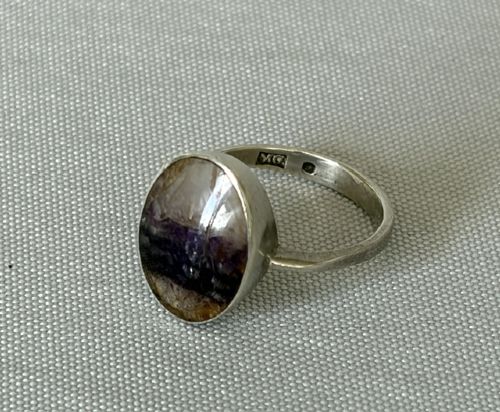
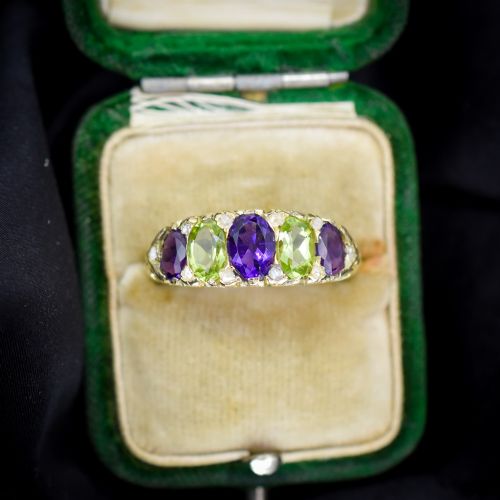
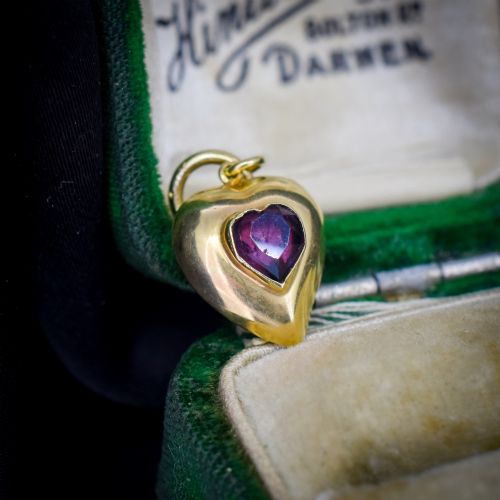
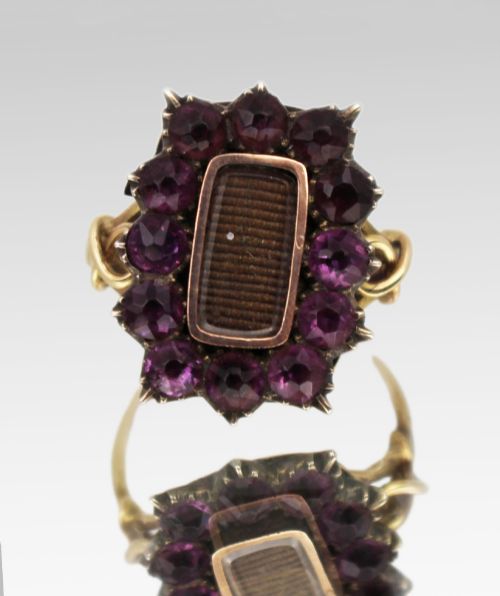
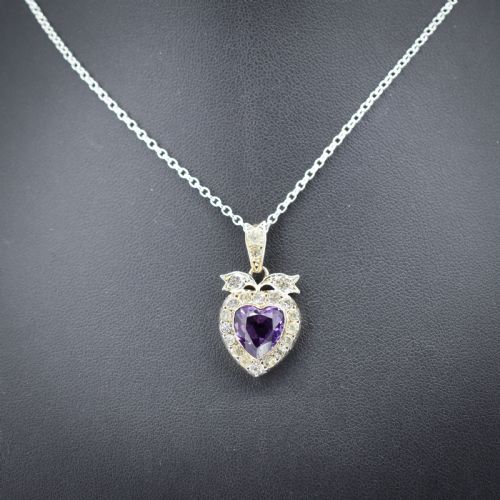
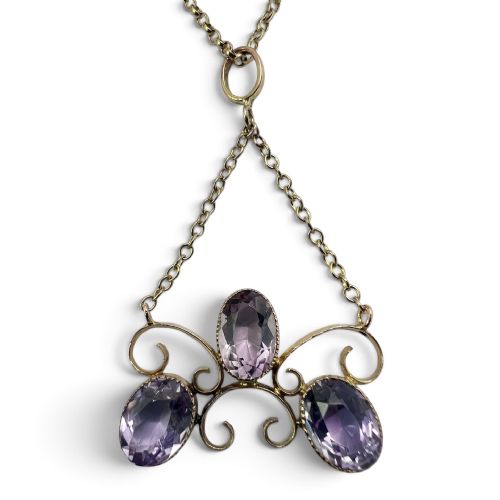
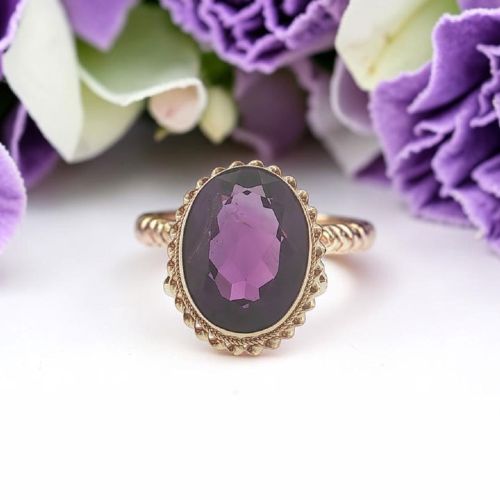
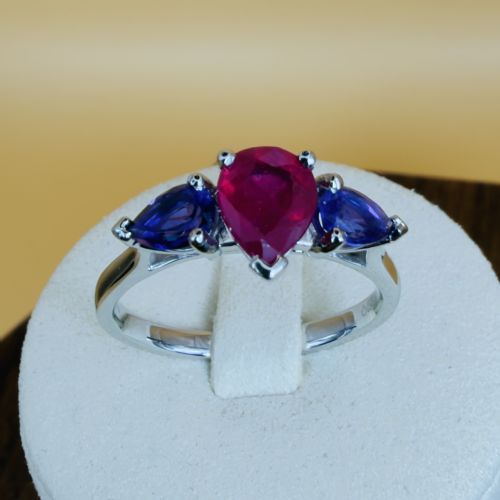
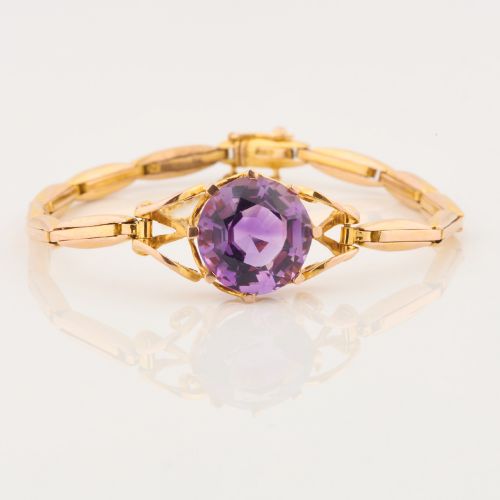
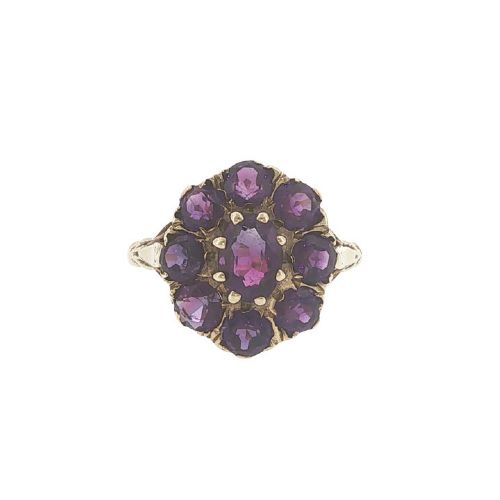
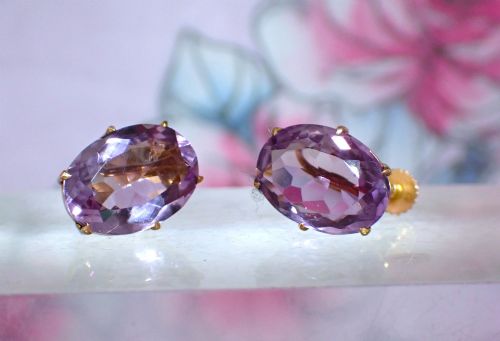
When you search for antique purple stone jewellery, you encounter rings, pendants, earrings and bracelets spanning the Georgian, Victorian, Edwardian and Art Deco periods. These pieces showcase violet and purple gems, predominantly amethyst alongside paste, glass, alexandrite and blue john.
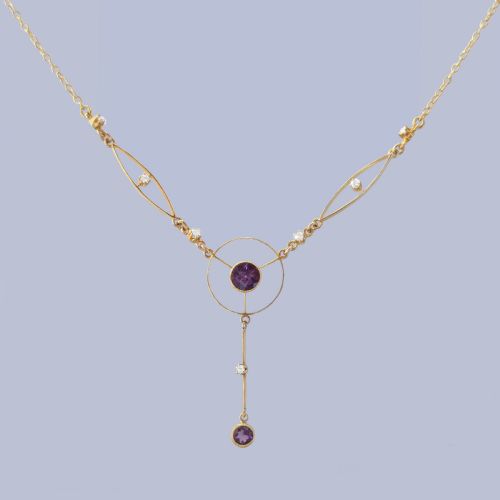
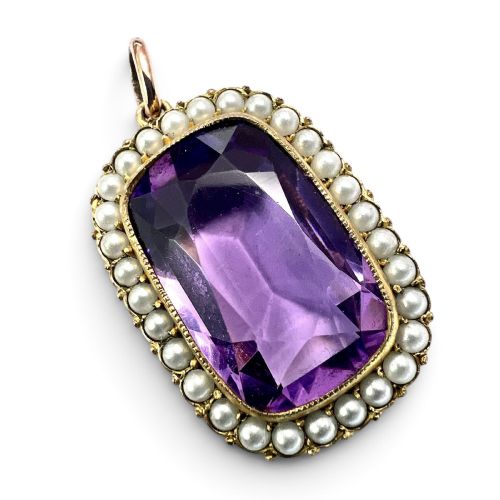
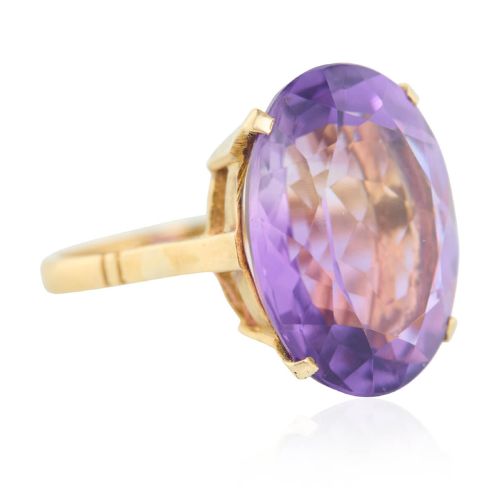
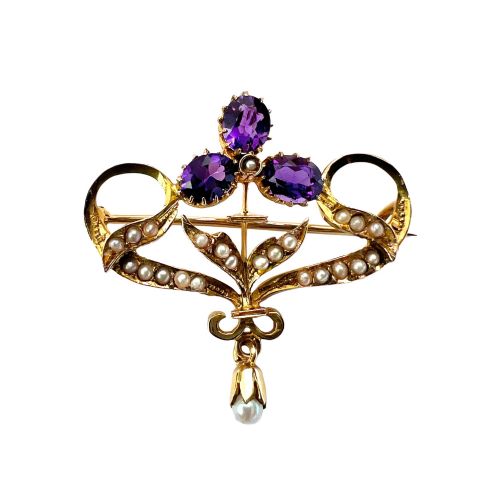
The selection ranges from delicate 9ct gold and seed pearl lavalier necklaces to substantial 18ct gold dress rings and lockets set with large faceted stones. Victorian mourning items and Edwardian drop earrings appear frequently alongside Art Nouveau floral motifs.
Originating across the nineteenth and early twentieth centuries, these ornaments reflect shifting tastes in gemstone cutting and precious metal mounting. Pieces move from flat-cut Georgian work to elaborate halo clusters and delicate claw settings.
How these pieces were made
Goldsmiths utilised 9ct, 12ct, 14ct, 15ct and 18ct yellow and white gold alongside silver to mount the stones securely. Metalwork techniques combined casting with hand-finishing, integrating wirework for delicate lavalier drops and solid bezels for heavier quartz varieties.
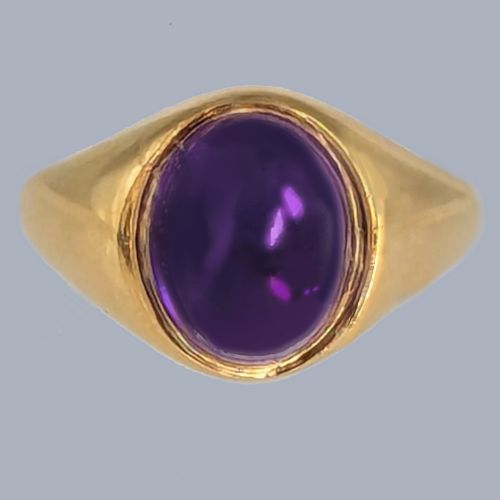
Stones were shaped using period cutting methods, resulting in round, oval, flat-cut and cabochon profiles that maximised the depth of the purple colour. Seed pearls and diamonds frequently accompanied the central purple gems, held in place by tiny grain settings and claw mounts.
Materials recorded across the inventory include amethyst, seed pearl, diamond, silver and yellow gold in various purities.
What varies in quality
Quality rests upon the depth and saturation of the purple stone, the crispness of the gemstone facets and the structural integrity of the gold or silver mount. Heavier gold weights and substantial stone carats distinguish grander dress rings and lockets from lighter everyday wear.
Design execution separates standard production from finer artisan pieces, particularly in Art Nouveau and Edwardian work where organic whiplash lines and integrated seed pearls demand precise hand assembly. The survival of matching natural pearls and original clasps also marks higher grade examples.
S. Blanckensee & Son
The Antique Purple Stone Jewellery Glossary
- Amethyst
- A purple variety of quartz prized for centuries in rings, pendants and brooches. Its colour ranges from pale lilac to deep violet.
- Lavalier
- A pendant necklace featuring a central drop suspended from a chain, popular during the Edwardian and Art Nouveau eras.
- Seed Pearl
- Tiny, naturally small pearls often used in clusters around a central coloured stone in Victorian and Edwardian brooches and rings.
- Cabochon
- A gemstone shaped and polished with a smooth, rounded surface rather than faceted edges, common in larger amethyst rings and earrings.
Antique Purple Stone Jewellery: Frequently Asked Questions
What periods do these pieces span?
The inventory covers items from the Georgian and Victorian eras through the Edwardian, Art Nouveau and Art Deco periods, extending into mid-century designs.
Victorian and Edwardian examples appear most frequently, featuring characteristic gold work and pearl accents alongside amethysts.
What metals were used for the settings?
Goldsmiths employed various gold purities including 9ct, 12ct, 14ct, 15ct and 18ct yellow gold, alongside white gold and silver.
Choice of metal often aligns with the period, with higher carat golds common in earlier Victorian pieces and 9ct widely used in later Edwardian items.
Are all the purple stones amethysts?
While amethyst is the primary purple gemstone present, the category also includes purple glass paste, alexandrite, blue john and garnets.
Paste offers the brilliance of faceted stones using period glass techniques, while blue john provides natural banded fluorite.
How should I care for antique gold jewellery?
These pieces require gentle handling due to their age and delicate components like seed pearls or thin gold chains.
Clean them with a soft cloth and avoid harsh chemical dips or ultrasonic cleaners that can damage soft organic pearls or loose stone settings.