





Victorian Amethyst Dress Ring
These Victorian amethyst dress rings combine rich purple quartz with warm gold settings, offering a striking piece of antique jewellery for everyday wear.
Victorian Amethyst Dress Ring
A victorian amethyst dress ring brings together deep purple quartz and period gold work, creating a wearable piece of history. When you examine a victorian amethyst dress ring on this page, you encounter pieces spanning the nineteenth century alongside occasional later twentieth-century examples.
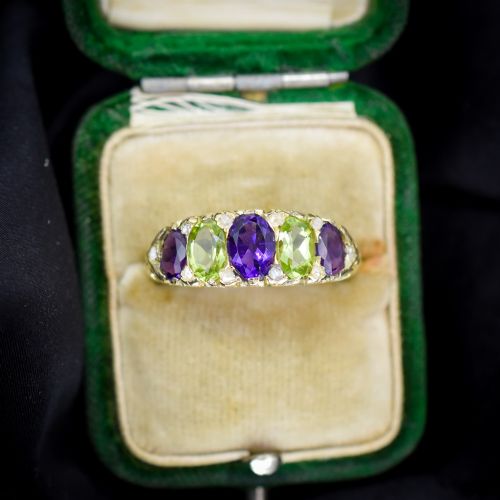
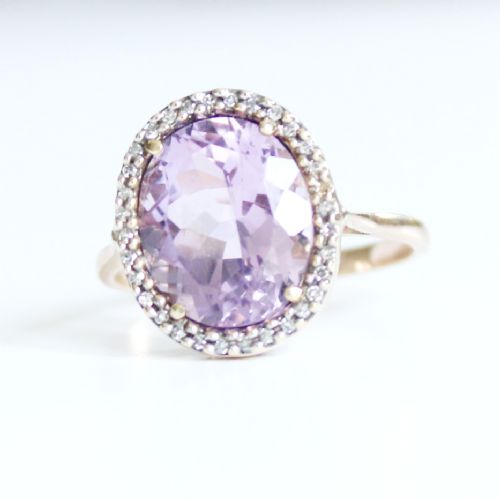
The selections showcase cluster and five-stone configurations, frequently accompanied by pearls or diamonds. These items originate predominantly from the Victorian and Edwardian eras, rendered in metals ranging from nine-carat to eighteen-carat gold.
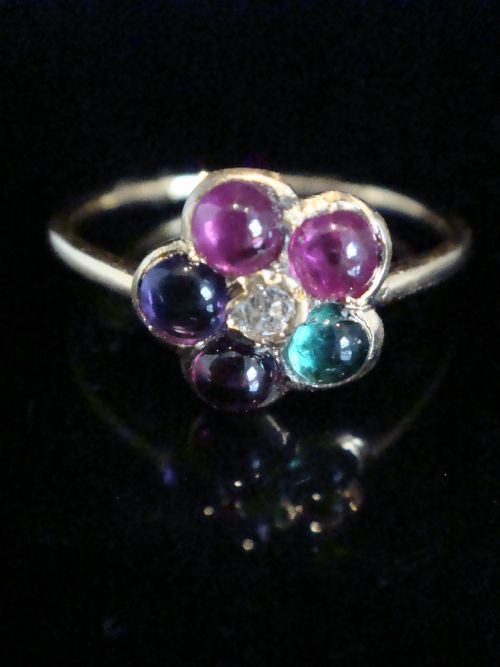
Cluster designs position the amethyst at the centre surrounded by smaller stones, while five-stone layouts present a row of graduated gems. Each arrangement reflects the aesthetic priorities of its period, maintaining the characteristic charm of nineteenth-century craftsmanship.
Materials and construction
Goldsmiths utilised varied purities of gold, including nine-carat, fifteen-carat, and eighteen-carat variations in yellow and rose hues. These metals form the structural mounts that securely hold the amethysts, diamonds, emeralds, and seed pearls.
Gemstones are hand-set into claw or bezel mountings, paired with delicate pearl work where seed pearls outline the central quartz. The combination of amethyst with diamonds or pearls demonstrates traditional Victorian bench techniques.
Listings feature amethysts paired with diamonds, emeralds, and seed pearls set across nine-carat, fifteen-carat, and eighteen-carat gold.
Quality variations
Quality rests upon the depth of colour in the amethyst and the purity of the surrounding gold. Higher-tier pieces employ fifteen-carat or eighteen-carat gold paired with well-matched diamonds and uniform seed pearls.
The precision of the stone setting and the overall balance of the cluster or five-stone layout define the execution. Finer examples maintain crisp detail in the metalwork and secure stone retention without excessive wear to the prongs.
The Victorian Amethyst Dress Ring Glossary
- Cluster ring
- A ring design featuring a central gemstone surrounded by a border of smaller stones. This layout maximises visual impact and was favoured throughout the nineteenth century.
- Seed pearl
- A very small, naturally occurring pearl, often drilled and threaded or set into Victorian jewellery. These delicate elements create subtle borders around amethysts.
- Five stone ring
- A setting displaying five gems in a horizontal row across the finger. Graduated versions place the largest stone in the centre.
- Rose gold
- An alloy of gold and copper yielding a warm pinkish tint. This metal tone is characteristic of many nineteenth-century pieces.
Victorian Amethyst Dress Ring: Frequently Asked Questions
How do I care for my ring?
Clean your Victorian amethyst dress ring gently with warm soapy water and a soft brush, avoiding harsh ultrasonic cleaners. Amethyst can fade with prolonged exposure to direct sunlight.
Store the piece separately in a fabric-lined box to prevent the gold and softer gems like pearls from scratching against other jewellery.
Can these rings be resized?
Most gold rings can be altered by a competent jeweller who understands antique settings. The feasibility depends on the shank thickness and whether stones extend entirely around the band.
Cluster and multi-stone configurations require careful handling to avoid disturbing the adjacent claw settings during the process.
Are these rings suitable for daily wear?
While these pieces were made for regular use, their antique nature demands mindful treatment. Removing the ring during manual tasks protects the soft seed pearls and delicate gold claws from damage.
Amethyst has a reasonable hardness for daily wear, but older settings benefit from periodic inspection by a professional jeweller.
What is a REGARD ring?
A REGARD ring spells out a sentimental acrostic using the first letter of each gemstone: Ruby, Emerald, Garnet, Amethyst, Ruby, and Diamond. These romantic pieces were popular in the Victorian era.
Variations occasionally incorporate different stones while maintaining the coded message of affection.