
Antique Purple Jewellery
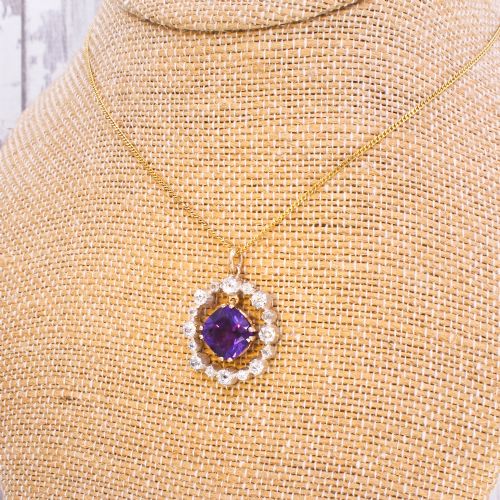
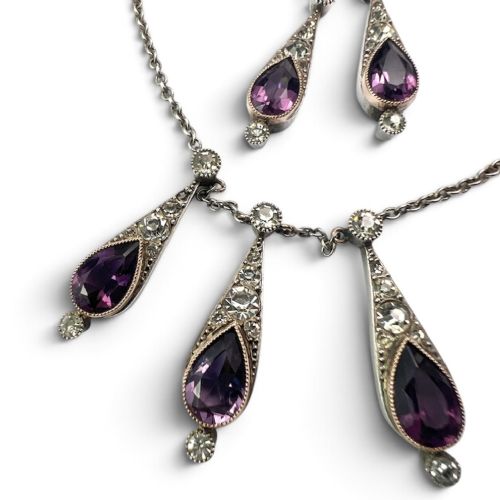
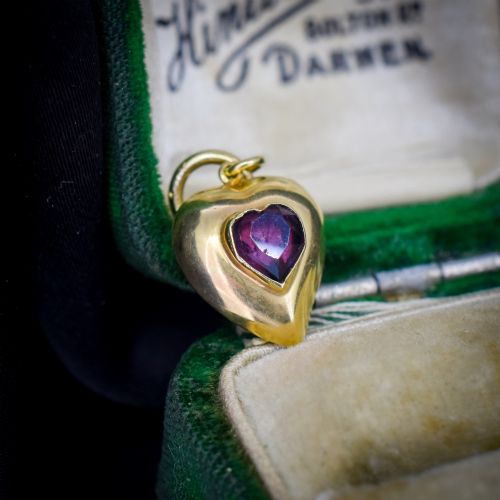
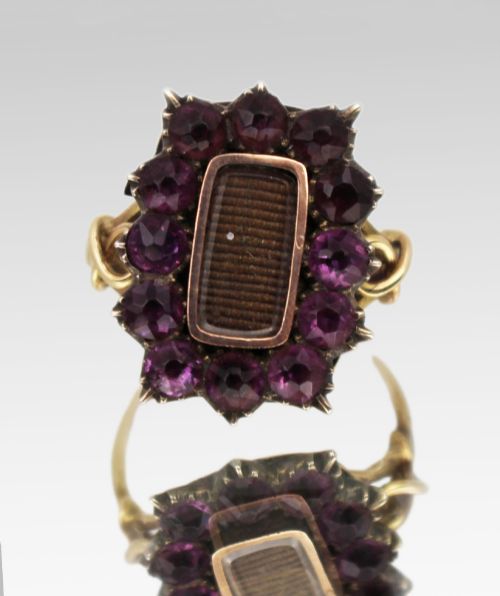
Antique purple jewellery brings together deep violet amethysts, almandine garnets and rich pastes, captured in yellow gold and silver settings.
Antique Purple Jewellery
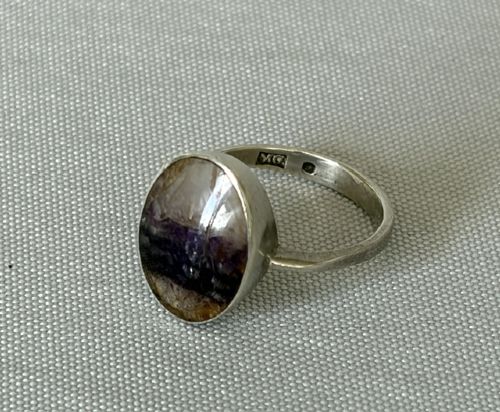
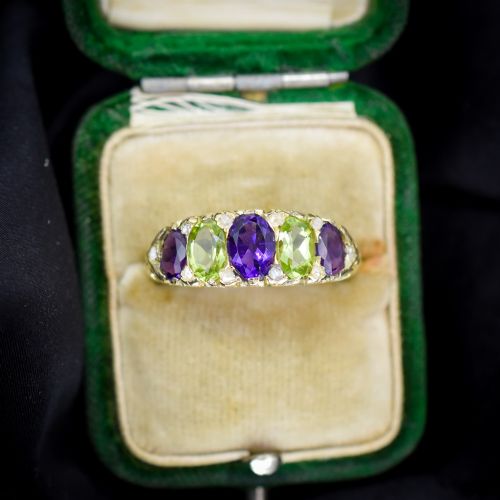
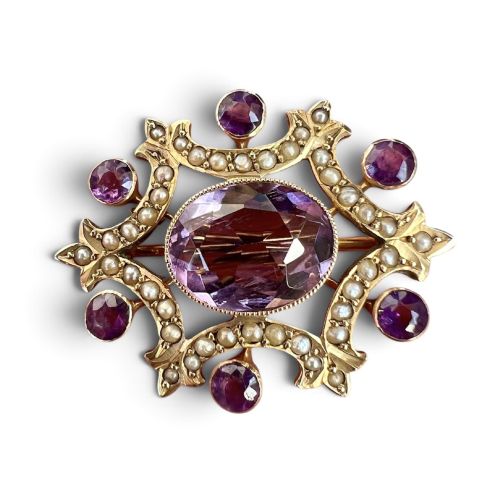
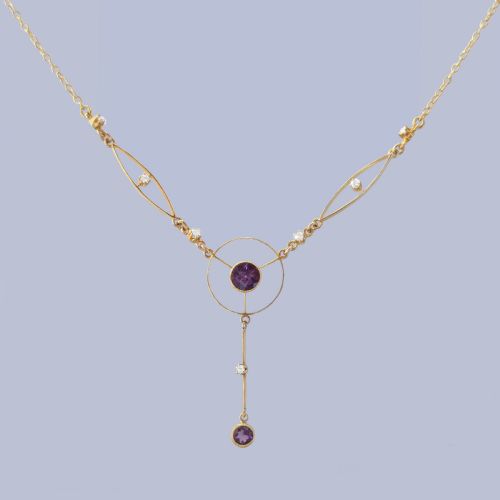
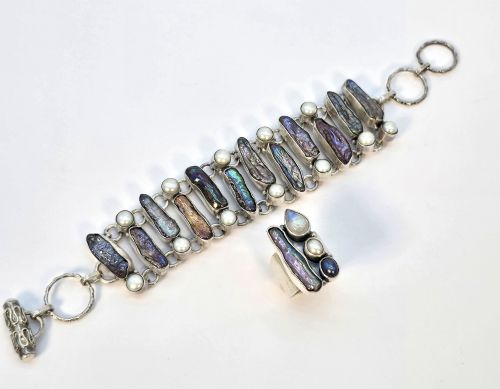
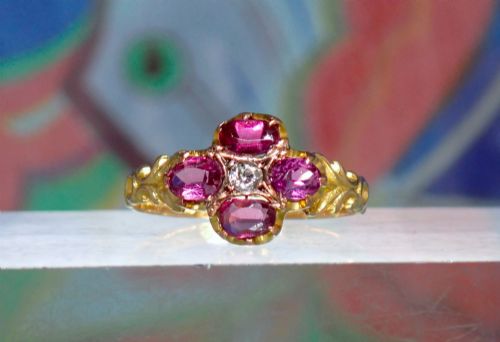
Antique purple jewellery centres on pieces adorned with amethyst, almandine garnet, purple glass paste and lavender jade. These items span Victorian, Edwardian, Art Deco and mid-century periods, capturing violet and deep purple tones in wearable forms.
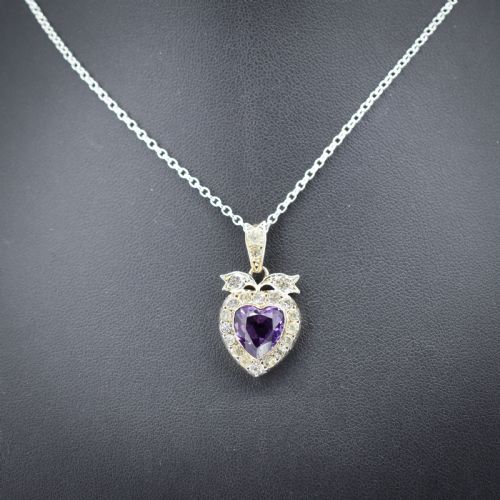
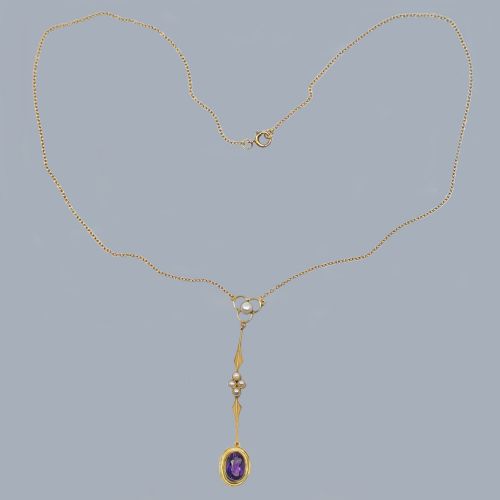
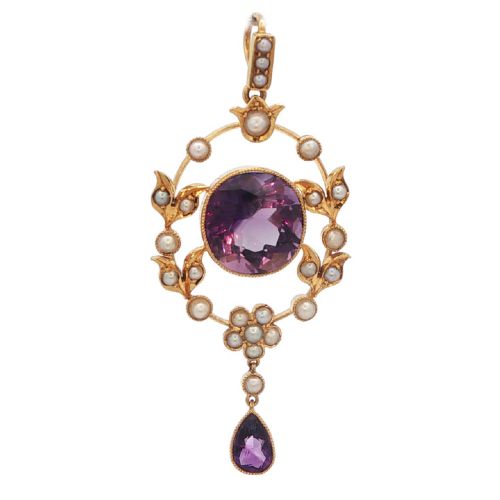
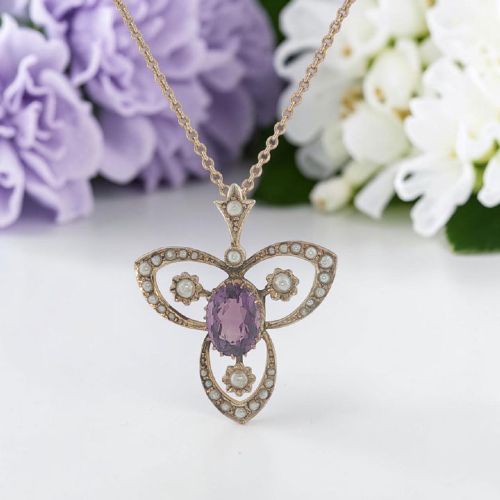
Earrings, rings, pendants, necklaces, brooches and bracelets dominate the selection. Edwardian and Victorian pendant necklaces paired with seed pearls appear frequently alongside multi-stone rings and drop earrings.
The materials range from nine-carat, fifteen-carat and eighteen-carat yellow gold to silver and rolled gold. Pieces often reflect specific design movements like Art Nouveau curves or geometric Art Deco lines.
How they were made
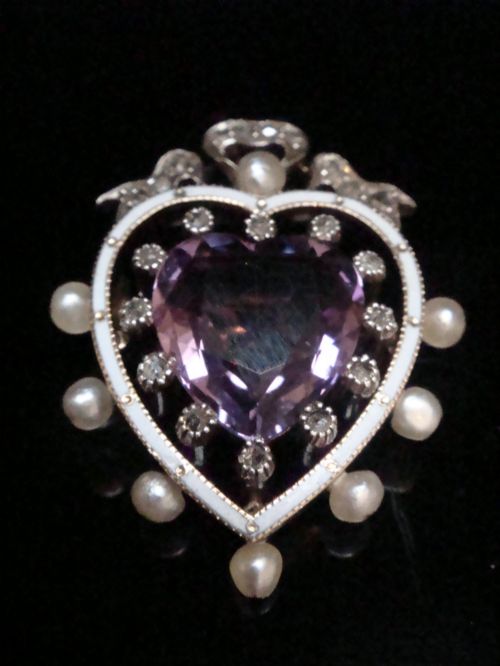
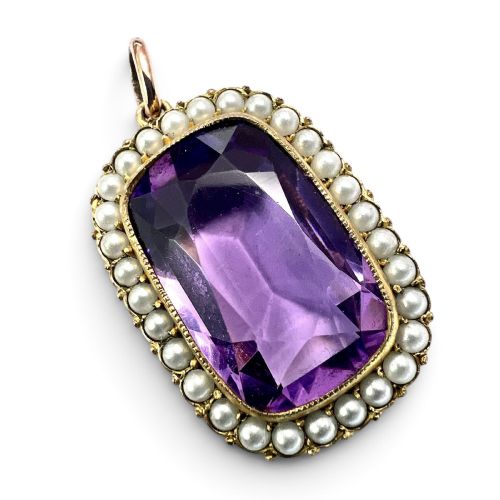
Goldsmiths set violet stones into mounts of nine-carat, fifteen-carat and eighteen-carat gold, or worked them into silver filigree and enamel. Seed pearls were meticulously threaded and wired around central amethyst clusters in Edwardian lavaliers and brooches.
Cut-down collet settings and claw settings secured stones like amethysts and old-cut diamonds. Techniques such as guilloche enamel and hollow stamping shaped the lightweight gold components found in drop earrings and chains.
What varies in quality
The depth of colour and clarity in the purple stones dictate visual impact, with deeply saturated amethysts and vibrant almandine garnets standing apart from paler quartz or clouded paste. The precision of goldwork, from delicate seed pearl arrangement to crisp filigree, marks out superior craftsmanship.
Originality of setting and intact components influence the overall integrity of a piece. Retaining matching stones, undamaged enamel and clear hallmarks distinguishes well-preserved examples from altered or heavily restored items.
Harold Arthur Lazarus·S Blanckensee And Son·Waring And Gillow
The Antique Purple Jewellery Glossary
- Amethyst
- A purple variety of quartz prized for its violet hue. It serves as the primary gemstone across Victorian and Edwardian rings and pendants.
- Seed pearl
- A tiny, naturally small saltwater pearl used in clusters or borders. These delicate pearls surround central amethysts in Edwardian brooches and lavaliers.
- Lavalier
- A pendant necklace featuring a suspended gemstone drop. This flowing style is characteristic of Edwardian jewellery design.
- Guilloche
- An ornamental engraving technique covered with translucent enamel. It appears on Edwardian pendants and adds patterned depth beneath coloured surfaces.
Antique Purple Jewellery: Frequently Asked Questions
What periods do these purple pieces come from?
The listings span the Victorian, Edwardian, Art Deco, and mid-century eras. You will find nineteenth-century garnet rings alongside nineteen-twenties paste earrings and nineteen-fifties jade.
The majority lean toward the Edwardian and Victorian periods, showcasing yellow gold settings and delicate seed pearl accents paired with amethysts.
How do I identify Edwardian purple jewellery?
Edwardian pieces often utilise nine-carat or eighteen-carat yellow gold combined with amethysts and seed pearls. Look for flowing lavalier necklaces and intricate wirework.
Designs from this era frequently incorporate symmetrical floral motifs, light settings, and hanging drops that distinguish them from heavier Victorian styles.
What is the difference between amethyst and paste?
Amethyst is a natural purple quartz gemstone mined from the earth. Paste is a form of heavy lead glass cut and polished to imitate precious stones.
Antiques use both materials extensively, with purple paste offering vivid colour and brilliance in silver and gold-set earrings and pendants.
How should I care for antique gold and amethyst jewellery?
Clean these items gently using warm soapy water and a soft brush, avoiding harsh chemical dips that can damage pearls or enamel. Store each piece separately to prevent scratching.
Seed pearls and antique foil-backed stones require particular caution, as prolonged exposure to moisture weakens their delicate settings and adhesive.