



Antique Purple Earrings
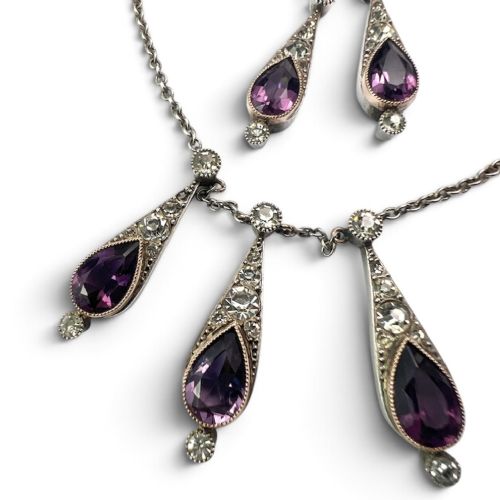
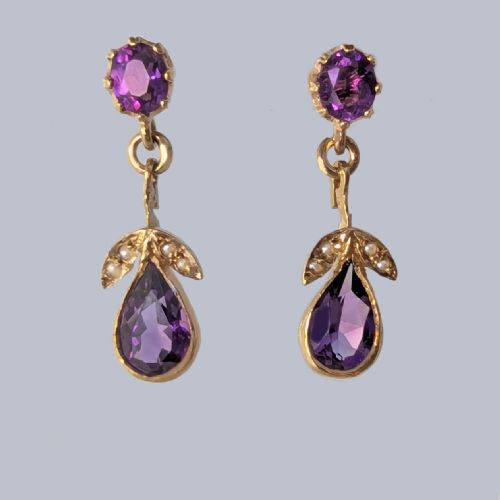
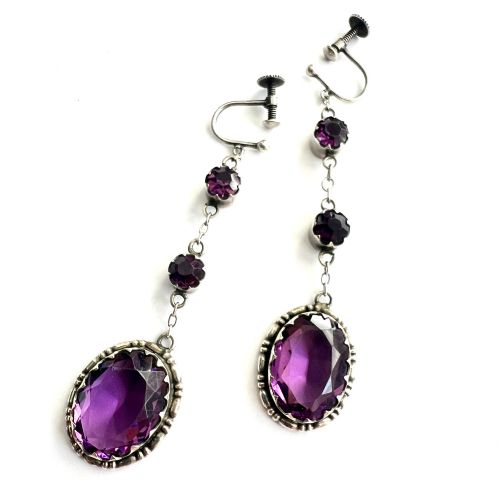
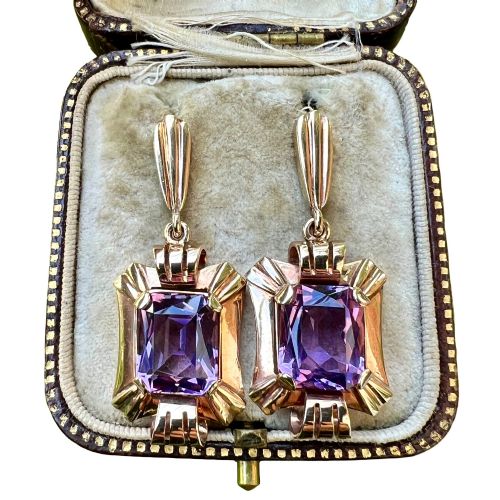
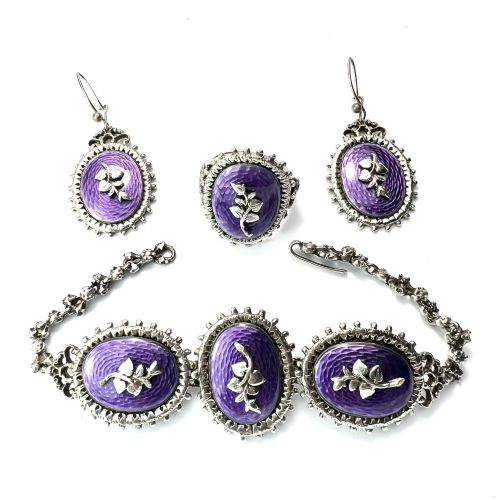
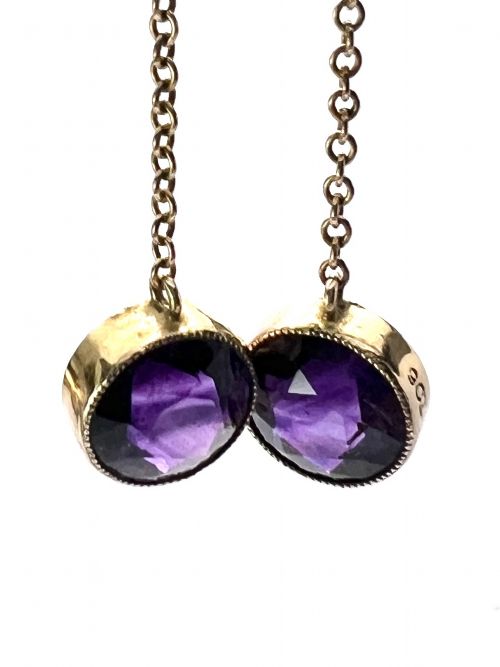
These antique purple earrings range from Victorian gold drops to Art Deco paste designs, offering deep purple colour set in silver and gold.
Antique Purple Earrings
When you search for antique purple earrings, you encounter items defined primarily by amethyst stones, paste glass, and purple corundum mounted in gold, silver, and white gold. These pieces span from the Georgian and Victorian eras through the Edwardian period into the Art Deco, mid-century, and vintage decades.
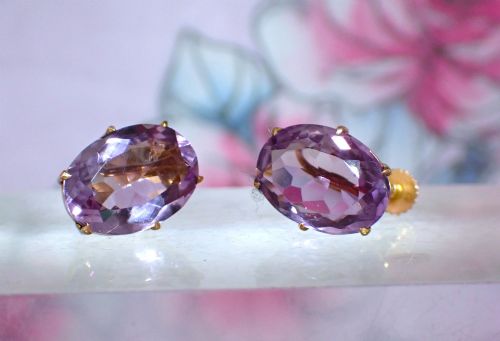
The most common examples on this page are drop earrings, stud screw-ons, and clusters fashioned in nine-carat gold or silver. You will also find matching jewellery sets that pair earrings with brooches, necklaces, or rings.
The designs draw on traditional, Victorian revival, and Art Deco styles, often featuring seed pearls or diamond accents alongside the central purple stones.
How they were made
Makers set amethysts, paste glass, and purple spinels into nine-carat or eighteen-carat gold, silver, and white gold using traditional claw settings and bezels. Many Edwardian and Victorian examples employ delicate chain drops or screw-back mechanisms for non-pierced ears.
Techniques range from flat-cut stones in early pieces to oval-cut, cabochon, and teardrop faceted amethysts in later Edwardian and mid-century designs. Hallmarks appear on selected gold items, recording assay offices such as Sheffield alongside specific production years.
Listings feature amethysts, paste glass, and seed pearls mounted in nine-carat gold and silver across the Victorian and Art Deco periods.
What varies in quality
Quality depends on the saturation and clarity of the purple stones, whether natural amethyst, paste glass, or corundum, and the weight and purity of the surrounding metal. Heavier gold mountings and solid silver frames indicate superior craftsmanship compared to lighter commercial settings.
The sophistication of the metalwork, from hand-wrought Edwardian wirework to structured Art Deco geometry and detailed seed pearl arrangement, dictates the distinction between standard production pieces and finer artisan items.
Harold Arthur Lazarus
The Antique Purple Earrings Glossary
- Amethyst
- A purple variety of quartz used extensively as a gemstone in Victorian and Edwardian jewellery. Its deep violet shade defines the colour palette of these pieces.
- Paste glass
- A heavy, highly transparent type of glass cut and polished to imitate gemstones. It was utilised widely in Art Deco jewellery for bright colour and sharp facets.
- Seed pearl
- Very small natural or cultured pearls, often half-drilled and glued or pegged onto a backing. They frequently border amethyst stones in Victorian and Edwardian cluster designs.
- Screw-back
- A mechanical earring fastening that uses a threaded screw to hold the piece onto an unpierced earlobe. This fitting is common on Victorian and mid-century designs.
- Cabochon
- A gemstone shaped and polished with a smooth, convex upper surface rather than faceted edges. This cut highlights the rich, uniform colour of larger purple stones.
Antique Purple Earrings: Frequently Asked Questions
Are these earrings for pierced ears?
Many antique earrings utilise screw-back or screw-on mechanisms designed for unpierced earlobes, reflecting the standard fashion of the Victorian and Edwardian eras. Other examples feature standard posts or wire hooks for pierced ears.
Conversion from screw-back to modern posts is sometimes undertaken by owners, but original mechanisms remain intact on numerous surviving pairs.
How do I identify an Edwardian pair?
Edwardian earrings often feature nine-carat yellow gold work with delicate chain drops, seed pearls, and light purple amethysts. The aesthetic prioritises lace-like lightness and symmetrical geometry.
Markings are minimal on early pieces, so identification relies on stylistic cues like openwork frames and characteristic claw settings from the early twentieth century.
How should I store them?
Store antique earrings individually in lined boxes or soft pouches to prevent delicate seed pearls or softer paste stones from rubbing against other items. Minimising contact protects fragile settings and gold surfaces.
Keep them away from direct sunlight and moisture to preserve the rich purple tone of amethysts and the integrity of vintage metalwork.