


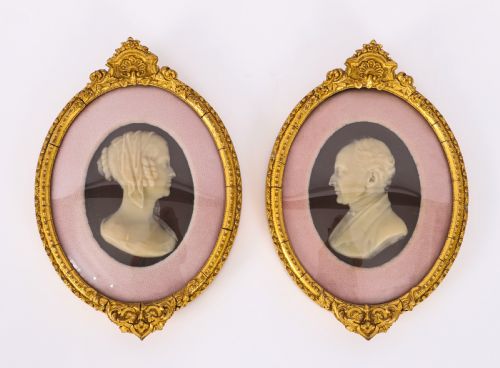
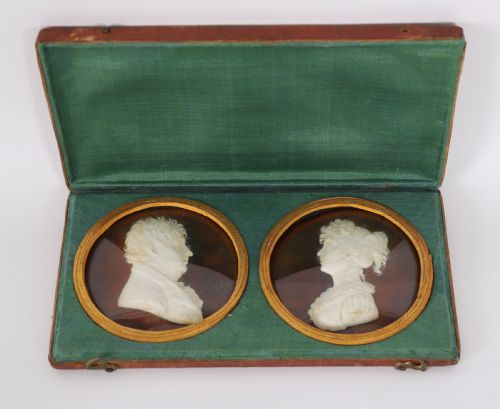
Antique Profile Portrait Miniature
An antique profile portrait miniature captures a likeness in miniature, prized for its intimacy and the skill of the artist.
Antique Profile Portrait Miniature
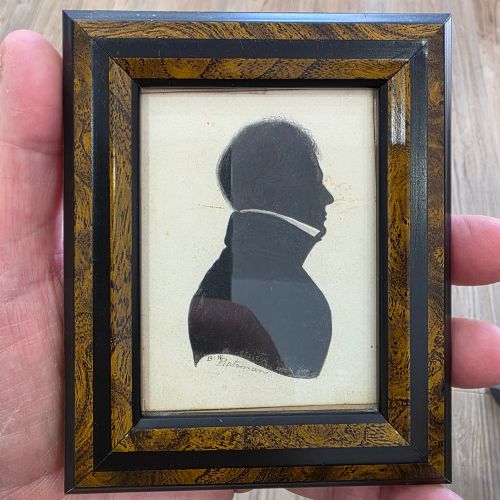
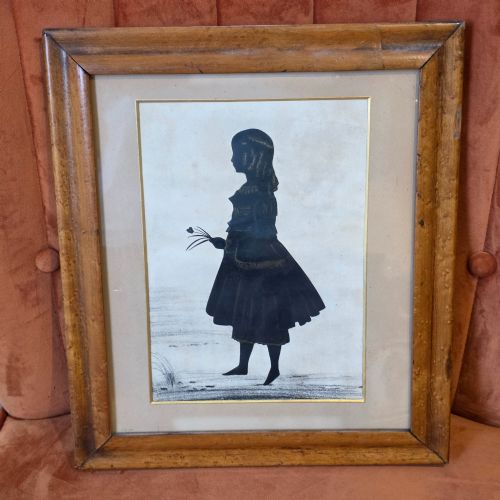
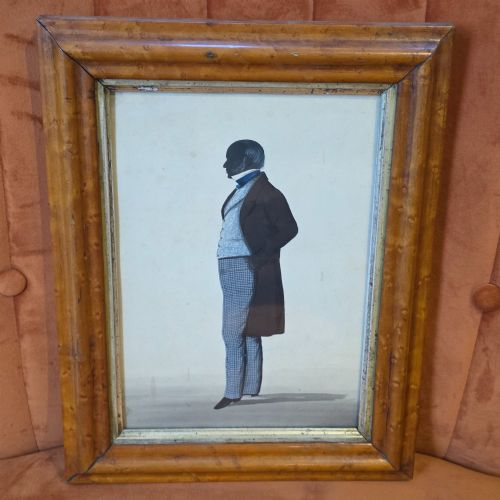
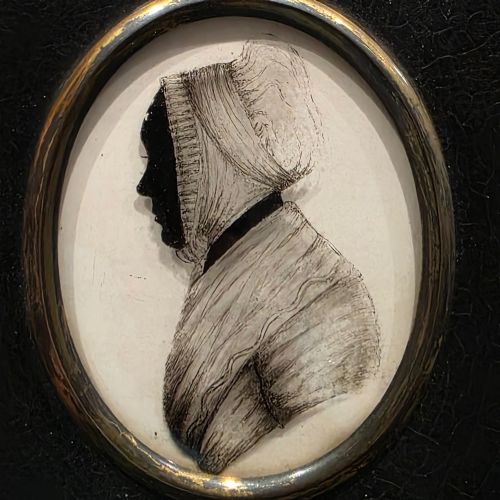
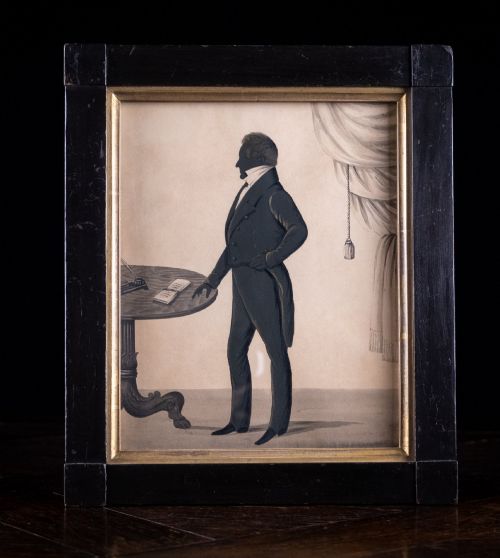
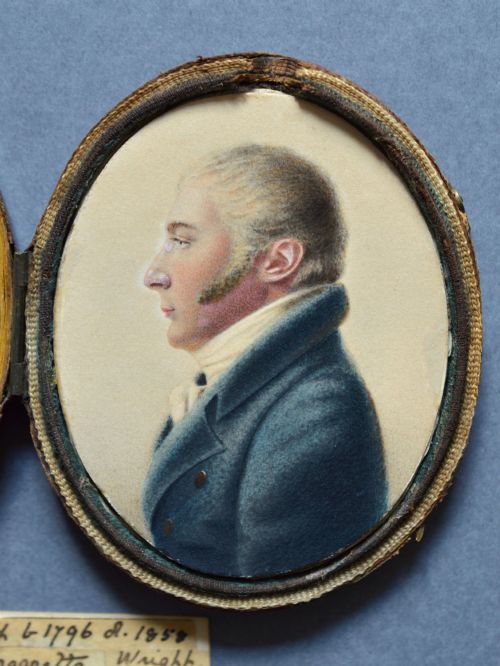
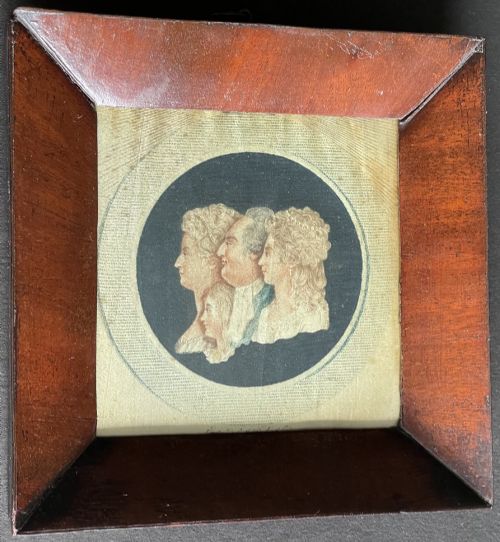
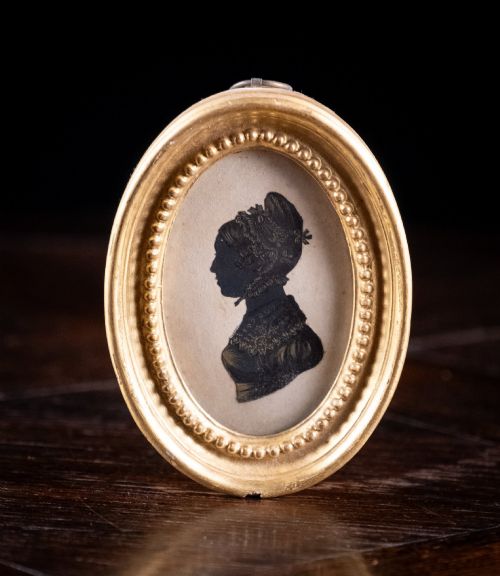
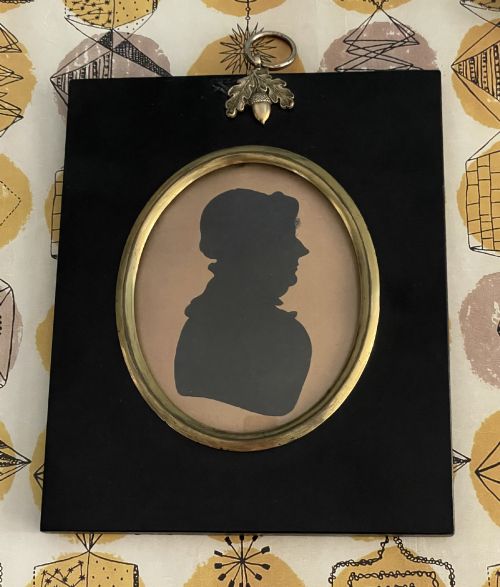
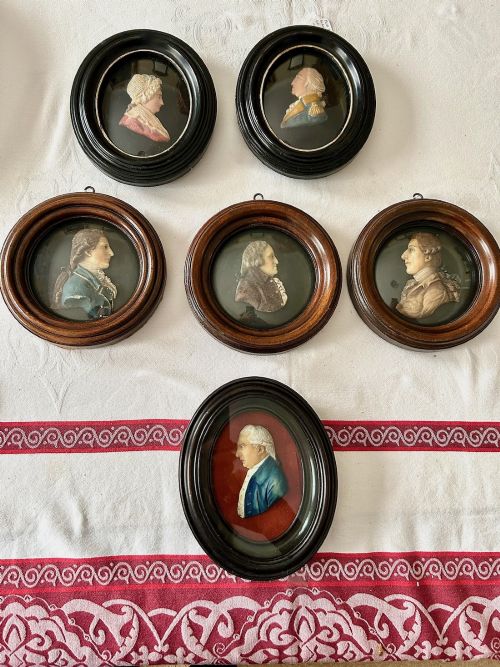
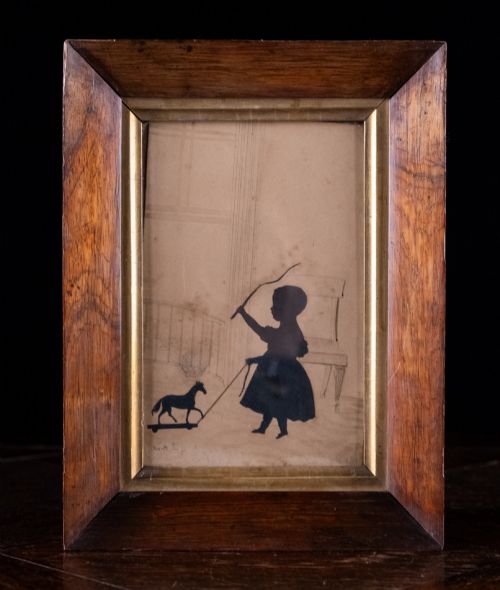
The most common formats on this page are silhouette portraits and miniature paintings. Artists recorded sitters using cut paper, watercolour, ink, and wax relief within compact frames or jewellery.
Origins span British and Continental workshops, taking the form of framed wall art, pendants, rings, and carved plaques. These items served as keepsakes, travelling tokens, and memorials for families of the period.
Materials and Technique
Makers utilised paper, card, glass, and ivory as grounds for ink, watercolour, and plumbago. Silhouettes were hand-cut from black paper or painted directly onto glass and plaster.
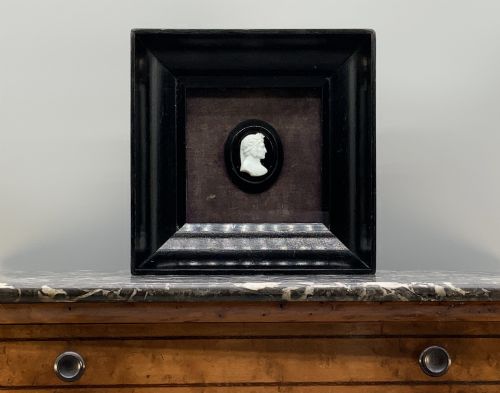
Relief profiles employed wax and pressed glass paste, often enhanced with gold leaf highlights. Frames were constructed from ebonised wood and brass, enclosing the delicate imagery.
Artists applied fine brushwork for watercolour details, while silhouette artists relied on precise scissor work or hollow-cut techniques to define the profile.
Listings feature works from the eighteenth century through the Edwardian period, executed in watercolour, ink, cut paper, and wax.
Distinctions in Quality
Quality rests upon the precision of the profile line and the control of the medium. A skilled hand captures likeness and character with economy, whether through a pair of scissors or a fine brush.
The integration of secondary details, such as delicate pencilled hair or gold leaf embellishment, separates standard works from accomplished pieces. The preservation of the original glass, brass fitting, and frame also governs desirability.
Signed works and those with documented provenance carry greater weight, identifying the output of known profile artists and miniaturists of the period.
Bateman·Frith·James Sharples·George Atkinson·Thomas John Horsley·James Gillespie·Augustin Edouart·Hubard Gallery·John Miers·Thomas London·J. Deacon·Susie Lassam·James Ferguson·Archibald Skirving
The Antique Profile Portrait Miniature Glossary
- Silhouette
- A profile portrait filled with a solid dark colour, usually black, created by cutting paper or painting on card or glass. The form relies entirely on outline to convey likeness.
- Plumbago
- A drawing executed in graphite, taking its name from the Latin word for lead ore. These monochrome works offer fine detail in profile.
- Reverse painted
- A technique where the artist paints directly onto the underside of a piece of glass, allowing the finished image to be viewed correctly from the polished top side.
- Hollow-cut
- A silhouette method where the profile is cut out from a sheet of paper, leaving the surrounding mount to form the finished picture against a contrasting background.
- Glass paste
- A vitreous material melted and pressed into moulds to imitate carved gems or cameos, seen in profile reliefs.
Antique Profile Portrait Miniature: Frequently Asked Questions
What is an antique profile portrait miniature?
An antique profile portrait miniature is a small-scale likeness created in the eighteenth, nineteenth, or early twentieth centuries. These works record individual sitters in profile, focusing attention on the contour of the face.
They appear as framed pictures, wearable jewellery, and carved plaques, produced using media such as silhouette paper, watercolour, and wax.
How were profile miniatures displayed?
Makers housed these small portraits in tight wooden frames, often ebonised and fitted with brass bezels for wall hanging. Many were designed for personal wear as brooches, rings, and pendants.
Desk placement and travel cases also allowed owners to carry likenesses of family members during journeys.
How do I date a silhouette portrait?
Dating relies on the costume, hair style, and framing materials visible in the piece. Regency silhouettes often feature high-waisted dresses and elaborate cravats, while Victorian examples display different necklines and bonnet styles.
Backing papers, trade labels, and handwritten inscriptions on the reverse also provide clues to the period.