




Antique Privacy Panel
An antique privacy panel creates intimate divisions within large rooms, offering both decorative presence and functional seclusion.
Antique Privacy Panel
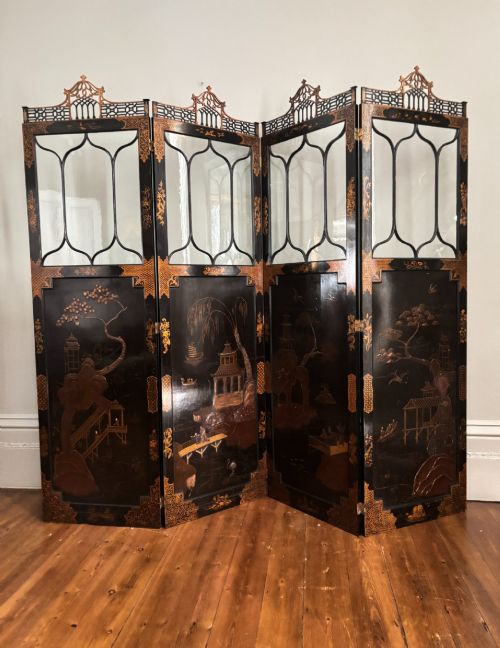
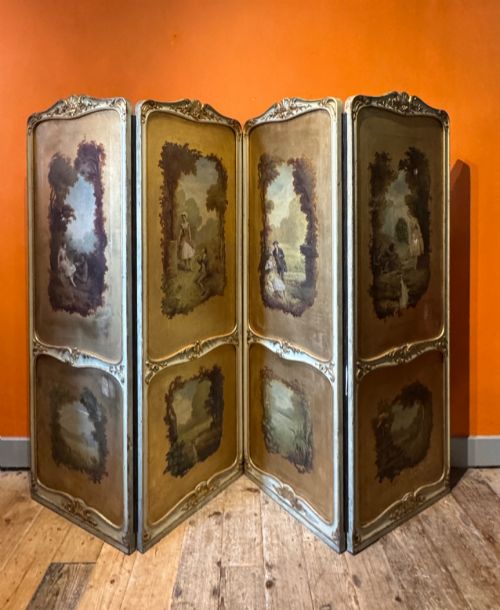
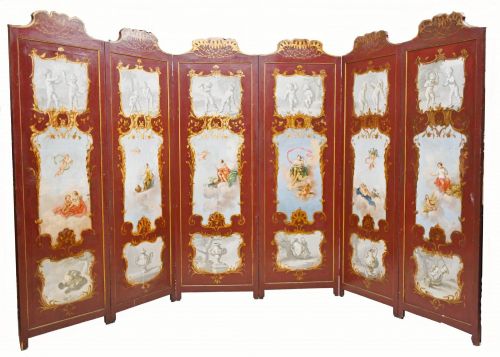
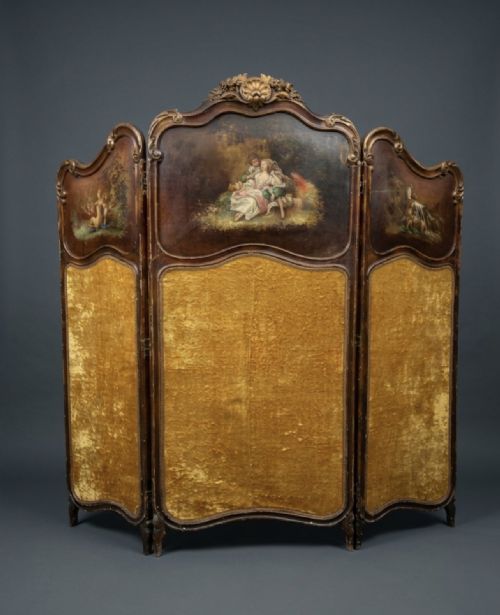
When searching for an antique privacy panel, buyers encounter folding screens, room dividers, and dressing screens designed to partition interior spaces. These multi-panel pieces originate from various periods including the Victorian era, the nineteenth century, and the early twentieth century, spanning English, French, Chinese, and Japanese traditions.
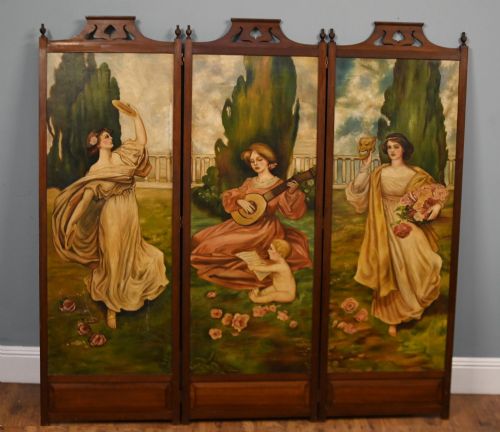
The pieces on this page primarily take the form of multi-fold screens with three, four, six, or eight panels linked by hinges. Common variations include dressing screens, vanity screens, modesty screens, and large country-house dividers used to manage light, draughts, and personal space.
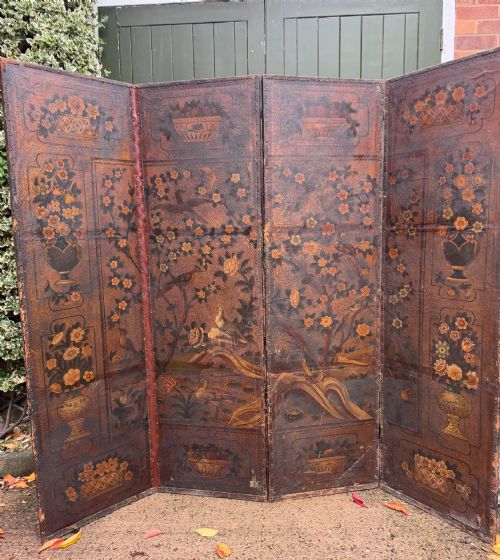
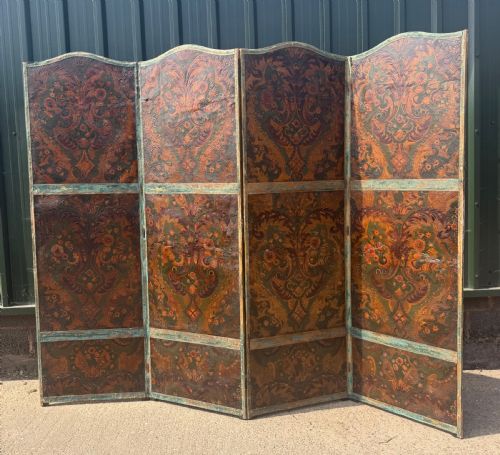
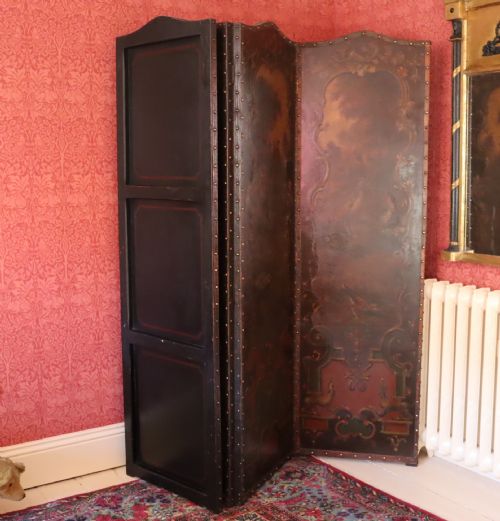
Origins range widely from European workshops utilising walnut, mahogany, oak, and tooled leather to Asian traditions producing lacquered, coromandel, and hand-painted surfaces. Buyers find both modest three-fold domestic examples and monumental multi-fold architectural partitions.
Materials and construction methods
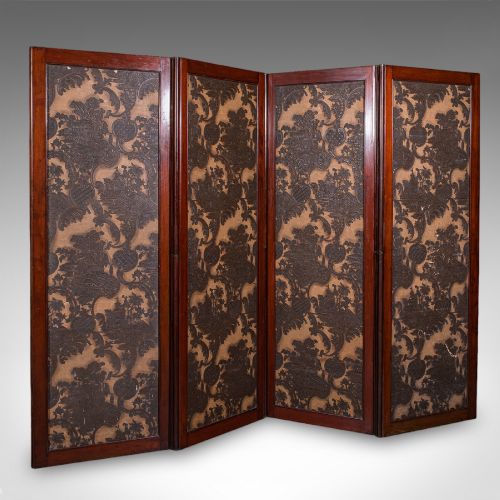
Timbers such as mahogany, walnut, oak, and hardwood form the structural frames of these screens, often joined with multiple hinged panels to allow flexible positioning. Carved wooden details, inlaid mahogany, and ebonised oak demonstrate traditional cabinet-making techniques.
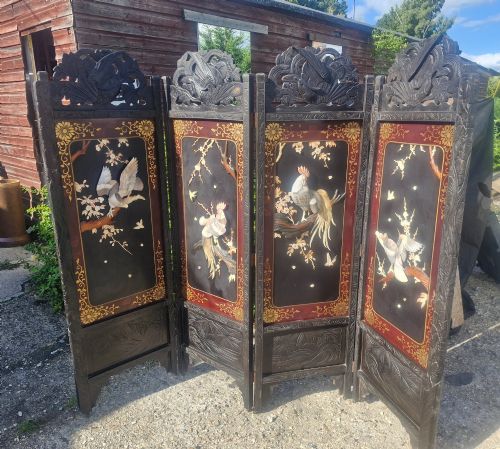
Surface decoration defines many examples, utilising black lacquer, papier-mâché, polychrome paint, oil paint, and gilt embossing over leather, canvas, silk cotton, or paper. Asian pieces incorporate deep carved bone, hardstone mounts, and intricate dragon carvings, whilst European examples employ needlepoint, scrap work, and hand-painted pastoral or Pre-Raphaelite scenes.
Antique Privacy Panel Retail Price Guide 2026
Typical asking prices for privacy panel among the pieces listed under this phrase on Sellingantiques today, from the lower quarter to the upper quarter. They describe what is for sale here now, not the wider market.
The inventory records diverse international origins, including English country-house pieces, French walnut vanity screens, and Chinese and Japanese lacquered folding screens.
Distinctions in quality
Quality rests in the execution of the surface artistry, from finely detailed hand-painted leather and elaborate Chinoiserie lacquering to deep bone carvings and precise needlepoint work. Superior examples exhibit sustained technical skill across every panel rather than decorative focus on the front alone.
Structural integrity of the hinges, frames, and panel joints separates robust architectural dividers from lighter vanity screens. The weight and selection of dense hardwoods like mahogany or walnut versus softer woods also signal the standard of manufacture.
The Antique Privacy Panel Glossary
- Coromandel
- A type of Chinese carved lacquerware featuring dark wood coated in multiple layers of lacquer, which is then incised and often filled with colours. This technique creates a rich relief surface frequently seen on multi-fold screens.
- Modesty screen
- A small portable screen historically used to shield individuals while dressing or washing. These pieces typically feature folding panels and decorative painted or textile inserts.
- Chinoiserie
- European theatrical interpretation of Chinese and East Asian artistic traditions, popular in furniture and screen decoration. It involves decorative motifs rendered in lacquer, paint, and gilt.
- Mashrabiya
- An architectural element adapted into room dividers, characterised by intricate wooden lattice work. This technique provides privacy whilst allowing air circulation and filtered light.
- Needlepoint
- Embroidery stitched onto canvas mesh to create dense pictorial or geometric patterns. On privacy screens, needlepoint panels serve as the primary decorative and textural medium.
Antique Privacy Panel: Frequently Asked Questions
What is an antique privacy panel used for?
These folding screens were historically utilised to divide large rooms, shield dressing areas from view, and block draughts in high-ceilinged interiors. In modern settings, they serve identical functional purposes while acting as sculptural focal points.
Their flexible multi-panel design allows owners to reconfigure spaces easily, concealing storage areas or creating quiet reading corners within open-plan rooms.
How do you date an antique privacy panel?
Dating relies on examining the underlying timber, hinge construction, framing techniques, and stylistic markers such as Victorian revivalism, Arts and Crafts ebonising, or Regency chinoiserie. Material analysis of the canvas, leather, or paper backing also offers clues to the period of manufacture.
Makers often employed distinct decorative palettes and motifs specific to decades like the late nineteenth century or the 1920s, which help narrow down the era of production.
Where should you place a room divider?
Room dividers function best in spaces requiring flexible spatial management, such as studio apartments, large living rooms, or bedrooms acting as dressing areas. Position them perpendicular to walls to section off specific zones or flat against a wall as a decorative backdrop.
Ensure the panels have adequate clearance to fold and unfold without catching on furniture or flooring.
How do you care for lacquered screens?
Lacquered and painted surfaces require gentle dusting with a soft, dry cloth to prevent abrasive particles from scratching the delicate finish. Avoid placing these pieces in direct sunlight or near heat sources, which can cause wood to warp and lacquer to crack.
Maintain stable indoor humidity levels to preserve the integrity of both the wooden frames and the applied surface decorations.