



Antique Pouch Work Table
An antique pouch work table is a functional domestic piece designed for needlework, bringing together timber craftsmanship and suspended fabric storage.
Antique Pouch Work Table
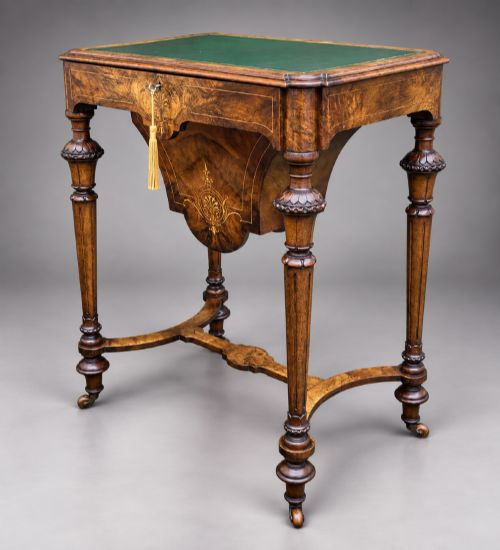
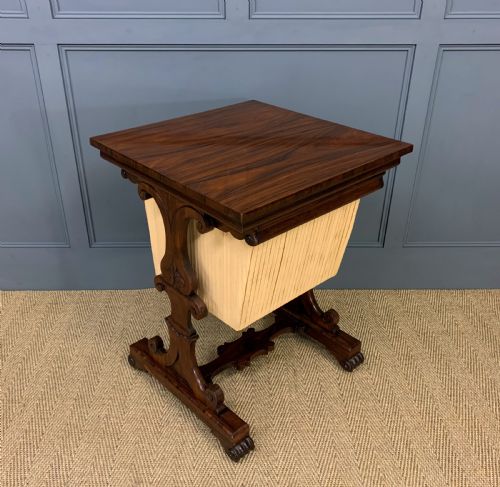
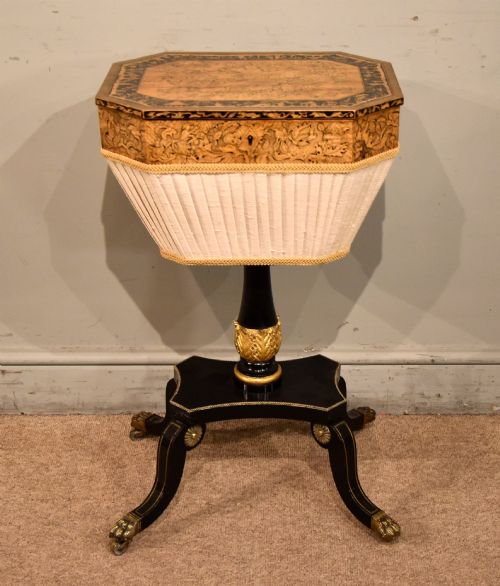
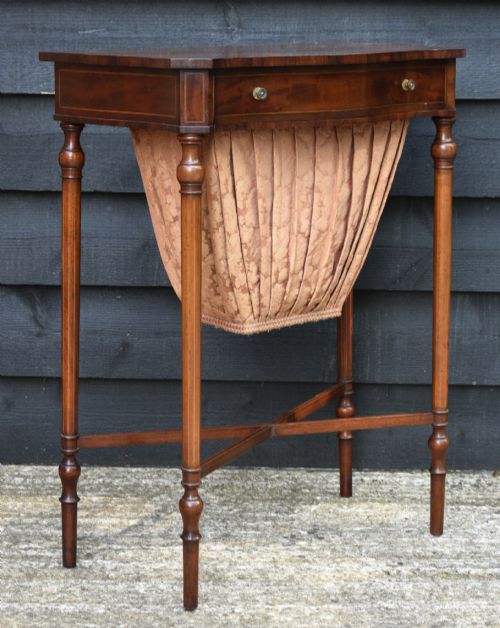
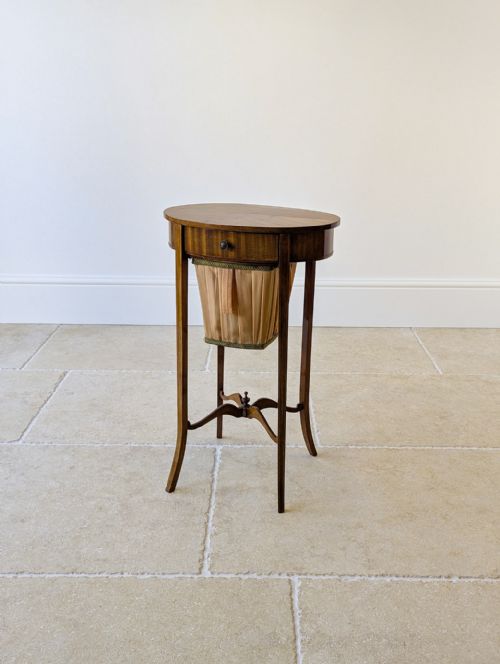
An antique pouch work table is a specialised piece of furniture created for sewing, needlework and light domestic tasks. These tables integrate a small top surface with a suspended fabric bag or pouch underneath to hold wools, threads and ongoing projects.
The pieces seen here span from the 18th century through the Regency, William IV and Victorian eras up to the Edwardian period. Mahogany and rosewood form the majority of the surviving examples, alongside satinwood, burr walnut and pollard oak.
Most variations take the form of freestanding tables, drop leaf designs or octagonal and pedestal formats. Buyers meet variations ranging from plain mahogany sides to elaborate marquetry, brass inlay and penwork decoration.
Materials and Construction Methods
Cabinetmakers utilised dense hardwoods such as mahogany and rosewood for the structural frames, legs and table tops. These timbers provided the stability needed for daily domestic use while accepting fine polished finishes.
Secondary timbers like satinwood and boxwood were employed for contrasting stringing and geometric inlay. Silk and fabric formed the hanging pouches beneath, gathered on wooden or metal frames to store sewing materials.
Specialised techniques included brass inlay, marquetry panels and penwork decoration applied to the top surfaces and frieze drawers. Drop leaves and pedestal bases required precise joinery to ensure the tables remained balanced when opened.
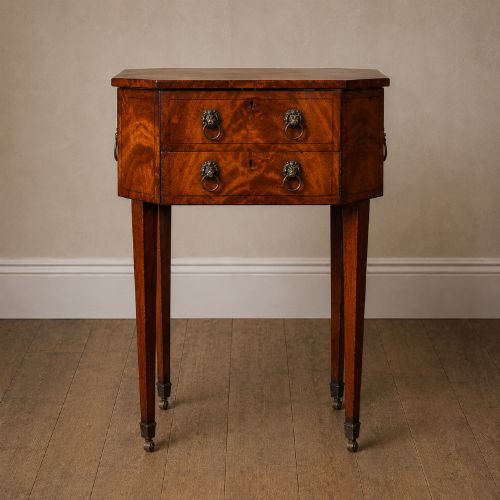
Lion mask handles occasionally peer out from beneath George III satinwood tops, guarding sewing supplies with unexpected majesty.
Distinguishing Features of Quality
Quality rests in the selection of timber figures, such as highly grained burr walnut or figured rosewood, matched across the table top and drawers. Superior examples display precise marquetry, delicate brass inlay or detailed lion mask handles rather than plain veneers.
Construction details differentiate standard production from finer cabinetmaking. Well-made pieces feature fitted interiors with lidded compartments and small dividers for sewing tools, alongside smooth action in drop leaves and pedestal joints.
John MaClean
The Antique Pouch Work Table Glossary
- Pouch
- The suspended fabric bag beneath the table top, traditionally gathered for holding sewing supplies and needlework projects. This soft compartment defines the primary function of the furniture type.
- Drop leaf
- A hinged flap on the side of a table top that lifts to extend the surface area when needed. These leaves are supported by swing brackets or rule joints.
- Marquetry
- Decorative veneer work forming pictorial or geometric patterns using various coloured woods. Craftsmen cut contrasting timbers to fit precisely into a prepared background.
- Penwork
- A surface decoration technique using ink drawn directly onto light wood, often finished with a clear protective varnish. This method created fine linear designs during the Regency period.
- Frieze
- The horizontal band beneath the table top, frequently housing one or more small drawers for tools. It provides structural rigidity between the legs and the upper surface.
Antique Pouch Work Table: Frequently Asked Questions
What was a pouch work table used for?
These tables served as dedicated workstations for ladies undertaking needlework, embroidery and sewing tasks in the parlour or drawing room.
The top surface held the working frame or writing materials, while the fabric pouch below stored threads, wools and unfinished pieces out of sight.
How do I identify a Regency period work table?
Regency examples typically display classical proportions, pedestal bases with splayed legs, or lyre-end supports. Brass inlay and rosewood veneers are common hallmarks of this era.
Cabinetmakers of the time also utilised penwork and pollard oak, reflecting a shift towards darker, heavily grained exotic timbers.
Are the fabric pouches original?
The fabric pouches on these tables frequently show evidence of historical replacement due to the delicate nature of silk and textiles over centuries.
When replacement occurs, restorers generally follow traditional gathering styles and materials appropriate to the period of the frame.
Where should I place a work table in a modern room?
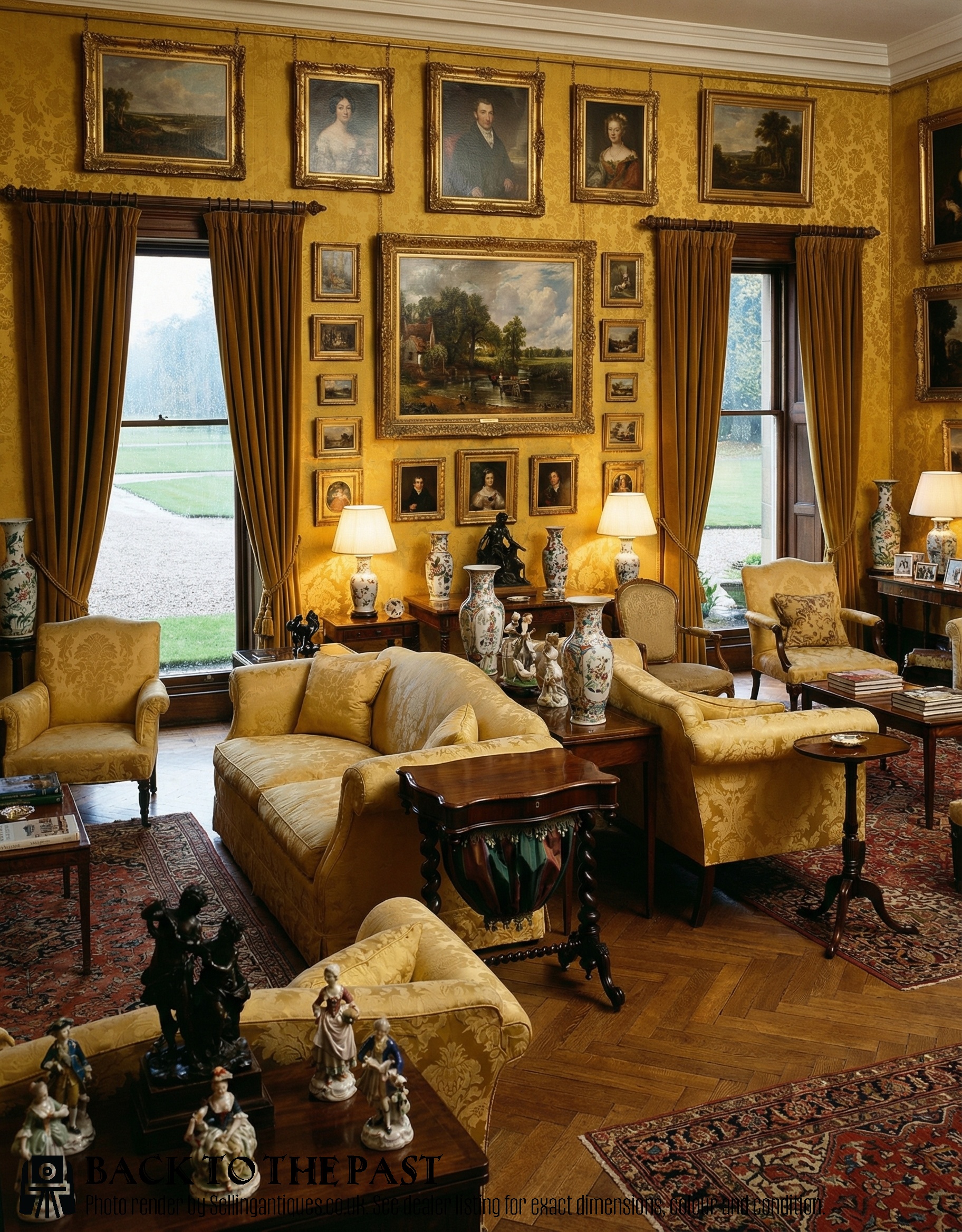
Work tables function well as compact side tables beside a sofa or armchair, utilising their small proportions in limited spaces.
Their finished backs and freestanding designs allow them to sit centrally in a room or against a wall as occasional surfaces.