




Antique Pottery Greyhounds
These antique pottery greyhounds bring the spirited charm of Victorian and Georgian domestic display straight onto the mantelpiece.
Antique Pottery Greyhounds
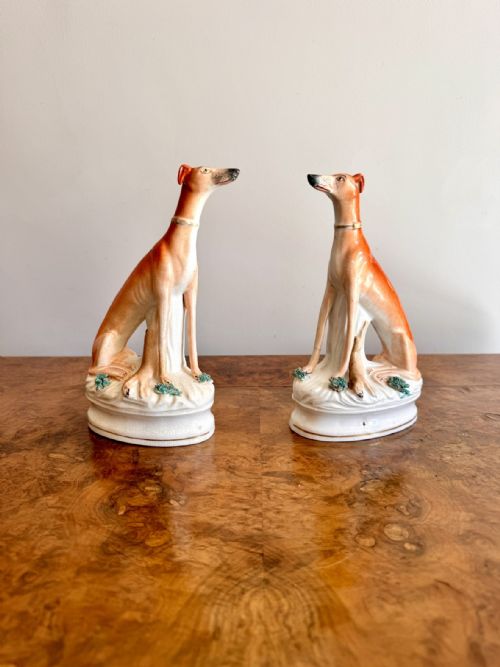
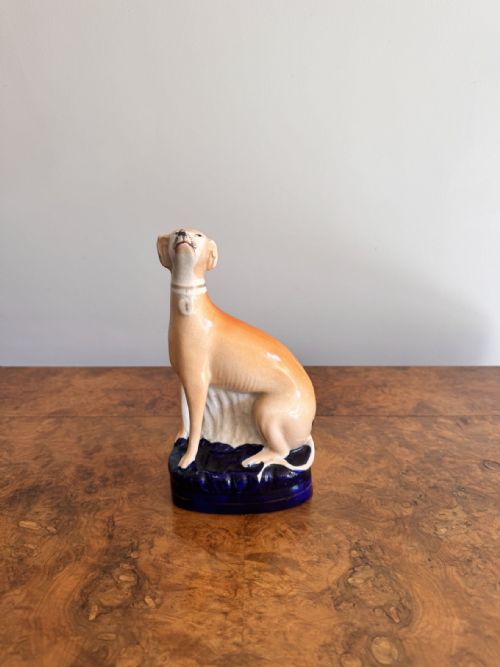
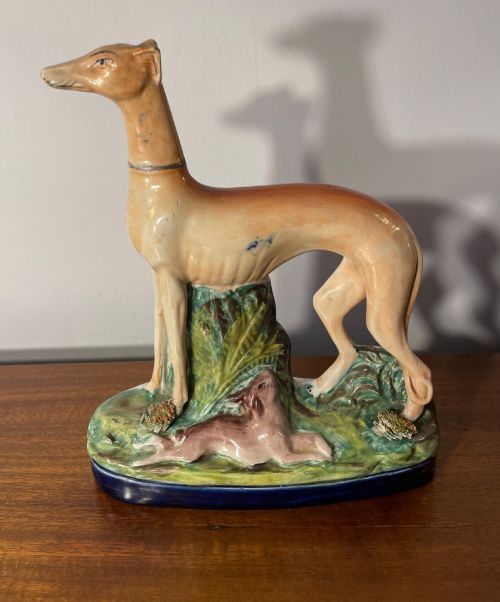
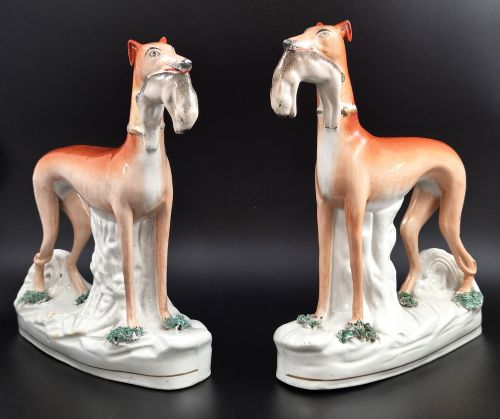
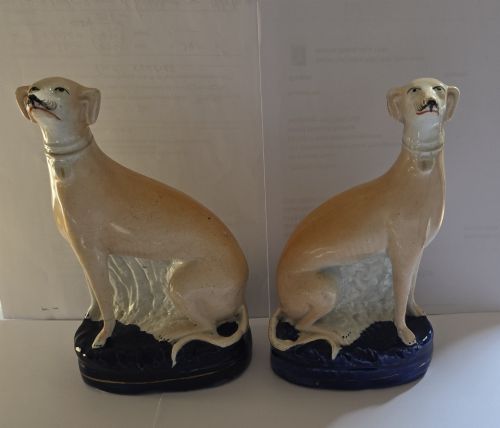
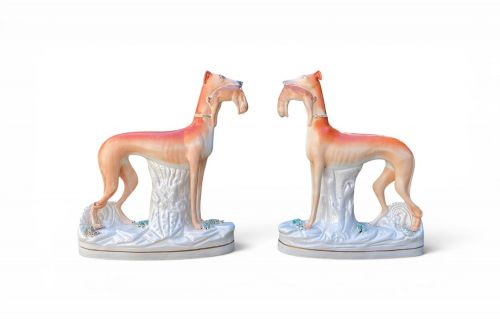
When you search for antique pottery greyhounds, you encounter spirited Staffordshire figures and practical desk accessories modelled on these slender hounds. The selection spans single figures and matched pairs, often shown seated or capturing a hare in the chase.
Most pieces date from the Victorian era, particularly the mid to late nineteenth century, alongside earlier Georgian examples. These ceramic dogs served both decorative and functional roles as inkwells, quill holders, and desk ornaments in period interiors.
Makers fashioned them in various sizes, from standard mantel ornaments to unusually large display figures. The designs capture the characteristic alert posture and muscular grace of the breed, frequently embellished with rich enamels and gilding.
How they were made
Potters shaped these figures from earthenware and glazed ceramic bodies using traditional moulding techniques. Lead glaze coats the surfaces, providing a glossy sheen that protects the underlying body and enhances the painted details.
Antique Pottery Greyhounds Retail Price Guide 2026
Typical asking prices for pottery greyhounds among the pieces listed under this phrase on Sellingantiques today, from the lower quarter to the upper quarter. They describe what is for sale here now, not the wider market.
The listings show earthenware as the dominant material, finished with lead glaze and enamel paint across Victorian and Georgian eras.
What varies in quality
The precision of the modelling separates finer figures from simpler production pieces, particularly in the rendering of the canine musculature and facial expressions. Sharp definition in the paws, muzzle, and fur indicates a superior mould and careful finishing.
The application of enamel paint and glaze uniformity also mark the differences across the range. Rich, well-preserved hand painting and clean glaze surfaces distinguish the top tier of nineteenth-century pottery figures.
Thomas Parr
The Antique Pottery Greyhounds Glossary
- Earthenware
- A porous pottery body fired at lower temperatures, commonly used for nineteenth-century Staffordshire figures. It requires a glaze to render it impermeable to liquids.
- Lead glaze
- A glossy coating containing lead oxide applied to pottery before firing. It produces a smooth, reflective surface that intensifies the colours beneath.
- Staffordshire
- A generic term for ceramic wares produced in the pottery towns of Staffordshire, England. Figures from this region dominate the market for antique canine pottery.
- Quill holder
- A desk accessory designed with dedicated slots or resting places for writing feathers. These functional pieces often double as sculptural ornaments.
- Enamel paint
- Vitreous pigments applied over the glaze and fired at a lower temperature. This technique allows for detailed polychrome decoration on finished ceramics.
Antique Pottery Greyhounds: Frequently Asked Questions
What are antique pottery greyhounds?
These pieces are ceramic figures and desk accessories modelled on greyhounds and whippets, originating mainly from nineteenth-century English potteries. They reflect the Victorian fascination with domestic animals and hunting scenes.
Potters created them as decorative mantel ornaments or practical items like inkwells and quill holders. Their enduring appeal lies in their sculptural forms and connection to period country life.
How were greyhound inkwells used?
These inkwells sat on nineteenth-century desks to hold liquid ink while providing a decorative resting place for pens. The hound figure formed the sculptural housing for the ink reservoir and pen channels.
They combined utility with fashionable display in Victorian studies and libraries. Writers dipped their quills directly into the fitted wells incorporated into the base.
How do you date Staffordshire greyhound figures?
Dating relies on stylistic markers, manufacturing techniques, and the character of the glaze and enamels. Mid-Victorian pieces often feature deep earthenware bodies and bright hand-painted enamels.
Earlier Georgian examples display distinct relief moulding and simpler glazing styles. Comparing the base construction and colour palette helps place a piece within its proper decade.
How do you display antique dog figures?
These figures look best placed on mantels, bookshelves, or side tables where their profiles can be appreciated. Pairs of hounds are traditionally arranged facing inward toward each other.
Stable, flat surfaces away from direct sunlight protect the earthenware bodies and painted enamels. Their modest scale allows them to integrate easily into both traditional and modern interior settings.