
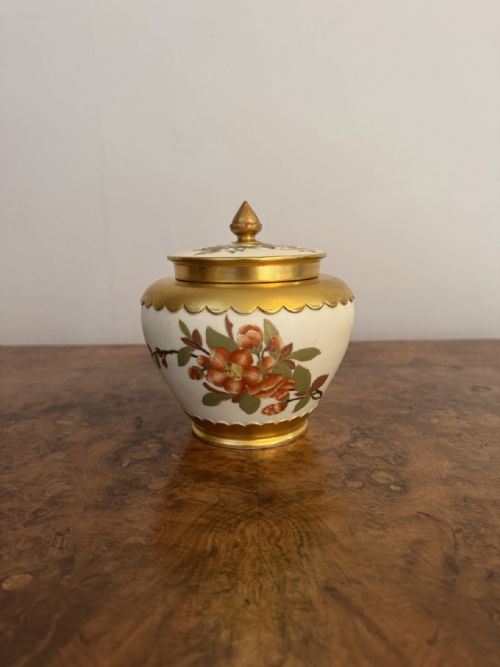


Antique Potpourri Pot
An antique potpourri pot brings scented dried petals into a room through pierced ceramic or silver vessels designed to release fragrance.
Antique Potpourri Pot
An antique potpourri pot serves as both a decorative vessel and a container for fragrant plant matter, appearing in forms such as lidded jars, vases, baskets, and boxes. These objects emerge from periods ranging through the eighteenth, nineteenth, and twentieth centuries, including Georgian, Victorian, and Edwardian eras.
The most common versions on this page are porcelain jars and vases by makers like Royal Worcester, alongside solid silver boxes and baskets from the Edwardian period. Buyers encounter everything from large blush ivory jars with crown covers to small pierced silver lavender boxes designed for a desk or table.
What varies in quality
Quality rests in the crispness of the piercing, the fineness of the ceramic body, and the detail of any painted decoration or applied gilt bronze. Pieces with complex hand-painted motifs or substantial cast mounts stand apart from simpler utilitarian vessels.
The execution of the pierced lid or cover dictates how successfully form matches function in releasing fragrance while keeping contents secure.
Listings feature porcelain, silver, ironstone, and gilt bronze across periods from the eighteenth century through the Edwardian era.
Royal Worcester·Chamberlain Worcester·Mason's Ironstone·W Comyns
The Antique Potpourri Pot Glossary
- Potpourri
- A mixture of dried petals and spices placed in a vessel to perfume a room. The pots designed to hold this mixture feature pierced lids or bodies.
- Gilt bronze
- Bronze coated with a thin layer of gold, frequently used for mounts and bases on nineteenth-century porcelain vessels.
- Ironstone
- A heavy, durable type of earthenware patented in the nineteenth century, often decorated in Imari patterns.
- Blush ivory
- A soft cream-coloured porcelain ground developed by Royal Worcester, typically decorated with painted floral sprays.
- Fretted
- Ornamented with openwork or pierced patterns, allowing air to circulate through the container.
Antique Potpourri Pot: Frequently Asked Questions
How do I use an antique potpourri pot?
Place dried scented plant matter inside the vessel and position it in a room to let the fragrance diffuse through the pierced lid or openings.
Ensure the interior is clean before adding fresh dry mixtures to protect the historic ceramic or silver surfaces.
What is the difference between a potpourri jar and a vase?
A potpourri jar or pot specifically incorporates a pierced cover designed to release scent from the dried materials held within. Standard decorative vases remain sealed to hold water or stand purely as ornament.
Many examples on this page feature explicit crown covers or pierced lids tailored for botanical blends.
How do I date a silver potpourri box?
Sterling silver pieces carry hallmarks that indicate the assay office, standard mark, and date letter corresponding to the year of manufacture. Edwardian examples often date from the early twentieth century around nineteen hundred to nineteen ten.
Comparing the hallmark stamp against official registers provides the exact year a silver box was assayed.
What materials were used for these pots?
Materials span fine porcelain, ironstone, and sterling silver, frequently enhanced with gilding, gold leaf, or gilt bronze mounts. Some silver versions also incorporate mother of pearl or glass elements.
Ceramic examples range from painted fruit designs on blush ivory bodies to blue and red Imari patterns.