



Antique Postal Balance Set
An antique postal balance set is a functional desk accessory in brass and wood that brings tactile Victorian and Edwardian weight management into a modern study.
Antique Postal Balance Set
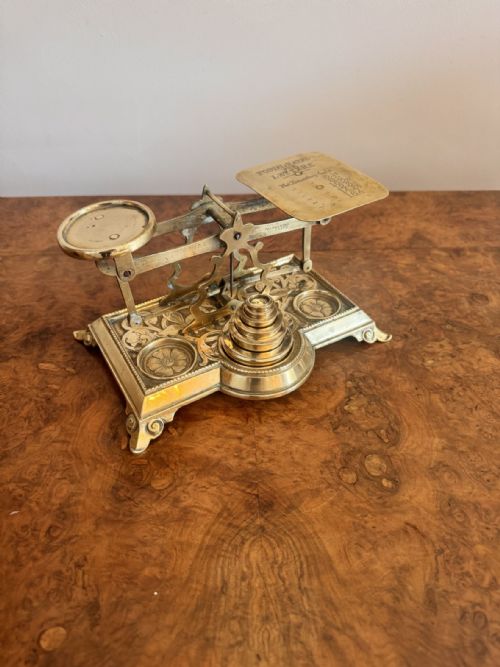
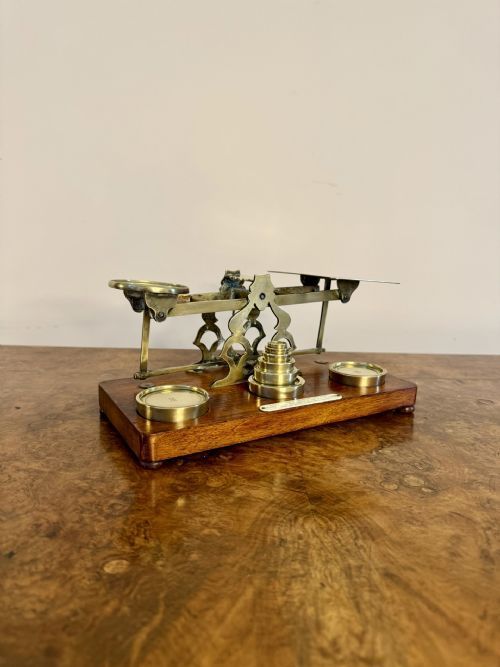
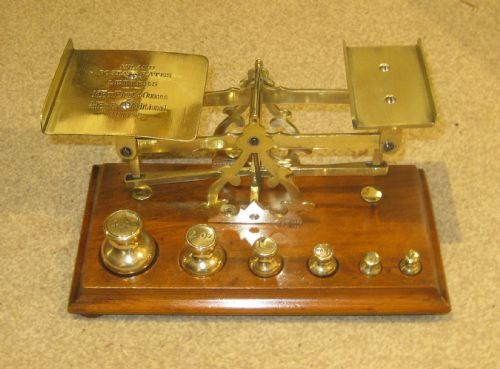
An antique postal balance set is a desk instrument designed for weighing letters and packages to calculate correct postage during the Victorian and Edwardian eras. These practical objects combine a brass balance mechanism with a solid wooden base, often accompanied by matched sets of graduated brass weights.
You are most likely to encounter Edwardian and Victorian examples on this page, spanning the decades from the 1860s to 1910. The forms range from standard desk models to very large formats designed for heavy correspondence, reflecting the administrative needs of their original offices.
How they were made
The construction relies on the combination of cast and sheet brass for the operating balance arm, pans, and weights. This metalwork is mounted onto substantial wooden bases shaped from mahogany, oak, walnut, or general hardwood.
Makers such as S. Mordan and S. Mordan & Co in London engineered these balances for precision and daily utility. The wood is typically polished to show the natural grain, while the brass elements are finished to a bright metallic sheen.
Materials across these listings include brass paired with mahogany, oak, walnut, and hardwood.
What varies in quality
The distinction between standard and superior pieces rests on the scale of the object and the richness of the timber base. Very large formats and solid oak or figured walnut boards indicate higher production ambitions.
The presence of a complete set of original matching brass weights elevates a balance set. Maker attribution, specifically pieces bearing London stamps, marks a higher grade of workshop execution.
S Mordan·S Mordan And Co
The Antique Postal Balance Set Glossary
- Postal scale
- A mechanical device used to determine the weight of mail for postage tariffs. These items sit upon a desktop and operate on a pivot or balance beam.
- Brass
- A copper and zinc alloy utilised for the working mechanism, pans, and weights of these scales. It provides durability and a bright finish.
- Mahogany
- A durable tropical hardwood selected for the heavy base boards of many Victorian letter scales. Its deep red-brown tone complements polished brass.
- Edwardian
- A stylistic period spanning the early twentieth century up to 1910. Pieces from this era often feature refined brasswork and lighter timbers.
- Victorian
- A nineteenth-century period covering the reigns of manufacture seen in the 1860s and 1880s. Items from this time tend toward robust proportions and substantial hardwood bases.
Antique Postal Balance Set: Frequently Asked Questions
What is an antique postal balance set?
An antique postal balance set is a desk instrument used in the nineteenth and early twentieth centuries to weigh letters and small parcels. They combine a pivoting brass scale with a wooden base.
These pieces were essential office tools before the advent of digital weighing. Today they survive as decorative and tactile items for a desk or study.
How do you use postal scales?
You place a letter or small package onto the brass pan to cause the balance arm to tilt. The matching weights are added to the opposing side to determine the exact weight.
While modern postal rates bear no relation to these historical scales, the mechanical movement still functions accurately for demonstration.
How do I date an antique postal balance set?
Dating relies on the stylistic markers of the wood and brass, along with period stamps or maker signatures. Pieces range from the 1860s through to the Edwardian era around 1910.
Victorian examples often use heavy mahogany bases, whereas Edwardian pieces frequently utilise solid oak or walnut alongside lighter framing.
What woods were used for the bases?
The wooden bases are constructed from hardwoods such as mahogany, oak, walnut, and general hardwood. These timbers provided a stable platform for the brass mechanism.
Selected boards show rich grain patterns that anchor the bright brass components visually. The timber was finished to withstand heavy daily use in a Victorian or Edwardian office.