



Antique Portrait Ring
These antique portrait ring examples bring miniature likenesses and silhouettes close to the hand in gold and hardstone.
Antique Portrait Ring
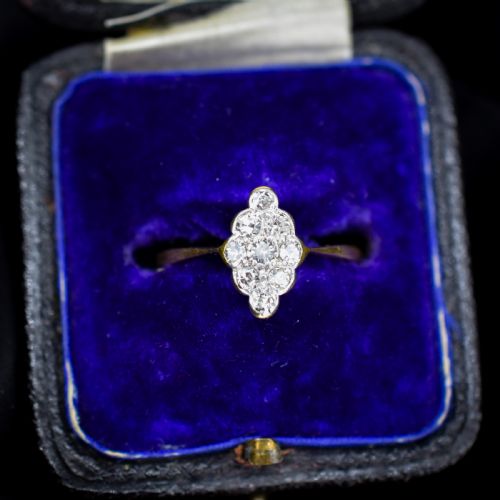
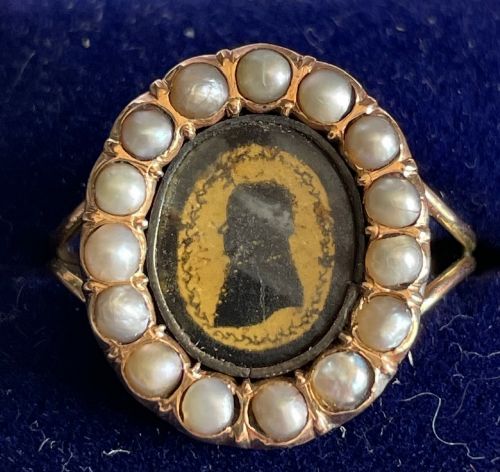
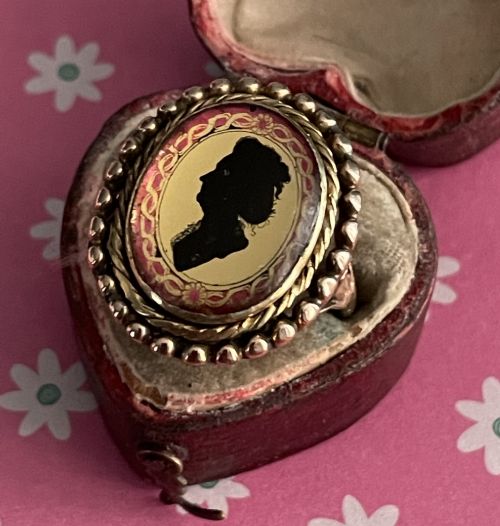
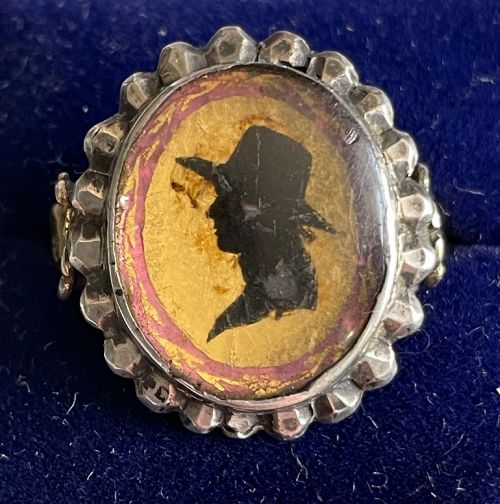
An antique portrait ring places a likeness onto the finger, spanning periods from the Georgian era through to the Edwardian period and the 1920s. Buyers searching for an antique portrait ring encounter forms ranging from hand-painted miniatures under glass to carved cameos and silhouettes.
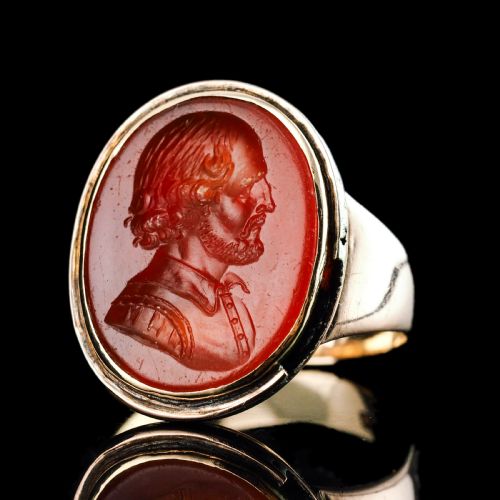
The most common examples on this page date from the Victorian and Georgian eras, executed in yellow gold, rose gold or platinum. These pieces incorporate carved hardstones like carnelian, agate, and black opal alongside glass and rock crystal.
Makers utilised diverse techniques to capture subjects, from classical female profiles and silhouettes to specific historical figures. Alongside rings, the selection includes fob seals functioning as miniature portraits.
Materials and Techniques
Goldsmiths worked with 9ct gold, 18ct yellow gold, rose gold, and platinum to form the structural mounts and bezels of the rings. Metalwork frames secure the central portrait or act as swivel settings for intaglios and fob seals.
Carvers and painters utilised hardstone, carnelian, agate, coral, and glass to create cameos, intaglios, and silhouettes. Verre eglomise and hand-painted miniatures introduce fine detail beneath protective glass or rock crystal layers.
Antique Portrait Ring Retail Price Guide 2026
Typical asking prices for portrait ring among the pieces listed under this phrase on Sellingantiques today, from the lower quarter to the upper quarter. They describe what is for sale here now, not the wider market.
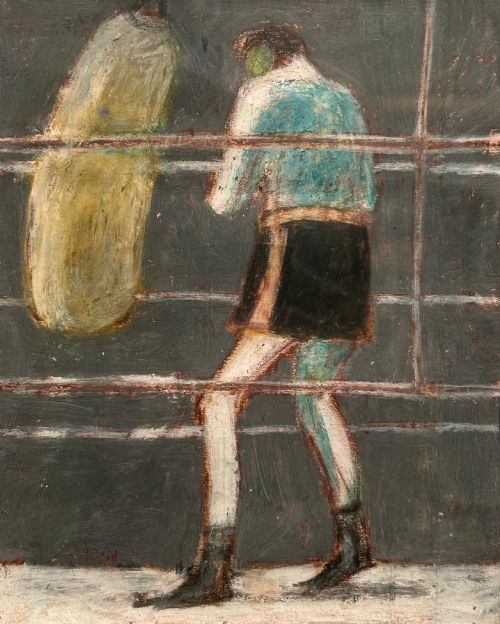
A gentleman in a tricorn hat watches over the collection from an oil painting.
Factors of Quality
The artistry of the painted miniature or silhouette determines the vitality of the portrait. Fine brushwork and proportion under glass distinguish master execution from standard commercial production.
The Antique Portrait Ring Glossary
- Intaglio
- A gemstone or hardstone carved beneath the surface so that a impression pressed into wax yields a raised relief. It serves as a seal and a wearable portrait.
- Cameo
- A method of carving where the subject is raised in relief against a contrasting background layer of agate, carnelian, or shell. The design stands proud of the stone plane.
- Silhouette
- A solid black profile portrait, often cut from paper or painted onto card, glass, or porcelain. Continental Georgian examples frequently employ this dark outline technique.
- Verre Eglomise
- A cold decoration technique involving the application of gold leaf and painting onto the reverse of glass. This process creates a reflective, shimmering ground for miniatures.
Antique Portrait Ring: Frequently Asked Questions
How do I date a portrait ring?
Dating relies upon stylistic markers of the setting, the materials used, and the costume or hair styling of the subject. Georgian pieces often display closed-back foils and silhouettes, whereas Victorian examples introduce varied gold purities and carved hardstones.
Later pieces from Edwardian times and the 1920s incorporate platinum settings and geometric navette contours.
What materials make up these rings?
The metal mounts utilise 9ct gold, 18ct yellow gold, rose gold, and platinum. Portraits employ organic and mineral substances including carnelian, agate, coral, black opal, and rock crystal.
Painters and silhouettists also worked on glass, paper, and copper to render the central likeness.
Are portrait rings wearable daily?
Wearability depends on the fragility of the central material and the security of the antique setting. Hardstone cameos and intaglios in gold withstand careful everyday use.
Painted miniatures under glass or delicate foils require protection from knocks, moisture, and harsh cleaning agents.