
Antique Porcelain Tea
These antique porcelain tea vessels carry the weight of eighteenth and nineteenth-century drawing rooms into modern hands.
Antique Porcelain Tea
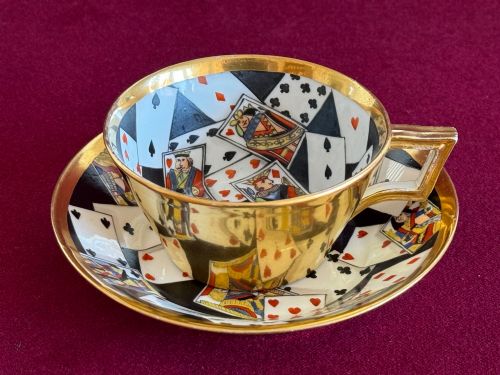
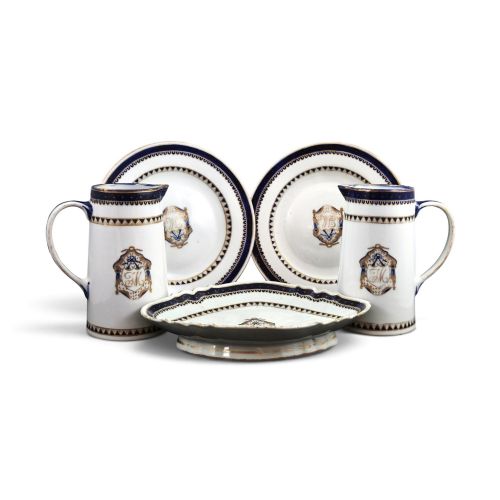
When you search for antique porcelain tea, you find cups, saucers, teapots, trios, and sugar bowls spanning the seventeenth through to the early twentieth centuries. English factories such as Worcester, New Hall, and H & R Daniel dominate the selection, alongside Chinese export wares and continental porcelain from Berlin and Dresden.
Most items on this page date from the Georgian and Regency periods, taking the form of individual tea cups, saucers, and matched trios. These domestic items trace the evolution of tea drinking from an elite ritual into a cornerstone of middle-class social life.
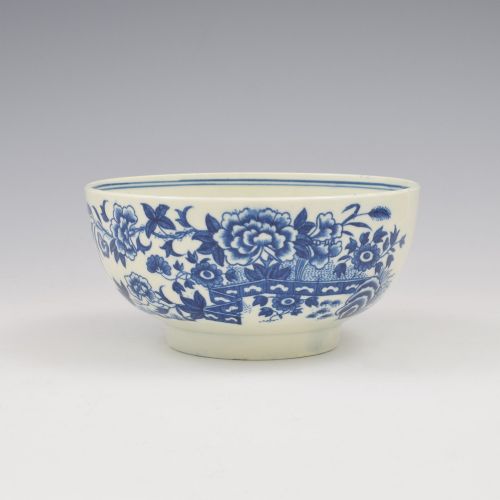
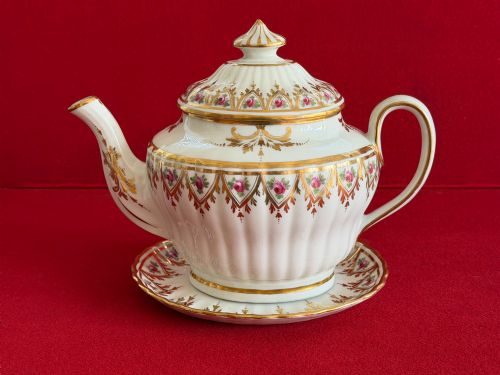
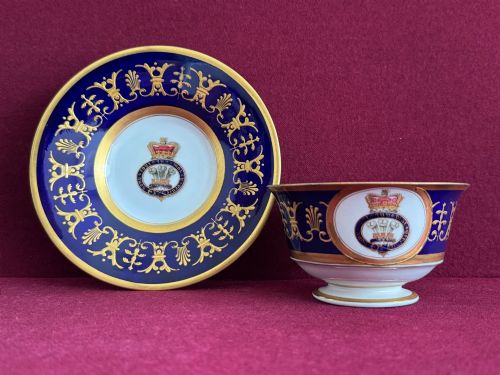
The objects range from utilitarian blue and white bowls salvaged from shipwrecks to elaborately painted cabinet cups intended for display. Functional forms like teapots and slop bowls sit alongside decorative trays and presentation pieces.
How they were made
Potters shaped these wares using soft-paste or hard-paste ceramic bodies, applying lead or feldspathic glazes before kiln firing. Factories like Worcester and Coalport developed specialised enamel palettes that fused to the surface during secondary low-temperature firings.
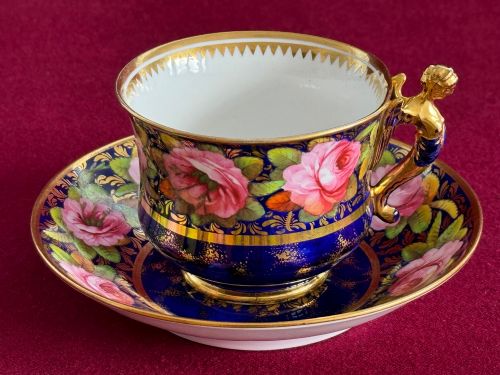
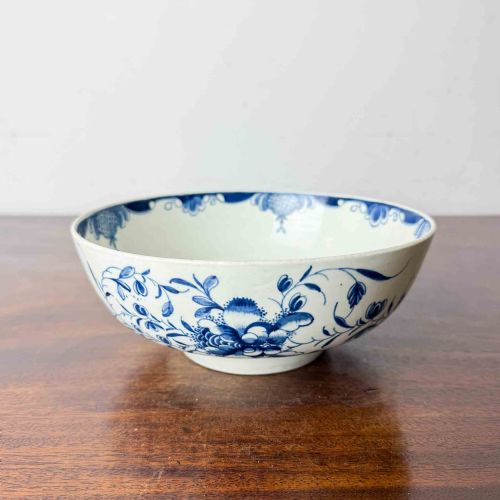
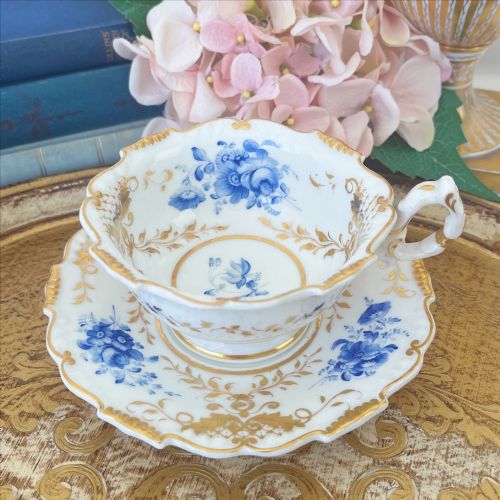
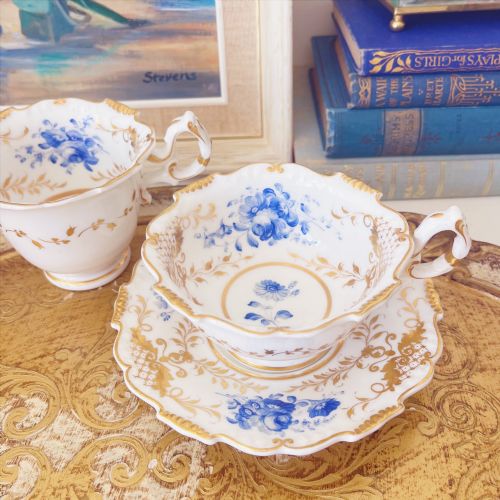
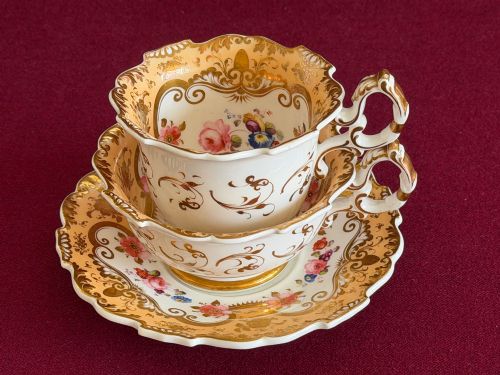
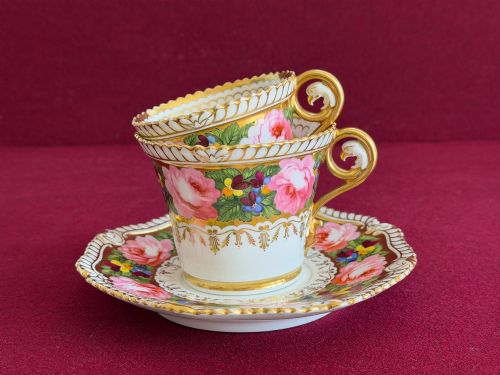
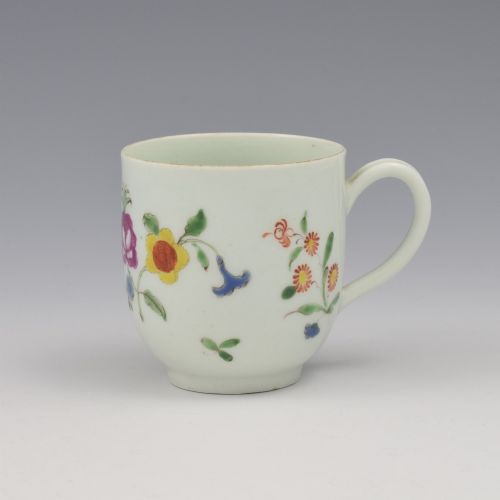
Decoration relied heavily on handpainting, gold leaf application, and transfer printing in blue and white. Artisans used fine brushes for detailed floral sprays and landscape scenes, while gilders applied gold leaf to rims, handles, and accents.
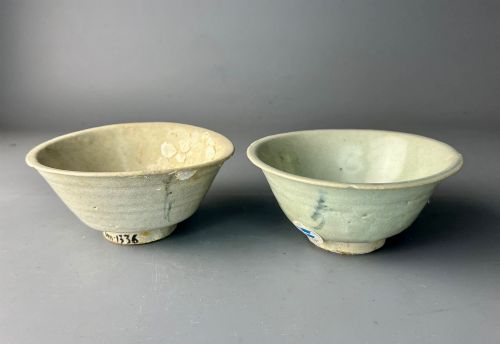
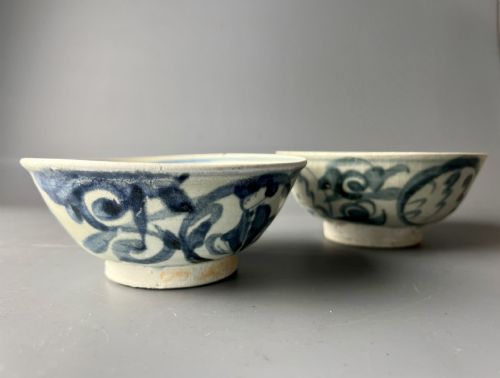
Seventeenth-century Chinese bowls on this page survived a shipwreck at Vung Tau before finding their way into modern tea collections.
What varies in quality
Quality rests on the precision of the handpainting and the purity of the porcelain body. Pieces from established makers like Dr Wall Worcester or H & R Daniel show superior control in brushwork, gilding density, and porcelain translucency compared to unmarked vernacular wares.
The complexity of the form and the preservation of the enamel and gold leaf dictate the upper tier of the range. Complete trios and factory-marked cabinet cups with intact handpainted landscapes command greater attention than simple, utilitarian vessels.
New Hall Porcelain·Spode Porcelain·Barr and Barr Worcester·Derby Porcelain·Richard Chaffers·Davenport·Coalport·KPM Berlin·Chamberlains Worcester·Minton
The Antique Porcelain Tea Glossary
- Trio
- A matched set consisting of a tea cup, a coffee cup, and a saucer.
- Slop bowl
- A larger bowl used during tea service to discard the dregs from cups before pouring a fresh brew.
- Soft-paste porcelain
- An artificial ceramic composition of clay, glass, and frit fired at lower temperatures than true hard-paste porcelain.
- Sucrier
- A covered vessel designed specifically to hold sugar during tea service.
- Transfer printing
- A mechanical method of applying complex designs to ceramic surfaces by transferring ink from an engraved copper plate via tissue paper.
Antique Porcelain Tea: Frequently Asked Questions
What is a tea trio?
A tea trio brings together three matching ceramic pieces for the table. It consists of a tea cup, a coffee cup, and a shared saucer.
This configuration reflects the nineteenth-century fashion of serving both tea and coffee during social gatherings using a unified tableware pattern.
How do I date early porcelain?
Dating relies on factory marks, paste composition, and stylistic clues painted onto the ceramic surface. Early pieces often feature hand-penciled pattern numbers or period-specific cobalt blue underglaze signatures.
Comparing potting weights, glaze pooling, and decorative motifs against documented factory timelines helps narrow the decade of production.
Can I use antique teacups?
Using antique teacups for daily dining requires care due to the fragile nature of soft-paste porcelain and delicate overglaze enamels. Hand washing in warm water preserves the gold leaf and painted details.
Thermal shock from boiling water can crack centuries-old ceramic bodies, so warming the vessel gently before pouring tea helps prevent damage.
What makes Dr Wall Worcester special?
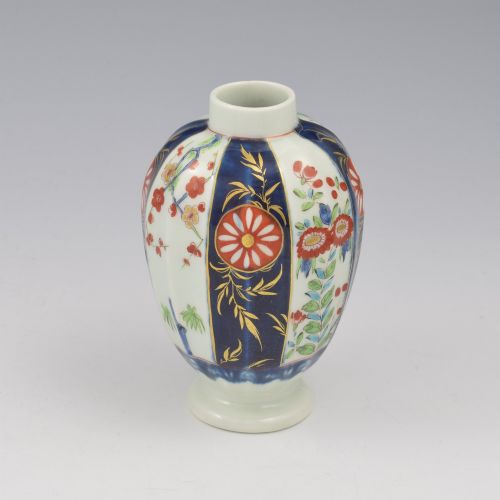
Dr Wall Worcester refers to the initial period of the Worcester porcelain factory operating in the eighteenth century. These pieces are celebrated for their fine potting and sophisticated oriental-inspired designs.
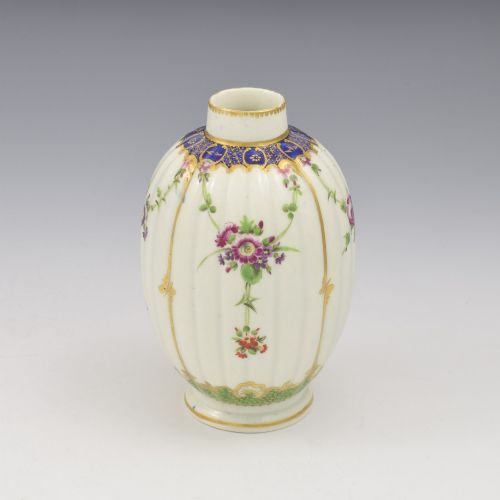
Items from this era often display deep blue scale grounds or delicate handpainted botanical and figure motifs executed with high technical skill.