



Antique Pointer Figurine
An antique pointer figurine captures the intensity of the working hound in bronze, ceramic, and cast iron.
Antique Pointer Figurine
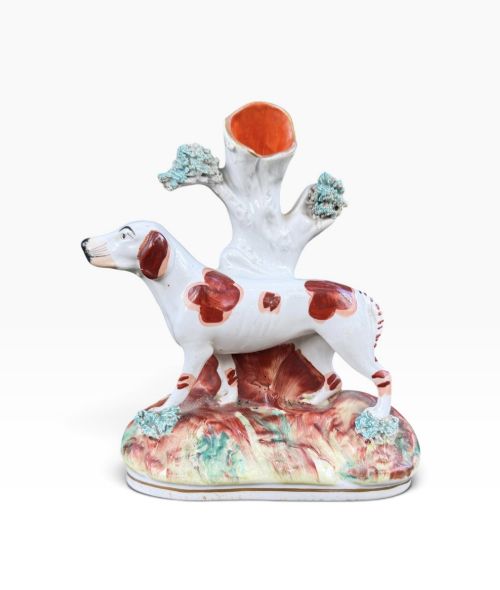
An antique pointer figurine represents the canine form in materials ranging from Staffordshire pottery to French bronze. When searching this phrase, buyers encounter working dogs shown standing, pointing, or retrieving game across the nineteenth and twentieth centuries.
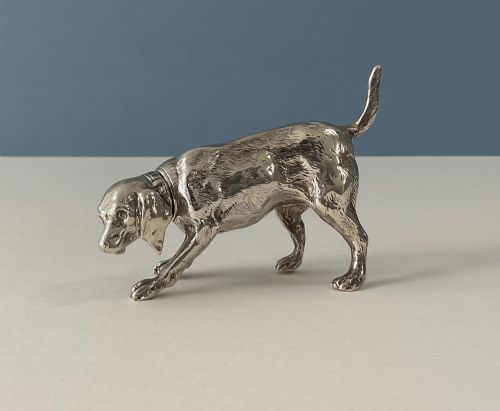
The selections on this page span several distinct forms, including spill vases, pepper pots, and large decorative sculptures. Animalier subjects dominate the offerings, reflecting a strong Victorian and Edwardian interest in naturalistic animal sculpture.
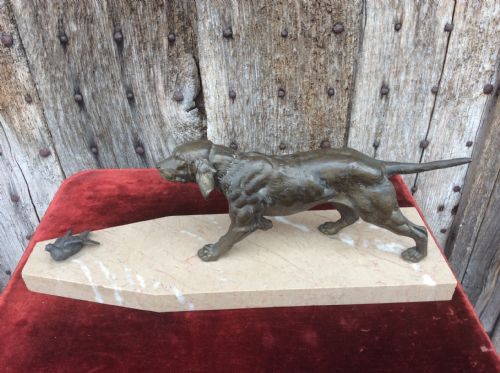
Most examples originate from British potteries and continental foundries, demonstrating diverse regional approaches to animal anatomy. Staffordshire earthenware figures sit alongside French spelter and bronze statuary mounted on marble plining.
How they were made
Foundries produced metal figures using traditional casting techniques in bronze, spelter, and cast iron. Artisans often chased the metal surfaces by hand to define musculature and coat texture before mounting the sculptures on marble plinths.
Listings feature materials spanning bronze, marble, earthenware, enamel, cast iron, glaze, solid silver, and spelter.
What varies in quality
Anatomical precision and liveliness of posture distinguish superior sculptural work from rigid casting. The sensitivity in modelling the hound's head and tense stance dictates the visual impact of the piece.
Surface finish and patination determine the grade of metal sculptures, where crisp chasing reveals fine details of the coat. In ceramic figures, the preservation of hand-applied enamel colours maintains the intended character.
Thomas Parr factory·Enoch Wood factory·Royal Dux
The Antique Pointer Figurine Glossary
- Animalier
- A nineteenth-century artistic movement dedicated to the realistic depiction of animals, particularly working dogs and big cats. Sculptors in this tradition studied live subjects closely at menageries and in the field.
- Spelter
- An alloy of zinc and lead used as a cost-effective alternative to bronze for sculptural figures. It accepts patination well to simulate heavier metals.
- Spill vase
- A hollow ceramic or metal vessel designed to hold taper matches for lighting fires and pipes. These useful items often incorporated animal figures alongside the receptacle.
- Patina
- The surface sheen and coloration developed on metal through age or chemical treatment. A well-preserved patina enhances the depth of sculptural details.
Antique Pointer Figurine: Frequently Asked Questions
What is an antique pointer figurine?
These pieces are sculptural representations of hunting hounds created in bronze, ceramic, and iron during the nineteenth and twentieth centuries. They served variously as mantel ornaments, desk accessories, and functional spill vases.
Craftsmen across Britain and continental Europe modelled these figures to celebrate the working dog's form. The examples available here reflect diverse manufacturing traditions from local potteries to major foundries.
How were these figures used originally?
Wealthy households displayed bronze and spelter sculptures in libraries and antechambers to demonstrate an interest in field sports. Ceramic versions adorned mantelpieces in domestic parlours.
Certain hollow ceramic forms doubled as spill vases to hold wooden matches near hearths. Novelty items like silver pepper pots brought sporting themes directly to the dining table.
How do I identify the period?
Stylistic indicators and material choices help date each piece to specific decades. Victorian examples often feature hand-painted Staffordshire earthenware, while Edwardian pieces may draw on continental porcelain traditions.
Nineteenth-century bronzes frequently carry foundry marks or artist signatures within the metal base. Art Deco pieces from the early twentieth century display characteristic streamlined plinths and stylized patination.
How do I care for bronze and ceramic figures?
Bronze and spelter sculptures require only gentle dusting with a soft, dry cloth to preserve their patination. Avoid harsh chemical cleaners that strip the original surface finish.
Ceramic figures benefit from careful handling away from direct sunlight to protect enamel pigments. Glazed earthenware can be wiped gently with a damp cloth if dust accumulates in recessed areas.