






Antique Pocket Pistol
An antique pocket pistol is a compact firearm designed for personal defence, prized for its intricate mechanism and history.
Antique Pocket Pistol
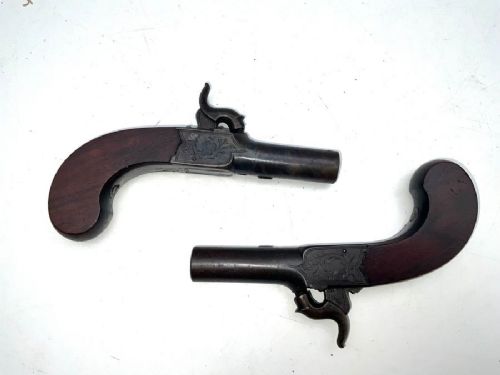
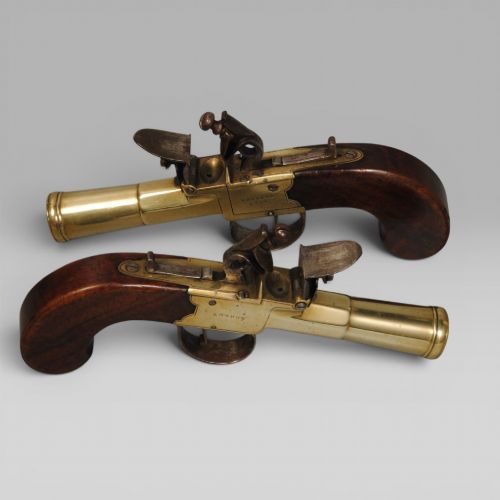
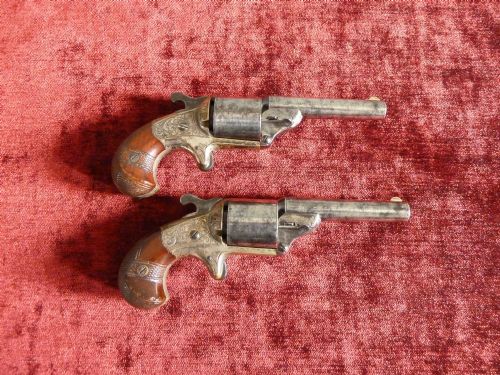
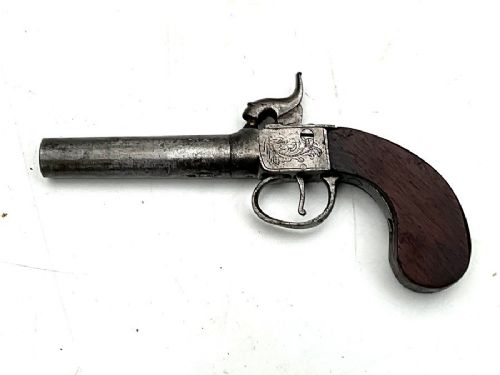
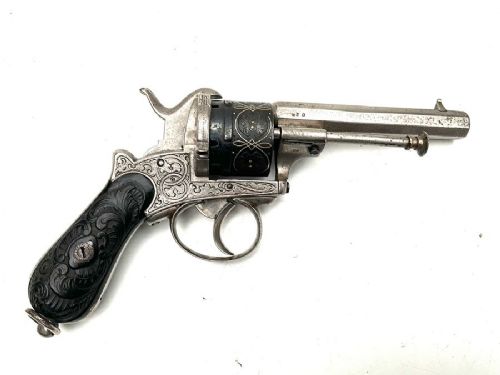
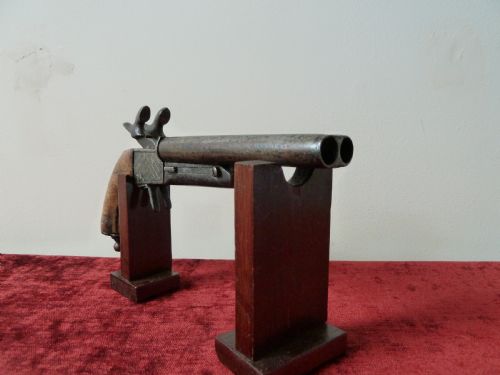
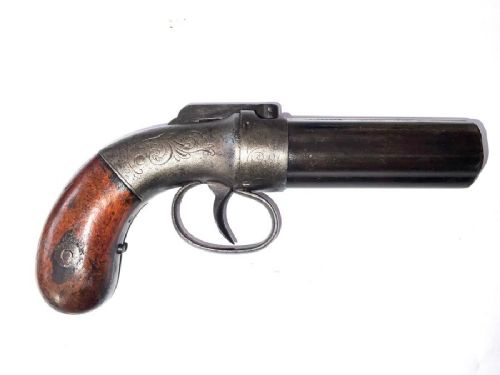
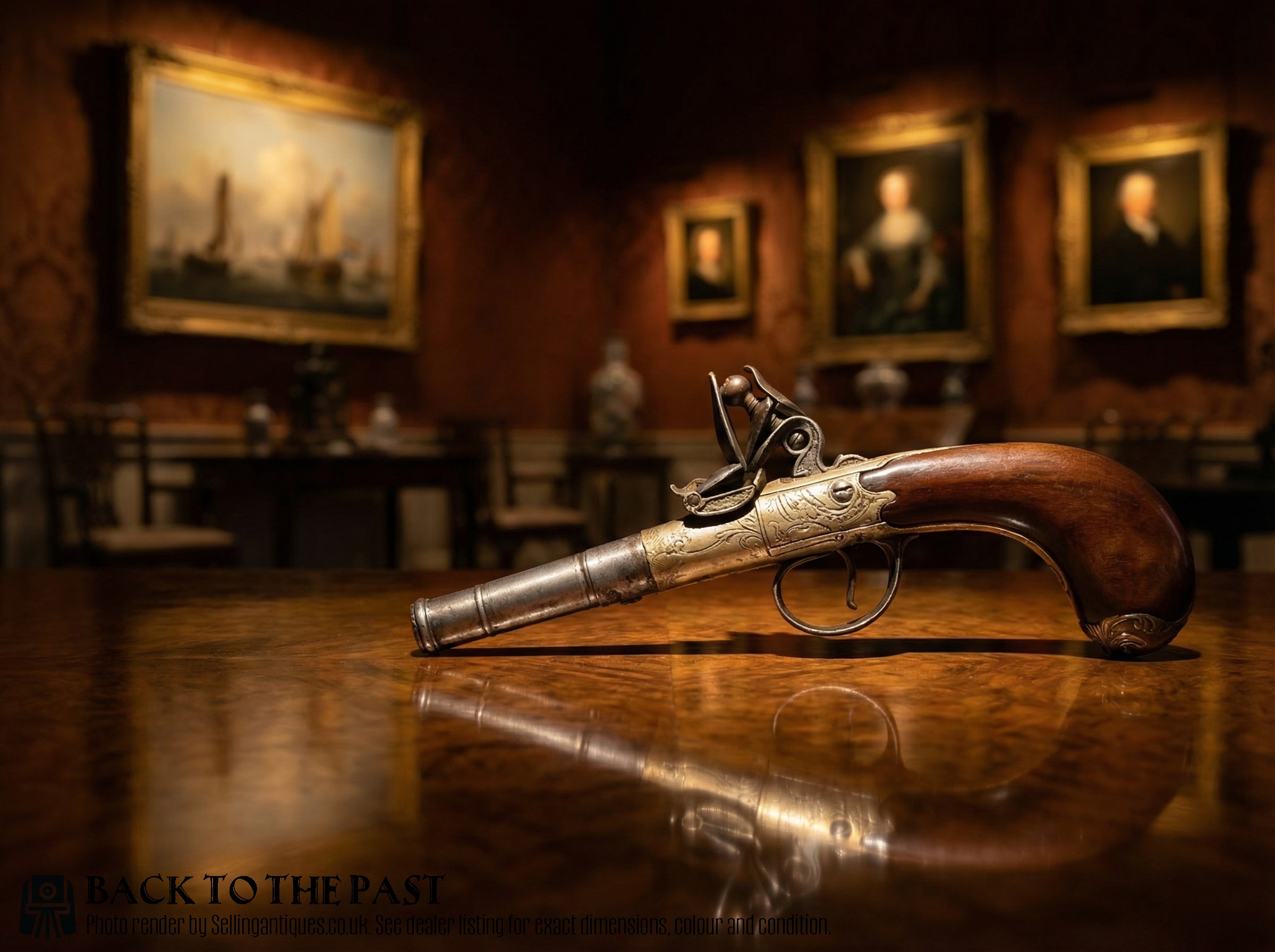
An antique pocket pistol represents a small firearm designed to be carried discretely by travellers, officers, and gentlemen for personal protection during the eighteenth and nineteenth centuries. These pieces encompass various ignition systems, from early flintlocks to later percussion and pinfire mechanisms, reflecting rapid technological shifts in personal arms.
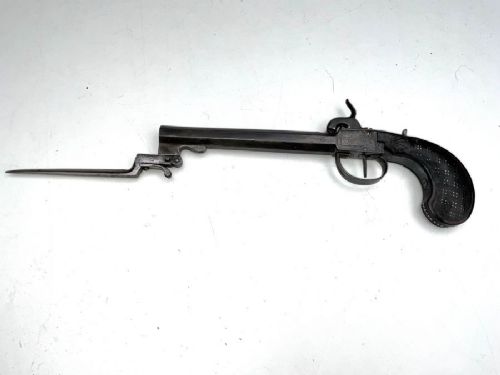
The selection on this page centres heavily on nineteenth-century percussion examples alongside eighteenth-century flintlocks, frequently appearing in forms such as boxlock, turn-off, and muff pistols. Makers often integrated folding bayonets or hidden triggers into these compact frames to ensure they remained snag-free when drawn from a pocket or coat.
Originating predominantly from British and European workshops, these sidearms display distinct regional proof marks and stylistic touches like silver wire inlay or carved walnut grips. They bridge the gap between martial weaponry and civilian gadgetry, offering a tangible link to the personal security concerns of past eras.
How They Were Made
Gunsmiths forged barrels from steel and iron, frequently employing brass for cannon-barrel designs and furniture to resist corrosion while adding structural rigidity. Stocks were traditionally turned from dense hardwoods such as walnut and ebony, shaped to fit the hand securely despite the small proportions of the grip.
Mechanisms relied on precision filing and fitting of internal springs and sears, housing the lockwork within boxlock frames or sideplates. Craftsmen embellished finer pieces with intricate engraving on the metal surfaces and delicate silver wire inlays winding through the wooden stocks.
Antique Pocket Pistol Retail Price Guide 2026
Typical asking prices for pocket pistol among the pieces listed under this phrase on Sellingantiques today, from the lower quarter to the upper quarter. They describe what is for sale here now, not the wider market.
Gunsmiths occasionally hid folding bayonets beneath the barrel, ensuring an unexpected prickly reception for anyone too close for comfort.
What Varies in Quality
Quality in these firearms rests upon the crispness of the lock mechanism and the precision with which the components are fitted together. Superior examples exhibit smooth, deliberate action in the hammer and trigger, alongside clean, deep engraving that remains sharp rather than softened by wear or poor restoration.
Twigg London·James Barber·Thomas Henshaw·Auguste Francotte·Meyer And Mortimer·George Sherwood
The Antique Pocket Pistol Glossary
- Flintlock
- An ignition mechanism utilising a flint held in a cock to strike a steel frizzen, creating sparks to ignite the priming powder. This system dominated military and civilian firearms throughout the eighteenth century.
- Percussion
- A later ignition system employing a small priming cap struck by the hammer to ignite the powder charge within the barrel. It largely superseded the flintlock method during the early nineteenth century.
- Boxlock
- A firearm design where the breech and lockplate are forged as a single unified piece, placing the mechanism centrally behind the barrel. This layout improved mechanical strength and simplified production for pocket arms.
- Turn-off
- A barrel construction allowing it to be unscrewed from the breech for easier loading from the front with a tight-fitting ball. It is a common feature on Queen Anne style pocket pistols.
- Pinfire
- An early self-contained cartridge system featuring a small pin protruding radially from the base of the cartridge, which the hammer strikes to detonate the internal priming compound.
Antique Pocket Pistol: Frequently Asked Questions
What is a pocket pistol?
A pocket pistol is a small, concealed firearm designed for personal defence during the eighteenth and nineteenth centuries.
These compact sidearms allowed travellers and civilians to protect themselves against highwaymen and urban footpads.
How do flintlock and percussion pistols differ?
Flintlocks use a piece of flint striking steel to create sparks that ignite loose gunpowder in a pan.
Percussion pistols rely on a hammer striking a small metal cap containing sensitive detonating compound, offering greater reliability in wet weather.
What is a muff pistol?
A muff pistol is an exceptionally small firearm designed to slip easily into a lady's fur muff or a gentleman's pocket.
Their tiny proportions made them convenient for discreet daily carry in urban environments.
How should I display my antique pistol?
These firearms are best housed in a dry, stable environment away from direct sunlight to preserve the wooden stocks and metal finishes.
Many collectors utilise glass-fronted cabinets or fitted presentation boxes to keep the pieces secure while remaining visible.