


Antique Planter Bowl
An antique planter bowl brings greenery indoors with centuries of craft, from heavy copper vessels to delicate blue and white porcelain.
Antique Planter Bowl
When you search for an antique planter bowl, you encounter vessels originally made to hold plants, display cut flowers, or serve practical domestic purposes in kitchens and gardens. These pieces cross centuries of global craftsmanship, taking the form of heavy metal basins, ceramic cachepots, and grand majolica jardinières.
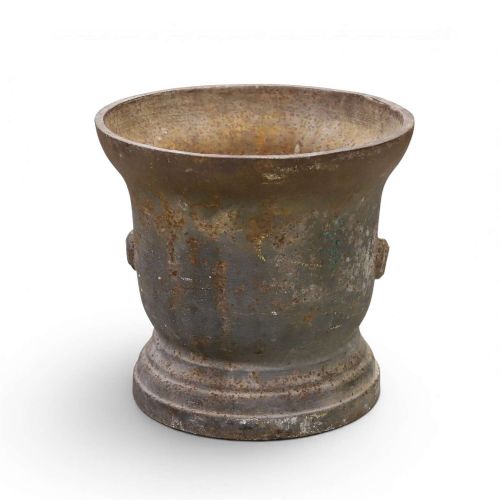
The versions most common on this page stem from the nineteenth century, blending utilitarian origins with decorative appeal. You will find Japanese bronze and porcelain bowls alongside European copper pans, cast iron mortars, and earthenware crocks repurposed for botanical displays.
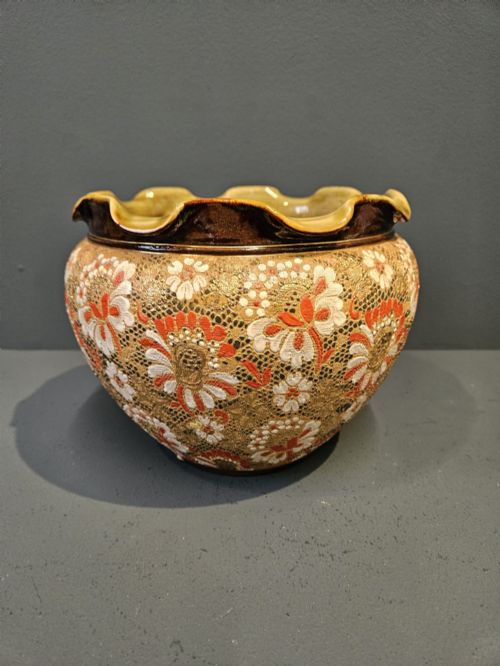
Makers ranged from large British potteries like Doulton Lambeth to Japanese Meiji period workshops and continental porcelain studios. Each piece reflects the interior fashions of its era, moving from Georgian copper kitchenware to Victorian and Edwardian display ceramics.
How they were made
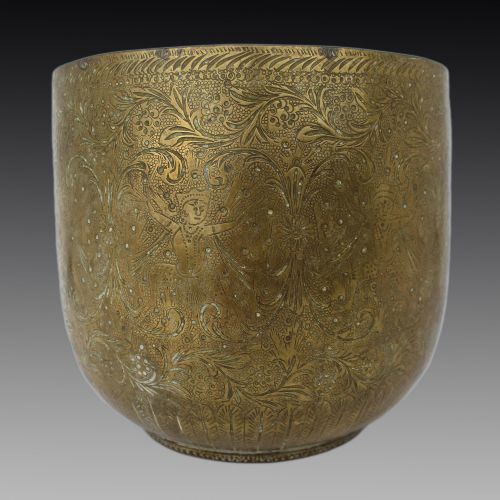
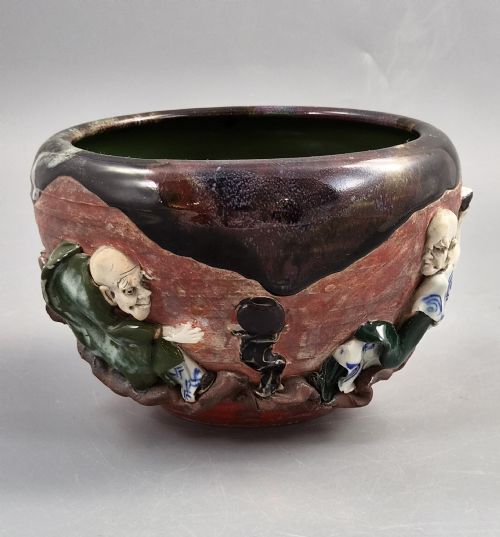
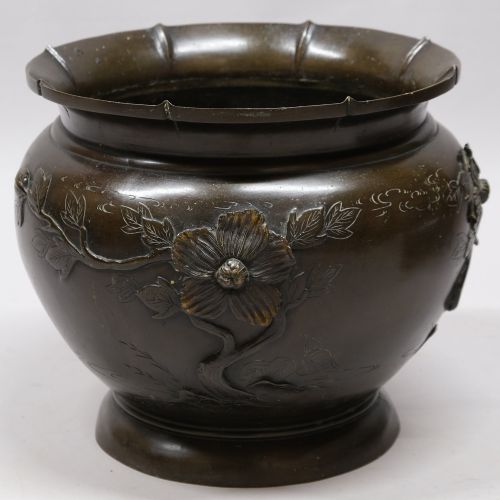
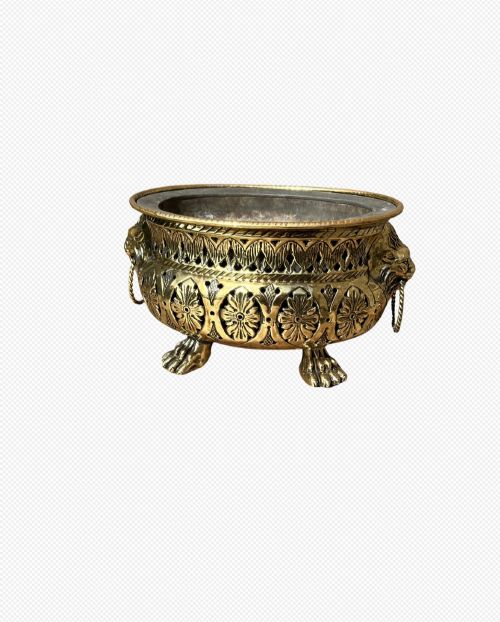
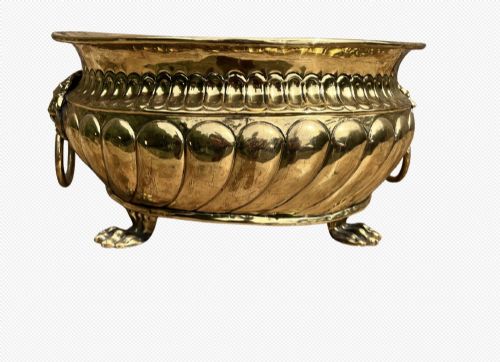
Metal vessels rely on traditional forming techniques, with copper and brass bowls constructed through hand-riveting or casting, often finished with hammered textures. Bronze pieces from the Japanese Meiji period demonstrate intricate lost-wax casting and relief work, sometimes incorporating figures or applied details.
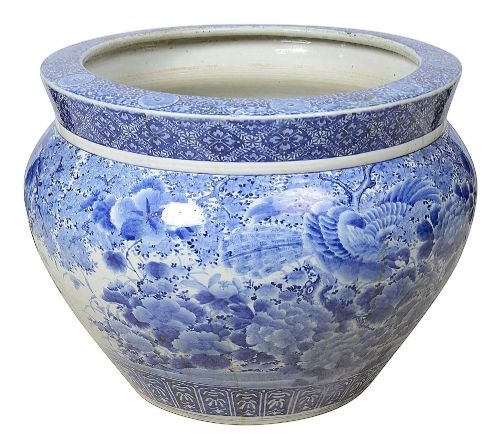
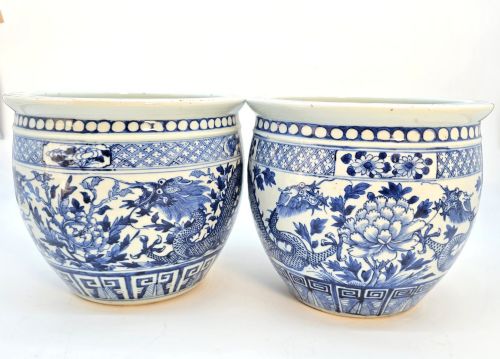
Ceramic and porcelain examples employ wheel-throwing or moulding, followed by hand-painting in blue and white, Famille Rose, or Imari palettes before high-temperature glazing. Terracotta and majolica pieces utilise earthenware bodies coated in thick opaque glazes or decorative slip, occasionally mounting onto figural or architectural bases.
Several Japanese Meiji period bowls feature cheeky climbing figures scaling the outer walls as if attempting an escape.
What varies in quality
The standard of a piece rests on the precision of its manufacture and the depth of its decoration. Superior examples show crisp casting in metals, careful hand-chasing of relief details, or finely executed brushwork on porcelain rather than flat, mechanical transfer printing.
Substance and material thickness distinguish finer vessels from lighter utilitarian wares. Heavy gauge copper with robust rivetting, substantial bronze weight, and dense, resonant porcelain indicate superior original purpose and enduring structural integrity.
Doulton Lambeth·Inoue Ryōsai
The Antique Planter Bowl Glossary
- Jardiniere
- A large ornamental pot or stand for holding plants or flowers. This term appears frequently across French and English listings.
- Cachepot
- An ornamental pot used to conceal an unadorned flowerpot. These watertight vessels protect interior surfaces from drainage.
- Imari
- A style of Japanese export porcelain decorated in underglaze blue and contrasting iron red and gold. Pieces typically feature complex botanical and geometric patterns.
- Famille Rose
- A major palette of Chinese ceramic glazes introduced in the eighteenth century, distinguished by opaque pink or purple enamel. The style depicts figures, birds, and flowers with high detail.
- Majolica
- A type of earthenware coated with an opaque tin-glaze and painted with bright metal oxide colours. It gained immense popularity during the Victorian era for sculptural garden and table wares.
Antique Planter Bowl: Frequently Asked Questions
What is an antique planter bowl?
An antique planter bowl is a historic vessel designed to hold growing plants, flowers, or water, encompassing diverse forms such as copper basins, porcelain jardinières, and bronze cachepots.
These pieces reflect the domestic and decorative standards of periods ranging from the eighteenth century through the early twentieth century, drawing on global traditions of metalwork and ceramics.
How were these bowls originally used?
Many of these vessels served practical roles in European kitchens, dairies, and gardens as copper pans, grain measures, mortars, or salting crocks before later finding new life as planters.
Others were created specifically as ornamental jardinières and centrepieces for grand dining tables or parlours to display ferns and floral arrangements.
How do I care for an antique bowl?
Metal vessels require gentle cleaning appropriate to their specific alloy, allowing copper and brass to develop a natural patina or maintaining them with mild polishes depending on personal preference.
Ceramic and porcelain bowls benefit from plastic inner liners to hold soil and moisture, preventing water from sitting directly against historic porous bodies or glazes.
How can I tell the period of a bowl?
Dating relies on material composition, manufacturing marks, and decorative style, such as recognising Meiji period Japanese bronzes or eighteenth-century copper construction methods.
Maker stamps, potteries like Doulton Lambeth, and stylistic shifts from Georgian utility to Victorian ornamentation provide reliable chronological markers.