


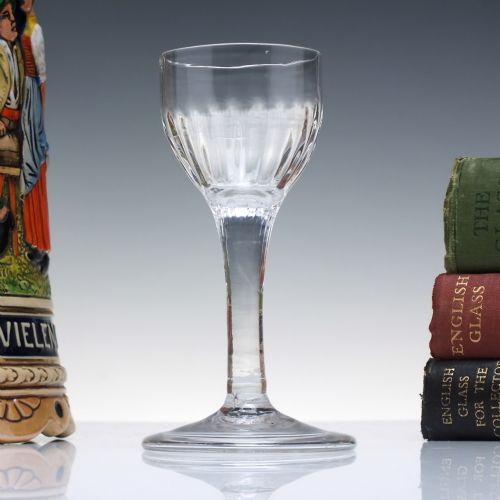


Antique Plain Stem Glasses
Antique plain stem glasses are Georgian drinking vessels defined by unadorned cylindrical stems, offering tactile weight and historical clarity.
Antique Plain Stem Glasses
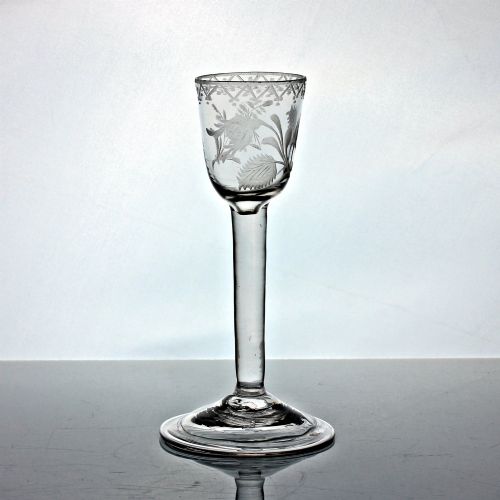
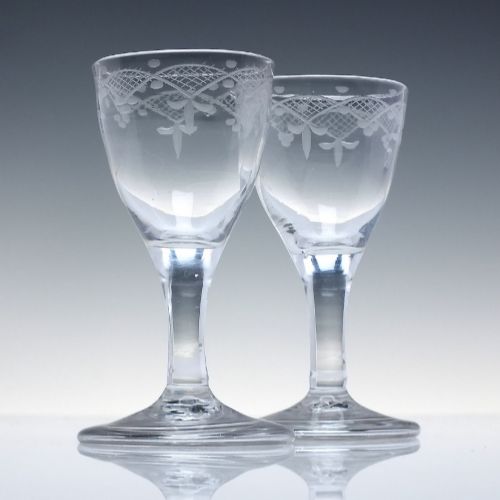
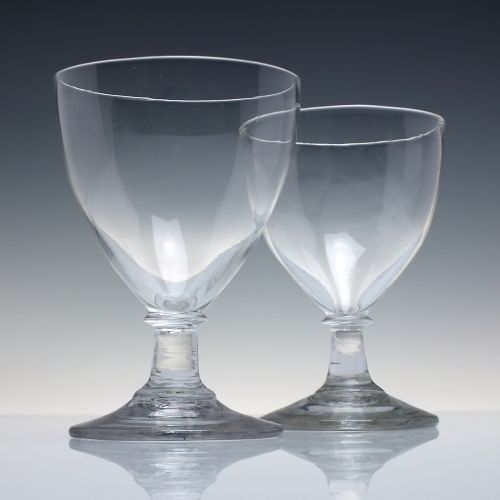
When you search for antique plain stem glasses, you encounter drinking vessels originating primarily in the eighteenth century and the Georgian period. The pieces appearing on this page span several specific forms, including wine glasses, cordial glasses, ale glasses, whisky dram glasses, and larger goblets or rummers.
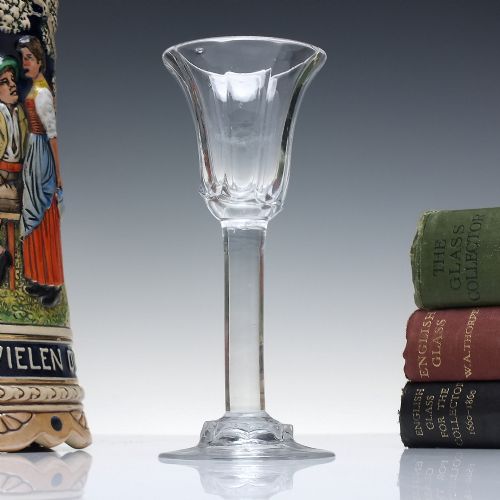
You are most likely to meet trumpet bowls, ovoid bowls, and ribbed or moulded variations, often supported by folded feet. These items date predominantly from the seventeen-forties and seventeen-sixties, representing foundational English glassmaking traditions.
The objects serve as functional tablewares and display pieces shaped by Georgian drinking culture. Each item carries the structural signatures of mid-eighteenth-century manufacture, from drawn bowls to substantial plain stems.
How they were made
These items rely on lead glass, lead crystal, clear glass, and flint glass, shaped through free-blowing and mould-blowing techniques. Glassmakers gathered molten metal on a pontil iron, blowing and manipulating the material by hand to form the bowl, stem, and foot separately before joining them.
Decoration involves wheel engraving and metal moulding, producing inverted petal patterns, nut-moulded surfaces, and commissioned monograms. Internal air tears occasionally occur naturally within the stem structure during the cooling and forming process.
Antique Plain Stem Glasses Retail Price Guide 2026
Typical asking prices for plain stem glasses among the pieces listed under this phrase on Sellingantiques today, from the lower quarter to the upper quarter. They describe what is for sale here now, not the wider market.
Periods represented on this site span the eighteenth century, Georgian era, and the year 1800.
What varies in quality
The standard of an item depends upon the crispness of the moulded decoration and the symmetry of the drawn bowl and plain stem. Pieces featuring specialised additions such as folded feet or deliberate air tears demonstrate higher levels of artisanal execution.
Engraved details reveal variations in technical proficiency, ranging from simple surface scratches to deeply cut wheel-engraved heraldry or floral motifs. The clarity of the metal and the absence of heavy clouding distinguish finer surviving examples.
The Antique Plain Stem Glasses Glossary
- Plain stem
- A straight, unadorned cylindrical glass stem lacking air twists, opaque twists, or multifaceted cutting. This form characterises English drinking vessels from the earlier part of the eighteenth century.
- Folded foot
- A glass foot possessing a rim turned underneath to create a double layer of metal for added strength. This technique provides stability and protection against chipping on tavern tables.
- Trumpet bowl
- A conical drinking vessel bowl widening uniformly from the stem to the rim. This silhouette represents a standard Georgian form for wine and ale glasses.
- Moulded glass
- Glass shaped by being blown or pressed into an intaglio pattern mould. Eighteenth-century examples include ribbed, inverted petal, and nut-moulded designs.
Antique Plain Stem Glasses: Frequently Asked Questions
What is an antique plain stem glass?
These pieces are eighteenth-century English drinking vessels characterised by straight, unadorned stems supporting bowls shaped for wine, ale, or cordials.
They reflect the domestic and social habits of the Georgian period, utilising lead glass and traditional blowing methods.
How do I identify a Georgian plain stem glass?
Examine the stem for a simple, straight profile without twists or cutting, and check the base for a pontil mark or folded foot.
Most surviving examples date between the seventeen-forties and seventeen-sixties, showing the characteristic metal weight of the era.
What were cordial glasses used for?
Cordial glasses served strong, sweet liqueurs and spirits in small quantities during the eighteenth century.
Their smaller bowl capacities separated them from standard wine glasses and larger goblets.
How should I clean antique glass?
Wash these items by hand in warm water using mild soap, avoiding sudden temperature changes that can stress old metal.
Dry them immediately with a soft cloth to prevent water spots on the clear lead glass surface.
What makes an 18th-century glass engraved?
Engraved glasses feature decorative motifs cut into the surface using a small rotating copper wheel fed with an abrasive slurry.
Common motifs on plain stem vessels include floral sprays, monograms, and Jacobite symbols.