
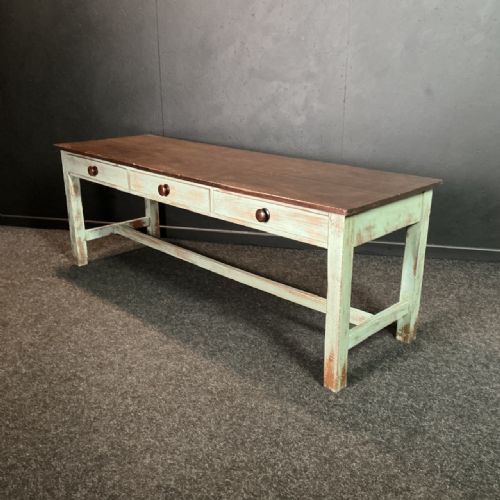
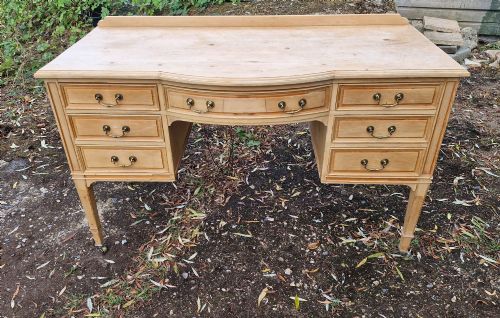
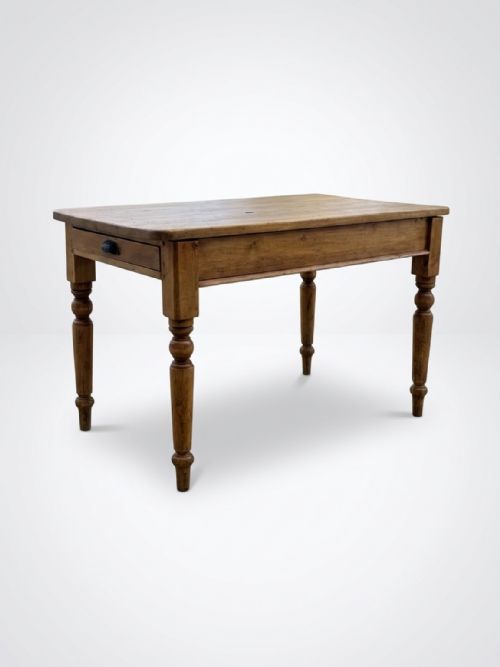
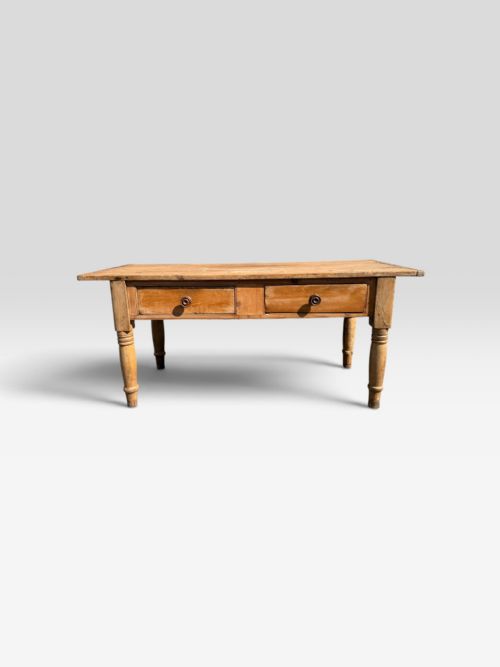
Antique Pine Drawer Table
An antique pine drawer table brings utilitarian warmth to a room, offering honest domestic history through fitted storage and working timber.
Antique Pine Drawer Table
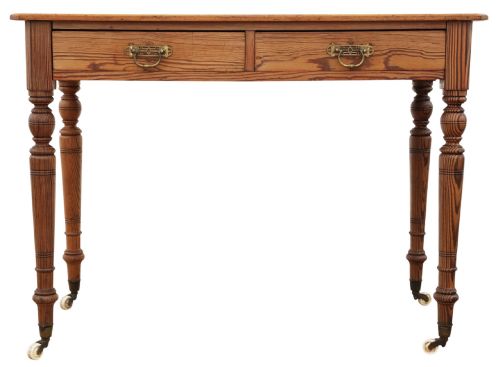
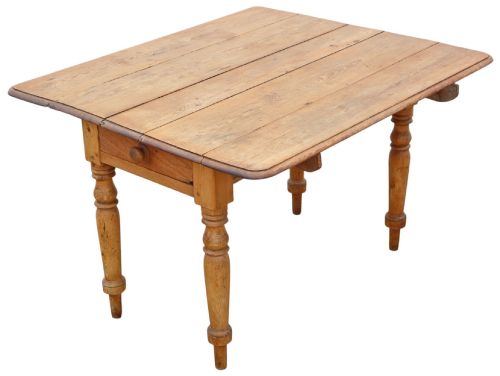
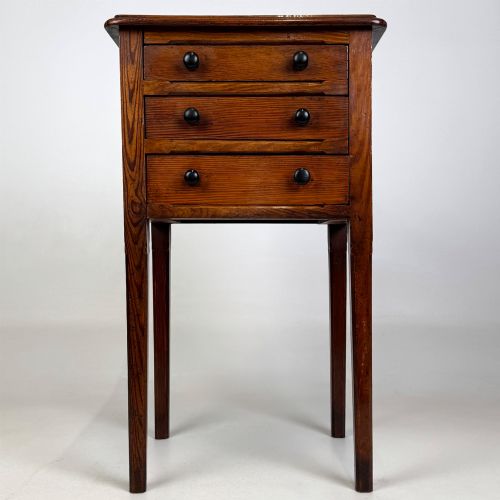
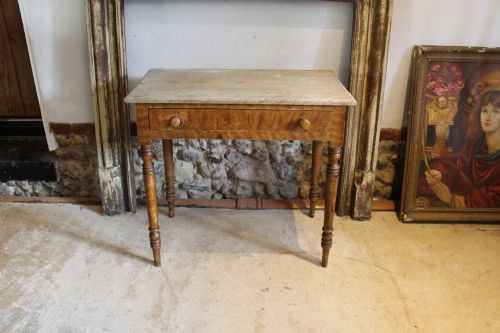
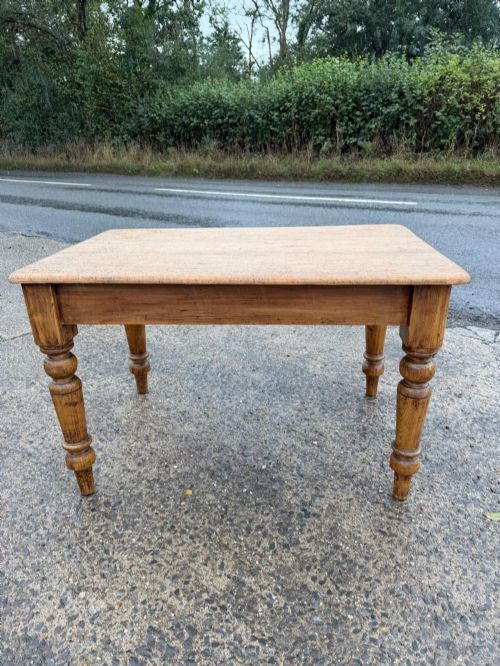
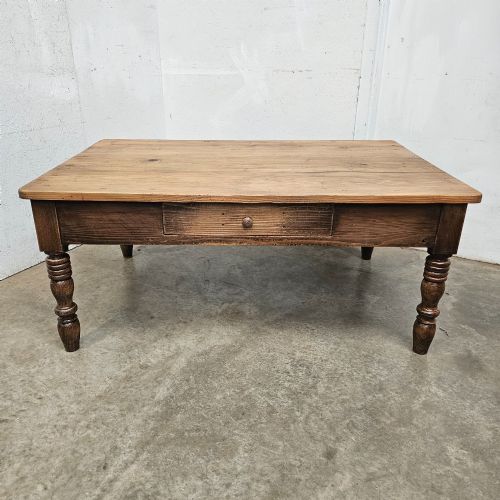
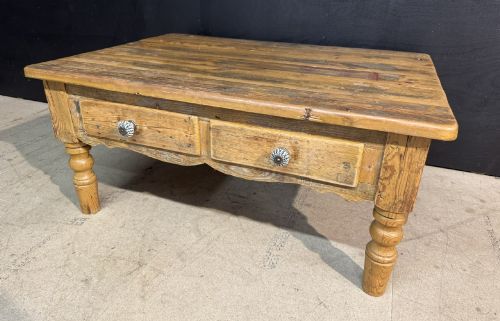
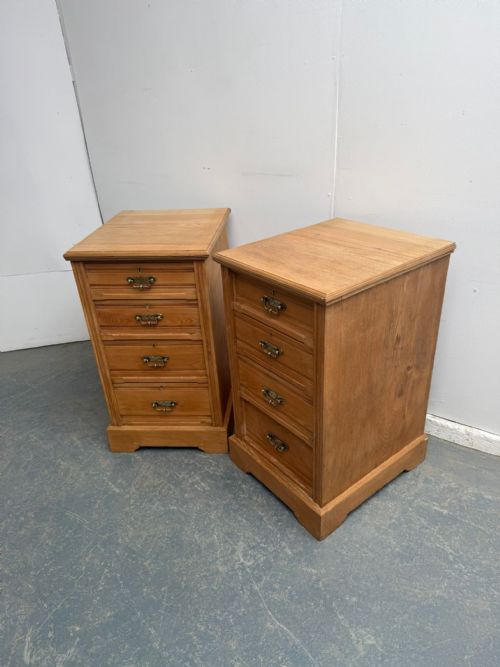
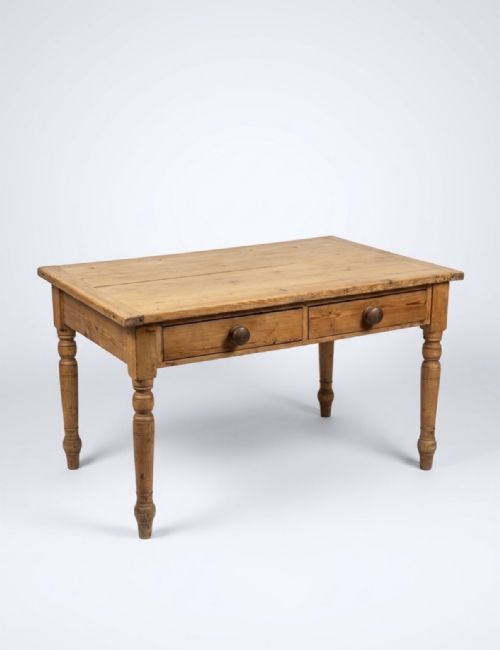
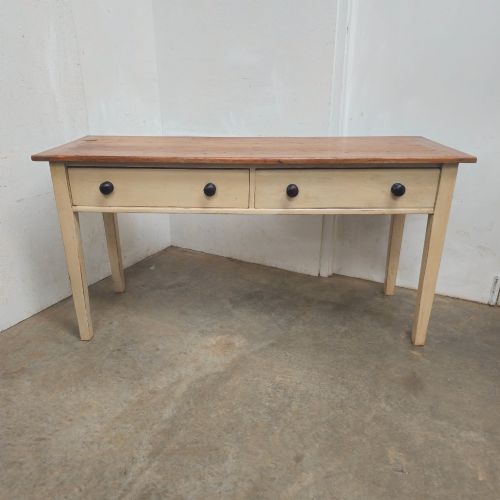
When someone searches for an antique pine drawer table, they are looking at practical domestic furniture built for service in kitchens, dairies, sculleries, and studies. These pieces range from simple side tables with a single frieze drawer to large farmhouse and prep tables fitted with multiple drawers for implements and linens.
The versions most frequently met on this page belong to the Victorian era and the wider nineteenth century, constructed with straightforward proportions and honest utility. Surviving examples often appear as kitchen tables, writing desks, and side tables, reflecting the versatile roles pine played in period households.
Alongside standard domestic pine, variations in timber appear through the use of denser pitch pine and secondary woods like oak, ash, or fruitwood. Forms shift from drop-leaf pembroke tables to substantial drapers and tavern tables, showing how workshop designs adapted to specific trades and domestic chores.
How they were made
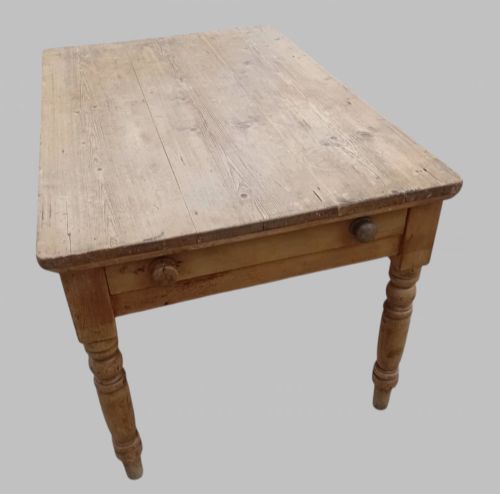
Makers constructed these tables primarily from solid pine and pitch pine, frequently pairing them with oak, sycamore, or chestnut for scrub tops and drawer linings. Joinery relied on sturdy pegged or dovetailed joints designed to endure heavy daily labour in busy kitchens and workshops.
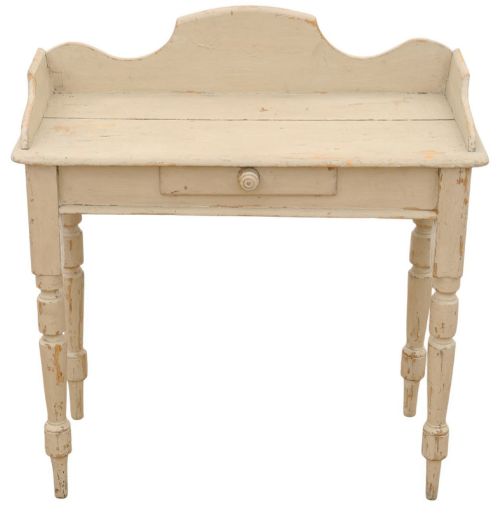
Surfaces were either left as bare scrubbed timber, finished with traditional wax, or coated in early layers of paint, scumble, and wash. Drawer construction typically featured hand-cut dovetails, paired with turned wooden knobs or small brass pulls depending on the domestic status of the piece.
Surviving drawer interiors occasionally still retain stray flour dust and centuries-old dried herbs from forgotten culinary tasks.
What varies in quality
Quality in these tables rests upon structural integrity, timber selection, and the degree of original surface preservation. Pieces fashioned from dense pitch pine or tighter-grained old-growth timber exhibit superior durability compared to softer secondary pine variants.
The finesse of the joinery, particularly in the hand-cutting of drawer dovetails and the turning of legs, separates utilitarian workshop output from finer domestic furniture. Furthermore, survival of an original scumble, paint finish, or scrubbed patina rather than later stripping elevates the historical interest of the table.
The Antique Pine Drawer Table Glossary
- Frieze
- The horizontal band running directly beneath the tabletop, which typically houses the fitted drawers on these tables.
- Pitch pine
- A dense, resinous variety of pine known for distinctive grain patterns and greater weight than standard softwoods.
- Scumble
- A translucent layer of glaze or tinted paint applied over a base coat to simulate wood grain or create textured decorative surfaces.
- Scrub top
- An unfinished wooden tabletop designed to be vigorously scrubbed clean with water and sand after food preparation.
- Pembroke
- A small table design featuring hinged drop leaves on either side and usually a single drawer at one end.
Antique Pine Drawer Table: Frequently Asked Questions
How were these tables used originally?
These tables served as hardworking surfaces in domestic kitchens, dairies, and sculleries, where drawers kept utensils, cloths, and dry goods close to hand.
In studies and dressing rooms, smaller variants functioned as writing desks or washstands, combining a compact work surface with enclosed storage.
Are scrub tops meant to be bare?
Yes, many working kitchen and dairy tables featured bare timber tops that were regularly scoured with water and abrasive stones to maintain hygiene.
This rigorous daily maintenance created the pale, worn patina characteristic of genuine antique pine surfaces.
How can I tell a Victorian pine table from an earlier one?
Nineteenth-century pieces generally show standardised machine-assisted sawn timber dimensions alongside hand-finished joinery like dovetails.
Earlier Georgian examples often display wider board widths, hand-riven components, and different nail types that reflect pre-industrial workshop practices.
What is the difference between pine and pitch pine?
Standard pine is a softer, lighter softwood widely used for everyday domestic furniture and secondary framing.
Pitch pine contains a high resin content, giving the timber a heavier weight, reddish hue, and pronounced grain patterns well suited to robust construction.