
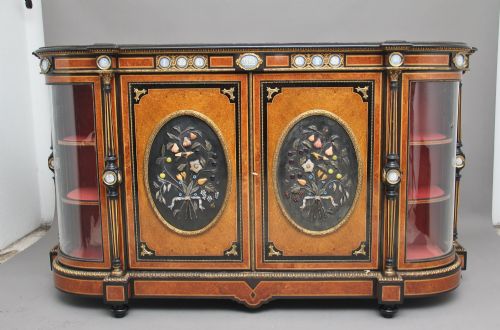

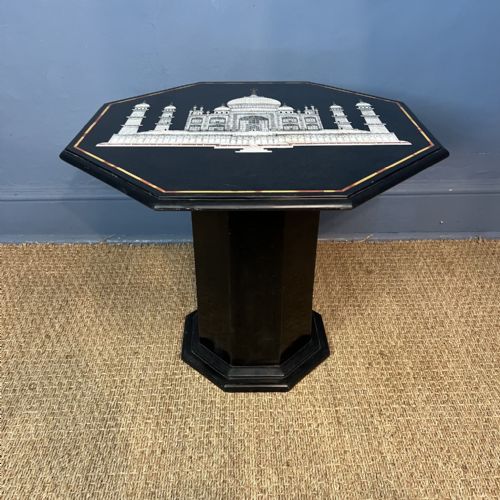


Antique Pietre Dure
These antique pietre dure works bring together cut stone and meticulous marble inlay to form tables, panels and decorative objects.
Antique Pietre Dure
When you search for antique pietre dure, you encounter decorative objects, wall art and tables formed from hardstones and marbles. The inventory spans the eighteenth century through the art deco period, drawing upon Italian, English and continental traditions.
Centre tables and side tables dominate the selection, often featuring circular or rectangular specimen marble tops set upon mahogany, rosewood or oak bases. Alongside these larger furniture pieces, smaller decorative objects such as candlesticks, paperweights and framed panels appear.
Materials and construction
Artisans cut thin sections of coloured marbles, malachite and hardstones, fitting them closely together within a solid marble or slate base. This mosaic technique, known as pietre dure, creates smooth pictorial surfaces and geometric tabletops.
Supports and frames utilise traditional timbers including mahogany, rosewood, oak and brass, matched to heavy marble table tops. Stonemasons and cabinet makers collaborated to build sturdy structures capable of carrying the significant weight of inlaid stone.
Materials documented across the listings include malachite, slate, brass, mahogany, oak and various specimen marbles.
Distinctions in quality
The precision of the stone joints dictates the standard of the piece, where tighter fits between individual coloured marbles reveal superior workmanship. Finer examples display subtle tonal gradations and complex pictorial or geometric composition rather than simple repeating patterns.
The Antique Pietre Dure Glossary
- Pietra dura
- Italian for hard stone, this technique involves inlaying cut and polished coloured stones into a solid marble background to create pictures or geometric designs.
- Specimen marble
- A tabletop or panel composed of numerous different types of marble and mineral samples arranged in decorative patterns.
- Ashford marble
- A black limestone quarried in Derbyshire, often inlaid with coloured minerals and used for Victorian decorative objects and obelisks.
- Grand Tour
- A cultural journey undertaken by wealthy Europeans in the eighteenth and nineteenth centuries, responsible for bringing back Italian pietre dure panels and tables.
Antique Pietre Dure: Frequently Asked Questions
What is pietre dure?
Pietre dure is a mosaic technique using cut and fitted polished hardstones and marbles to create pictorial scenes or geometric patterns.
Craftsmen shape each stone piece precisely before bedding it into a solid base material.
Where were these pieces made?
Production centres include Italy, particularly Florence, alongside English workshops producing Ashford black marble items in Derbyshire.
Grand Tour travellers frequently acquired Italian marble panels and tables to bring home.
How do I care for a marble top?
Clean the surface gently using a soft, dry cloth and avoid harsh chemical cleaners that can damage the polished stone.
Protect the heavy marble from sharp impacts and use coasters to prevent staining on antique tables.
How do I date a pietre dure table?
Examine the supporting timber framework, as Regency rosewood bases differ significantly from Victorian mahogany supports or later art deco designs.
Construction methods and the types of marble used help place pieces within the eighteenth, nineteenth or twentieth centuries.