



Antique Persian Heriz Runner
An antique persian heriz runner brings robust wool geometry and earthy dyes to long hallways.
Antique Persian Heriz Runner
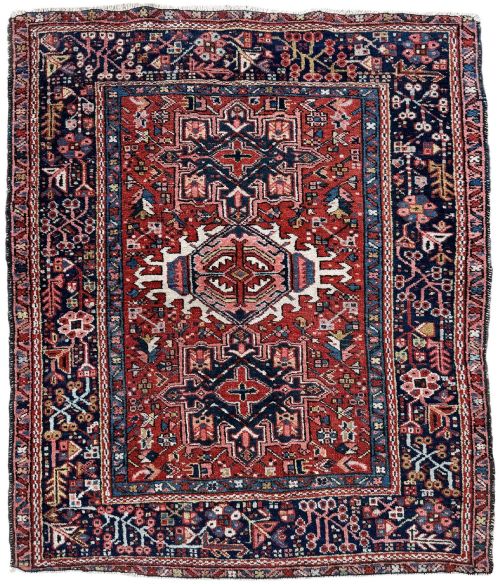
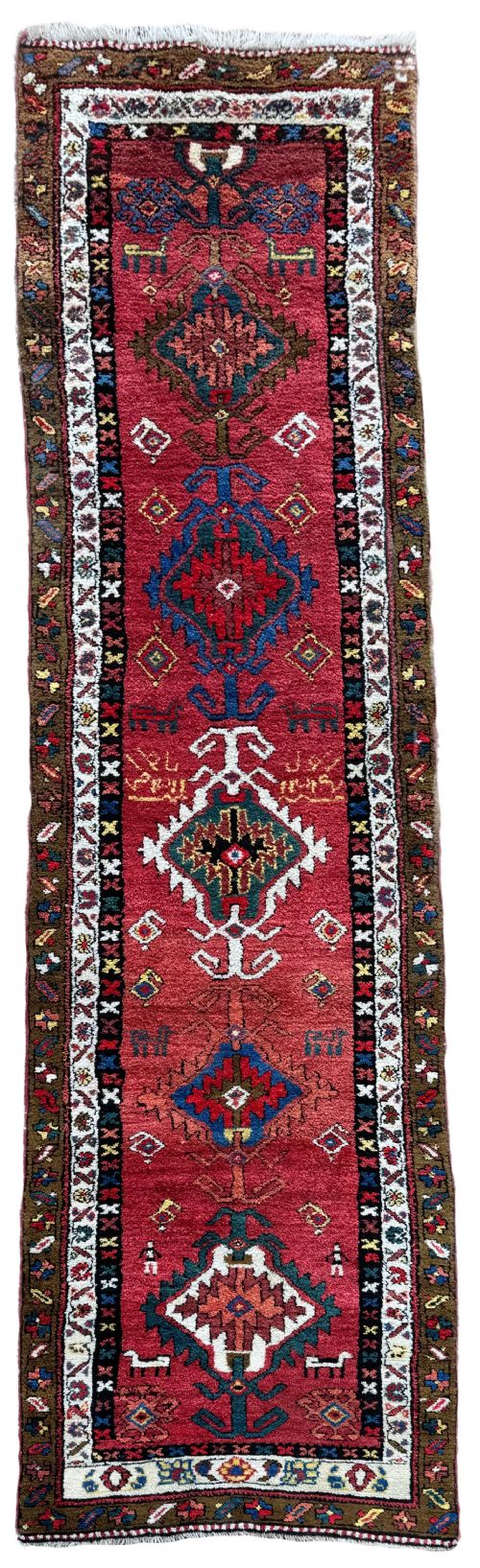
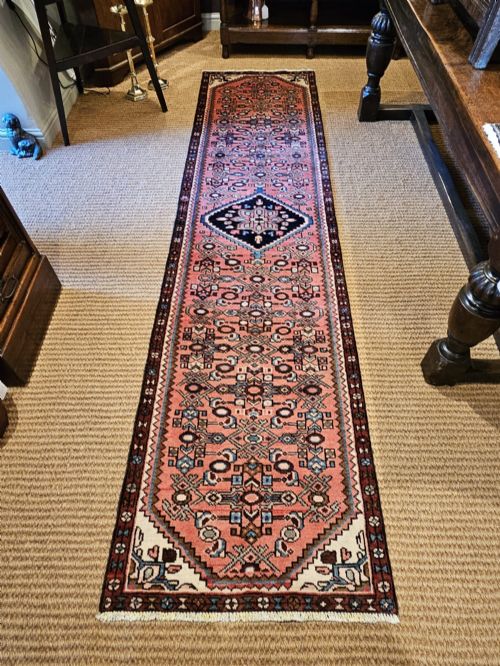
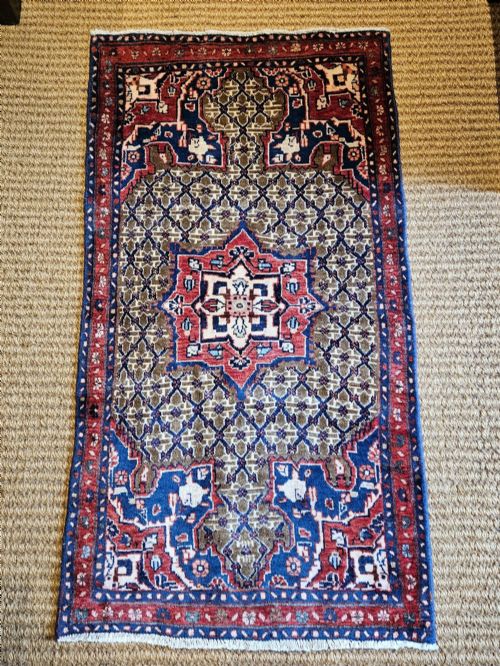
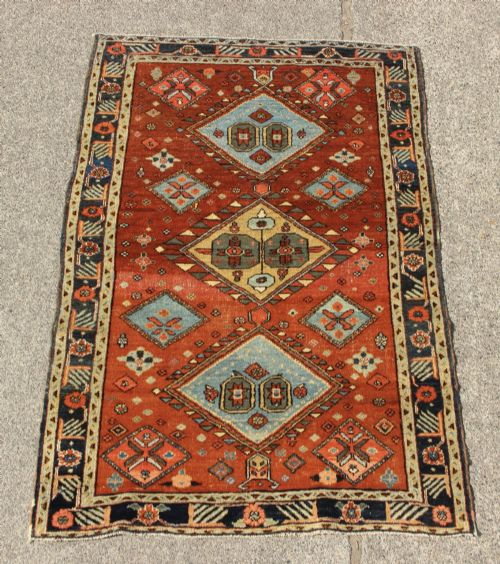
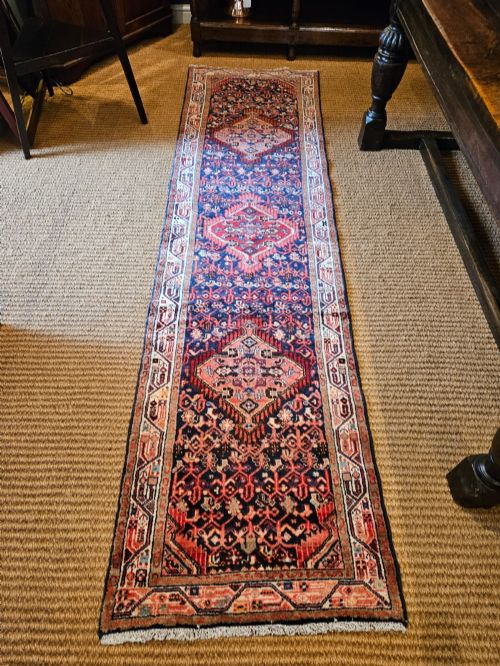
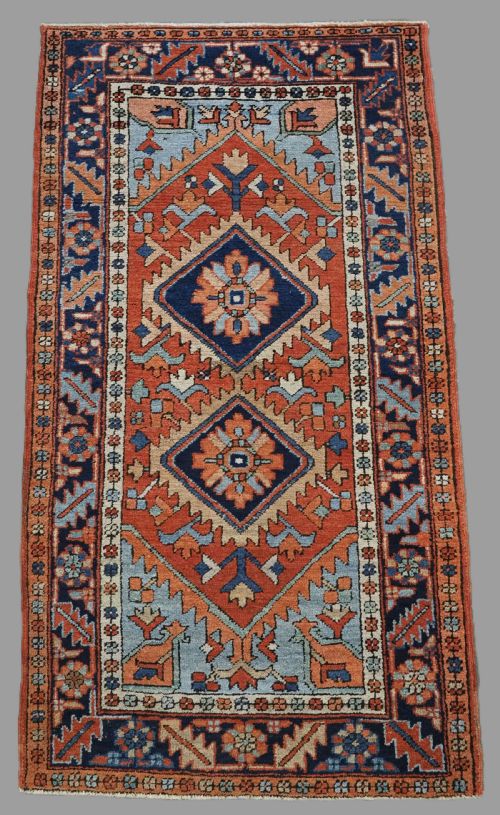
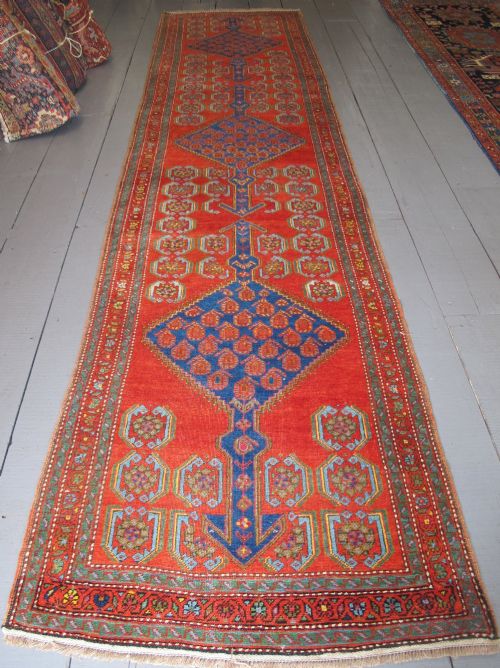
An antique persian heriz runner sits as a durable floor covering woven in the mountainous north-west region of Persia. These long formats serve hallways and corridors, balancing narrow proportions with bold geometric medallions and characteristic angular corner spandrels.
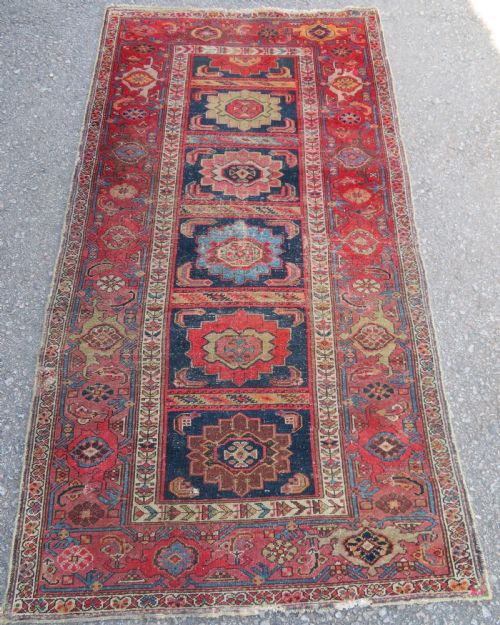
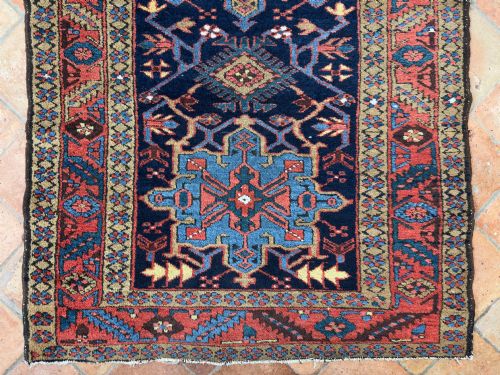
The pieces on this page span from the late nineteenth century through to the 1930s, encompassing related weaving traditions from the same geographic orbit. Alongside direct Heriz pieces, the selection includes regional variations such as Karaja, Gorevan, Bakshaish, Serapi, and Sarab.
Buyers encounter narrow hallway lengths as well as broader gallery formats. While many carry the signature Heriz large central medallion, others display all-over tribal patterns or crab motifs.
How they were made
Weavers constructed these runners using hand-spun wool pile knotted tightly onto sturdy cotton foundations. This pairing of materials provides the dense, heavy handle necessary to withstand heavy foot traffic in domestic corridors.
Dyers utilised natural vegetable and mineral sources to achieve enduring palettes of terracotta, indigo, madder red, and ivory. The resulting wool absorbs dyes with subtle tonal variations, known locally as abrash, which develop depth as the pile matures.
Regional weaving attribution on this page includes Heriz, Karaja, Serapi, Bakshaish, and Sarab.
What varies in quality
Quality rests primarily in the crispness of the drawing and the saturation of the natural dyes. Superior examples exhibit precise geometric articulation in the motifs and a harmonious balance of primary colours across the field.
The handle and knot density also separate regional weaves, with finer knot counts allowing for sharper linear details. Uniformity in the runner width and integrity along the selvedges indicate careful workshop production.
Waring and Gillow
The Antique Persian Heriz Runner Glossary
- Heriz
- A town in north-west Persia famous for bold, geometric rug designs. These pieces typically feature sturdy wool and large central medallions.
- Serapi
- An older, finer trade designation often applied to nineteenth-century carpets from the Heriz district. They generally display more open fields and softer palettes.
- Abrash
- Variations of colour within a single field of wool. This natural shift happens when dye batches change during the weaving process.
- Spandrels
- The triangular corner areas situated between the central medallion field and the outer borders. In Heriz weaving, these often contrast sharply in colour.
- Karaja
- A village weaving style close to Heriz producing smaller rugs and runners. They frequently incorporate repeating geometric guls or pictorial elements.
Antique Persian Heriz Runner: Frequently Asked Questions
How do I clean an antique runner?
Vacuum gently without a rotating brush bar to remove surface dust. Professional specialist cleaning remains essential for washing wool pile and stabilizing natural dyes.
Avoid household detergents and excess moisture. Allow adequate airflow underneath the runner to protect the cotton foundation fibres.
Are these runners suitable for hallways?
These narrow formats were originally built for heavy corridor use. The dense wool pile withstands frequent foot traffic while insulating stone or wooden floors.
Pair the runner with a breathable underlay to prevent slipping and reduce friction against the floorboards.
What is the difference between Heriz and Serapi?
Serapi rugs represent an earlier, finer nineteenth-century aesthetic originating from the same region. They usually feature more spacious fields and delicate geometry.
Heriz pieces from later decades tend towards bolder, denser medallion structures and heavier structural weights.
How do I date an antique runner?
Dating relies on dye analysis, structural materials, and stylistic shifts. Pieces utilising entirely natural vegetable dyes with cotton foundations typically point to the nineteenth or early twentieth century.
Broader chemical dye usage and stiffer wool handling often indicate production closer to the 1930s.