



Antique Persian Hall Carpet
An antique persian hall carpet brings depth and character to long corridors through tribal weave and time-softened colour.
Antique Persian Hall Carpet
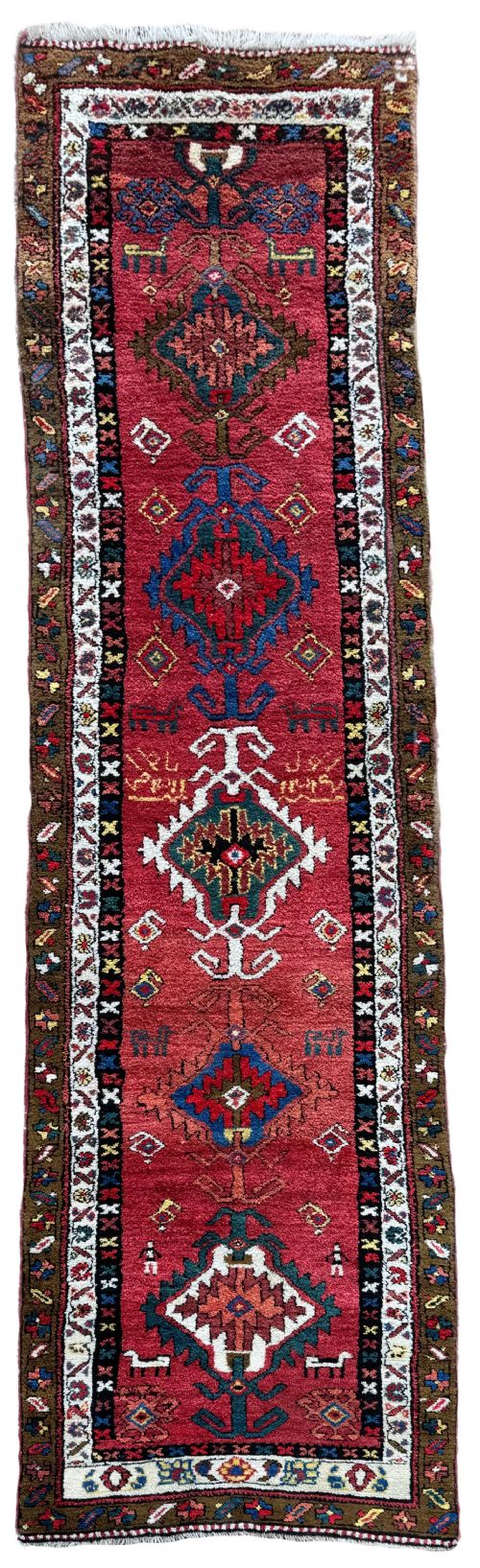
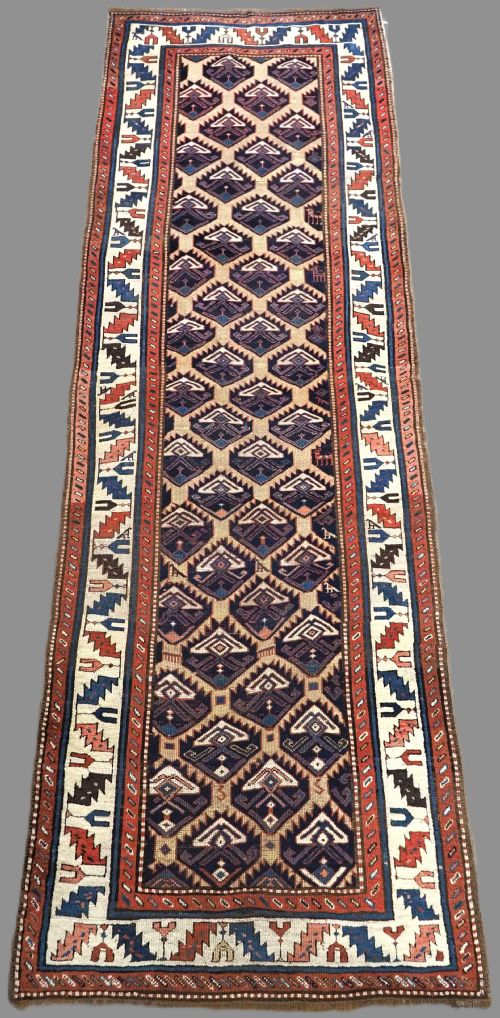
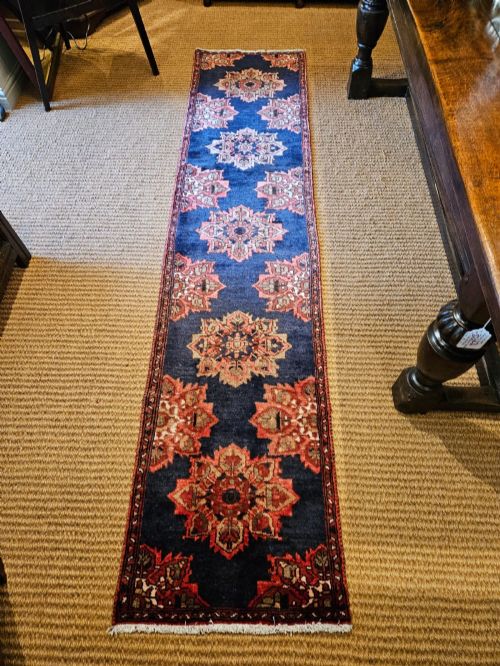
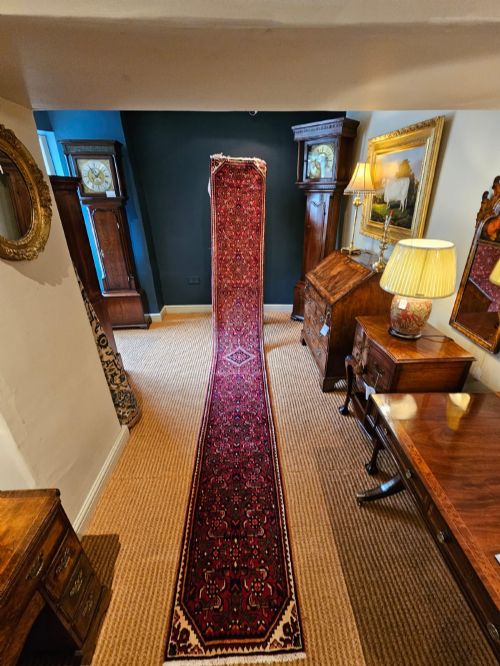
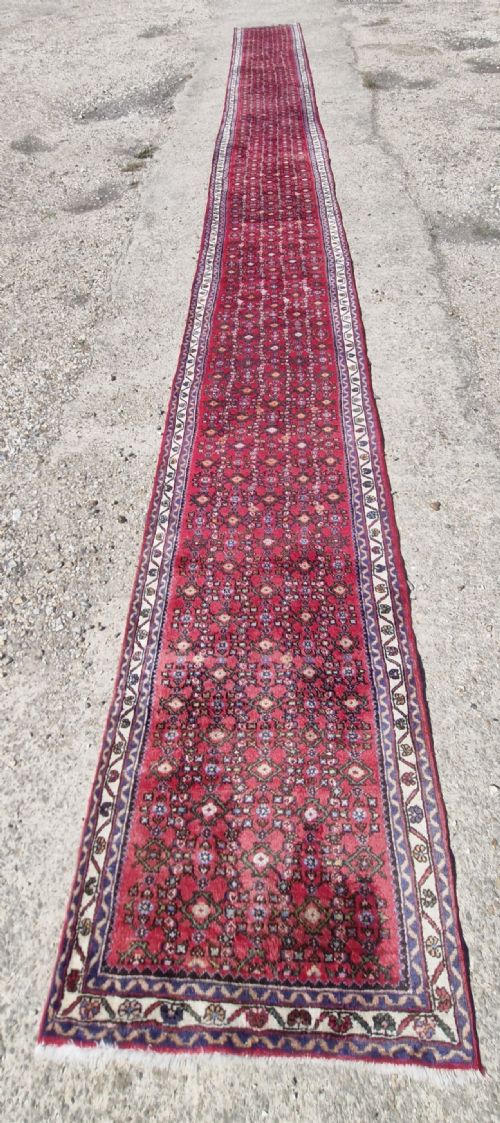
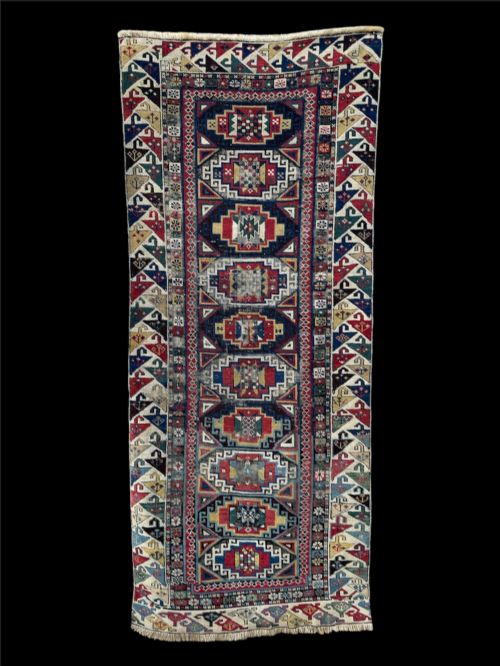
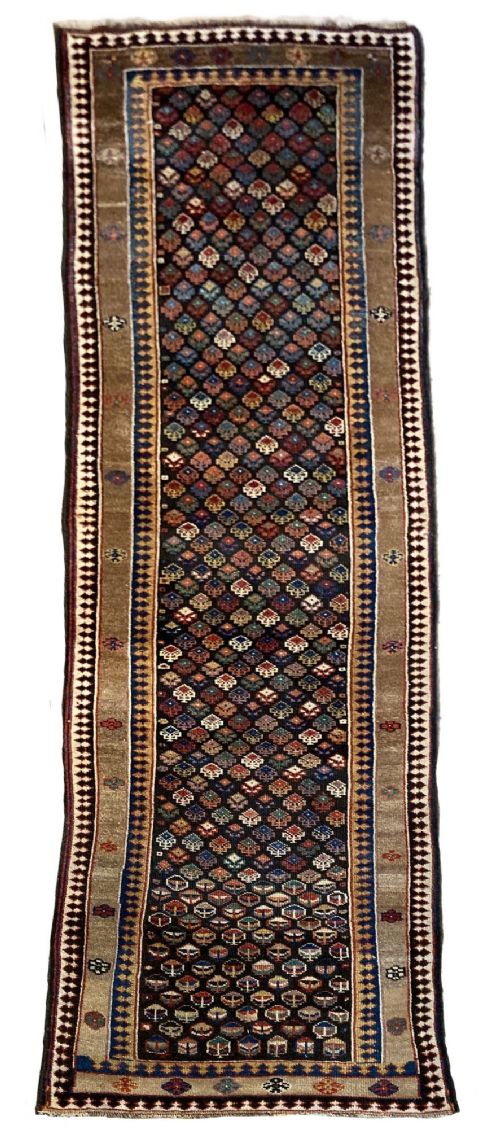
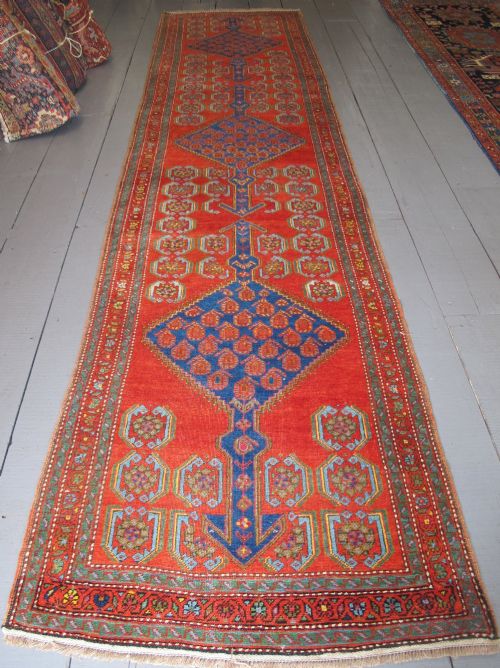
When searching for an antique persian hall carpet, buyers encounter long, narrow formats designed specifically for corridors, landings and hallways. These pieces span production periods from the nineteenth century into the twentieth century, originating from village and tribal workshops across Persia and neighbouring regions. The forms include runner rugs, hallway runners and long carpets fashioned for narrow domestic spaces.
The most common examples on this page are wool and cotton runners bearing traditional tribal motifs, Heriz designs and Kurdish patterns. These floor coverings bridge utility and decorative art, utilising geometric medallions, lattice formats and repetitive field patterns. Each piece reflects the regional weaving traditions of makers working in north-west Persia and beyond.
How they were made
These carpets rely on hand-spun wool and cotton foundations, utilising natural dyes to create stable, enduring colour palettes. Weavers tied pile knots onto warp and weft threads, incorporating camel hair in specific sections for natural tone and resilience.
The construction employs sturdy village weaving techniques designed to withstand heavy foot traffic in narrow spaces. Artisans used regional dyestuffs derived from plants and minerals, resulting in nuanced variations across the indigo blues, reds and earth tones.
Some resilient long runners stretch past thirty feet, built to endure generations of heavy footsteps in grand nineteenth-century hallways.
What varies in quality
Quality in these long formats rests on the tightness of the knotting, the balance of the proportions and the clarity of the design. Finer knot densities allow intricate geometric lattices and curvilinear motifs to remain sharp along extended runner lengths.
The choice of natural dyes and the integrity of the wool foundation determine how gracefully a piece ages under foot. Superior examples maintain structural firmness in the warp and weft while exhibiting rich tonal depth in the pile.
The Antique Persian Hall Carpet Glossary
- Runner
- A long, narrow carpet format traditionally utilised in hallways, corridors and staircases. These pieces measure significantly longer than they are wide.
- Warp
- The vertical threads stretched lengthwise on a loom that form the foundational skeleton of the carpet. Fringe typically extends from these ends.
- Weft
- The horizontal threads passed through the warp threads to bind the knots in place. Together with the warp, it forms the woven foundation.
- Natural Dyes
- Colourants derived from organic sources such as plants, insects and minerals rather than synthetic chemicals. These dyes produce complex, harmonious patinas over time.
- Medallion
- A central ornamental design motif placed in the field of the carpet. It often takes a geometric or floral form.
Antique Persian Hall Carpet: Frequently Asked Questions
Where should I place a long hallway runner?
These narrow formats suit extended corridors, entrance halls, and gallery landings where floor coverings soften footfall. Their proportions frame walking paths while protecting timber or stone flooring.
Ensure the space allows sufficient clearance for doors to swing freely over the pile thickness. Measuring the exact corridor length and width prevents the runner from overwhelming the proportions of the hallway.
How do I care for an antique wool carpet?
Regular gentle vacuuming without a rotating brush roll removes grit that settles deep within the wool pile. Professional cleaning by specialists in antique textiles preserves the structure of natural dyes and fibres.
Underlay helps prevent slipping on hard floors and reduces friction between the cotton foundation and the ground. Rotating the runner periodically ensures even wear across high-traffic areas of the corridor.
How can I tell tribal designs apart?
Tribal runners from regions such as Kurdish, Heriz or Caucasian areas rely on distinct geometric vocabularies, border arrangements and colour combinations. Kurdish pieces frequently display bold latch-hook motifs and stylized figures, whereas Heriz carpets often feature prominent rectilinear medallions.
Examining the weave structure, fringe construction and wool quality provides further clues to geographic origin. Local weaving groups passed down specific colour preferences and symbolic motifs through generations.
What does pile wear indicate about age?
A low or uneven pile often points to decades of domestic use in busy hallways, reflecting the historical function of the runner. Natural softening of the wool and subtle fading of natural dyes are expected characteristics of nineteenth and early twentieth-century pieces.
Provided the cotton and wool foundation remains sound, surface wear adds character rather than detracting from structural integrity. Evaluating the health of the edges and ends matters more than uniform pile height.