



Antique Pen Tray Organiser
An antique pen tray organiser keeps desks orderly while showing the refined metalwork and carving skills of the nineteenth and early twentieth centuries.
Antique Pen Tray Organiser
An antique pen tray organiser encompasses desk tidies, inkstands, and desk sets designed to keep writing implements orderly. These desktop accessories originate from periods spanning the Victorian era through the Art Deco epoch.
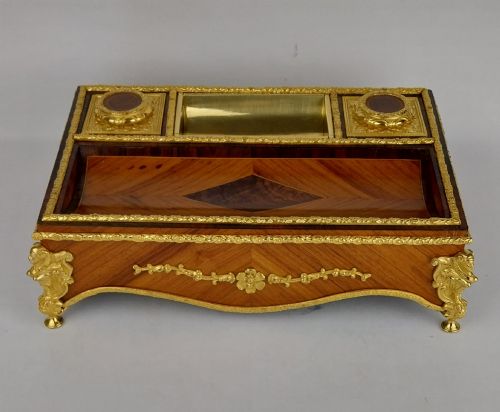
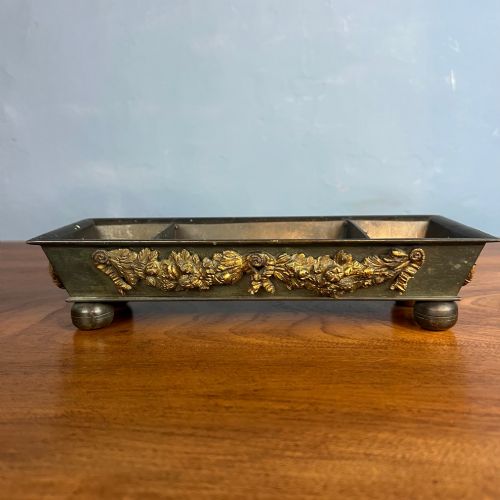
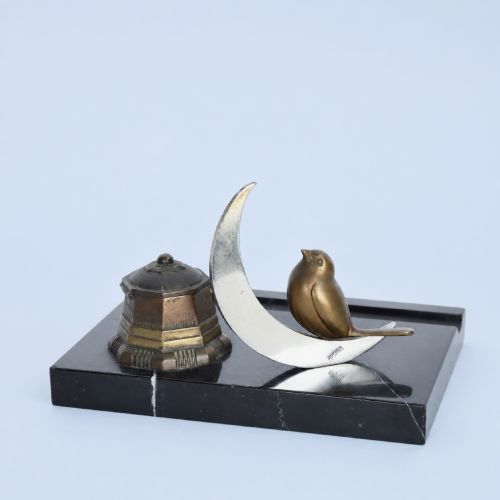
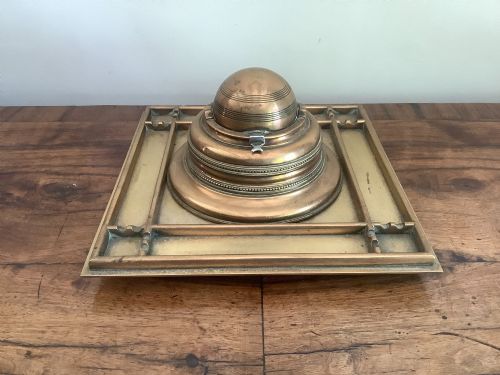
The pieces appearing on this page range from simple brass rests to elaborate marble and bronze inkstands. Buyers frequently encounter Victorian and Edwardian examples fashioned from woods like walnut, oak, and coromandel.
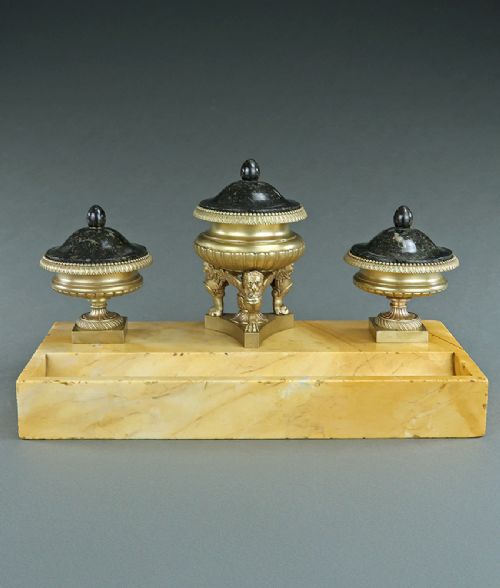
Makers utilised various forms, including French Empire designs, Black Forest carvings, and Neoclassical marble encriers. Each piece served as a functional centrepiece for the nineteenth-century writing desk.
How they were made
Craftsmen built these desk accessories using a combination of dense hardwoods and cast metals. Materials such as brass, gilt ormolu, and bronze were cast and chased, while woods like coromandel and tortoiseshell received delicate brass inlay.
Carvers shaped Black Forest items from solid blocks of wood to form animals like bears and cats. Stonework required skilled masons to cut and polish sienna and black marble into encriers and bases.
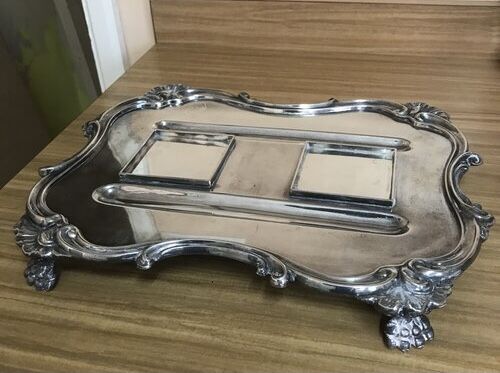
Makers applied finishes such as silver plating and cold painting to metals, adding decorative detail to inkwells and pen rests.
Antique Pen Tray Organiser Retail Price Guide 2026
Typical asking prices for pen tray organiser among the pieces listed under this phrase on Sellingantiques today, from the lower quarter to the upper quarter. They describe what is for sale here now, not the wider market.
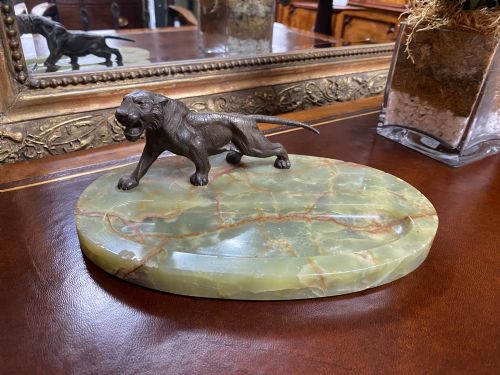
Desk tidies occasionally take the form of playful animals, with carved Black Forest cats and bronze kittens holding court over the ink.
What varies in quality
Quality rests upon the crispness of the metal casting and the precision of the woodwork. Superior examples display sharply defined bronze figures and tightly fitted brass inlay within walnut or coromandel veneers.
The choice of materials dictates the standing of a piece, with heavy marbles, solid gilt ormolu, and detailed tortoiseshell marking the upper tier. Simpler solid oak or basic brass trays occupy the more utilitarian end of the scale.
Harrods·Asprey Of London
The Antique Pen Tray Organiser Glossary
- Ormolu
- Gilt bronze mounted on decorative objects, created through an amalgam of mercury and gold applied to bronze. This technique brings a rich golden lustre to nineteenth-century desk hardware.
- Cold painted bronze
- Bronze figures decorated with non-fired paint layers, common in Austrian animalier desk tidies. The paint requires careful preservation.
- Black Forest carving
- Intricately carved wooden decorative items originating from Switzerland and Germany, often depicting animals. Bears and cats frequently feature on these inkstands.
Antique Pen Tray Organiser: Frequently Asked Questions
How do I date an inkstand?
Dating relies on stylistic clues, materials, and manufacturing techniques. Victorian pieces often use coromandel or papier-mâché, while later items reflect Art Deco geometry.
Examining the metal casting quality and the construction of the inkwells helps determine the specific decade of production.
Where were these desk sets used?
These accessories were standard fixtures on the writing desks of affluent homes, libraries, and administrative offices. They kept dipping pens, ink, and blotting materials close at hand.
Larger desk stands often remained stationary in private studies, while simpler trays moved between rooms as needed.
How do I care for marble and bronze?
Maintenance involves dusting with a soft, dry cloth to protect delicate patinas and stone surfaces. Avoid liquid cleaners that might damage cold painted bronze or wood veneers.
Keep pieces away from direct sunlight to prevent the fading of tortoiseshell and wooden finishes.