

Antique Pedestal Dishes
Antique pedestal dishes bring height and display to a room, holding fruit, flowers or sweets upon raised feet and columns.
Antique Pedestal Dishes
These elevated vessels span the eighteenth, nineteenth and early twentieth centuries, encompassing footed bowls, comports and tazzas alongside smaller wine and occasional tables lifted on central pillars. Georgian and Victorian examples sit alongside Edwardian and later pieces, showing a progression from formal dining room serving pieces to decorative display objects.
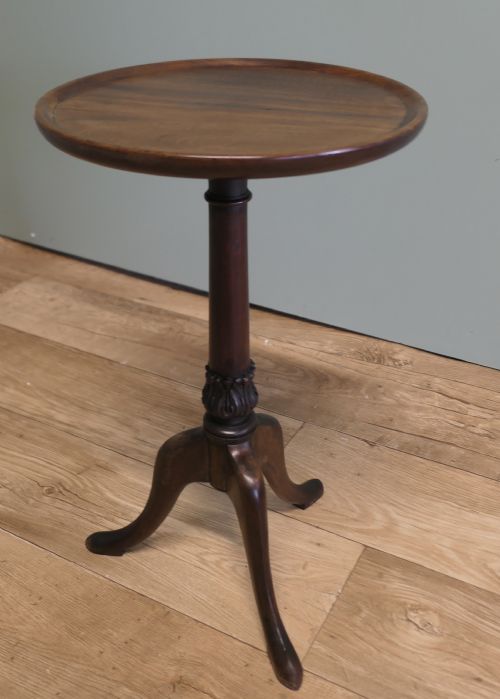
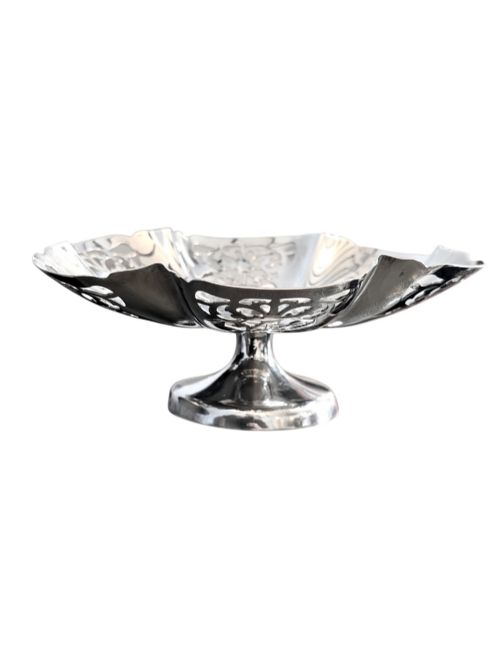
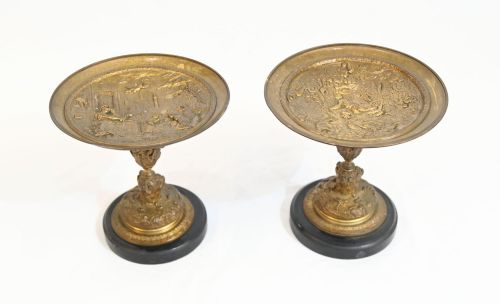
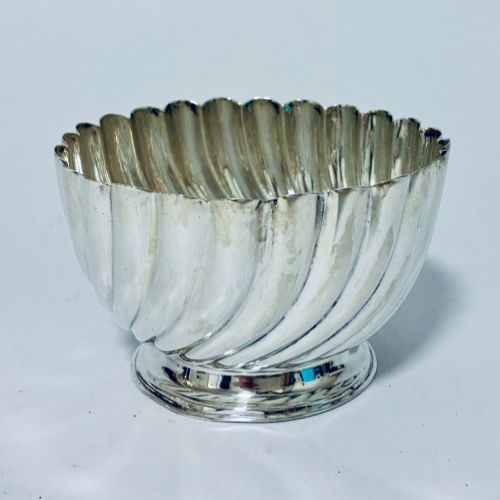
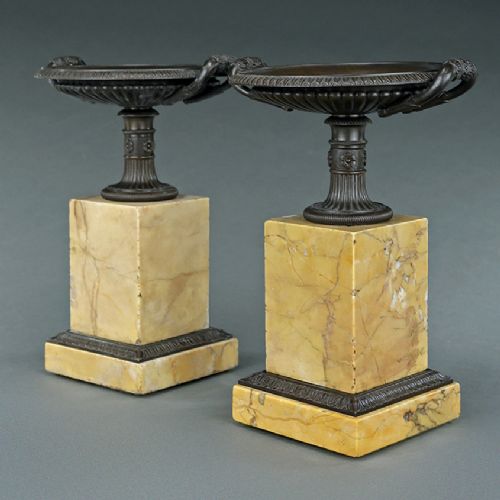
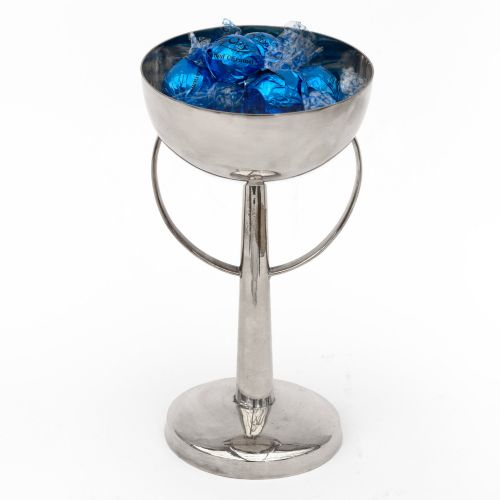
The form stretches from porcelain and earthenware bowls resting on pedestal feet to gilt bronze and marble tazzas, crystal glass centerpieces and silver plated fruit baskets. Alongside traditional serveware appear mahogany wine tables and tripod stands that share the same elevated circular format.
Originating across English and continental workshops, these items served varied domestic roles from holding dessert fruits on the dining table to supporting lamps in the drawing room. The selection here leans heavily towards nineteenth-century ceramic and metal tazzas, alongside timber wine tables supported by tripod legs.
Materials and construction methods
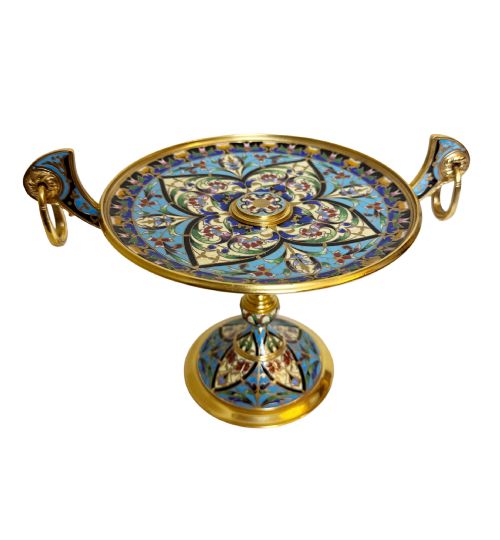
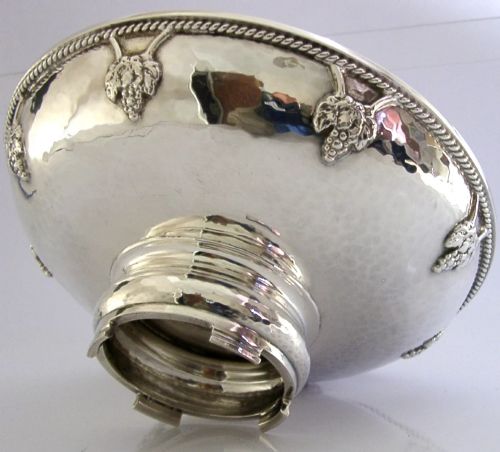
Metalwork pieces utilise sterling silver, silver plate, pewter and gilt bronze, often incorporating champlevé enamel or cast decorative mounts. Silversmiths employed hammering and planishing techniques by hand, while bronze items relied on detailed casting and marble bases.
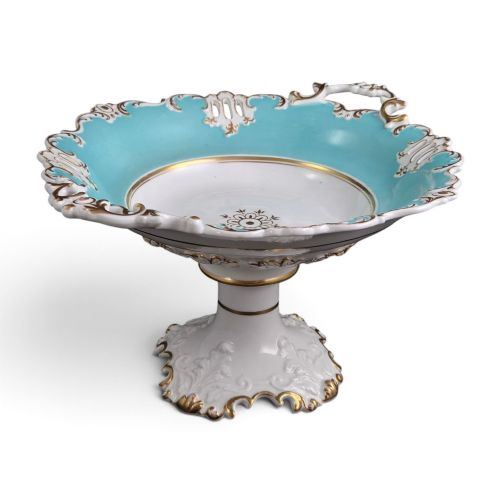
Ceramic dishes draw upon bone china, ironstone, felspar porcelain and pottery bodies, shaped and fired before receiving hand-painted or transfer-printed decoration such as the Japan and Pagoda patterns. Glass versions involve mould-blowing, cutting and crystal honeycomb moulding.
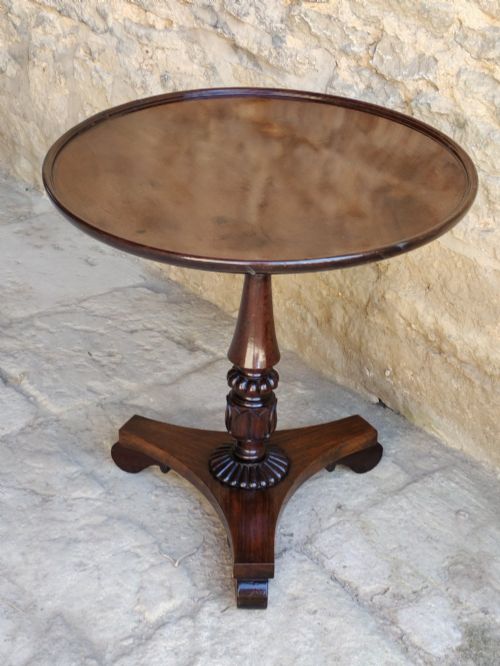
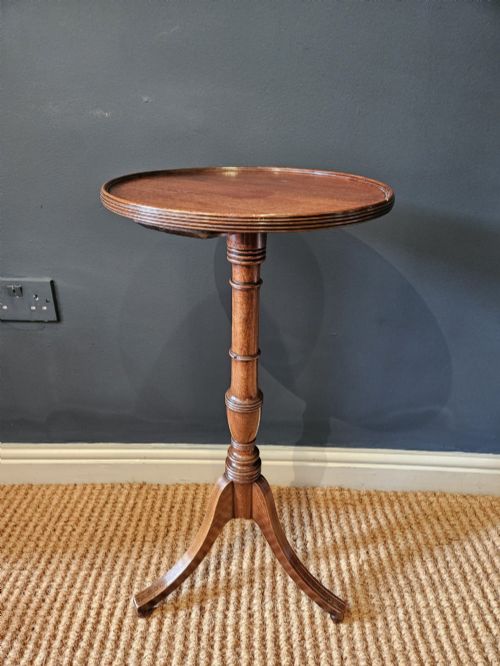
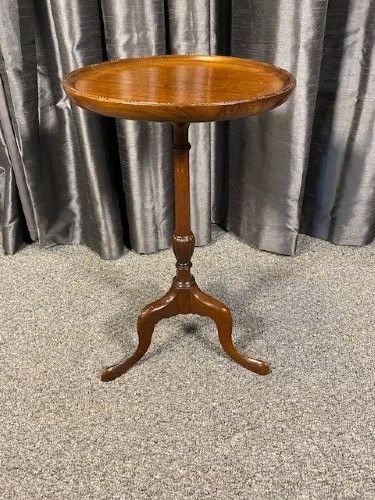
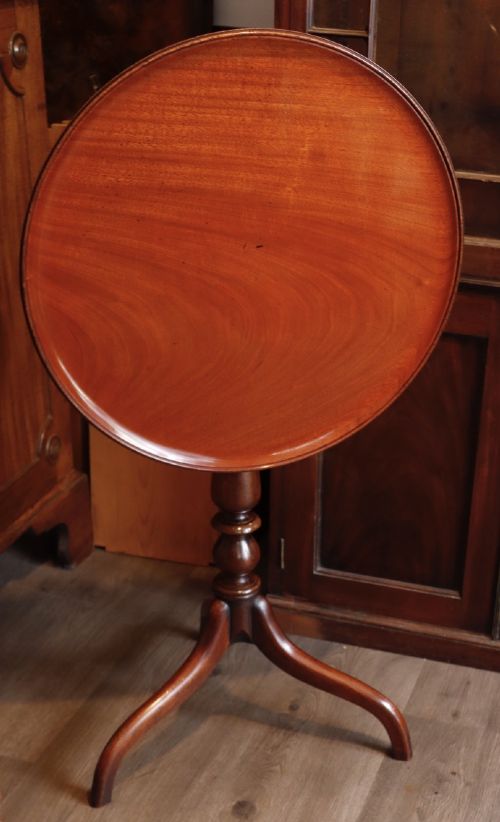
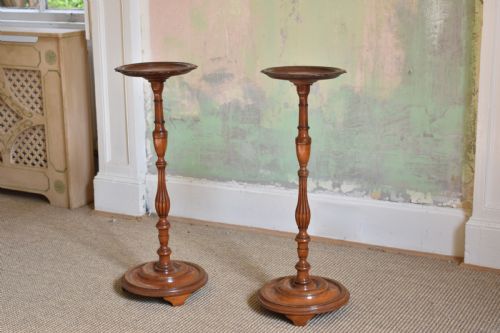
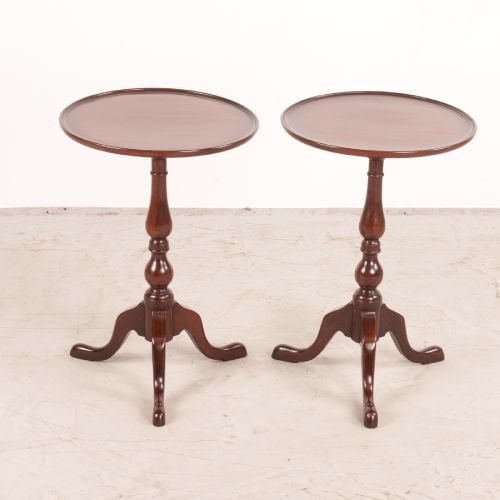
Timber examples, particularly mahogany and oak wine tables, rely on traditional joinery with turned central pillars, carved tripod legs and occasional tilt-top mechanisms. Inlaid satinwood pieces demonstrate precision woodcraft through contrasting veneers.
Listings span multiple centuries, uniting mahogany timber work with sterling silver, porcelain and gilt bronze.
Factors that determine quality
The refinement of the casting in metal pieces and the clarity of detail in chased or carved ornamentation separate standard production from superior examples. Weight and balance matter profoundly, particularly in tall bronze tazzas and crystal centrepieces that require heavy bases to remain stable.
Ceramic quality rests on the crispness of the porcelain paste, the brilliance of the glaze and the precision of hand-applied enamel colours. Maker attribution and documented factory marks elevate items from utilitarian wares to significant collector pieces.
In timber wine tables, the choice of dense, well-figured mahogany and the crisp execution of turned columns or carved tripod feet indicate superior workshop production.
Coalport·Goldsmiths and Silversmiths Company London·Liberty & Co Tudric Pewter·George W. Scott & Sons Ltd·Spode
The Antique Pedestal Dishes Glossary
- Tazza
- A shallow bowl or dish mounted on a stem and foot, traditionally used for serving fruit or sweetmeats. This form originates from Renaissance metalware before appearing in ceramics and glass.
- Comport
- A large footed dish or bowl designed for the centre of a dining table during the dessert course. These pieces lift fruit and confectionery above the table surface.
- Planished
- A metal surface finished by striking with a small-faced hammer to create uniform facets that catch the light. Arts and Crafts silversmiths favoured this technique.
- Tripod Table
- A small occasional or wine table supported by a pillar above three spreading legs. These pieces provide stable surfaces on uneven floors.
- Champlevé
- An enamelling technique where troughs are dug into a metal surface and filled with vitreous paste before firing. This method creates colourful geometric or pictorial designs.
Antique Pedestal Dishes: Frequently Asked Questions
What was a tazza used for?
These elevated dishes served sweetmeats, fruits and confections during formal dining courses, occupying pride of place in the centre of the table.
Over time, their role shifted towards pure ornamentation, displayed on sideboards or mantelpieces to catch the light and show off fine materials.
How do I care for antique silver dishes?
Gentle washing in warm soapy water with a soft cloth removes everyday dust and grease without harming the metal surface.
Avoid harsh abrasive polishes that wear away thin silver plating or soften the crisp details of hand-hammered decoration.
Are wine tables meant for dining?
Wine tables functioned as small moveable stands placed beside seating to hold glasses and bottles during evening conversation.
Their tilt-top designs allowed them to be stowed flat against walls when not in use during larger gatherings.