



Antique Pastoral Scene Print
An antique pastoral scene print brings the quiet rhythm of the countryside into a room through traditional rural imagery.
Antique Pastoral Scene Print
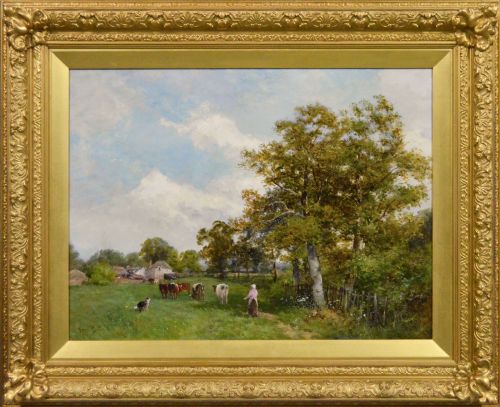
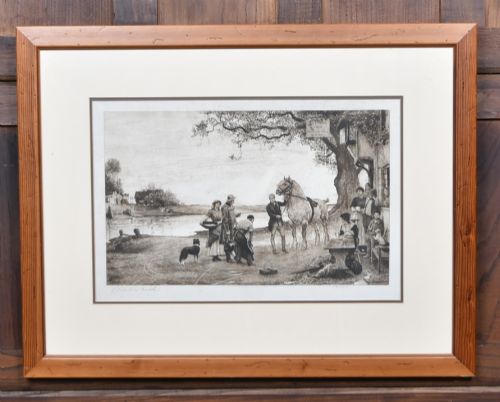
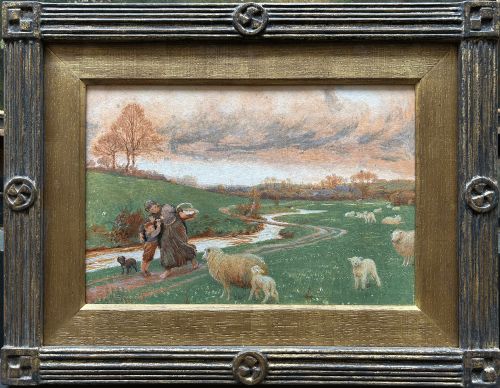
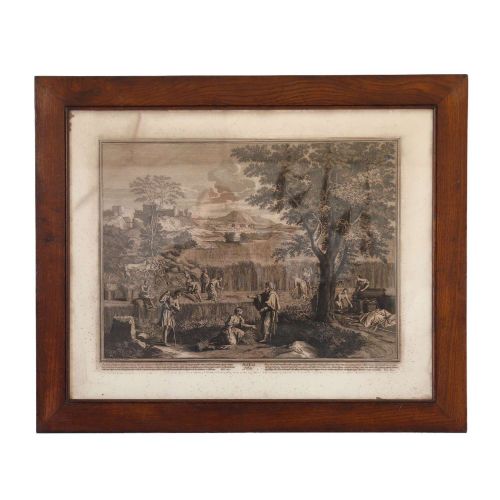
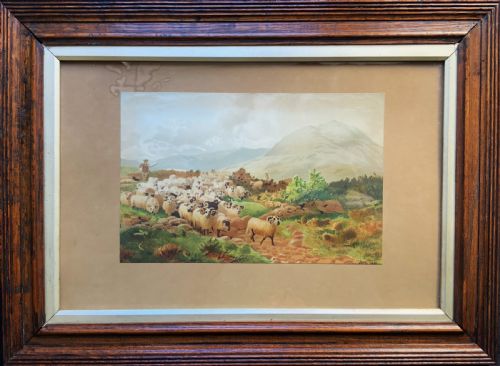
An antique pastoral scene print depicts traditional rural life, featuring farm workers, herdsmen, and shepherds tending animals across fields and valleys. When searching for an antique pastoral scene print, buyers encounter framed etchings, engravings, and mezzotints alongside related oil paintings, watercolours, and transfer-printed earthenware.
The selection ranges across several centuries, from Georgian and Regency works to Victorian interpretations of idyllic and realist country life. These pieces capture quiet domestic moments on farms, shepherds with flocks, and field workers harvesting crops in varied British and European landscapes.
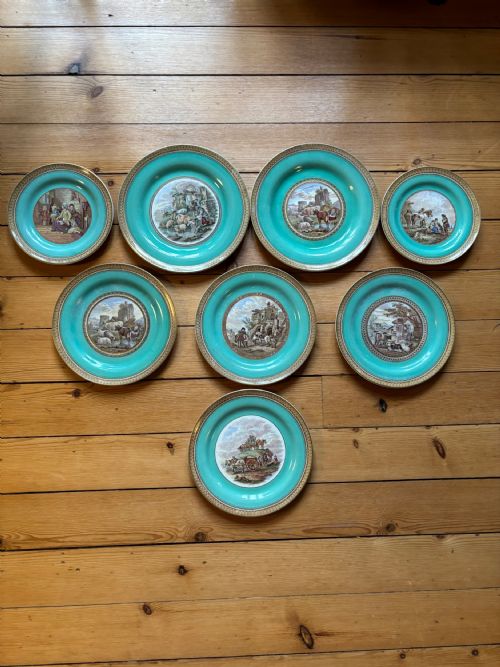
While some pieces arrive as works on paper behind glass within original wooden or gold leaf frames, others appear as earthenware plates and platters bearing printed rural designs. The variety reflects how widely makers applied these rural themes across decorative arts and wall art alike.
Materials and techniques
Makers produced these works using paper, wood, glass, and gold leaf, alongside ceramic materials like earthenware, pearlware, and glaze for transfer-printed items. Artisans employed etching, engraving, and mezzotint techniques on paper plates to transfer detailed rural compositions.
Painters applied oil and watercolour on canvas and paper, while ceramicists transferred blue and white pastoral motifs onto pottery plates, platters, jugs, and footbaths. Framers housed works on paper behind protective glass within wooden frames, often accented with gold leaf.
Assessing quality
Quality rests upon the clarity of the line work in prints and the depth of the pigment in paintings and transfer pottery. Fine impressions show sharp detail in the figures and landscapes, whereas lesser examples lose definition in the background.
The integration of the framing materials and the preservation of the paper or ceramic surface determine the overall standard of the piece. Well-preserved works retain their original tonal balance and structural integrity across both paper and earthenware forms.
David Bates·Robert W Macbeth·Frederick Walker·James William Booth·Joseph Kirkpatrick·Herbert Royle·Henry Birtles·I R Smith
The Antique Pastoral Scene Print Glossary
- Etching
- A printmaking technique where acid cuts into unprotected parts of a metal plate to hold ink. This process allows for fine, fluid lines in rural compositions.
- Mezzotint
- A printmaking method of the intaglio family where the plate is roughened to produce tones and shades. It creates soft, velvety transitions between light and dark areas.
- Engraving
- A method of cutting designs into a hard surface using a burin. It yields crisp, precise lines suited for detailed landscape work.
- Pearlware
- A refined earthenware developed in the late eighteenth century featuring a subtle bluish glaze. It served as a common canvas for blue and white transfer printing.
- Transfer printing
- A process of offsetting a design from an engraved metal plate onto paper and then onto pottery. This technique enabled consistent rural patterns on plates and jugs.
Antique Pastoral Scene Print: Frequently Asked Questions
What defines a pastoral scene?
A pastoral scene portrays rural life, specifically focusing on shepherds, farm workers, and animals within open countryside or agricultural settings. These subjects emphasise a traditional connection to the land.
Artists and printmakers from the Georgian period through the Victorian era frequently turned to these agrarian themes to evoke a sense of quiet rural harmony.
How should I hang these prints?
These works suit traditional living spaces, studies, or hallways where their detailed rural subjects can be viewed closely. Pairing them with period wooden frames enhances their historical character.
Keep framed paper pieces away from direct sunlight to protect the ink and paper from fading over time.
Are transfer pottery items durable?
Transfer-printed earthenware and pearlware were originally designed for functional household use, such as serving food or holding water. However, age makes the ceramic body and glaze more fragile.
Modern owners generally display these plates, platters, and footbaths decoratively rather than using them for daily service.
How do I identify the period?
Dating relies on stylistic markers within the imagery, the framing materials, and the type of paper or ceramic body used. Victorian works often feature heavier, more sentimental realism compared to earlier Regency or Georgian examples.
Examining the back of ceramics or the framing construction of prints often reveals further clues about the date of production.