




Antique Parquetry Caddy
An antique parquetry caddy brings geometric woodcraft to the table, offering a clever box to hold your tea.
Antique Parquetry Caddy
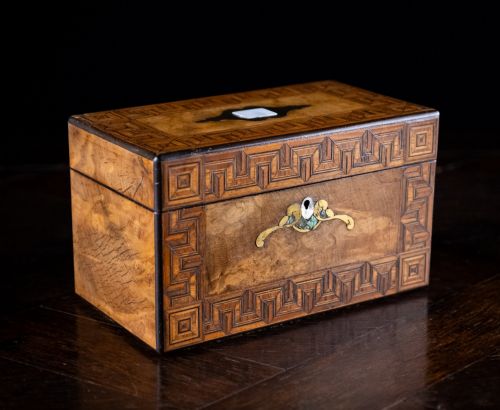
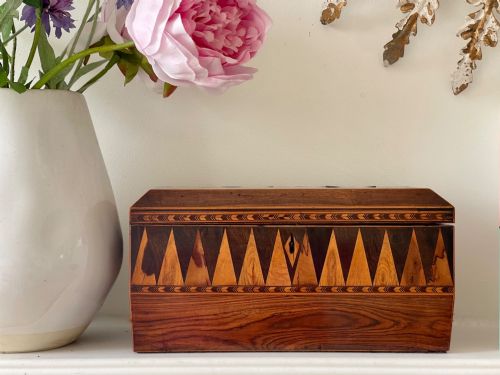
An antique parquetry caddy is a small lidded box designed originally to store and preserve precious tea leaves. When you search for this phrase, you find pieces fashioned with meticulous wood mosaic patterns across their surfaces. The examples you are most likely to meet on this page date from the Georgian, Regency, and Victorian periods.
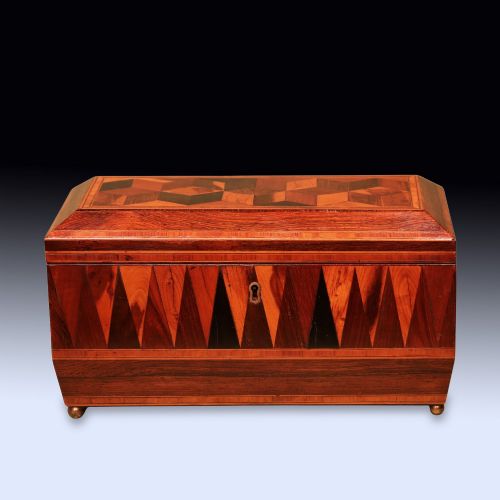
These boxes take various forms, from simple rectangular shapes to elaborate sarcophagus silhouettes and fitted interiors. Alongside standard tea caddies, the selection includes decorative boxes and sewing baskets that utilise similar parquetry and Tunbridge Ware techniques. They serve today as decorative storage objects for desks and side tables.
How they were made
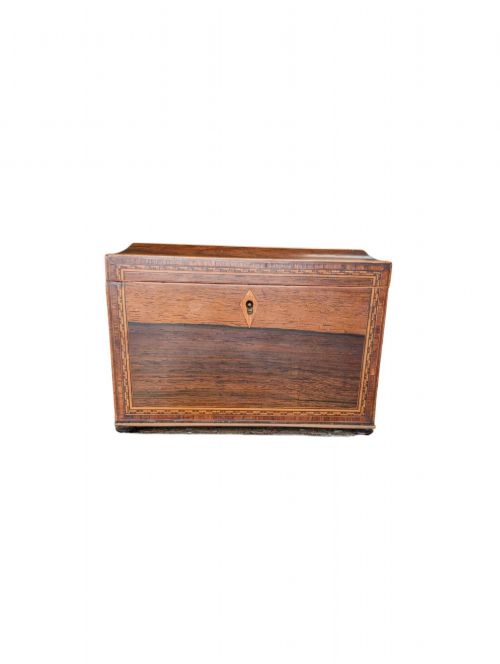
Cabinetmakers constructed these caddies using a solid wood carcase, frequently choosing rosewood, walnut, or mahogany as a foundational base. They then applied thin veneers and geometric wood mosaics to the exterior surfaces. Mixed wood inlay, boxwood, holly, and contrasting veneers formed the intricate patterns.
Many finer specimens incorporate brass fittings and mother of pearl details to accent the timber work. Artisans created specialised Tunbridge Ware mosaics by gluing tiny coloured wood blocks together and slicing them into repeating decorative bands.
Antique Parquetry Caddy Retail Price Guide 2026
Typical asking prices for parquetry caddy among the pieces listed under this phrase on Sellingantiques today, from the lower quarter to the upper quarter. They describe what is for sale here now, not the wider market.
Henry Hollamby famously turned tiny twigs into grand architecture, proving that even a humble tea box can hide a forest.
What varies in quality
The distinction between standard pieces and exceptional ones lies primarily in the precision and complexity of the wood mosaic work. Finer caddies display microscopic geometric accuracy in their parquetry, with tightly fitted joints and harmonious natural timber colours that require immense skill to assemble.
Internal appointments also set examples apart, with superior pieces retaining original fitted compartments, mixing bowls, and delicate interior lids. The choice of base timber, such as burr walnut or figured rosewood, further elevates the status of the box.
Henry Hollamby
The Antique Parquetry Caddy Glossary
- Parquetry
- A geometric mosaic of wood veneers assembled to form decorative patterns on furniture and boxes. It differs from marquetry by using strict geometric shapes rather than pictorial designs.
- Tunbridge Ware
- A specific type of woodwork originating from Kent, featuring microscopic mosaic patterns made from many different natural coloured woods. Slices of the assembled wood block are applied as veneer.
- Sarcophagus form
- A box shape featuring a steep, sloping lid and often resting on small bracket feet or ball feet. This architectural style was particularly popular during the Regency period.
- Caddy
- A small container or chest originally used for storing tea leaves when tea was an expensive commodity. They frequently included internal compartments and mixing bowls.
- Veneer
- A thin slice of superior or figured wood applied over a secondary timber carcase to provide a decorative surface. This technique prevents warping while displaying expensive grains.
Antique Parquetry Caddy: Frequently Asked Questions
What were antique parquetry caddies used for?
These boxes served to store loose tea leaves securely under lock and key when tea was a costly luxury in British households. Servants or the master of the house would measure out the leaves using internal compartments.
Today, collectors use them as decorative mantelpiece items or to store small personal trinkets and letters on dressing tables.
How do I identify a Regency period caddy?
Regency pieces often feature architectural sarcophagus shapes, brass lion paw feet, and bold rosewood veneers contrasted with light satinwood or brass inlay.
They rely heavily on classical proportions and symmetry, distinguishing them from the more ornate and floral tendencies of later Victorian boxes.
What is Tunbridge Ware inlay?
Tunbridge Ware is a specialised form of mosaic woodwork where thousands of tiny tinted wood squares are glued together to form a picture or geometric border. This composite block is then sliced thinly like bread to create matching veneer strips.
Look for intricate floral motifs or geometric bandings made entirely of natural unpainted woods.
How should I care for a wood caddy?
Keep wooden boxes away from direct sunlight and radiators to prevent the delicate veneers and mother of pearl inlays from drying out and lifting. Maintain a stable room temperature and humidity level in your home.
Apply a very light coat of microcrystalline wax occasionally to nourish the antique wood finish without building up heavy residue.