




Antique Paper Storage Rack
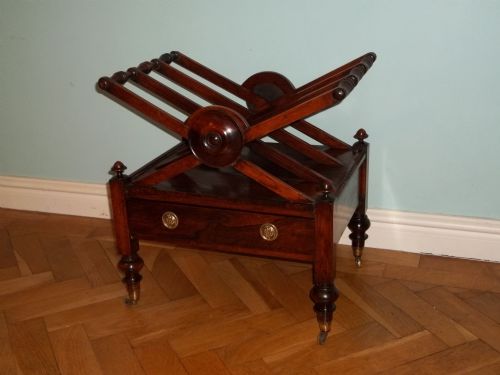
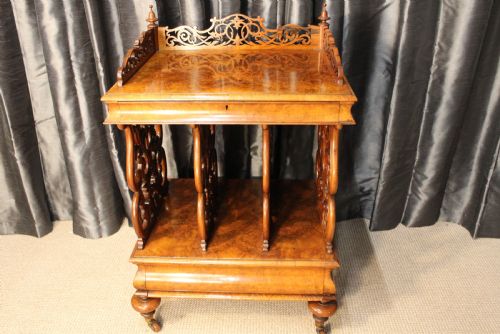
An antique paper storage rack organises news and sheets in timber, meeting the desk or floor with dividers.
Antique Paper Storage Rack
An antique paper storage rack comprises canterburys, magazine holders, and desk tidies designed to hold periodicals, sheets, and correspondence. These pieces appear across Georgian, Regency, Victorian, Edwardian, and later periods up to nineteen-twenty.
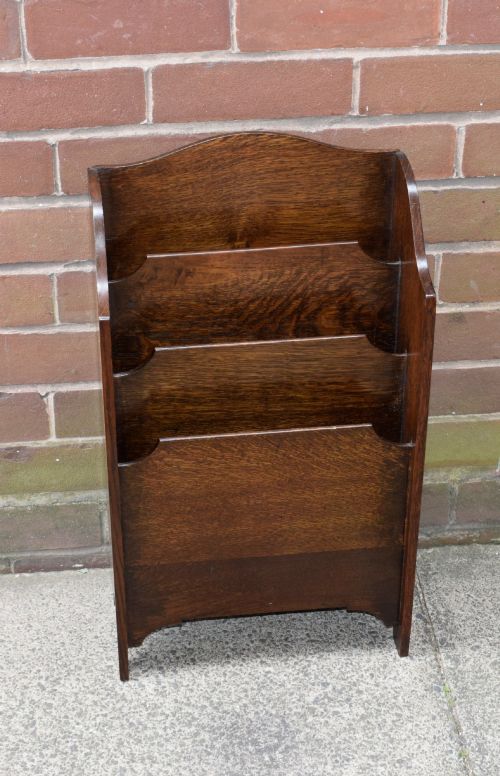
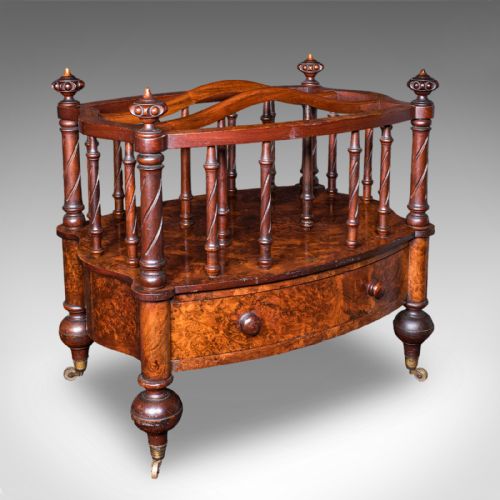
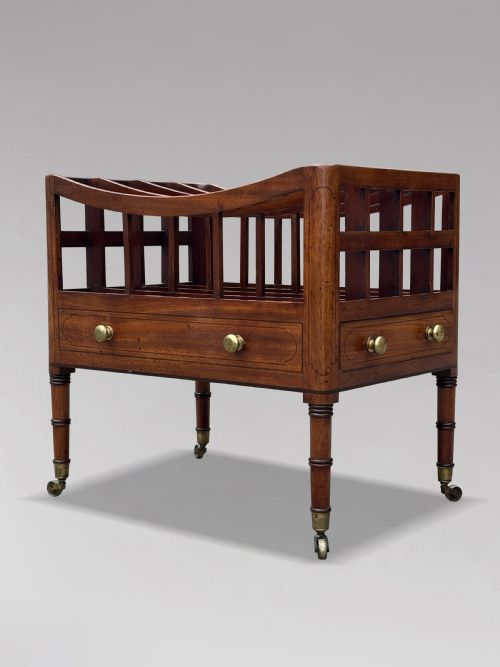
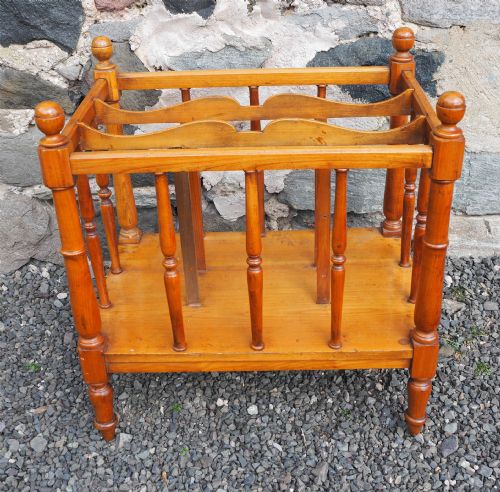
The traditional canterbury forms the primary version met on this page, featuring slatted divisions and often a drawer below. Other examples include tabletop desk organisers and brass-mounted stands for newspapers and music sheets.
Woods span mahogany, rosewood, walnut, burr walnut, oak, and fruitwood, sometimes banded with ebony or enriched with carved details. Origins trace principally to English workshops of the eighteenth and nineteenth centuries.
Judging quality and proportion
The refinement of the turning on the upright supports and the crispness of any carved detailing separate standard items from finer examples. Timber selection dictates visual appeal, particularly where figured veneers or contrasting ebony banding are employed.
Structural integrity depends on the tightness of the joints connecting the slatted divisions to the base. The inclusion of a smoothly operating drawer below the divisions adds practical complexity and merit.
Object forms vary between floor-standing canterburys with castors and tabletop desk organisers fitted with multiple shelves.
The Antique Paper Storage Rack Glossary
- Canterbury
- A low stand with slatted divisions for holding music sheets, newspapers, and magazines. It often includes a single drawer in the lower section and rests upon castors.
- Desk tidy
- A tabletop accessory featuring compartments and shelves for organising letters, papers, and writing implements. These items emerged in various woods during the nineteenth and early twentieth centuries.
- Banding
- A narrow strip of contrasting veneer inlaid around the edges of a surface to create a decorative border. Ebony banding appears frequently on Georgian and Regency pieces.
- Fruitwood
- A dense timber obtained from fruit-bearing trees such as pear or apple, utilised for smaller items and provincial furniture. It offers a smooth texture and warm tone.
Antique Paper Storage Rack: Frequently Asked Questions
What is a canterbury?
A canterbury is a low compartmentalised stand originally built for holding music sheets and periodicals off the floor. The divisions keep papers upright and separated for easy selection.
Most versions feature three or four sections and frequently incorporate a low drawer beneath the main body. They were designed to sit beside a desk or seating area.
How were desk tidies used?
Desk tidies sat upon writing tables to hold incoming correspondence, envelopes, and loose papers. They kept working surfaces clear before the widespread use of filing cabinets.
These accessories ranged from simple tiered shelves to partitioned racks in oak or mahogany. Their compact size suited them for domestic studies and offices.
Which woods are most common?
Mahogany and rosewood dominate the earlier nineteenth-century pieces, offering strong framing for slatted divisions. Walnut and burr walnut appear frequently in Victorian iterations.
Oak and fruitwood occur across various periods, particularly in Arts and Crafts or provincial examples. Darker hardwoods remained favored for their durability under daily handling.
How do I date these pieces?
Dating relies on timber choice, construction methods, and stylistic indicators such as brass castors and turning patterns. Georgian and Regency pieces display clean classical lines and solid mahogany or rosewood.
Victorian and Edwardian examples often introduce heavier carvings, walnut veneers, or tubular brass components. Later items from nineteen-twenty tend towards simpler oak or tiered desk accessories.