
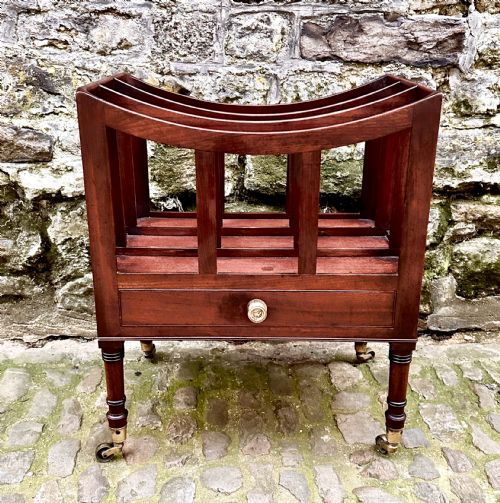
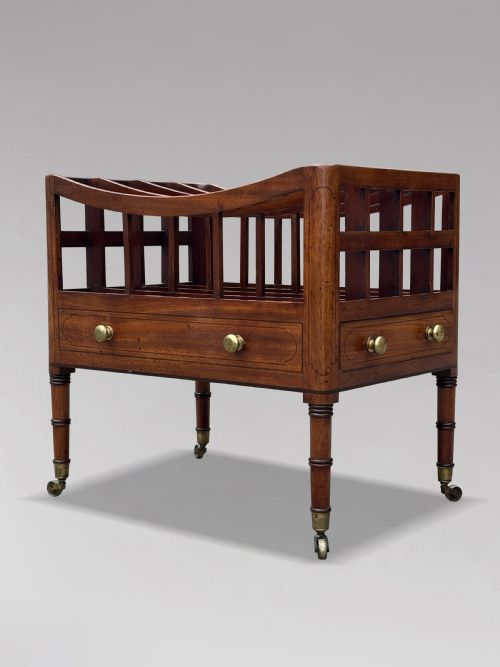


George III Magazine Holder
These george iii magazine holder pieces are elegant mahogany and rosewood canterburys designed to keep periodicals tidy.
George III Magazine Holder
A george iii magazine holder is typically found on this page in the form of a freestanding mahogany or rosewood canterbury. These pieces date from the Georgian era, the late eighteenth century, and the early nineteenth century.
The standard form serves to hold magazines, sheet music, or newspapers in slatted dividers, often featuring a low drawer beneath the main compartments.
How they were made
Cabinet makers constructed these canterburys primarily from solid mahogany and rosewood, utilising natural timber grains for visual depth. Brass castors frequently support the legs, allowing easy movement across the floor.
Joinery techniques involve precise framing for the vertical dividers and fitted drawer boxes, ensuring structural stability under the weight of paper.
Early musicians relied on these racks to stop their sheet music sliding into the fireplace.
What varies in quality
The refinement of the timber selection and the crispness of the turned legs separate standard examples from finer ones. Superior pieces display thoughtful proportions and careful attention to the joinery of the dividers.
The presence of secondary woods, original brass hardware, and an integrated drawer adds distinct character and influences the overall finish of the piece.
The George III Magazine Holder Glossary
- Canterbury
- A low freestanding rack with slatted divisions for holding music sheets, newspapers, or magazines. It often incorporates a single drawer at the base.
- Georgian
- The period spanning the reigns of the first four British monarchs named George, from seventeen fourteen to eighteen thirty. Furniture from this era emphasises classical proportions and fine timber.
- Mahogany
- A durable tropical hardwood prized for its rich reddish-brown colour and smooth grain. It remains the dominant material seen across these listings.
- Rosewood
- A dense, heavily figured timber with dark grain patterns, used for higher-end decorative furniture. It provides a striking alternative to mahogany.
George III Magazine Holder: Frequently Asked Questions
What is a canterbury used for?
These pieces were originally designed to hold sheet music and periodicals close to a seating area or instrument. Today they serve the same function for modern magazines and books.
The compartmentalised partitions keep loose papers upright and organised while remaining accessible in a living space.
How do I date a george iii piece?
Dating relies on timber choice, construction methods, and stylistic cues recorded in the inventory. Pieces from this era generally span the late eighteenth and early nineteenth centuries.
Examining secondary timbers and fixings helps confirm the period of manufacture alongside traditional cabinet making traits.
Where should I place a canterbury?
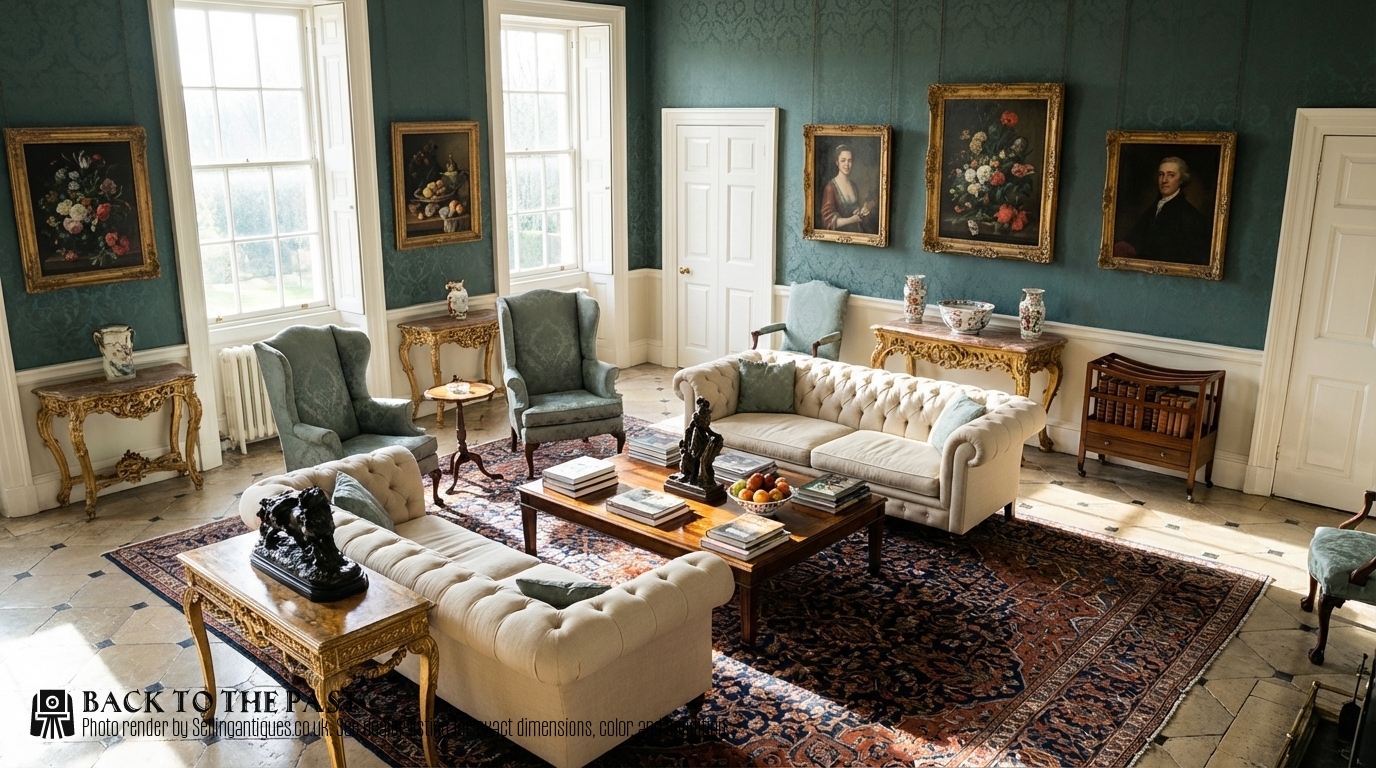
These compact racks suit placement beside a sofa, armchair, or desk where reading materials accumulate. Their freestanding design allows them to sit easily on carpets or wooden floors.
Brass castors on many models mean the holder can be repositioned effortlessly within a room.
Are these pieces made of solid wood?
Cabinet makers utilised solid mahogany and rosewood for the structural frames, legs, and dividers of these items. Selected veneers occasionally feature on flat surfaces to display decorative grain patterns.
Natural timber movement and patination develop over generations of handling and polish application.